Tana Alternatives: We tested the best 10 in 2026
Best Tana Alternatives in 2026 are Saner.AI, Craft, Notion, Obsidian, Evernote, Anytype, Workflowy, Capacities, ClickUp, Reflect


The 10 Best Tana Alternatives
People look for alternatives to Tana because while it excels at structured, graph-based note-taking, it can feel complex, hard to onboard, and difficult to use daily, especially on mobile.
At the same time, AI note-taking tools have evolved quickly, moving beyond static graphs toward daily planning, task extraction, and cognitive load reduction.
This guide helps you:
- Understand why users switch from Tana
- Compare the best Tana alternative apps objectively
- Choose a tool that fits how you think, not just how many features it has
Let’s get started!
1. What Is Tana?
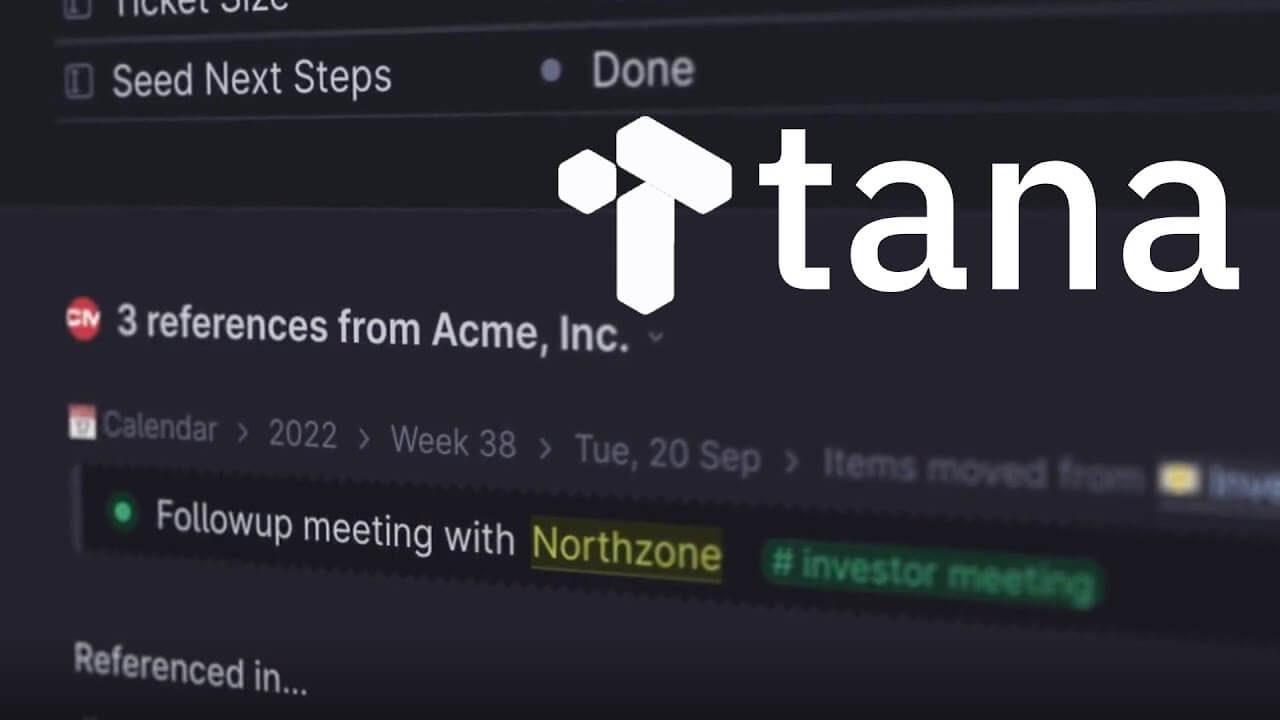
Tana is designed for people who think in structure. It excels at turning notes into interconnected nodes, making it easy to model complex ideas through outlines, references, and graph-based relationships.
2. Why People Look for Alternatives?
Despite its strengths, many users eventually look elsewhere due to:
- Steep learning curve
Understanding supertags, nodes, and structure takes time and mental energy. - Daily-use friction
Great for building systems, less smooth for quick capture or daily planning. - Limited AI assistance
AI features exist but are not deeply embedded into everyday workflows. - Mobile & UX limitations
Many users report friction on mobile or when switching contexts quickly. - Cognitive overload
Structured power can become mental overhead, especially for ADHD users
3. What to look for in Tana Alternatives?
When I’m looking for a Tana alternative, these features are absolute must-haves:
- AI integration: A tool that understands the way I write and think. It should let me search and pull together insights from my notes easily.
- Simple, intuitive tagging: I want to be able to tag and categorize things quickly, so I’m not wasting time digging around for what I need.
- Combine notes and tasks: Switching between my note app and the to-do list is exhausting. This problem shouldn’t even exist anymore.
- Strong integrations: My notes are spread across what feels like a million apps. I need something that can pull them together quickly and seamlessly.
- Quick capture: Whether I’m on my phone, laptop, or in the middle of a meeting, I need to capture ideas or information at the moment, without friction.
These features will make me work smarter, not harder.
What are the best Tana Alternatives in 2026?
Best Tana Alternatives in 2026 are Saner.AI, Craft, Notion, Obsidian, Evernote, Anytype, Workflowy, Capacities, ClickUp, Reflect
🧠 Best Tana Alternatives in 2026 - Comparison Table
| Tool | 🚀 Key Strengths | 🎯 Best For | 💻 Platform | 💰 Pricing |
|---|---|---|---|---|
| Saner.AI | AI-first planning, brain-dump → tasks, proactive daily plans, ADHD-friendly workflows | People who want AI to think & plan with them, not just store notes | Web, iOS (beta), Desktop | Free plan available · Paid from ~$8/month |
| Craft | Beautiful documents, structured blocks, great publishing & sharing | Writers and teams who care about visual clarity | macOS, iOS, Web | Free · Paid from ~$5/month |
| Notion | All-in-one workspace, databases, templates, AI assistant | Teams or individuals managing everything in one place | Web, Windows, macOS, iOS, Android | Free · Paid from ~$10/month |
| Obsidian | Local-first, backlinks, graph view, markdown purity | Power users who love knowledge graphs & ownership | Windows, macOS, Linux, iOS, Android | Free (personal) · Sync ~$10/month |
| Evernote | Strong search, web clipping, long-form notes | Archiving & reference-heavy note takers | Web, Windows, macOS, iOS, Android | Free (limited) · Paid from ~$15/month |
| Anytype | Local-first, object-based notes, privacy-focused | Users who want offline-first + privacy | Windows, macOS, Linux, iOS, Android | Free · Paid plans TBD |
| Workflowy | Ultra-fast outlining, infinite nested lists | Thinkers who organize ideas top-down & simply | Web, Windows, macOS, iOS, Android | Free · Pro ~$5/month |
| Capacities | Object-based PKM, clean UI, modern alternative to Tana | Tana-style users without steep complexity | Web, Windows, macOS | Free · Paid from ~$10/month |
| ClickUp | Tasks + docs + goals, strong automation | Teams needing execution + documentation | Web, Windows, macOS, iOS, Android | Free · Paid from ~$10/month |
| Reflect | Daily notes, backlinks, calendar integration | Solo thinkers & daily journaling | Web, macOS, iOS | Paid only ~$10/month |
1. Saner.AI
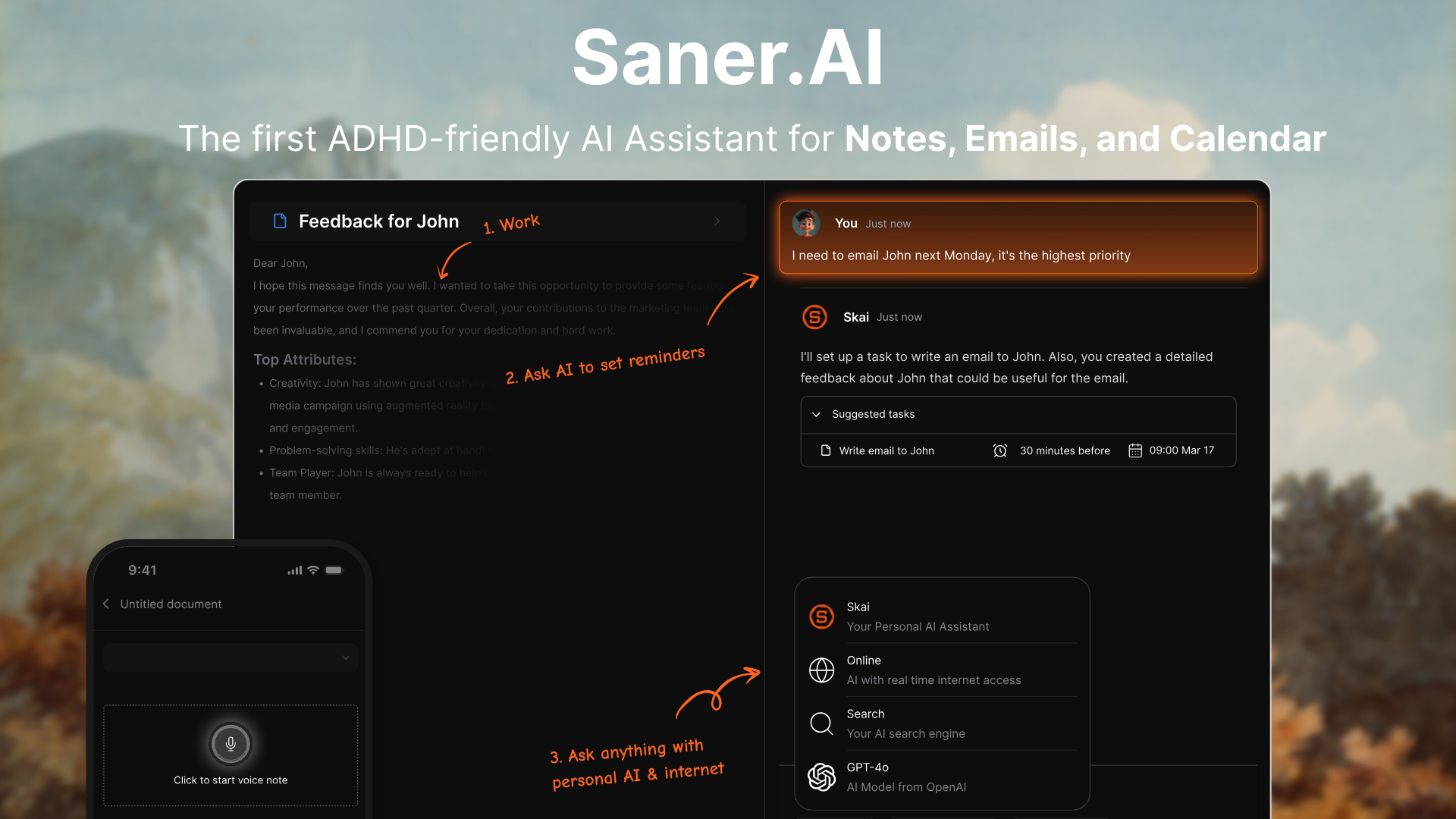
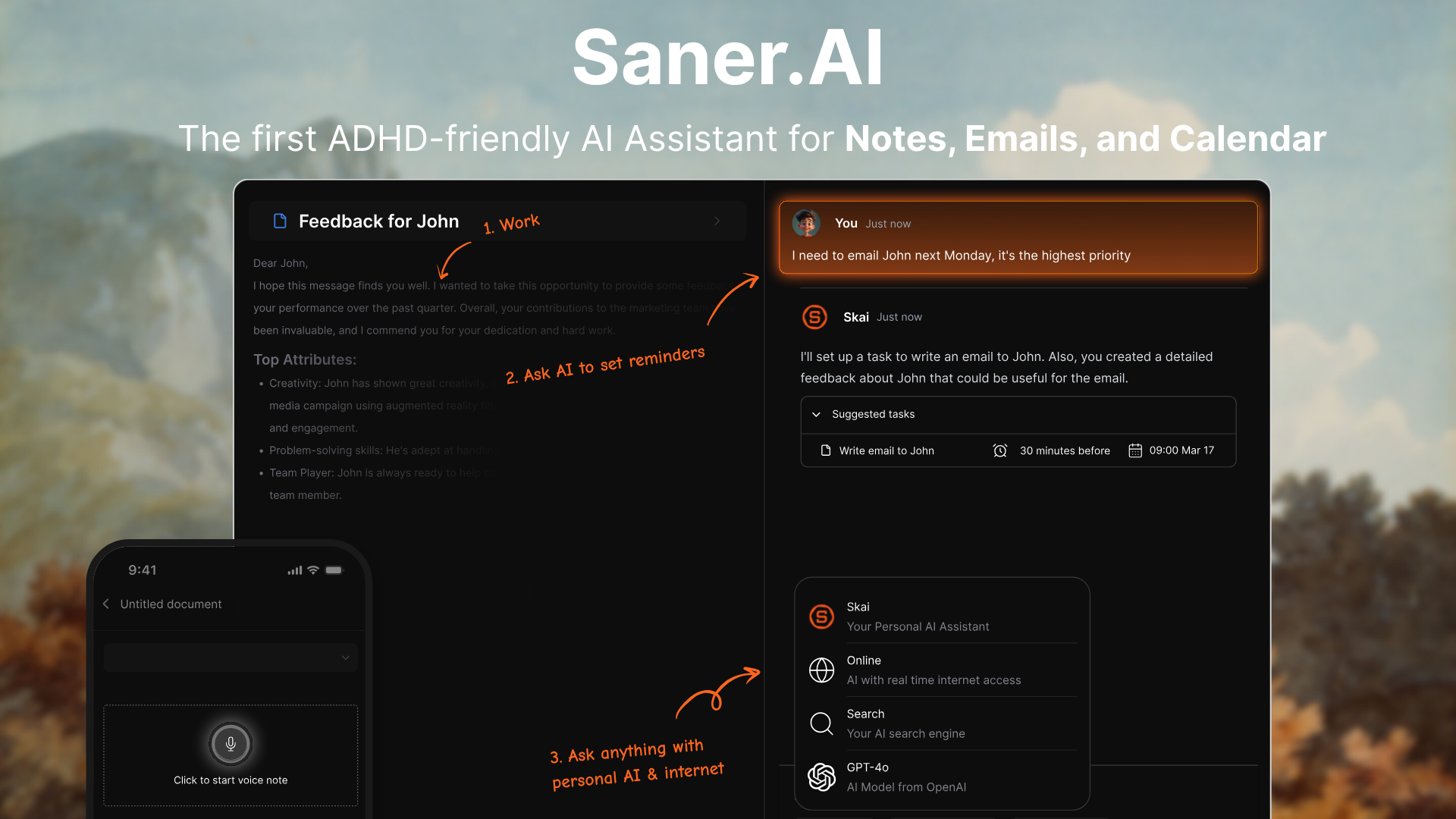
Saner.AI is an AI Assistant app designed for personal and professional productivity, offering chat-based interactions for notes, tasks, and reminders.
From the very beginning, we envisioned it as a tool inspired by the concept of Jarvis. What started as an AI note app has gradually evolved to include features like task management, email, and voice assistance. This is why it's an ideal Tana Alternative app
Pros
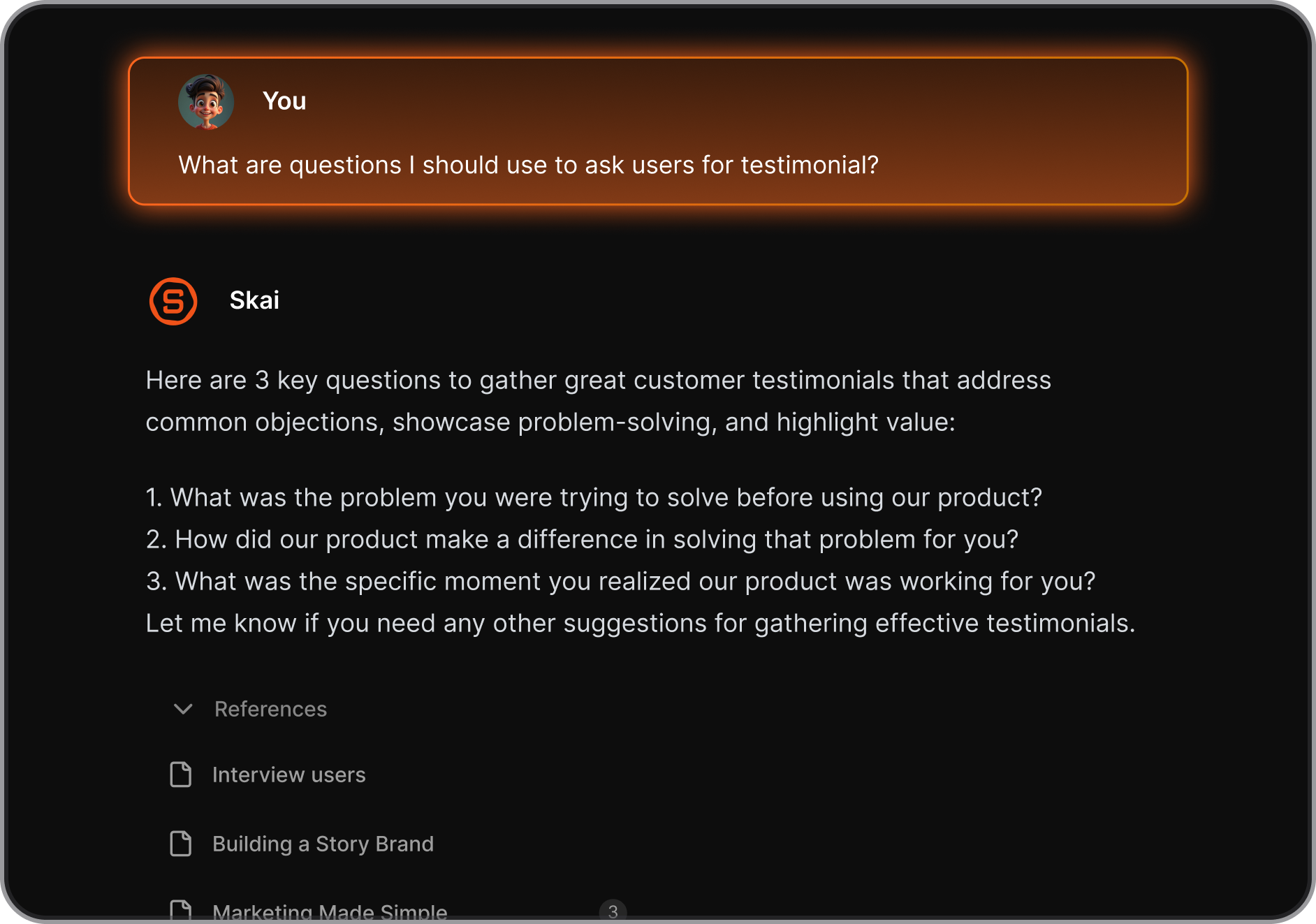
- AI will suggest relevant notes to what you are working on and even solutions for your tasks. It helps you break down tasks, suggest solutions & remind you to do the work
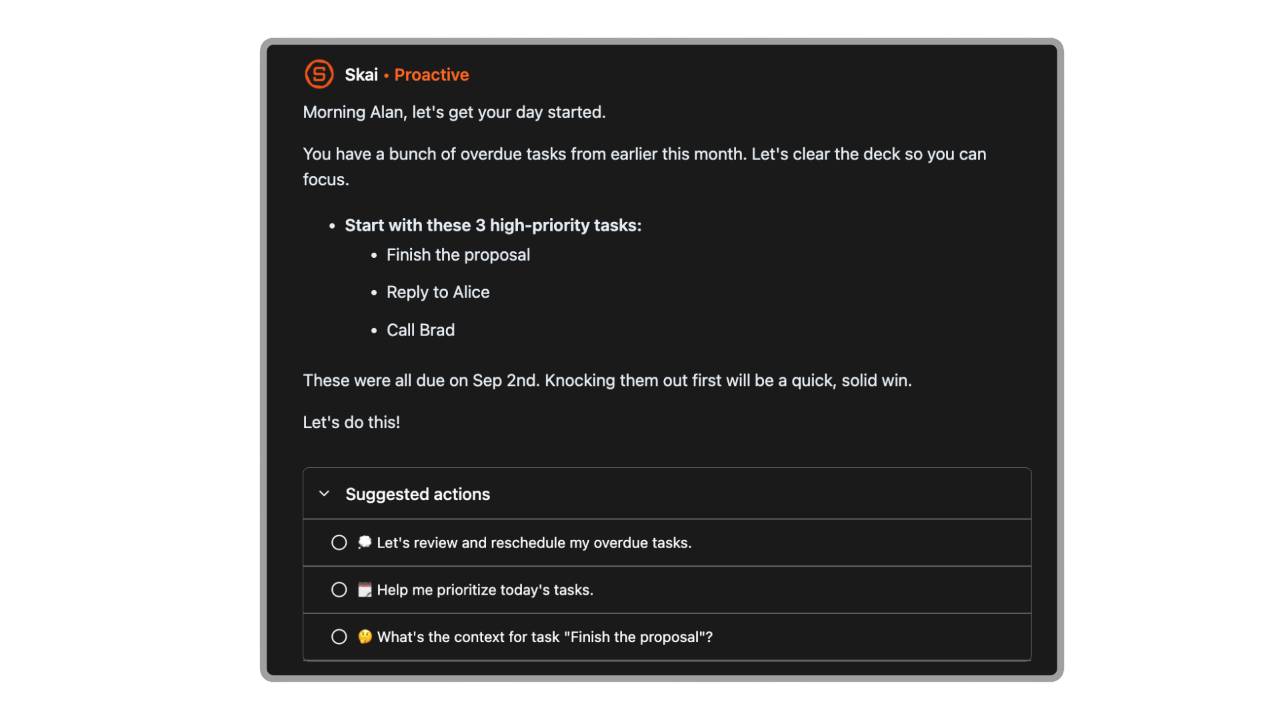
- Skai helps you recall and synthesize your notes. Just ask and get clear, direct answers from your notes
- An assistant that can fetch information online to answer your questions
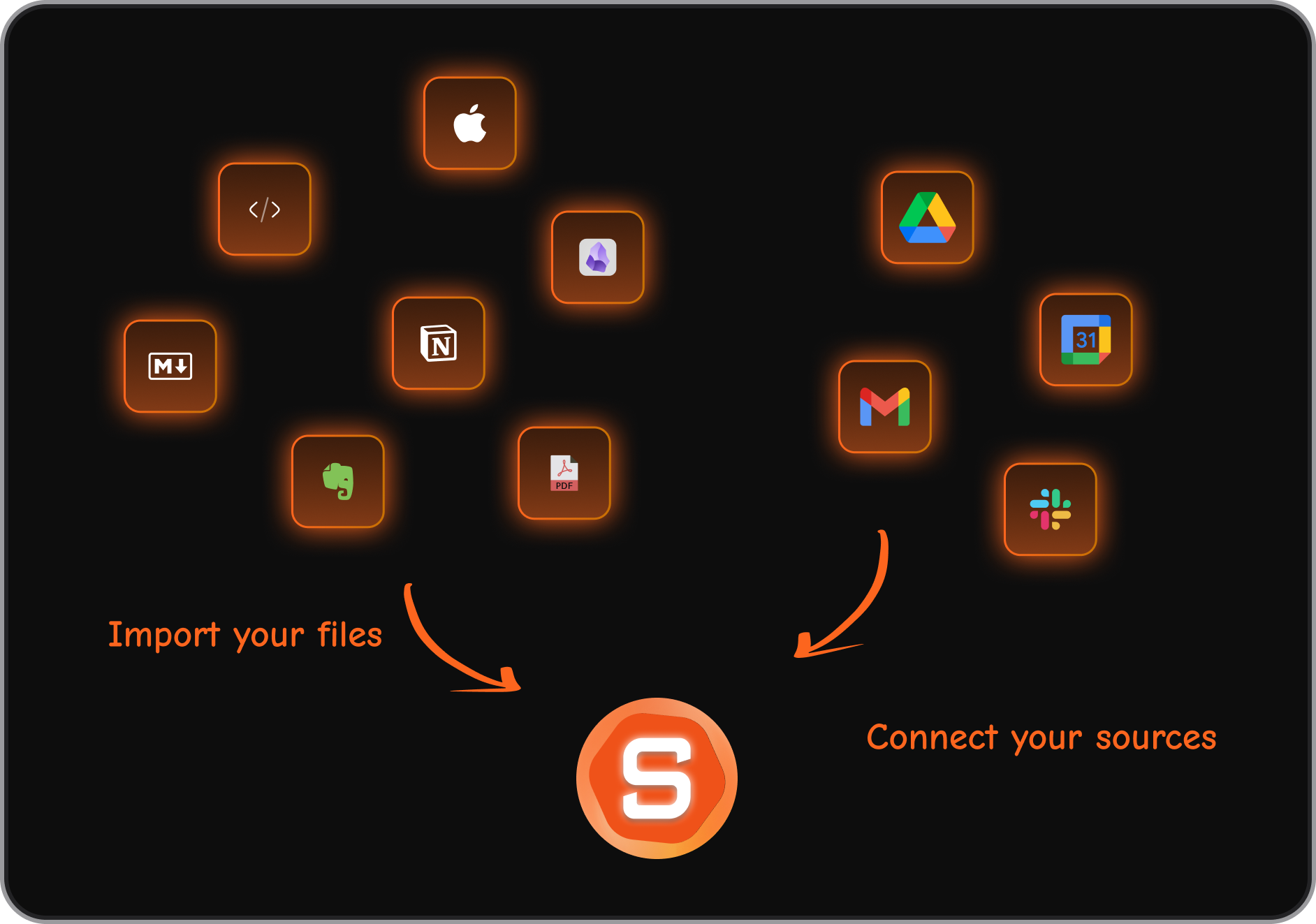
- Your tasks, information, and related knowledge are all in one place - allowing for easy search and efficient execution without context switching. (Emails, Slack, Notion, notes in Saner.AI, etc.)
- Easy to learn and use, even for beginners and ADHDers
Cons
- Built for personal task management, not ideal for large team workflow.
Pricing
- Free
- Starter: Monthly at $8/month, Annually at $6/month (with early user discount)
- Standard: Monthly at $16/month, Annually at $12/month (with early user discount)
Who is it suitable for?
Saner.AI is particularly well-suited for:
- Intensive knowledge workers who need to manage large amounts of information efficiently from multiple sources, such as entrepreneurs, researchers, managers, and content creators
- Individuals with ADHD or those who struggle with information organization and time management
- Anyone looking to streamline their workflow without spending too much time learning a new tool.
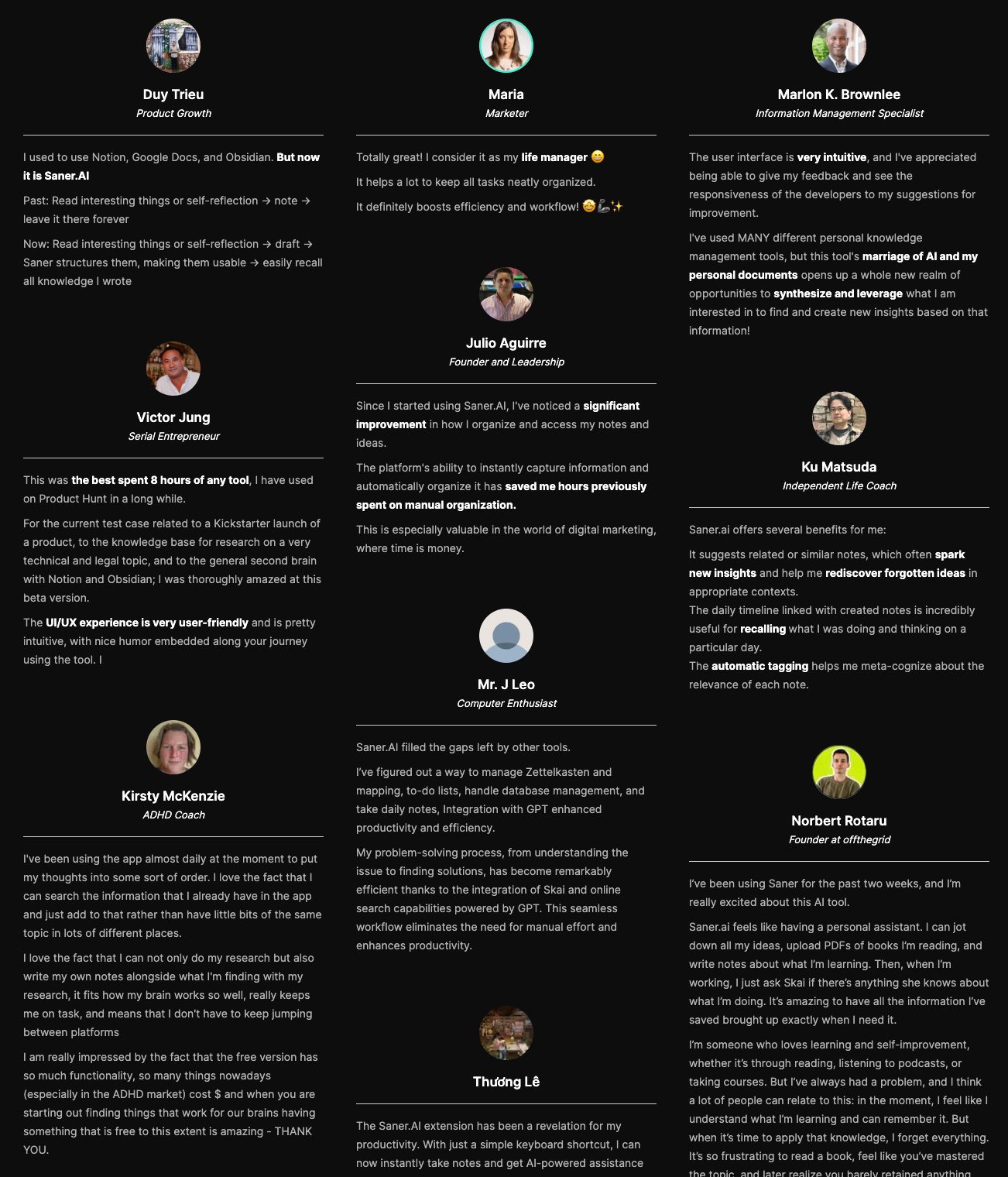
Saner.AI Reviews
How to start using it?
- Visit the Saner.AI website and sign up for an account
- Explore the app's features, starting with basic note-taking and task creation.
- Try out the integrated internet search functionality to streamline your workflow.
Stay on top of your work and life
2. Craft
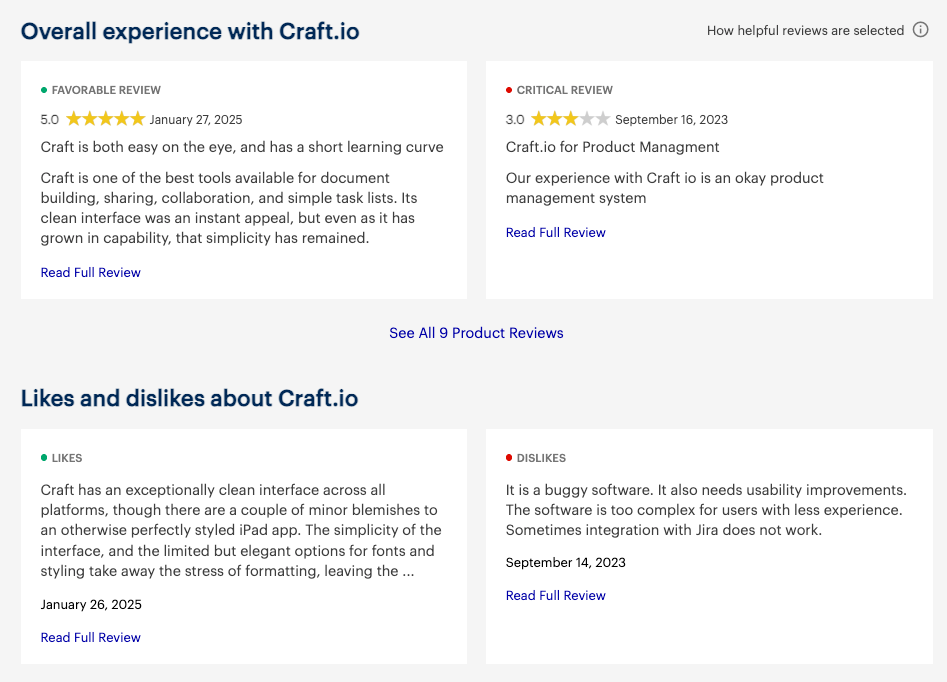
As a Tana alternative, Craft is designed for note-taking, document creation, and project organization. It combines the functionalities of a word processor, note-taking app, and personal organizer, making it an ideal alternative to Tana.
Key feature
- Create nested pages with text, images, embeds, and rich media for flexible content organization and writing.
- Available on Mac, Windows, iOS, and web, with notes accessible offline and synced across devices.
- Built-in tasks and calendar views let you capture todos and daily planning alongside docs. Craft integrates with reminders to keep work connected.
- Real-time collaboration and shareable links with advanced options (like password protection) make it easy to work with others.
Pros
- Craft's hierarchical structure allows users to create nested pages and link documents easily
- The app supports collaborative features that enable multiple users to edit documents simultaneously
- Users can embed various media types directly into their notes
Cons
- Certain functionalities depend on an internet connection; however, it does have offline capabilities.
- The free version provides only seven days of version history, which may not be sufficient for all users.
Price
- Starts at $10/month.
Suitable for:
- Writers, bloggers, and researchers looking for a flexible tool to organize ideas and create detailed documents will find Craft particularly useful.
Craft reviews (source)
How to start:
- Craft is available on iPhone, iPad, Mac, Windows, and as a web app. You can download it from the respective app stores or access it online.
3. Notion

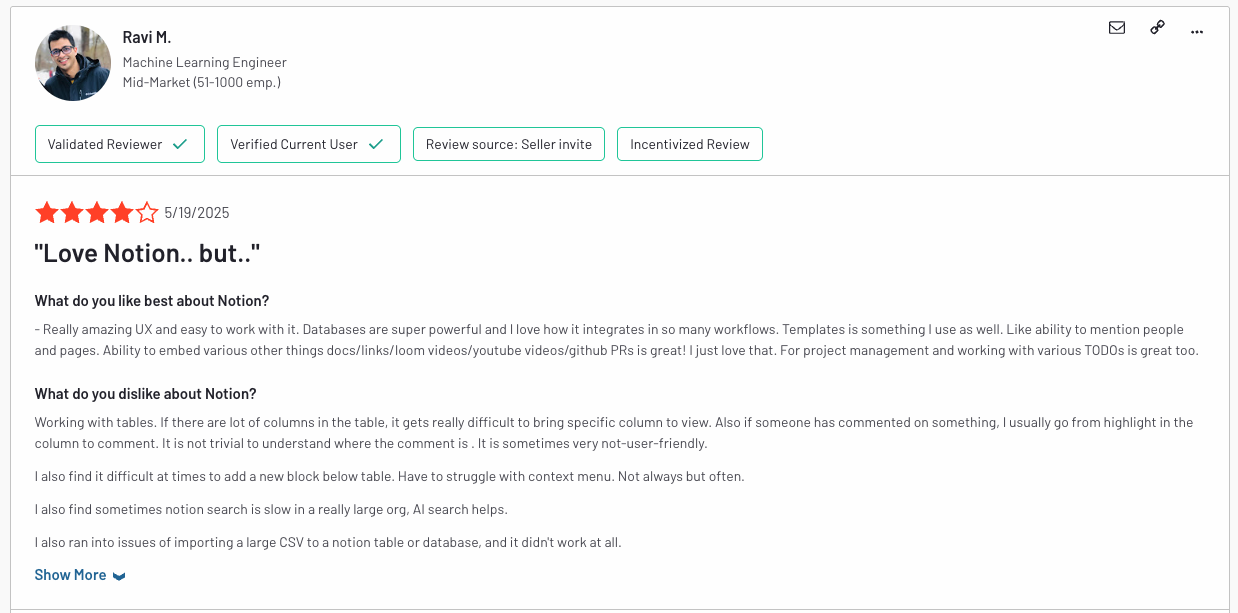
Notion is an all-in-one workspace designed to streamline various tasks such as note-taking, project management, and collaboration. Created as a knowledge management tool, it's now integrating AI features into the app.
Key features
- Everything is built from blocks that can turn into tables, boards, calendars, or lists.
- Thousands of ready-made templates for PKM, project management, content planning, and CRM reduce setup time for new users.
- Real-time editing, comments, permissions, and shared workspaces make it strong for teams and documentation.
Pros
- You can shape Notion into almost any system, from simple notes to complex dashboards.
- Permissions, collaboration, and shared knowledge bases work well at scale.
- Templates, integrations, and tutorials are easy to find, lowering the learning barrier.
- Works reliably on web, desktop, and mobile with good sync.
Cons
- It can be overwhelming for new users.
- AI can summarize pages, draft content, and answer questions from your workspace, but it doesn’t proactively plan or manage tasks.
Pricing
- Free plan available
- Premium plan starts at $8/month, with Notion AI.
Suitable for:
Notion is suitable for:
- Students: For organizing notes, assignments, and study materials.
- Freelancers and Small Businesses: Helps in managing client projects, tracking tasks, and maintaining records.
Notion Review (Source)
How to start:
- Sign up for Notion, choose a template, or start from scratch, and begin organizing your information using its flexible database and page structure.
4. Evernote
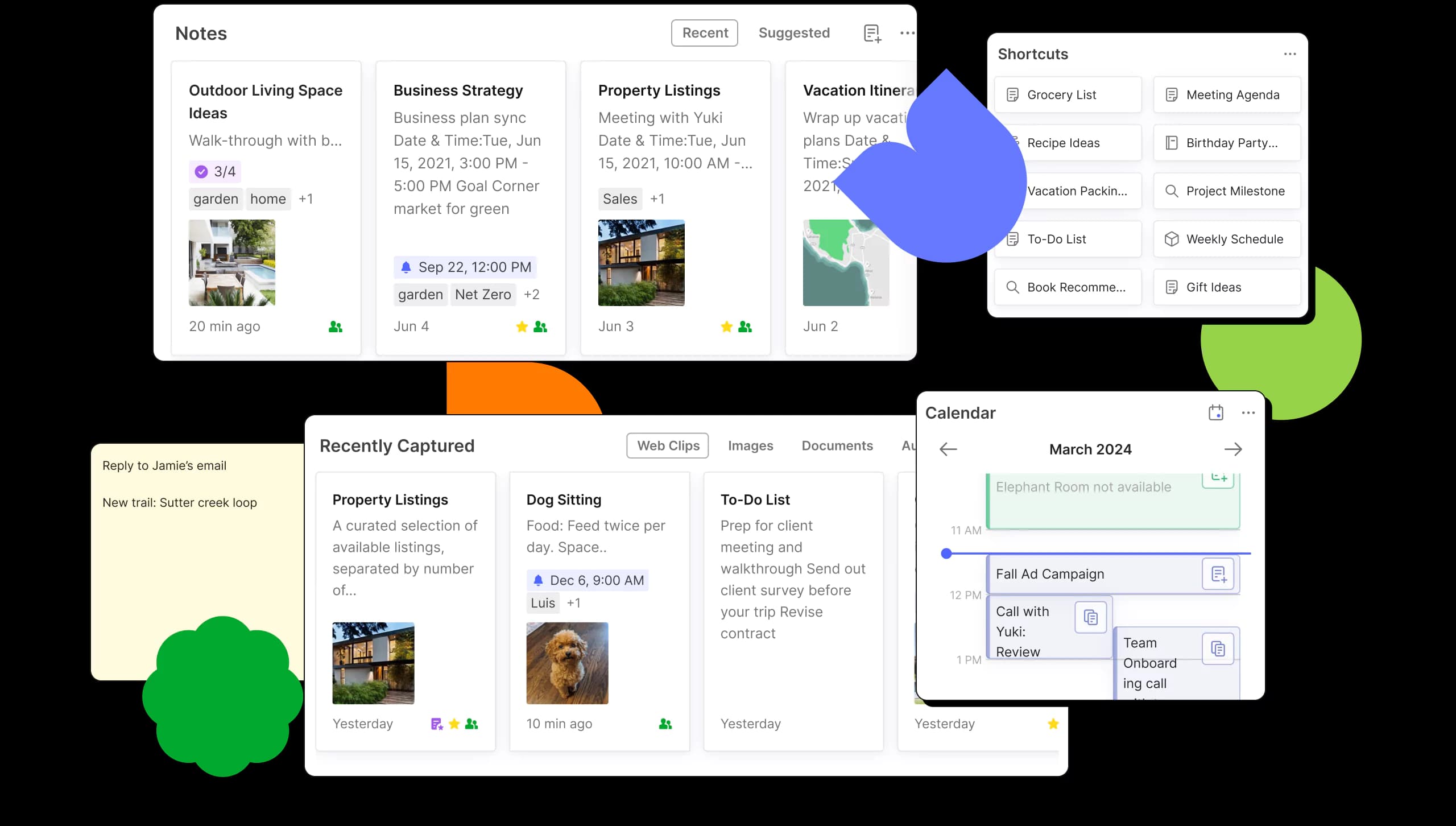
Evernote is a long-standing note-taking app built for capturing, storing, and searching information. It focuses on fast note capture from text, web clips, PDFs, images, and emails, then organizing everything into notebooks and tags.
Many users rely on Evernote as a digital filing cabinet rather than a structured thinking system. Compared to Tana, Evernote is less about schemas and relationships, and more about reliable storage and retrieval.
Key feature
- Evernote can search text inside PDFs, images, and scanned documents, which is useful for archiving receipts, documents, and research.
- Save articles, emails, screenshots, and files directly into notes with minimal friction.
- Notes are organized using notebooks and tags, offering a simple but familiar structure for large archives.
- Available on web, desktop, and mobile with consistent syncing across devices.
Pros
- A robust document-scanning feature
- Supports various media types
- AI search to locate notes by title, keywords, dates, or content type
- Web clipper for easy content-saving
Cons
- It can be overwhelming for new users
- The free plan is limited
- Limited functionality for AI-driven knowledge management.
- Some users have expressed a desire for a more modern and intuitive user interface, suggesting that it may feel outdated or not as user-friendly as it could be.
Pricing
- Free plan available
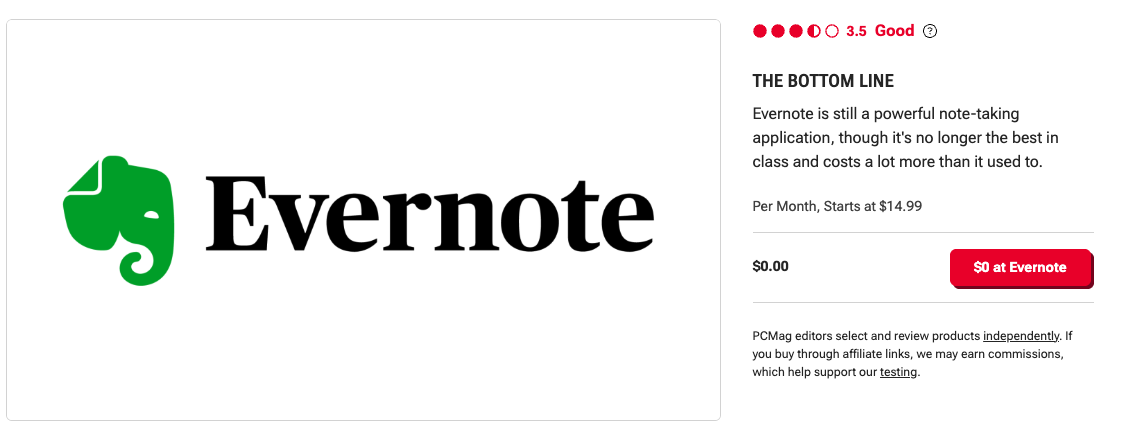
- Paid plans from $14.99/month
Suitable for:
- General users looking for a well-established note-taking app with AI enhancements
Evernote Review (Source)
How to start:
- Sign up on their website and start creating notes or importing content.
5. Anytype
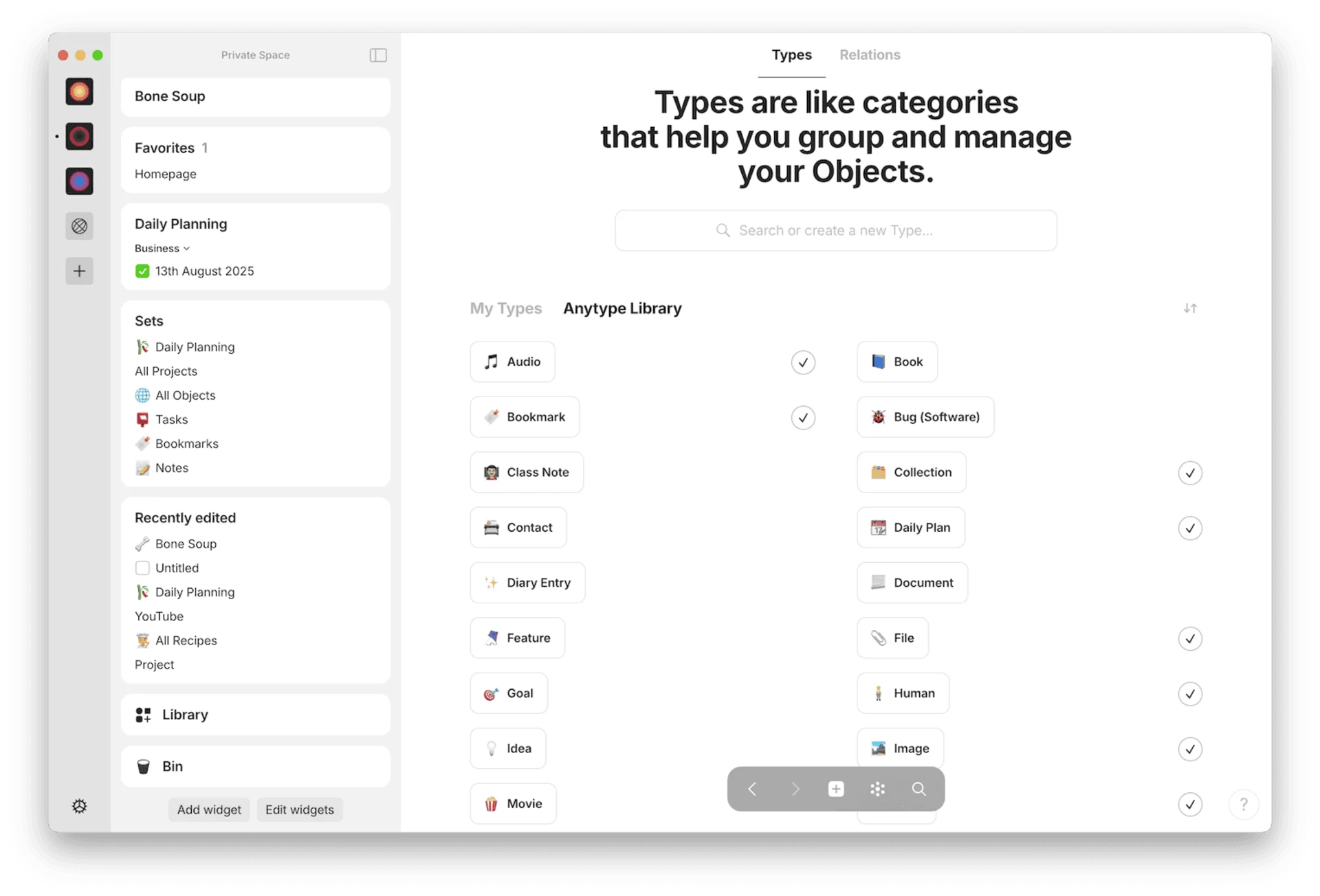
As a Tana alternative, Anytype is an innovative, open-source note-taking application that combines features from popular tools like Notion and Obsidian. It employs an object-based note-taking system, allowing users to treat each piece of information as an interconnected object rather than a linear note.
Key feature
- Evernote can search text inside PDFs, images, and scanned documents, which is useful for archiving receipts, documents, and research.
- Save articles, emails, screenshots, and files directly into notes with minimal friction.
- Notes are organized using notebooks and tags, offering a simple but familiar structure for large archives.
- Available on web, desktop, and mobile with consistent syncing across devices.
Pros
- Allows for structured note-taking by categorizing information as distinct objects.
- Local storage and encryption ensure that users have complete control over their data.
- Available on various operating systems and devices, ensuring seamless access.
Cons
- The high degree of customization may be overwhelming for new users
- The free version restricts the number of shared spaces and has storage limitations
Price
- Free
- Start from $99/year
Suitable for:
- Anytype is ideal for knowledge workers, researchers, and creative professionals who require a flexible and secure environment to manage complex information structures
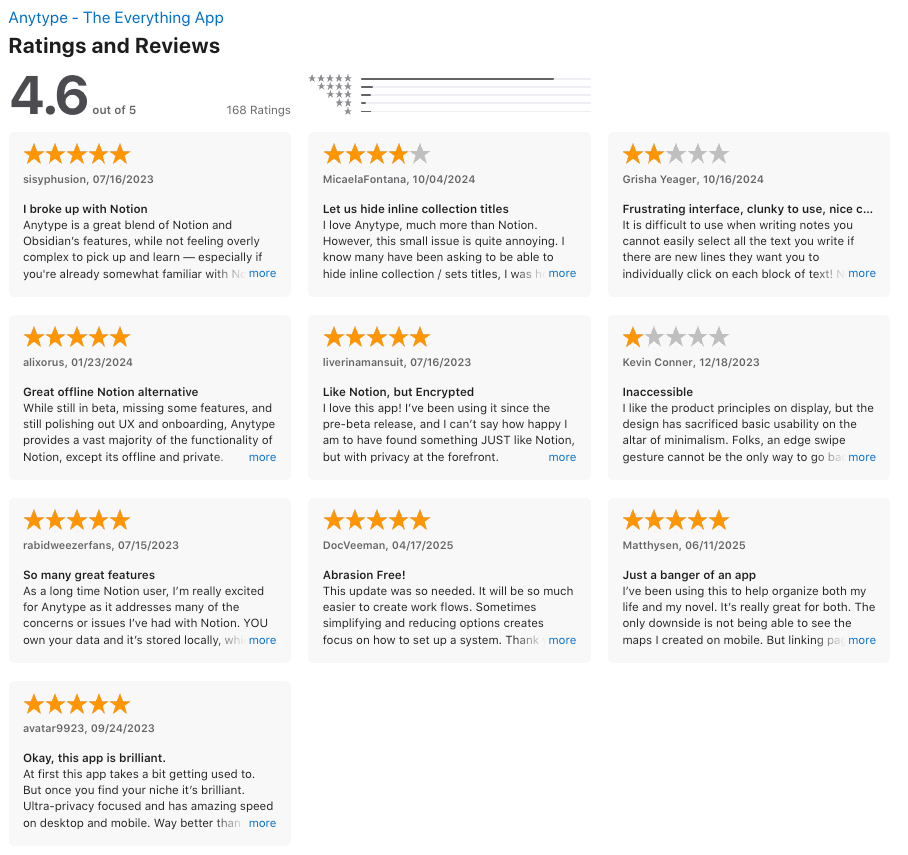
Anytype reviews (source)
How to start:
- Download the Application: Install it on your preferred platform (macOS, Windows, Linux, iOS, or Android).
- Set up your first workspace where you can organize your notes and objects.
6. Reflect
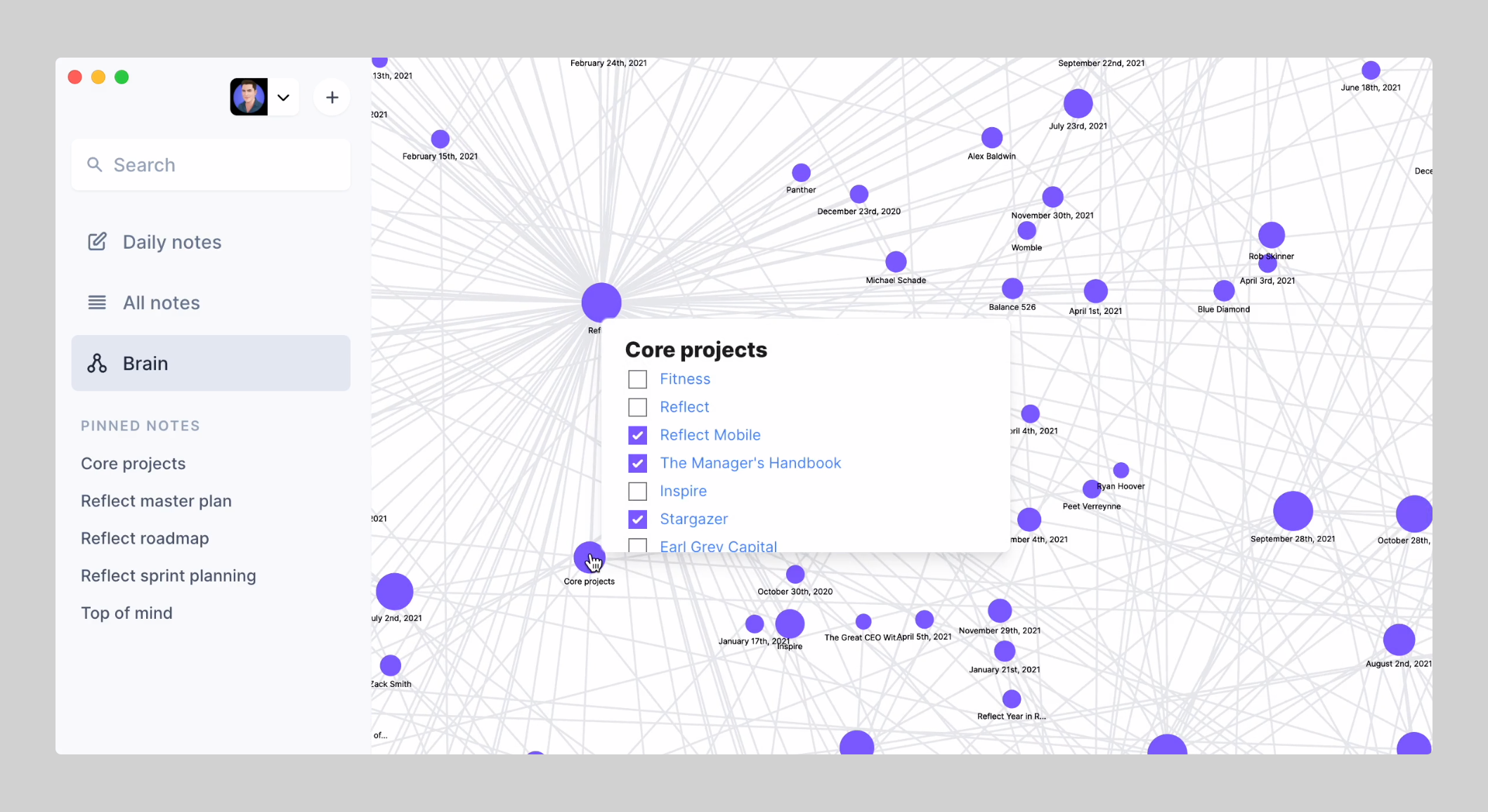
Reflect is a personal note-taking and thinking app built around daily notes and backlinks. It’s designed to help you capture ideas, meetings, and reflections quickly, then connect them through links over time.
The experience is minimal and writing-first, with fewer knobs to configure than tools like Tana. Reflect focuses more on thinking clarity and journaling than on complex tasks or data systems.
Key feature
- Notes automatically link to each other, helping ideas resurface and connect without manual structuring.
- Each day has a default note, making it easy to log thoughts, meetings, and reflections consistently.
- The editor is lightweight and distraction-free, optimized for writing rather than dashboards.
- Built-in AI can summarize notes, rewrite content, and answer questions from your knowledge base.
Pros
- You can start writing immediately without setting up schemas, tags, or databases.
- Daily notes plus backlinks work well for reflection and idea development.
- Minimal design reduces cognitive load compared to heavier tools like Notion.
- AI works directly on your notes, not as a separate chatbot.
Cons
- Offers fewer customization options compared to more complex platforms.
- Task features are present but may lack advanced functionalities.
Pricing
- 10$/month
Suitable for:
- Users seeking a straightforward, AI-enhanced note-taking app that emphasizes simplicity and security.
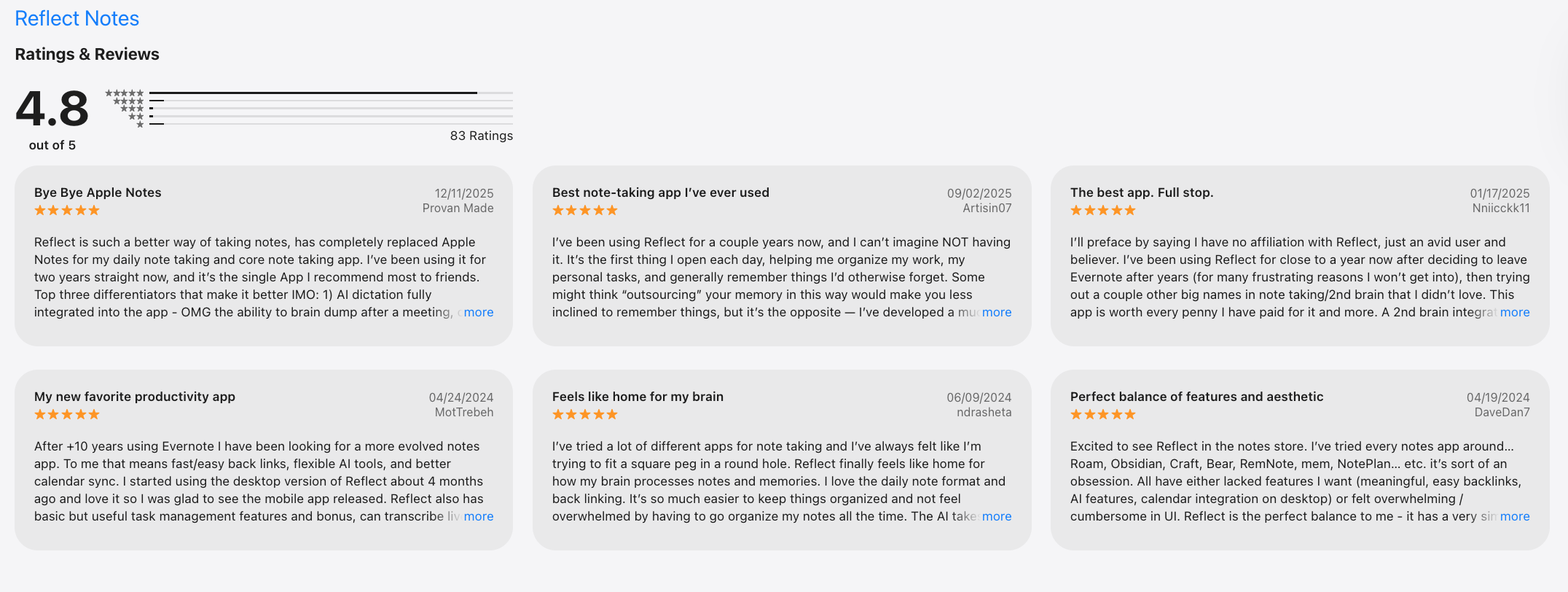
Reflect reviews (source)
How to start:
- Sign up on Reflect's website and begin your 14-day trial to explore its features.
7. Obsidian
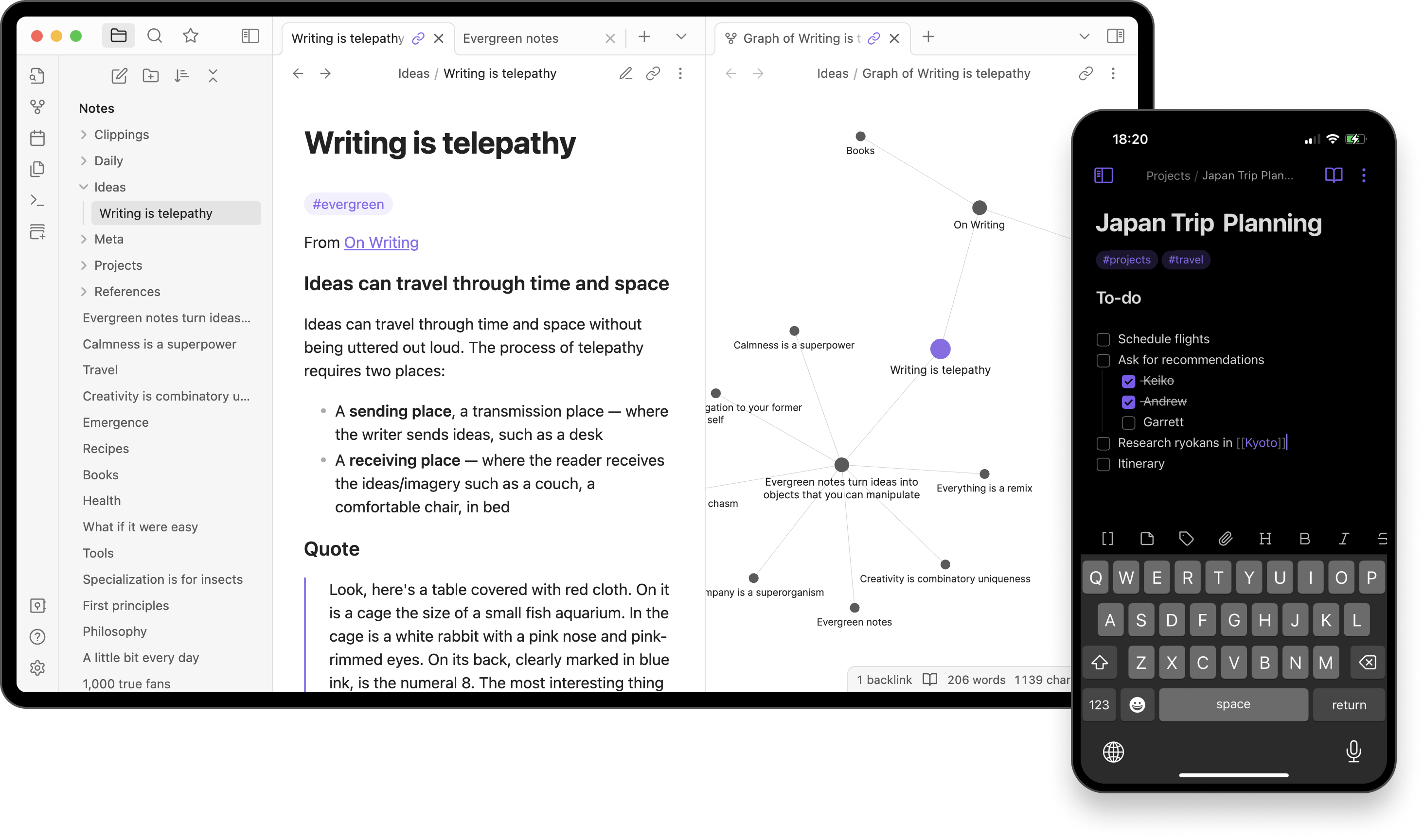
Obsidian is a local-first, markdown-based note-taking app built around links and personal knowledge graphs. It stores all notes as plain text files on your device, giving you full control over your data.
Obsidian is commonly used for personal knowledge management, research, and long-term thinking systems. Compared to Tana, Obsidian is more manual and file-based, with flexibility coming from plugins rather than built-in schemas.
Key features
- Notes are saved as plain Markdown files on your device, making them portable and future-proof.
- Automatic backlinks and a visual graph help you explore relationships between notes over time.
- Hundreds of community plugins add features like tasks, calendars, spaced repetition, and more.
- Works fully offline with no dependency on cloud services unless you choose to sync.
Pros
- Local storage of notes
- Highly customizable
- Bidirectional links and a graph view for visualizing connections.
Cons
- Steep learning curve due to its extensive features and customization options
- Lacks built-in AI tools (third-party plugins may be available).
Price
- Free for personal use, Premium plan starts at $50/year
Suitable for:
- Obsidian is ideal for users who prefer a high degree of control over their note-taking environment, value data privacy through local storage, and are comfortable investing time to customize their setup
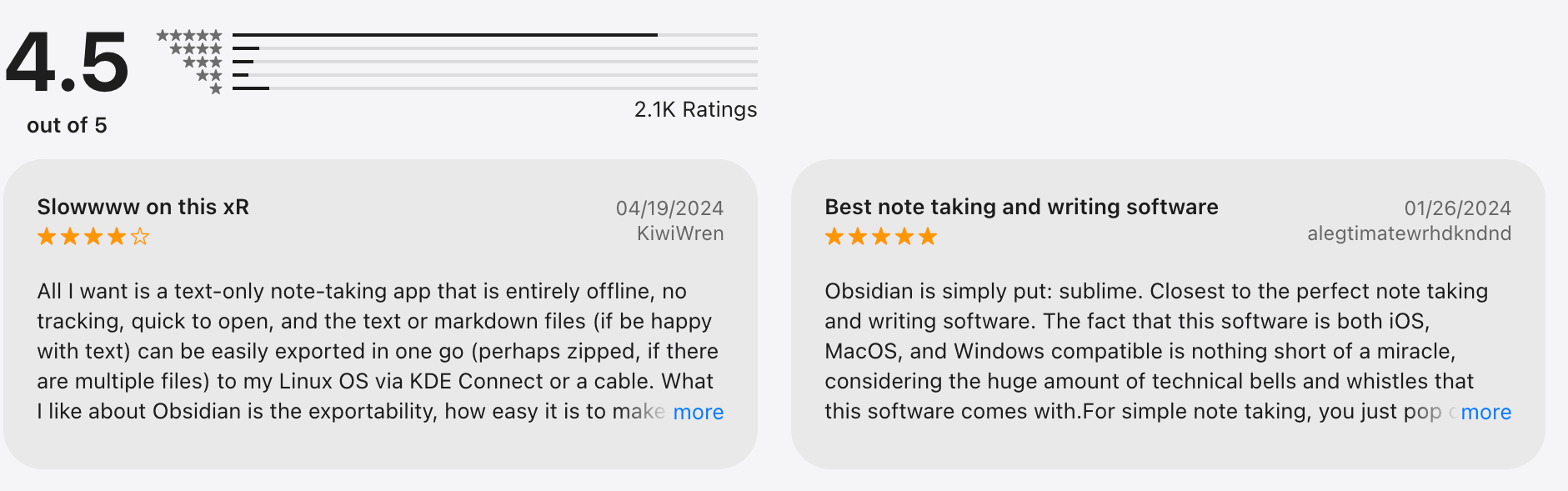
Obsidian reviews (source)
How to start:
- Download and install from their website, and begin creating markdown notes and linking them to build a knowledge graph.
8. Capacities
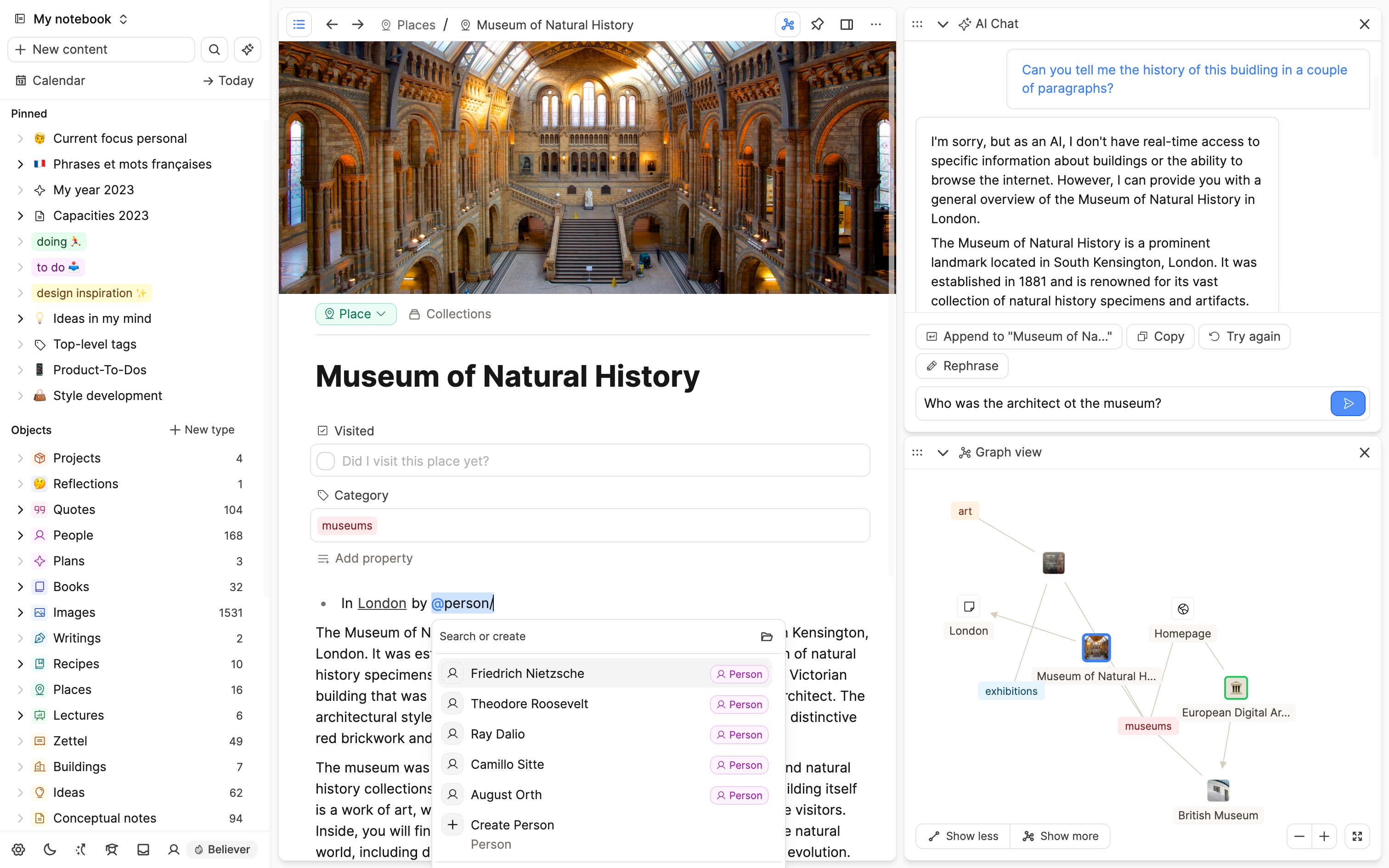
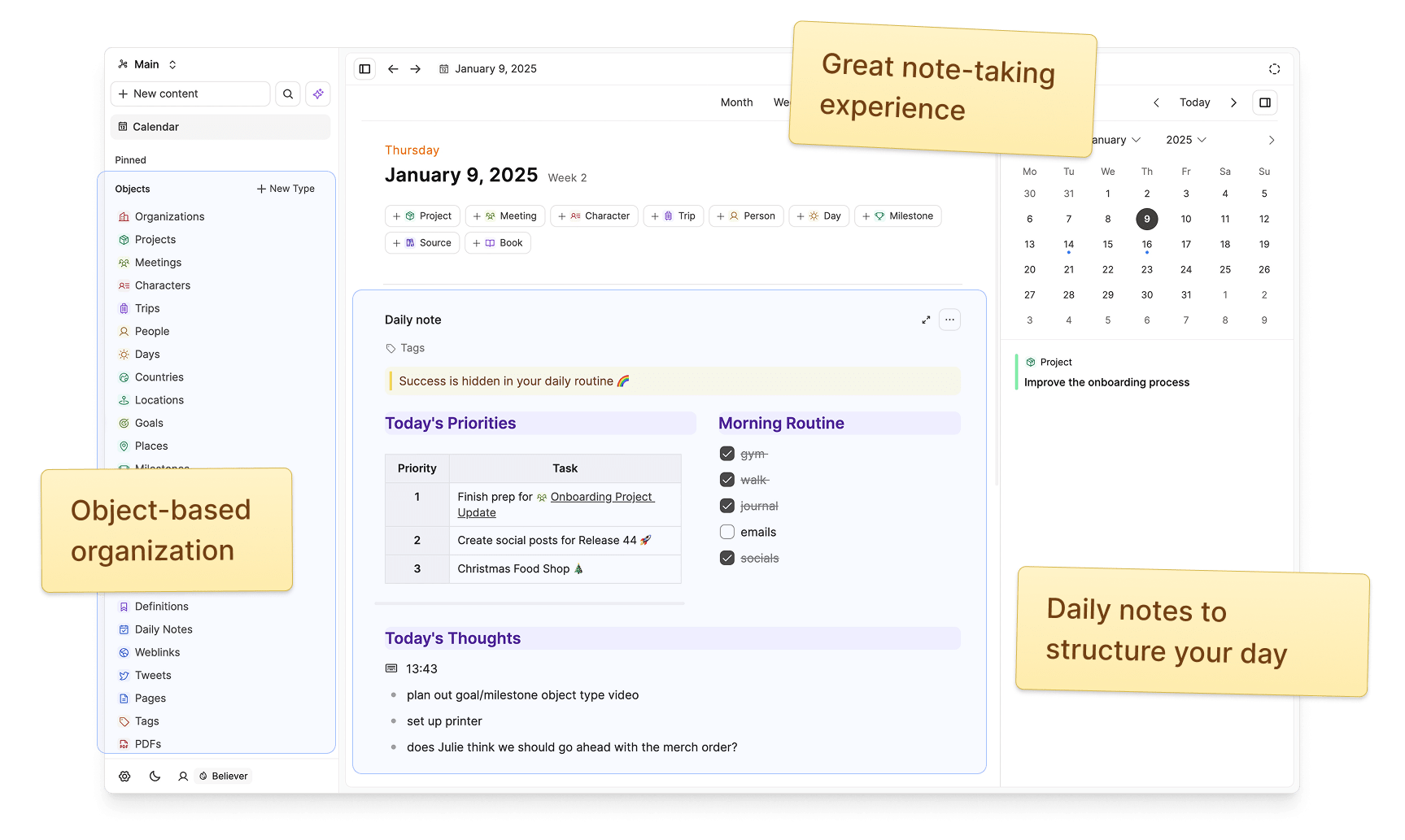
Capacities is a personal knowledge management app built around objects, not files. Instead of treating notes as standalone pages, it encourages you to think in terms of people, projects, books, meetings, and ideas.
Each object has properties and links to other objects, helping you build a structured knowledge base over time. Compared to Tana, Capacities offers similar object-based thinking but with a more visual and opinionated interface.
Key features
- Notes live inside object types (like People, Meetings, Projects), making structure more explicit than folders or tags.
- Relationships between objects are created naturally as you write, helping knowledge surface later.
- Combine free-form daily notes with structured objects for both thinking and organization.
- The interface is visually polished and easier to grasp than many graph-based tools.
Pros
- Capacities allows users to create notes as objects, which can be linked together, making it easier to visualize relationships between ideas.
- Multimedia Support: Users can embed various content types, including text, images, audio, and video, enhancing the richness of their notes.
Cons
- The unique organizational method may require time for new users to adapt, as it deviates from conventional note-taking paradigms.
- While the app includes an AI assistant, its functionality is limited compared to competitors like Notion, which can utilize all stored notes for AI interactions.
- The extensive onboarding presentation may overwhelm some users before they even start using the app.
Price
- Free
- Starts at 11.99$/month
Suitable for:
- Capacities is ideal for individuals who seek a more structured approach to note-taking and knowledge management.
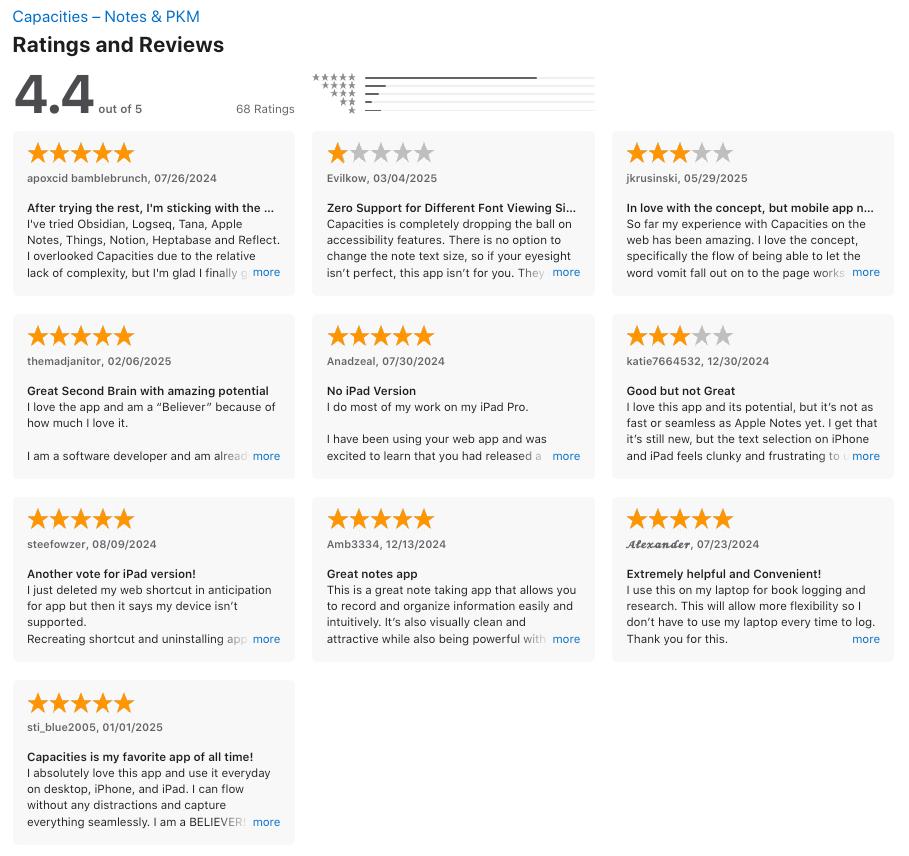
Capacities Reviews (source)
How to start:
- Sign up on Capacities website and explore its unique approach to organizing information.
9. Workflowy
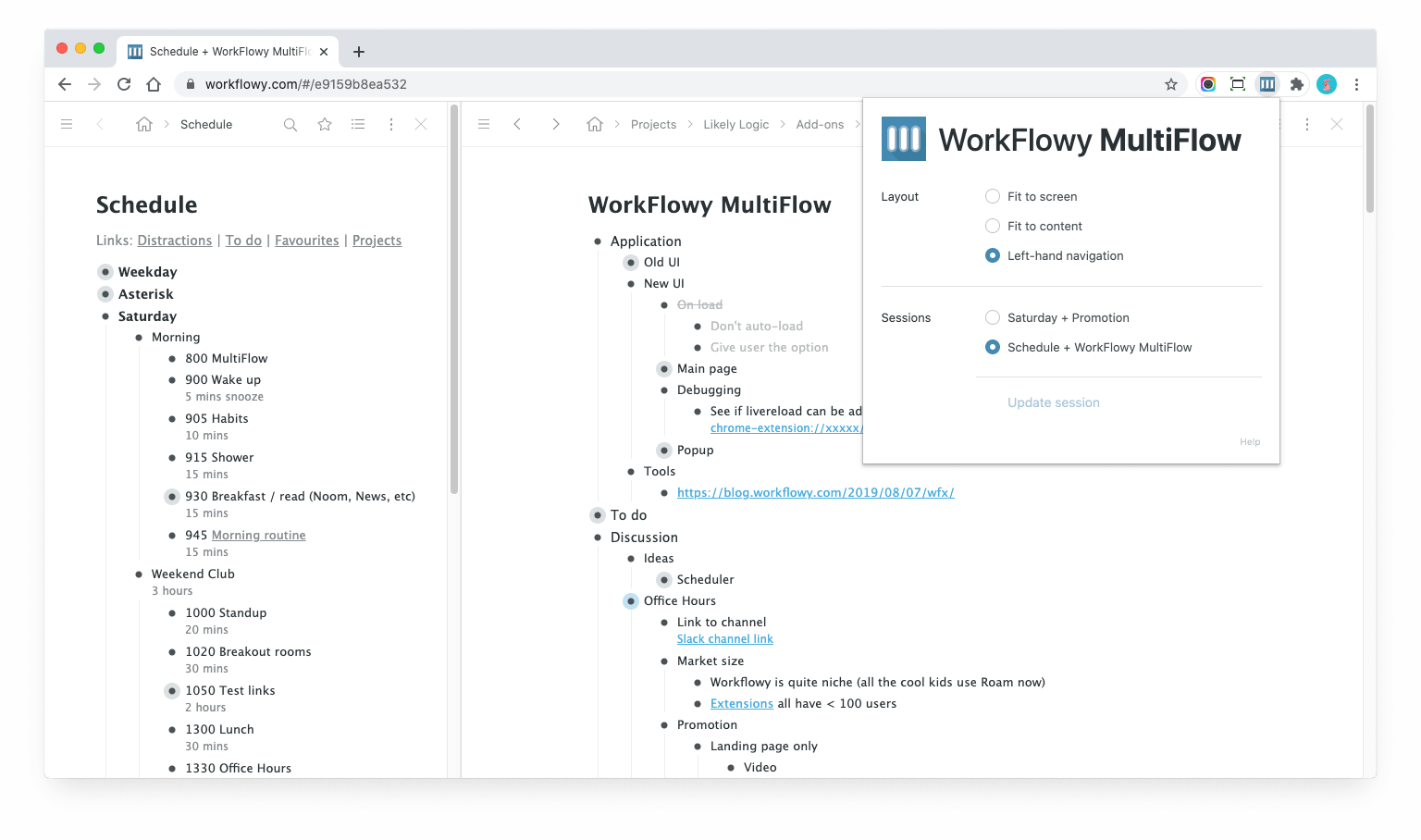
Workflowy is a versatile Tana alternative; its web-based outliner is designed to help users organize their thoughts, tasks, and projects through a simple, nested list format. It allows for infinite nesting of lists, enabling users to break down complex projects into manageable components.
Key features
- Create unlimited levels of bullets to break down ideas, projects, and tasks clearly.
- Click into any bullet to focus, helping you think one level at a time without clutter.
- Use hashtags to group and search items across your entire outline.
- Works on web, desktop, and mobile with near-instant syncing.
Pros
- The user-friendly interface allows for quick note-taking and organization, making it accessible even for those unfamiliar with productivity tools.
- Users can create unlimited sub-lists, which is ideal for detailed project management and helps maintain a clear structure.
Cons
- While its simplicity is beneficial, it may not offer the advanced functionalities found in other task management tools.
- Workflowy does not integrate with many third-party applications
- No AI assistant to manage the notes
Price
- Premium plan starts at $8.99/month
Suitable for:
- Students and educators looking for an efficient note-taking system.
- Professionals managing projects or tasks prefer a streamlined approach without clutter.
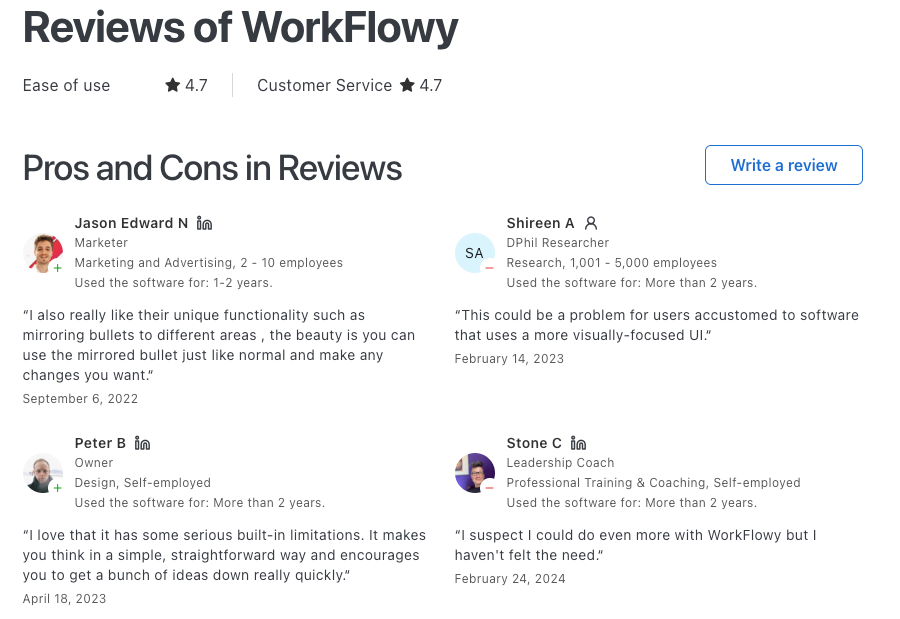
Workflowy reviews (source)
How to start:
- Visit the Workflowy website and create an account. You can start with the free version or opt for a Pro subscription for additional features.
10. ClickUp

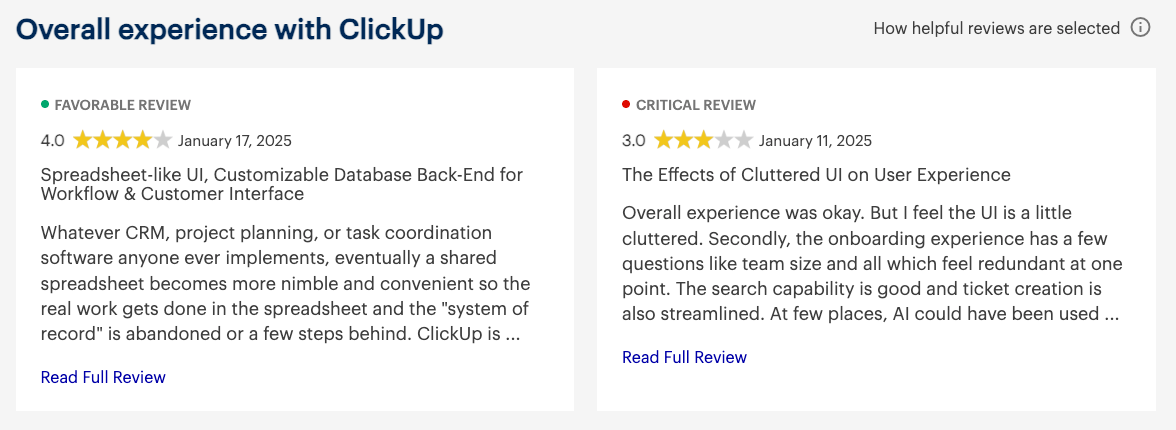
With an almost overwhelming array of features and customization options, ClickUp is designed for teams and individuals who want total control over their workflow. You can use it as an AI note app if you want to.
Key features
- Tasks support statuses, priorities, dependencies, assignees, and time tracking, making it suitable for complex projects.
- Switch between list, board, calendar, Gantt, and timeline views to match how different teams plan work.
- Built-in docs and customizable dashboards connect planning with execution and reporting.
- Automations reduce manual updates, and integrations connect ClickUp with common work tools.
Pros:
- Highly customizable with numerous features
- Summarize big blocks of text, meeting transcripts, and Task comment threads
- Beat writer’s block by creating content based on specific prompts
Cons:
- Steeper learning curve due to extensive features
- Can feel overwhelming for new users
Pricing:
- Free plan available
- Unlimited Plan: $10/month
- Business plan: $19/month
Suitable for:
- Teams looking for an AI note app within a project management solution
ClickUp reviews (source)
Getting Started:
- Register on ClickUp’s website or download the mobile app to start organizing tasks.
Conclusion: Choose the Right Tana Alternatives in 2026 💡
There’s no single best Tana alternative in 2026 - because people don’t think, plan, or work the same way.
- Some users love flexible, beautifully designed tools like Craft or Reflect for writing and reflection.
- Others prefer powerful, customizable knowledge systems such as Obsidian, Anytype, Workflowy, or Capacities to build a long-term personal knowledge base.
- Teams and structured planners often lean toward Notion or ClickUp, while Evernote still appeals to those who want fast capture and familiar workflows.
But if you liked Tana for its structured thinking, and still felt overwhelmed by the complexity, Saner.AI stands out as a new kind of Tana alternative.
Instead of asking you to design the perfect system upfront, Saner.AI works with your natural thinking. You can brain-dump freely, write messy notes, or talk through ideas, and the AI turns them into tasks, plans, and next steps.
It proactively helps plan your day, breaks things down when you feel stuck, and keeps context across notes, tasks, and priorities. For many users, that means less setup, less mental load, and more momentum.
Our recommendation
✨ Try 2–3 Tana alternative apps from different categories (AI assistant, PKM tool, outliner)
🧪 Test them in real work - planning, writing, meetings, content, life admin
🧠 Pay attention to energy saved, not just features or speed
If a tool helps you feel more focused, less scattered, and more in control. That’s your best Tana alternative.
👇 Ready to start?
Begin with Saner.AI if you want a calm, context-aware AI assistant that adapts to how your brain actually works, not the other way around.
Stay on top of your work and life
Tana Alternative: FAQ for 2026
1. What is Tana, and why look for an alternative?
Tana is an AI workspace that helps you organize notes and tasks using a flexible, networked structure. It combines outlining, tagging, and backlinks to build a second brain - but it comes with a learning curve.
You might be searching for a Tana alternative if:
- You find Tana’s setup overwhelming or too technical
- You prefer something simpler and more intuitive
- You want more automation, reminders, or calendar integration built in
Popular alternatives include Saner.AI, Notion, each offering a different take on AI-enhanced productivity.
2. What are the best alternatives to Tana?
Saner.AI, Notion, Here are the top tools people choose as Tana alternatives:
| Tool | Best For | Key Advantage |
|---|---|---|
| Saner.AI | ADHD-friendly productivity & task planning | Search notes with AI, chat to manage tasks, reminds you |
| Notion AI | Structured wikis & team documentation | Flexible databases, great for teams |
| Capacities | Power users who love object-based thinking | Flexible database, objects with graph view |
3. Why choose Saner.AI as a Tana alternative?
If you want AI that does the organizing for you, Saner.AI is built for action, not just structure.
Unlike Tana, which asks you to tag and build hierarchies, Saner lets you:
- Brain-dump notes in plain language - AI extracts the tasks
- Get smart reminders and automatic daily plans
- Search across notes, emails, and calendar with natural language
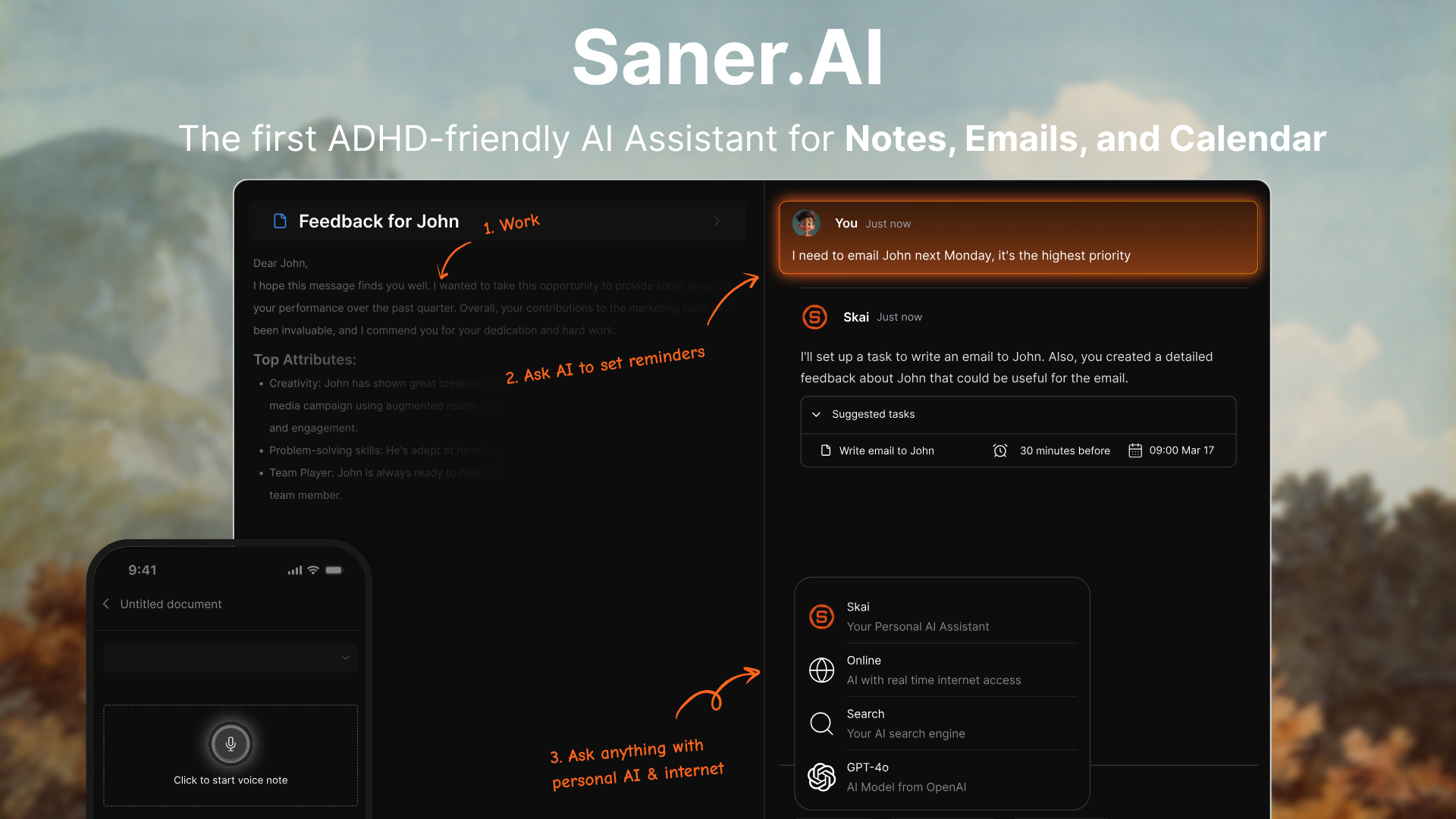
It's a calmer, cleaner experience - perfect if you're overwhelmed by traditional productivity tools.
4. Is there a simpler Tana alternative for ADHD brains?
Yes - Saner.AI is designed by people with ADHD, for people with ADHD. Instead of making you sort your thoughts, it:
- Turns messy rants into organized tasks
- Sends proactive reminders, not just passive notifications
- Keeps everything in one place - notes, to-dos, calendar
Many Tana users love the structure, but if it’s slowing you down, Saner might be the better fit.
5. Is Saner.AI free?
Yes. Saner.AI offers a free plan with:
- AI-powered reminders
- Calendar sync
- Smart search across your notes and tasks
It’s a great way to try a more intuitive Tana alternative without commitment.
6. What if I like Tana’s graph view?
The Obsidian and Reflect are good options for you
7. Can I still organize notes in Saner?
Absolutely - Saner uses AI auto-tagging and smart folders. You don’t have to label everything manually. Notes get categorized and grouped based on context and content.
If you’re tired of setting up systems from scratch (as you often do in Tana), this is a huge relief.
8. What makes Saner different from other Tana alternatives?
Unlike most tools, Saner is:
- Proactive – reminds you at the right moment
- Context-aware – understands your tasks, meetings, and notes together
- Low-effort – no setup, no learning curve
It feels more like a helpful assistant than a blank workspace.
9. Who is Saner.AI best for?
Saner.AI, as a Tana Alternative, is ideal for:
- Entrepreneurs juggling messy ideas
- Managers handle meetings, follow-ups, and notes
- ADHDers who need structure without friction
- Anyone looking for a lightweight yet powerful tool
10. What’s the best way to test a Tana alternative?
Start with your real chaos - don’t test in a sandbox.
Open your app, for example, Saner. AI and say something like:
“I need to prepare a report, call mom, and follow up on that hiring email—can you help me sort this?”
Let the AI show you what it can do. No setup, no folders - just clarity.
Tired of Tana?
[Last updated in 2026]