ADHD and Caffeine: How Does Caffeine Affect ADHD?

Caffeine can feel helpful for some adults with ADHD, especially for short-term focus and alertness, but it is not a treatment for ADHD.
Because ADHD brains regulate dopamine and norepinephrine differently, caffeine (a mild stimulant) can feel calming or focusing for some people, while making others anxious, tired, or wired-but-unproductive. Understanding why this happens, and where caffeine helps vs. harms, is key to using it wisely.
This guide answers the core question immediately, then goes deeper: how caffeine works in the ADHD brain, what symptoms it may help (and won’t), how it compares to ADHD medication, risks to watch for, and practical guidelines if you choose to use it at all.
1. What Is ADHD and Why Stimulants Matter?

ADHD (Attention-Deficit/Hyperactivity Disorder) is a neurodevelopmental condition involving differences in how the brain regulates attention, motivation, and self-control. At a neurochemical level, ADHD is commonly associated with lower or less efficiently regulated dopamine and norepinephrine in key brain networks.
ADHD rates have been increasing in recent years. While the exact reasons for the increase in ADHD diagnoses are not entirely clear, some experts suggest that it may be due to a combination of factors like increased awareness, changes in diagnostic criteria, and environmental/lifestyle influences.
Why stimulants are commonly used
- Dopamine supports motivation, reward, and sustained attention.
- Norepinephrine supports alertness and task engagement.
- Stimulant medications increase the availability of these neurotransmitters in targeted ways, improving signal clarity in the brain.
Where caffeine fits
- Caffeine is also a stimulant, but a milder, less precise one.
- It does not target ADHD pathways specifically.
- Its effects are shorter, more variable, and more dependent on timing, sleep, and tolerance.
Caffeine can nudge alertness upward, but it doesn’t correct the underlying regulation issues in ADHD.
2. How Caffeine Works in the Brain (ADHD vs. Non-ADHD)
When it comes to understanding how caffeine affects people with ADHD, it's a bit like each person is working with their own unique recipe. Just like in cooking, where a pinch of salt can enhance flavors for some dishes but spoil others, caffeine can have different effects on people with ADHD.
Even in animals, caffeine has shown some good results, like helping with attention issues and improving learning and memory.
Caffeine’s primary mechanism is blocking adenosine.
In simple terms:
- Adenosine builds up during the day and makes you feel sleepy.
- Caffeine blocks adenosine receptors → you feel more awake.
- This indirectly increases dopamine signaling in certain areas.
Why do ADHD brains respond differently?
People with ADHD often start the day with:
- Lower baseline alertness
- Slower dopamine signaling
- Difficulty “activating” focus on demand
So caffeine may:
- Raise alertness closer to a functional baseline
- Reduce mental fog
- Feel calming rather than stimulating
Common ADHD-specific reactions to caffeine
- ☕ Calm focus instead of jitters
- 😴 Sleepiness instead of energy (paradoxical effect)
- ⚡ Brief productivity followed by a crash
- 🔁 Needing more over time to feel anything
However, it's important to remember that not all the effects of caffeine, especially in the long run, are known yet. But the research so far suggests that it might help improve attention, memory, and motivation for those with ADHD.
3. Does Caffeine Help ADHD Symptoms?
A. Focus and Attention
Sometimes helps, modestly
- Can improve alertness and task initiation
- Effects are short-lived (1–3 hours for most adults)
- Less effective for sustained, deep focus
B. Energy and Motivation
Often helps temporarily
- Especially useful for low-energy mornings
- Can reduce task resistance
- Motivation boost is inconsistent
C. Hyperactivity
Mixed effects
- Some feel calmer
- Others become restless or physically tense
- Depends heavily on dose and anxiety sensitivity
D. Executive Dysfunction
Mostly does NOT help
- Planning, prioritization, working memory, and follow-through remain difficult
- Caffeine does not improve organizational skills or time awareness
Caffeine may help you start tasks, but it rarely helps you finish or manage them well.
4. Considerations for Using Caffeine with ADHD

When it comes to using caffeine, there are a few things to think about. Caffeine is a stimulant, just like some of the medications used for ADHD, so it can affect each person a little differently.
Here’s what to keep in mind:
A. Individualized Effects:
- Some people might find that a little caffeine helps them concentrate better and feel more energetic. However, others might find that it makes them feel too jittery, anxious, or even keeps them up at night.
- On the other hand, if you find that a small amount of caffeine helps you focus and doesn't cause any negative side effects, then it might be a helpful tool for managing your ADHD symptoms.
Just remember, everyone's different, so what works for your friend might not work for you. Keeping track of how you feel can help you figure out the best way to use caffeine, if at all.
B. Consider Combination with Medication:
- When you're taking medication for ADHD, adding caffeine into the mix can be a bit like adding extra fuel to a fire - it can make things burn hotter and faster.
This means that if you're already taking a stimulant medication to help manage your ADHD, having caffeine could make your heart beat faster, raise your blood pressure, or make you feel more anxious than usual.
So, before you think about having a soda, coffee, or even a chocolate bar, it's a really good idea to talk to your doctor. They can help you understand how caffeine and your medication might interact, and what that could mean for you.
C. Dose and Timing:
When it comes to caffeine, it's a bit like seasoning your food. Just the right amount can make things better, but too much can spoil the whole experience.
If you're thinking about having caffeine, whether it's from soda, tea, or coffee, starting with a small amount is a good idea. This way, you can see how it makes you feel without going overboard.
Imagine you're trying a new snack. You wouldn't eat a huge amount right away, right? You'd probably try a little bit first to see if you like it and how it makes you feel. That's a smart approach with caffeine too.
Also, think about when you have caffeine. Having it late in the day can be like turning on all the lights and turning up the music right before bedtime. It can make it tough to relax and fall asleep.
So, it's best to enjoy caffeinated drinks earlier in the day. This helps make sure that by the time you're ready to wind down and go to bed, the caffeine has worn off.
D. Medical Conditions and Interactions:
- Certain medical conditions, such as high blood pressure, heart disease, or anxiety disorders, can be affected by caffeine.
That's why doctors say it's super important to talk to them before you start having caffeine, especially if you're already taking other medications.
So, if you or someone you know has a medical condition or takes medicine, it's a good idea to check with a healthcare provider about whether it's okay to have caffeine.
E. Warning Signs to Stop or Reduce
- Increased anxiety
- Sleep debt
- Emotional volatility
- Productivity without progress
5. Conclusion
Caffeine can feel helpful for ADHD because it temporarily boosts alertness in brains that struggle with dopamine regulation. For some adults, this means calmer focus; for others, anxiety or exhaustion.
What matters most:
- Caffeine is not a treatment
- Benefits are short-term and inconsistent
- Risks increase with stress, poor sleep, and high doses
If caffeine helps you occasionally, use it intentionally and sparingly. If you rely on it daily just to function, that’s often a signal, not a solution.
Support from qualified professionals, combined with structured routines and ADHD-aware tools, leads to far more sustainable outcomes.
You’re not broken. Your brain just needs the right support.
FAQ: ADHD and Caffeine
1. Is caffeine good or bad for ADHD?
It depends on the person.
Some adults with ADHD feel more focused or calm after caffeine, while others experience anxiety, crashes, or worsened sleep. Caffeine is not a treatment for ADHD.
2. Why does caffeine feel different if you have ADHD?
Because ADHD brains regulate dopamine and alertness differently.
Caffeine may raise arousal closer to baseline instead of overstimulating, which is why it can feel calming rather than energizing.
3. Does caffeine help ADHD focus?
Sometimes, briefly.
Caffeine may improve alertness and task initiation, but it does not reliably improve sustained attention or deep focus.
4. Why does coffee make me sleepy with ADHD?
This paradoxical effect is common in ADHD.
If your baseline alertness is low, caffeine can normalize arousal instead of overstimulating - leading to calm or sleepiness.
5. Can caffeine reduce ADHD hyperactivity?
For some people, mildly.
Others feel more restless. The effect depends on dose, anxiety sensitivity, and overall nervous system state.
6. Does caffeine help ADHD executive dysfunction?
No, not reliably.
Caffeine does not significantly improve planning, prioritization, working memory, or follow-through.
7. Is caffeine a stimulant like ADHD medication?
Yes, but much weaker.
Caffeine is a mild, non-specific stimulant, while ADHD medications directly target dopamine and norepinephrine pathways.
8. Can caffeine replace ADHD medication?
No.
Caffeine lacks the strength, consistency, and symptom coverage of prescribed ADHD treatments.
9. Is caffeine a form of self-medication for ADHD?
Often, yes.
Many adults with undiagnosed ADHD use caffeine to cope with low energy, focus issues, or task paralysis.
10. Does caffeine make ADHD anxiety worse?
Frequently.
ADHD and anxiety commonly co-occur, and caffeine can amplify nervousness, racing thoughts, and physical tension.
11. How much caffeine is too much for ADHD?
There’s no single number, but warning signs include:
- Sleep disruption
- Irritability or anxiety
- Needing more caffeine to function
- Energy crashes
12. Is coffee better than energy drinks for ADHD?
Usually yes.
Energy drinks often contain higher caffeine doses plus additional stimulants that increase crash and anxiety risk.
13. Does caffeine worsen ADHD sleep problems?
Yes, especially if used late.
Poor sleep significantly worsens ADHD symptoms the next day, creating a caffeine–sleep debt cycle.
14. Can quitting caffeine improve ADHD symptoms?
For some people, yes.
Reducing caffeine can improve sleep quality, emotional regulation, and baseline focus, especially if anxiety is present.
15. Should adults with ADHD avoid caffeine completely?
Not necessarily.
Some tolerate small, early doses well. The key is intentional use, not reliance.
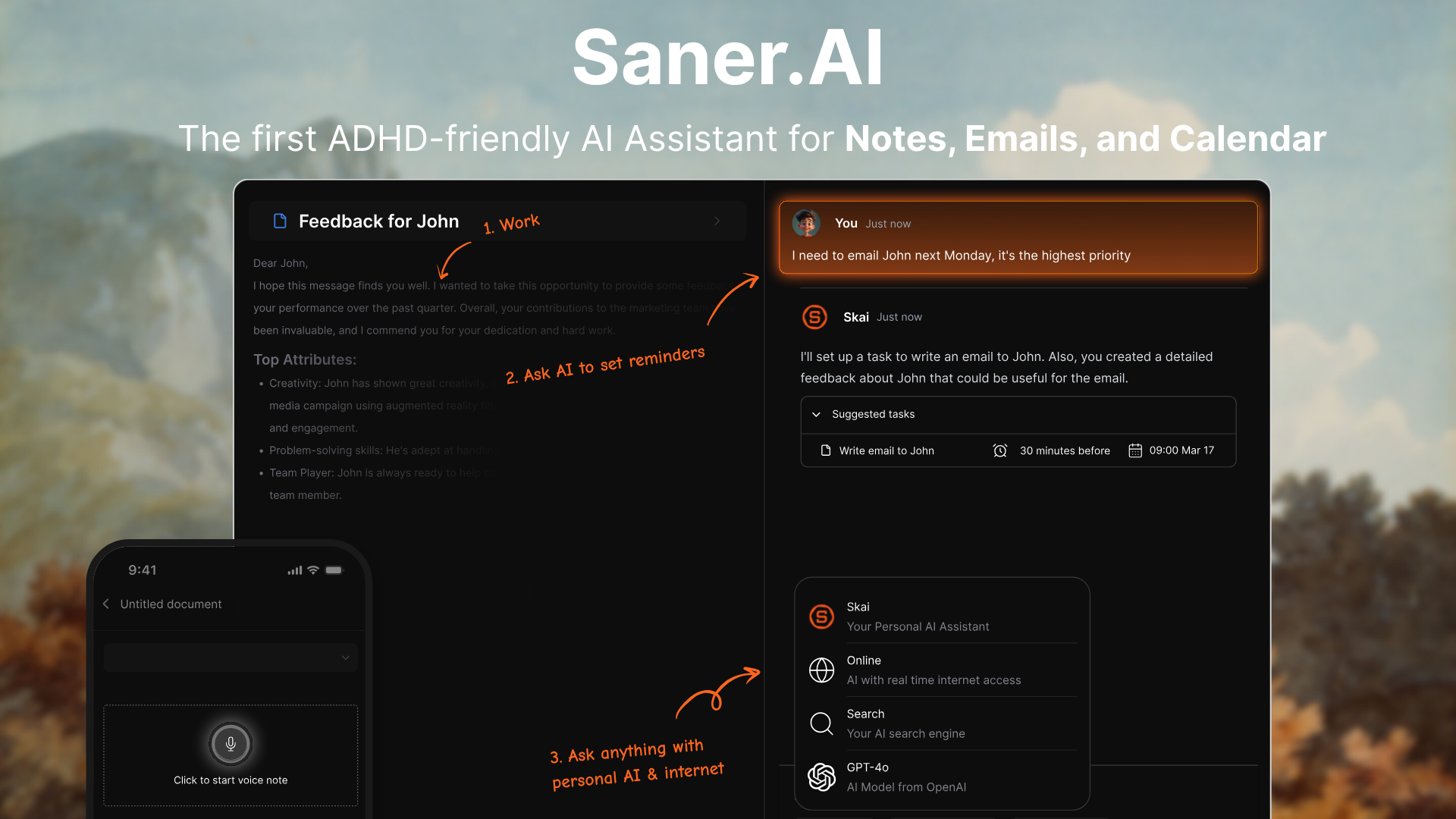
If you are interested in a non-caffeine method, but still give your ADHD brain a dopamine kick. You can start to try Saner.AI, which is an AI-automated task assistant to give you a better workflow, or simply just make your daily tasks easier to do.
Stay on top of your work and life
[Last updated in 2026]