The Best ADHD Planner Apps in 2026

This article is for the ADHD adult who wants to find a suitable planner app for their workflow, the student who keeps downloading apps and abandoning them, and the knowledge worker who is burning out trying to keep up with their overwhelming number of tasks.
Key takeaway: What are the Best ADHD planner apps?
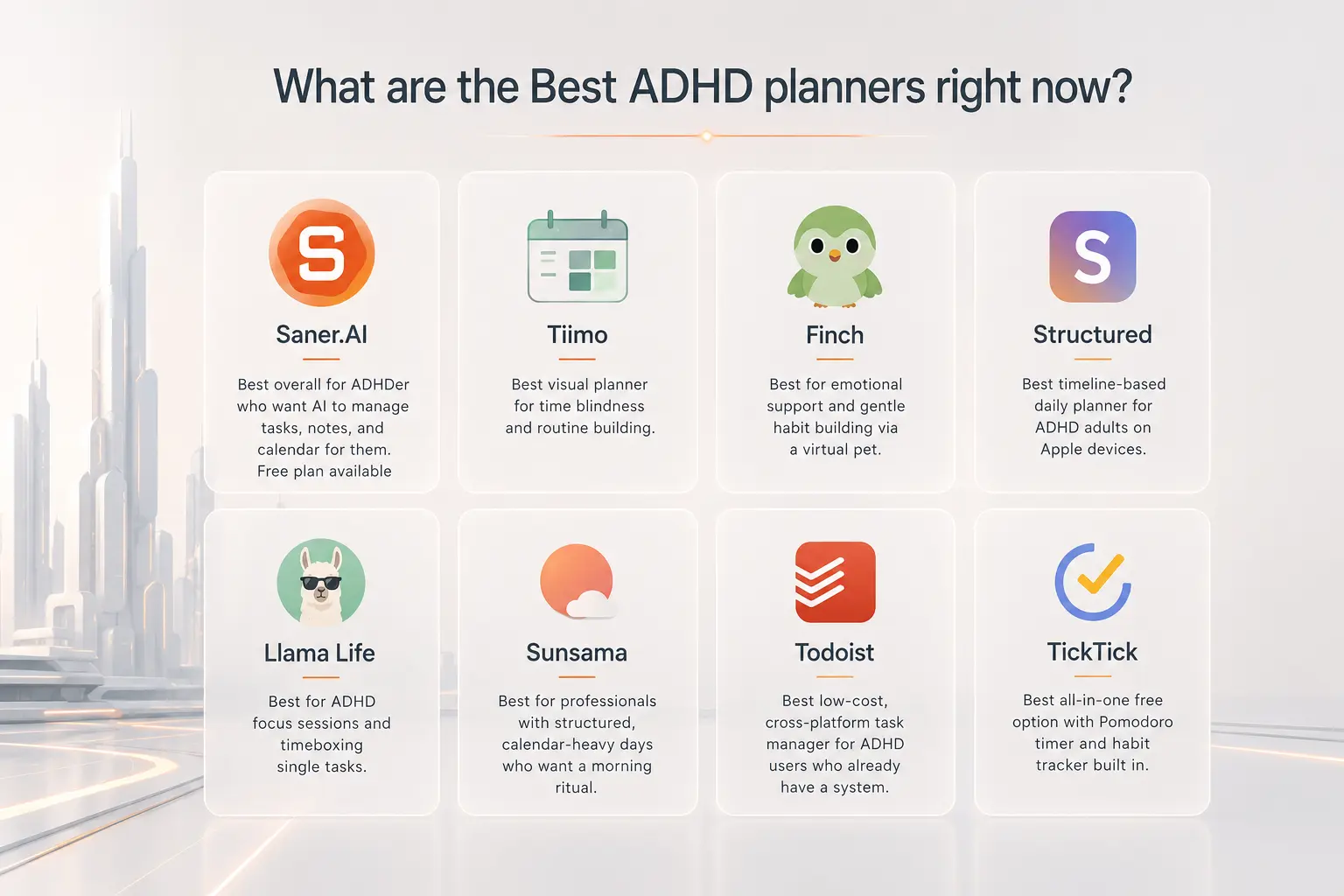
- Tiimo: Best visual planner for time blindness and routine building.
- Finch: Best for emotional support and gentle habit building via a virtual pet.
- Structured: Best timeline-based daily planner for ADHD adults on Apple devices.
- Llama Life: Best for ADHD focus sessions and timeboxing single tasks.
- Sunsama: Best for professionals with structured, calendar-heavy days who want a morning ritual.
- Todoist: Best low-cost, cross-platform task manager for ADHD users who already have a system.
- TickTick: Best all-in-one free option with Pomodoro timer and habit tracker built in.
1. What is ADHD?
ADHD is a neurodevelopmental condition - not a discipline problem. The DSM-5-TR defines it as "a neurodevelopmental disorder defined by impairing levels of inattention, disorganization, and/or hyperactivity-impulsivity."
2. What are ADHD planner apps?
An ADHD planner app is a digital tool - designed to work around how ADHD brains actually function, rather than assuming the user can maintain consistent habits, accurately estimate time, and remember things without external prompts.
3. Do ADHD planners really help?
Yes. Here is the evidence about the positive effect of ADHD planners, digital interventions, and apps on ADHD productivity:
4. How We Chose These Planner Apps
We evaluated over 16 ADHD planner apps across weeks, focusing on how each one performs for adults with ADHD in real conditions. The tools featured here were selected based on:
- Friction at startup — How much mental effort does it take to open the app and actually use it on a hard day, not just a motivated one?
- ADHD-specific design — Does the app account for time blindness, task initiation difficulty, and working memory limitations?
- Cognitive load — Does using the tool require you to already have your thoughts organized, or does it help you get there?
- Forgiveness for missed days — Apps that punish you for falling off (guilt messages, broken streaks, no rollover) tend to create shame cycles that make ADHD worse, not better.
- Pricing transparency and free-tier quality — Many tools upsell aggressively. We looked at what's genuinely useful on free plans versus what's locked away.
Now, let's dive in!
What are the Best ADHD Planner Apps?
The best ADHD Planner Apps in 2026 are: Saner.AI, Finch, Tiimo, Sunsama, Todoist, Llama Life, Structured, TickTick
1) Saner.AI
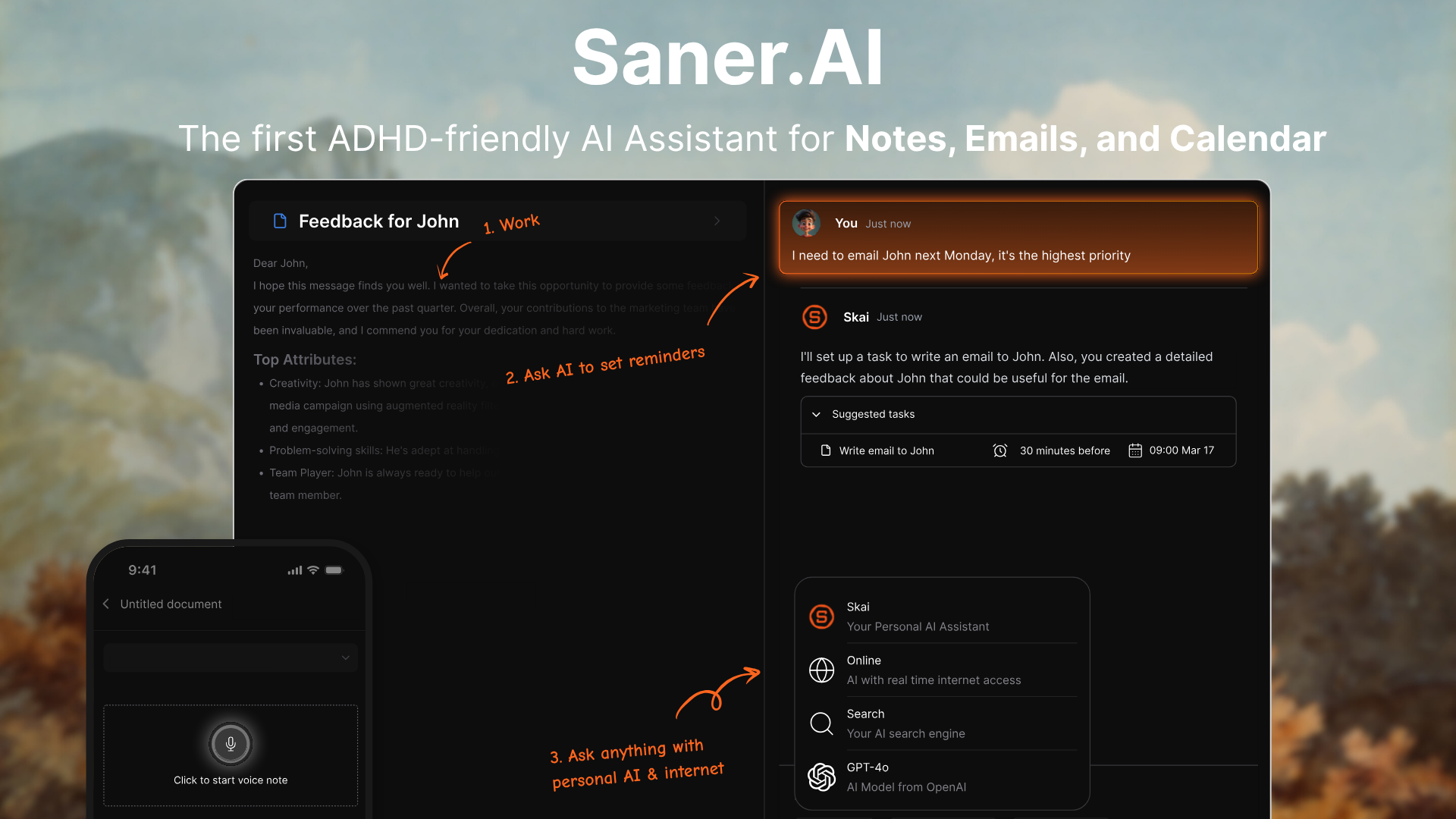
Saner.AI is an ADHD planner that helps you turn chaotic thoughts into clear tasks. It’s like having a personal planner that understands how your brain works, especially if you struggle with attention, overwhelm, or remembering what you were just doing.
Key features
- Brain-Dump to Tasks: Just type or speak your thoughts - Saner turns them into tasks, reminders, or scheduled plans
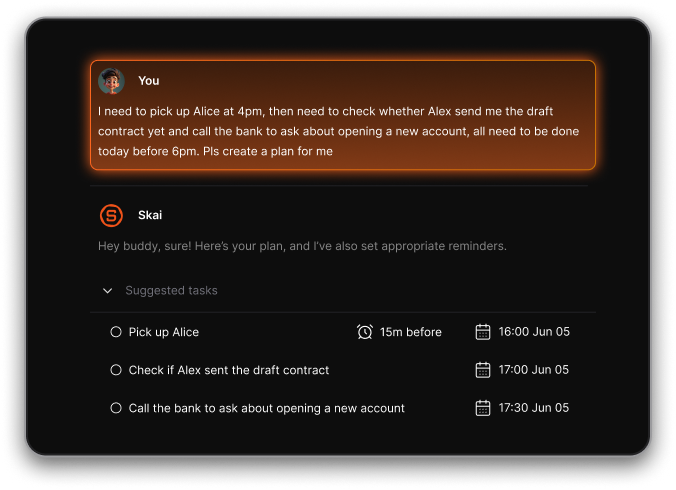
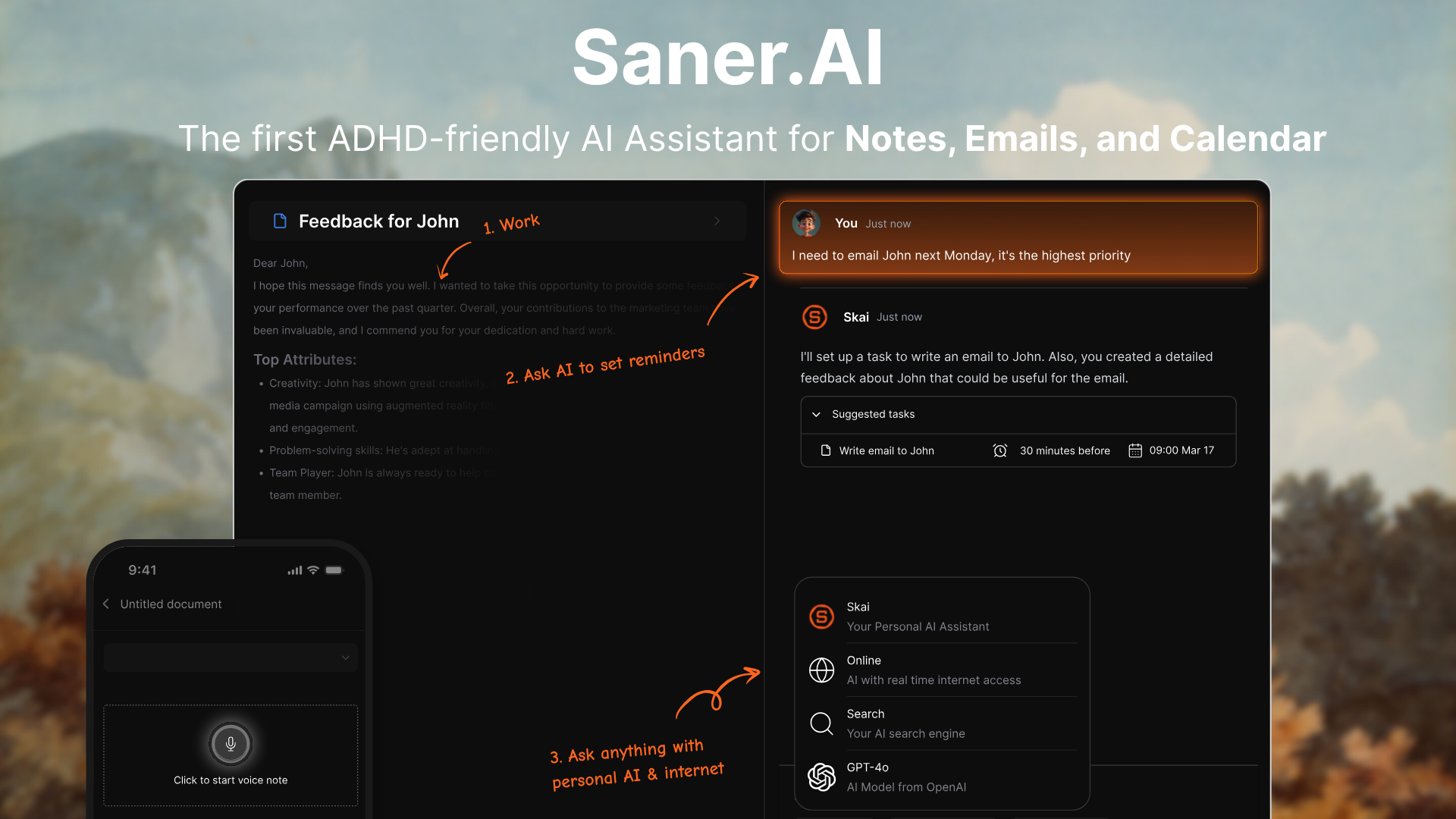
- Smart Task Assistant: You can chat with AI to schedule, break down, or reschedule tasks in natural language.
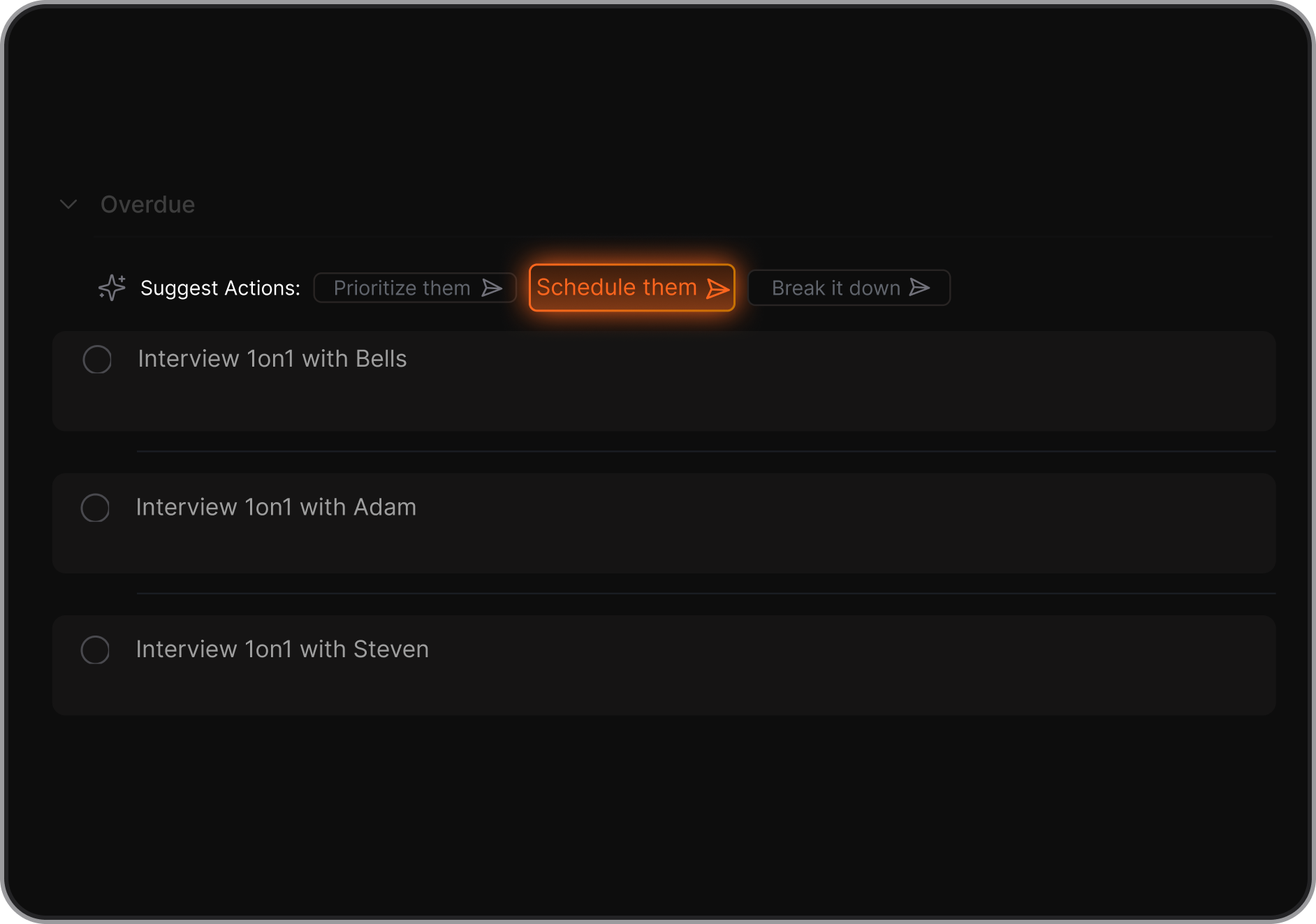
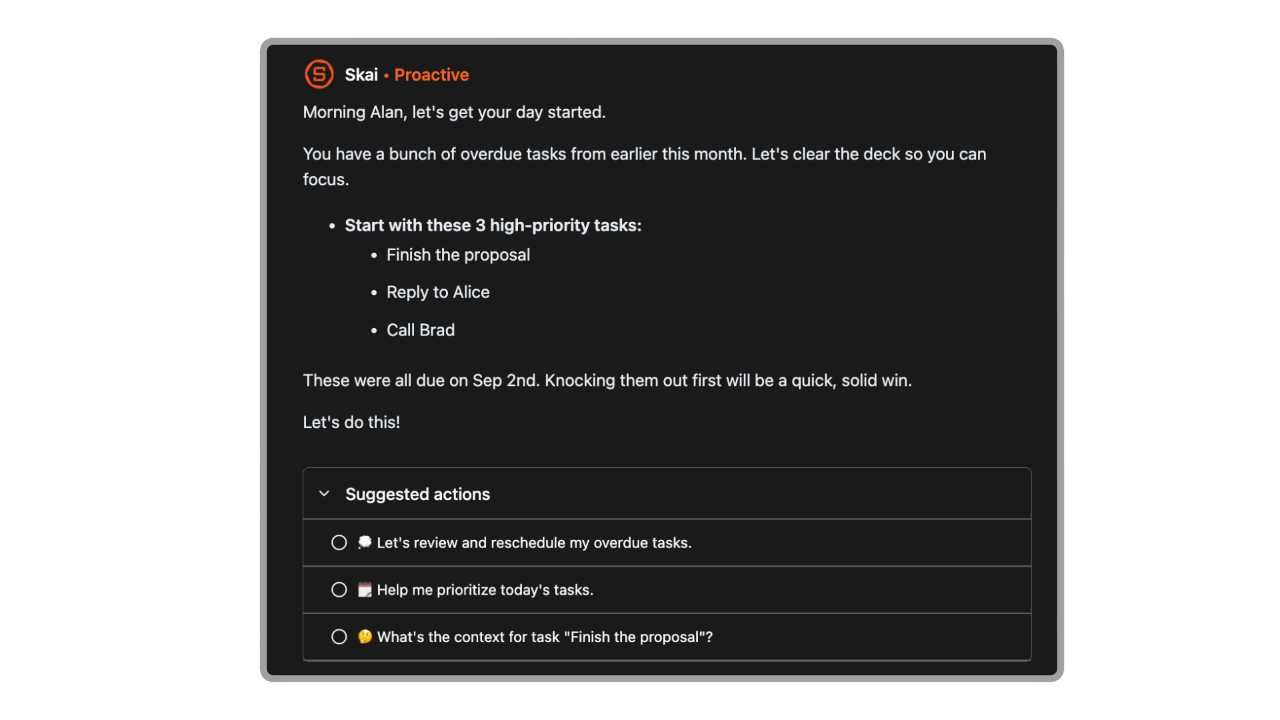
- Proactive check-in: Every morning, AI scans through your inbox and calendar and gives you the optimal action plan for the day
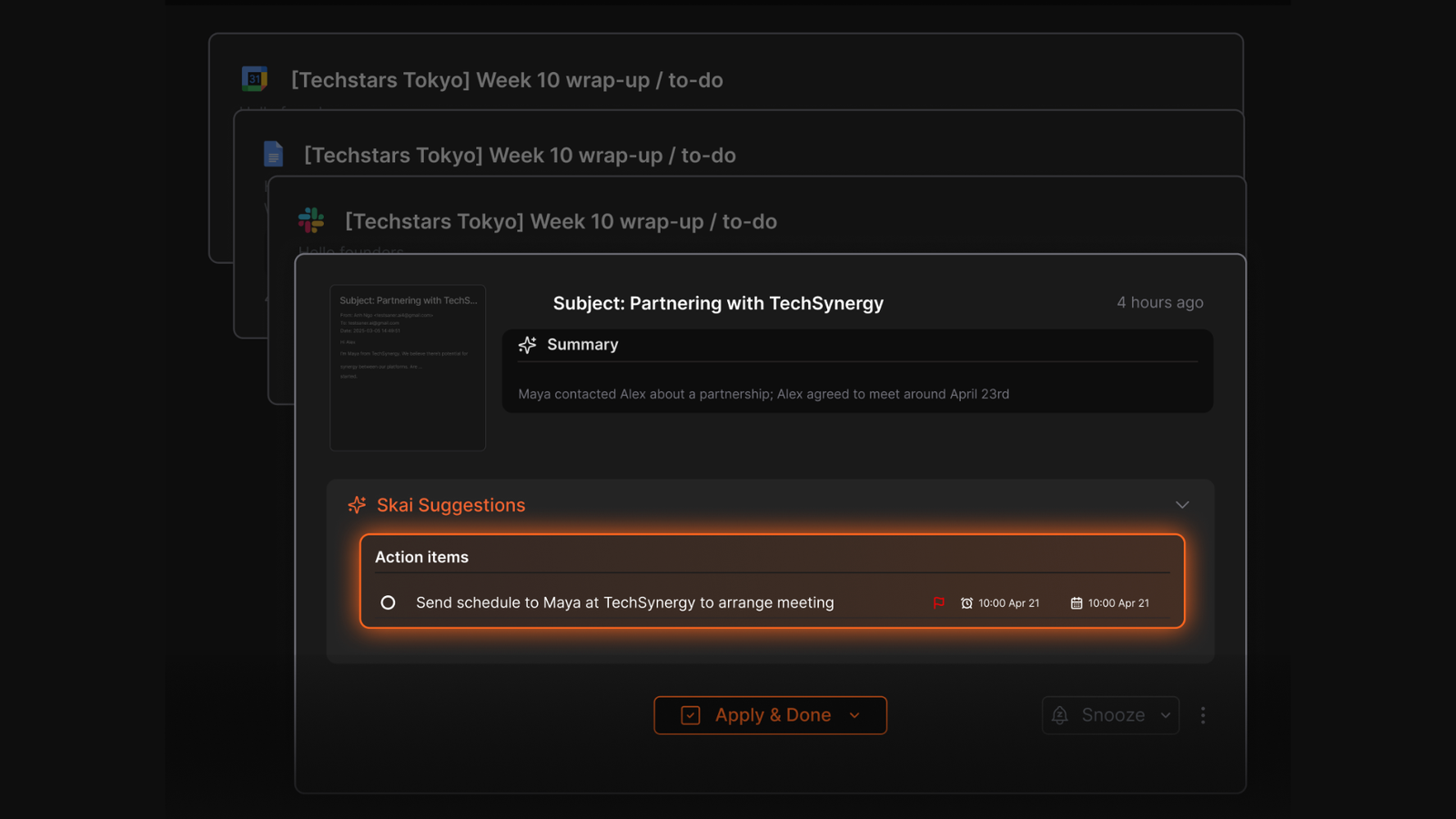
- Gmail Integration: Automatically pulls follow-ups and to-dos straight from your inbox
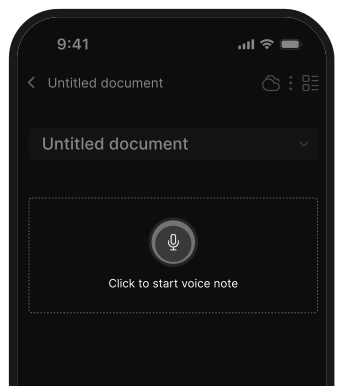
- Voice Capture: Record a voice or a note, and it’ll summarize or extract the to-dos for you
- Focus mode: Pins one task at a time, so you’re not distracted by a huge list
- ADHD-Friendly Design: Built specifically with input from 200+ ADHD users
What I liked
- I love how I can just brain-dump whatever’s in my head, and it figures out the action items for me - no structure needed.
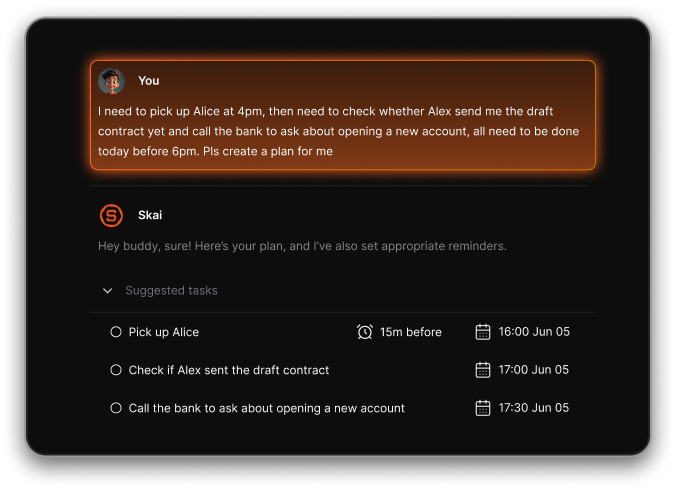
- The task assistant feels like texting a helpful friend. I can say “remind me to prep for my meeting,” and it just handles it.
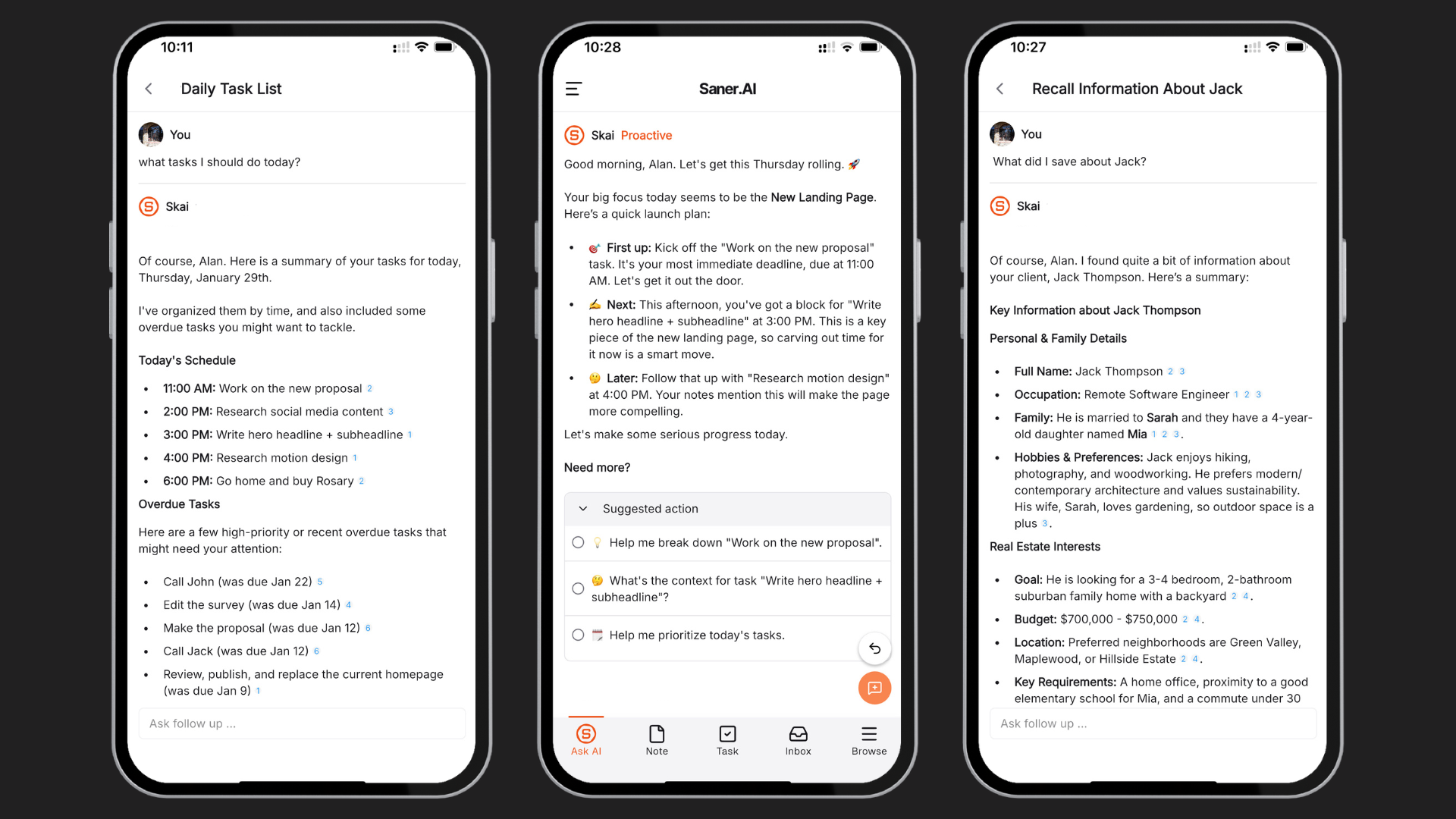
Cons
- Ideally, for personal task management, rather than for large team project management.
- No offline access
Pricing
- Free
- Starter: $8/month (billed annually) or $12/month billed monthly
- Standard: $16/month (billed annually) or $20/month billed monthly
Suitable for
- Knowledge workers, freelancers, and entrepreneurs with ADHD who juggle notes, emails, and tasks across multiple tools and need one place to make sense of it all.
Saner.AI reviews
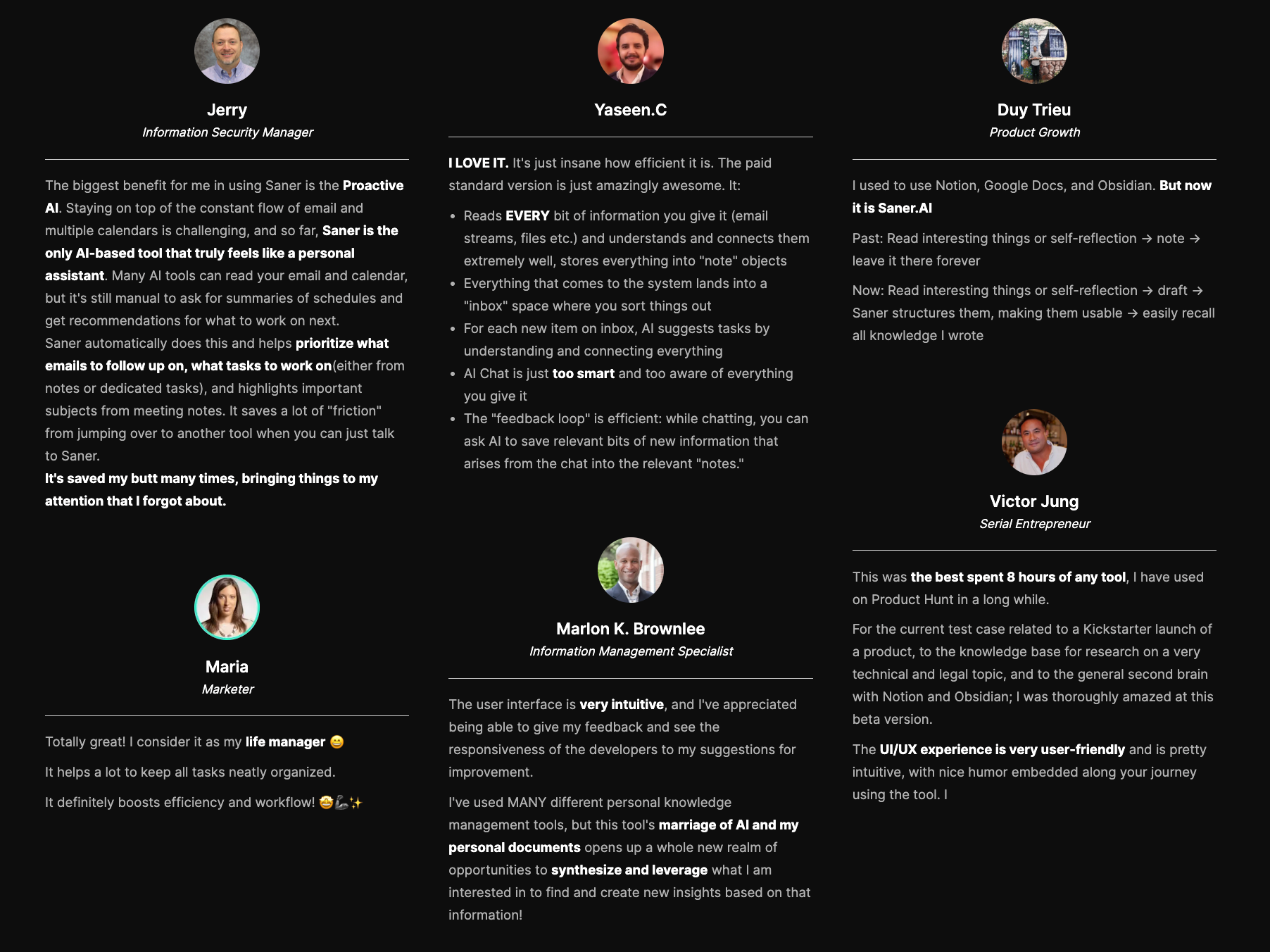
"The biggest benefit for me in using Saner is the Proactive AI. Staying on top of the constant flow of email and multiple calendars is challenging, and so far, Saner is the only AI-based tool that truly feels like a personal assistant" - Jerry
How to start
- Just go to saner.ai, make a free account, connect your tools, and start chatting with Skai. The AI will suggest tasks and help you organize without the usual friction.
Stay on top of life with the top ADHD Planner
2) Tiimo
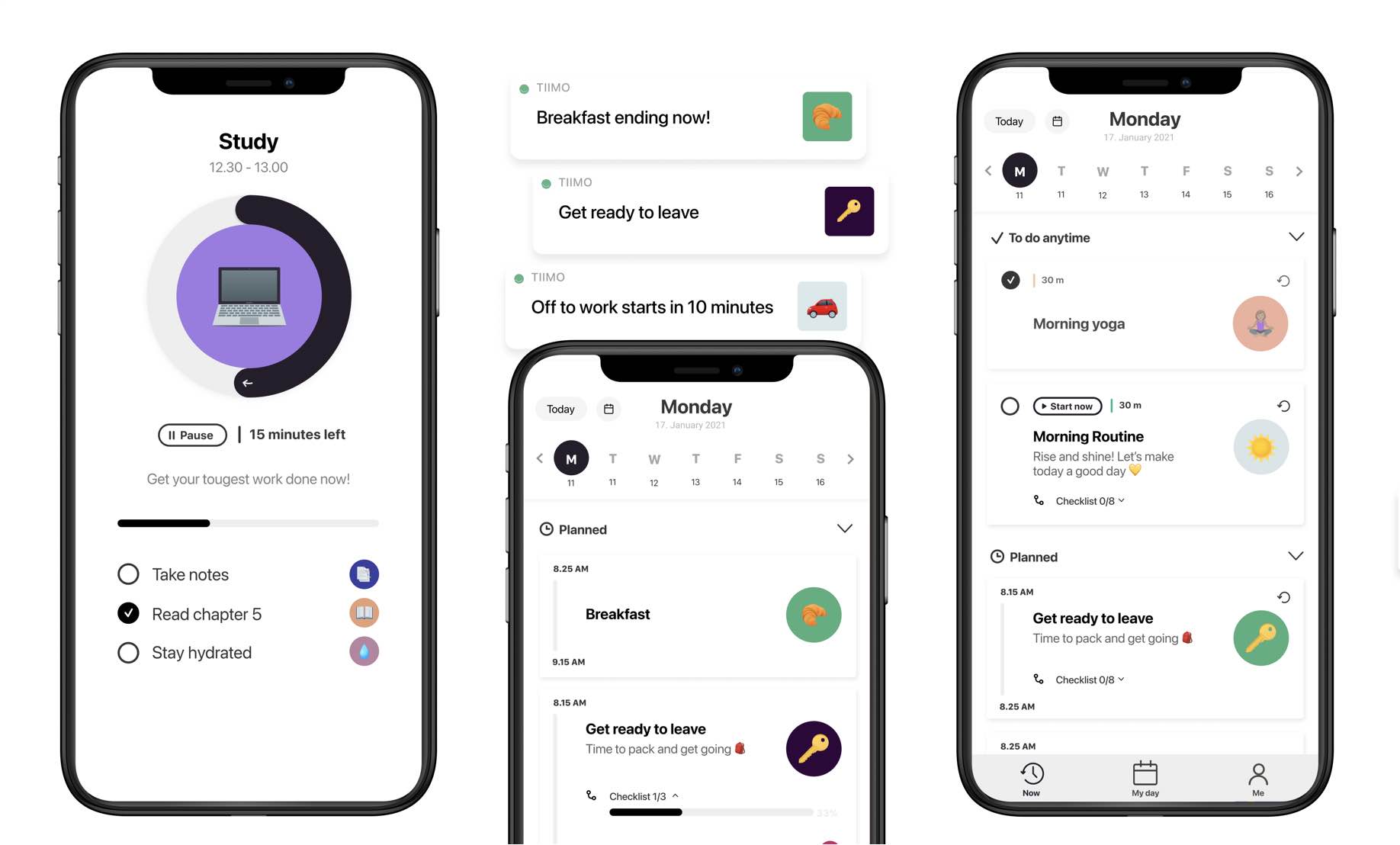
Tiimo is a visual daily planner built specifically for neurodivergent users, including people with ADHD. It focuses on turning plans into clear, visual routines instead of text-heavy to-do lists.
Key features
- Color-coded routines make time feel more tangible
- Breaks down big tasks into subtasks automatically
- Built-in Pomodoro-style timers help with starting and staying focused
- Works on iOS, web, Apple Watch, and (kind of) Android
Pros
- Visual timeline directly addresses time blindness
"Tiimo makes me feel 'in control' because I'm able to see my day visually and make scheduling a breeze." – reviews
- Apple Watch widget keeps the current task visible across apps
- I think mood tracking is a nice bonus.
Cons
- The app is quite buggy
"My entire schedule just disappeared out of thin air after I refreshed the page. I spent 3 hours on customer support trying to find a solution and guess what? No solution." – reviews
"The app helps some, but the benefits become redundant when I have to manually go in and correct things because little bugs throw off my routine." – reviews
- Doesn’t integrate with other systems like Google Drive, Notion.
- No dictation support
"There's no dictation facility. You end up having to type everything manually, which isn't ideal." – reviews
Pricing:
- Free: Limited features with trial access
- Paid: ~USD $9.99/month or ~$69.99/year
Suitable for:
- Individuals with ADHD who want a planner that’s visual, gentle, and designed around how their brain works, especially iOS users.
Tiimo Reviews (source)
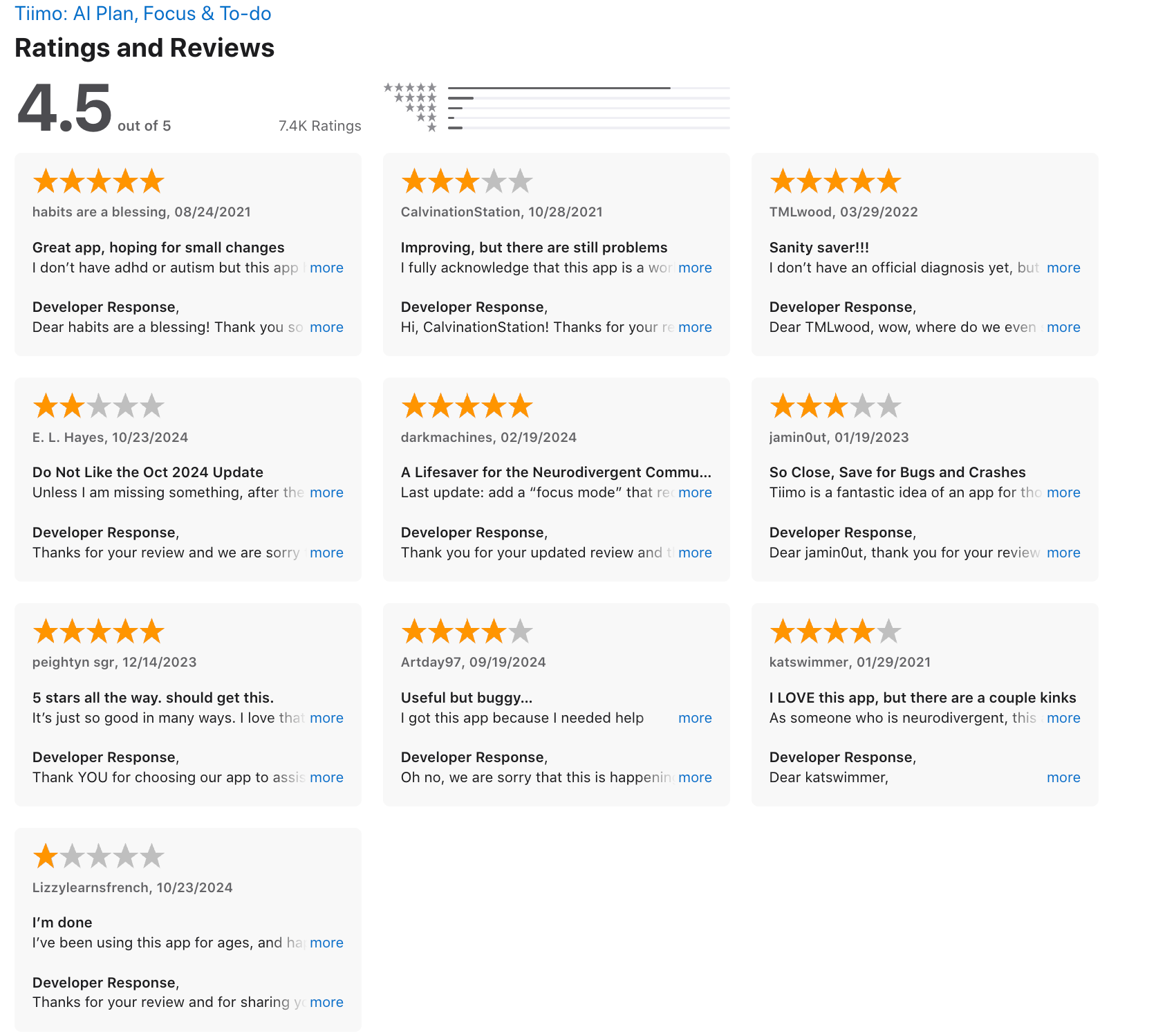
It doesn't do what it says it will do. Fails to import whole to do list. Fail to save edits mde to appointments. Began speaking to me in another language so I couldn't tell which button to press then loses all the data and request made. - Jane
Some of my favorite parts about Tiimo: The ability to set “anytime” tasks - I struggle with set times with my work already and I don’t want them in my personal life. - rahwri
How to start:
- Download Tiimo, try the free plan
3) Sunsama

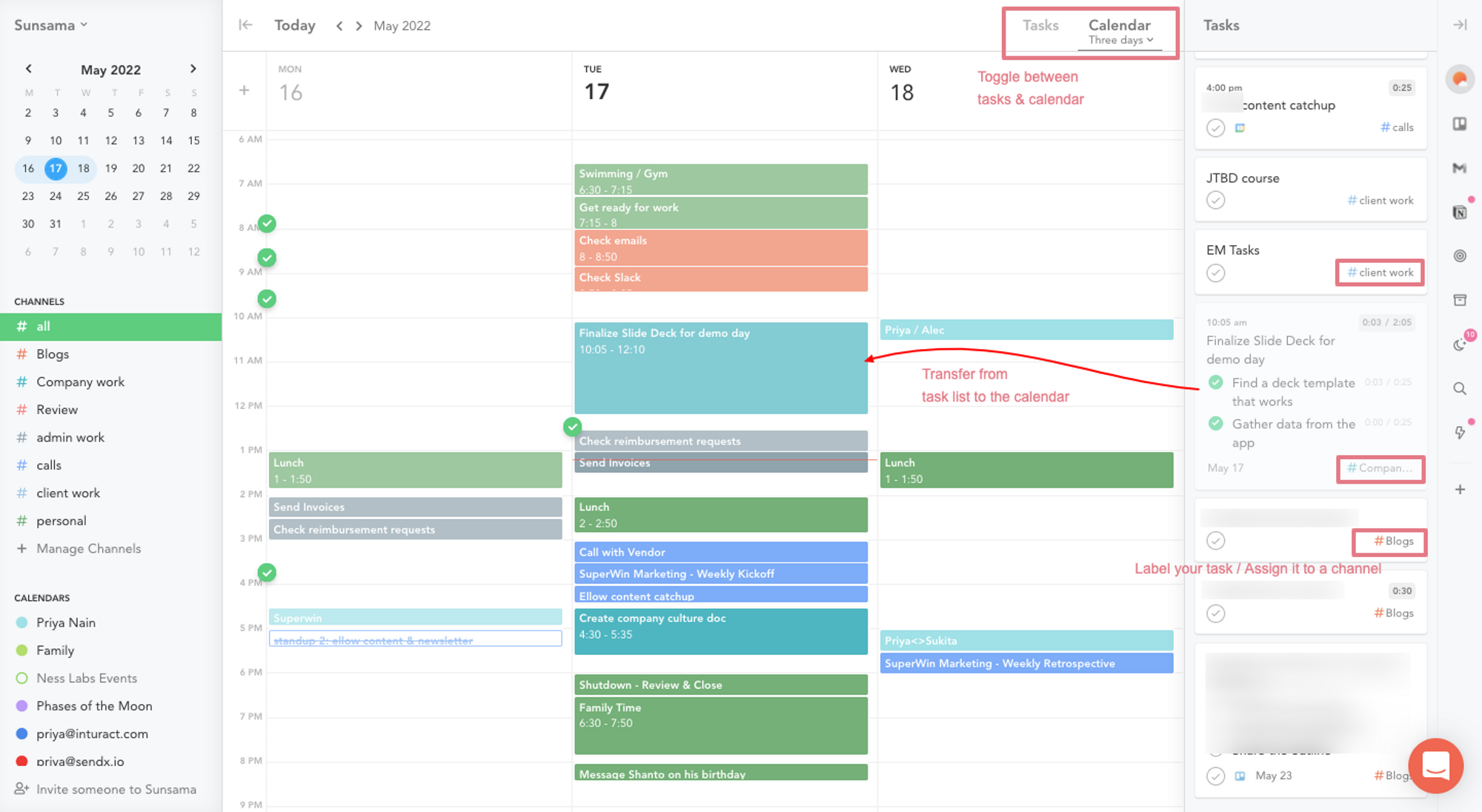
Sunsama is a daily planning tool designed to help you build intentional, realistic schedules. It guides you through planning your day, estimating time for tasks, and actually sticking to what you plan.
Key features
- Helps you plan each day intentionally without feeling overwhelmed
- Easily assign realistic durations to tasks so you don’t overcommit
- Built-in Pomodoro timer for staying on track
- Integrations: Syncs with Google Calendar, Outlook, Asana, Todoist, Trello, Gmail, and Slack
What I liked
- The daily planning ritual can keep you from trying to do too much in one day
- I like that it forces me to estimate how long each task will take
- Calendar integration is good
"The integration with Google Calendar is seamless and together I can manage my day with less stress" – reviews
What I disliked
- The daily planning ritual itself can become an initiation barrier
"Sunsama doesn't automatically schedule or prioritize tasks for you — YOU need to do that each day, so if you forget or fall off the habit, you're paying for a tool that sits dormant" - reviews
- Not designed for teams or complex project management
"Sunsama's channel organisation system falls behind the folder system typical for to-do list apps" – reviews
- Desktop experience is stronger than mobile; Android app lags
"The Android app is intended as a companion, not a replacement of the desktop version, and it lacks some functionality" – reviews
- Not made for storing documents or managing emails
Pricing
- 14-day free trial available
- $20/month or $16/month if billed annually
- No free forever plan
Suitable for:
- People with ADHD who want a daily planner that guides them toward focus, realistic expectations, and fewer distractions.
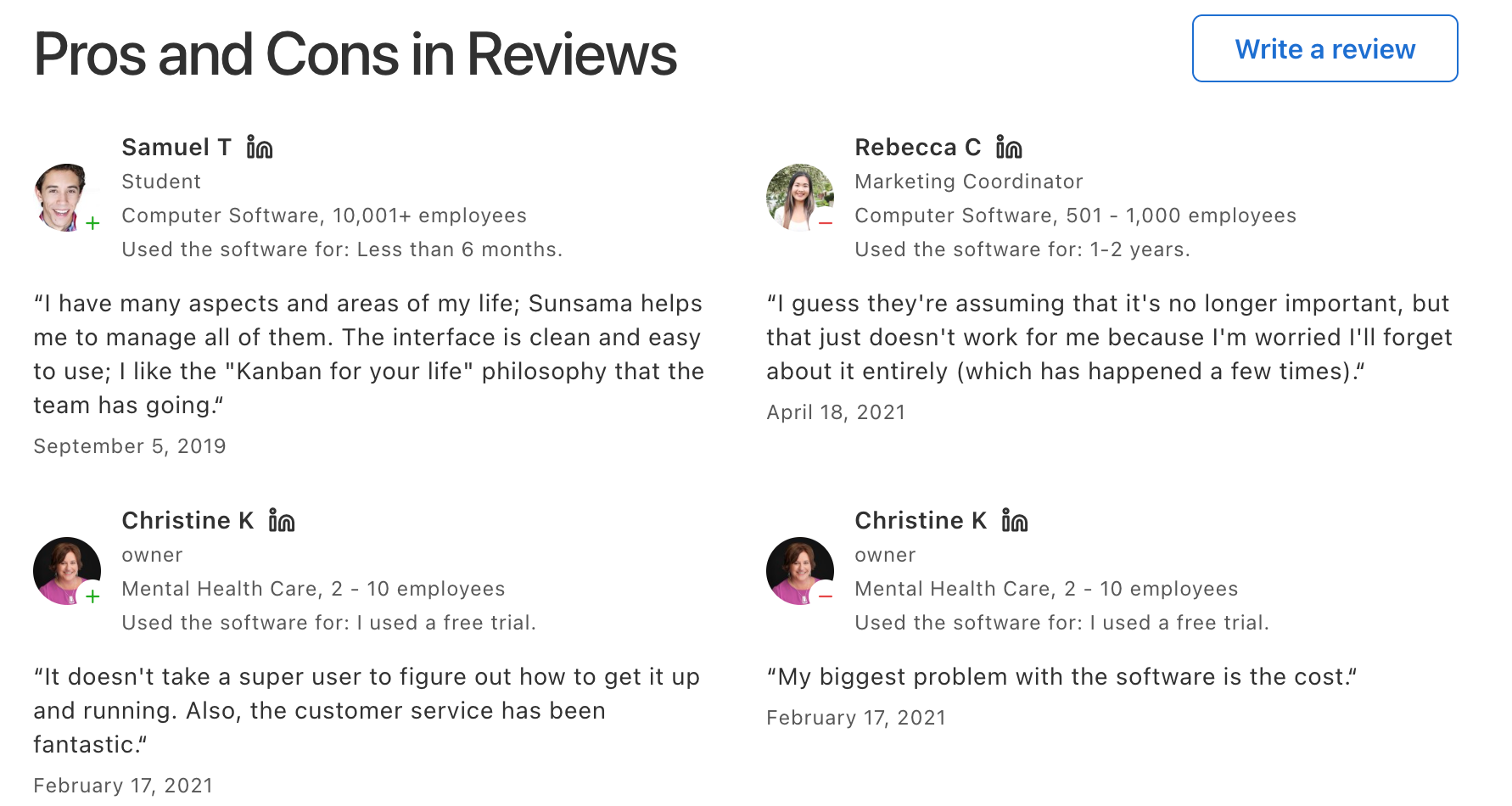
Sunsama reviews (source)
How to start:
- Just go to Sunsama, start the trial, and follow the daily planning ritual.
4) TickTick

TickTick is an ADHD planner to stay on top of tasks, routines, and focus time. It combines to-do lists, calendar views, habit tracking, and a built-in Pomodoro timer, all in one clean interface.
Key features
- Quick-add tasks with voice, widgets, or natural language input
- Calendar views with time-blocking and drag-and-drop scheduling
- Syncs across all devices and integrates with Google Calendar, Zapier, and more
What I liked
- I like how fast it is to capture a thought.
- Built-in Pomodoro is good and replaces a separate timer app
- Free plan is one of the most generous in the category
- Habit tracker, task manager, and calendar in one app
What I disliked
- It can feel like a lot if you try to use every feature at once. I had to start small and build up.
- You don't have an AI Assistant to help you manage tasks
- The app is buggy
"The app sometimes is buggy, especially with the desktop version which I am using the most" – reviews
Pricing
- Free plan available
- Premium plan at $3.99/month or $35.99/year
Suitable for
- People with ADHD who want an all-in-one planner that helps them capture ideas quickly, stay focused, and organize their time without chaos.
TickTick Reviews (Source)
Too basic, and yet too complicated for that simple task - Anti
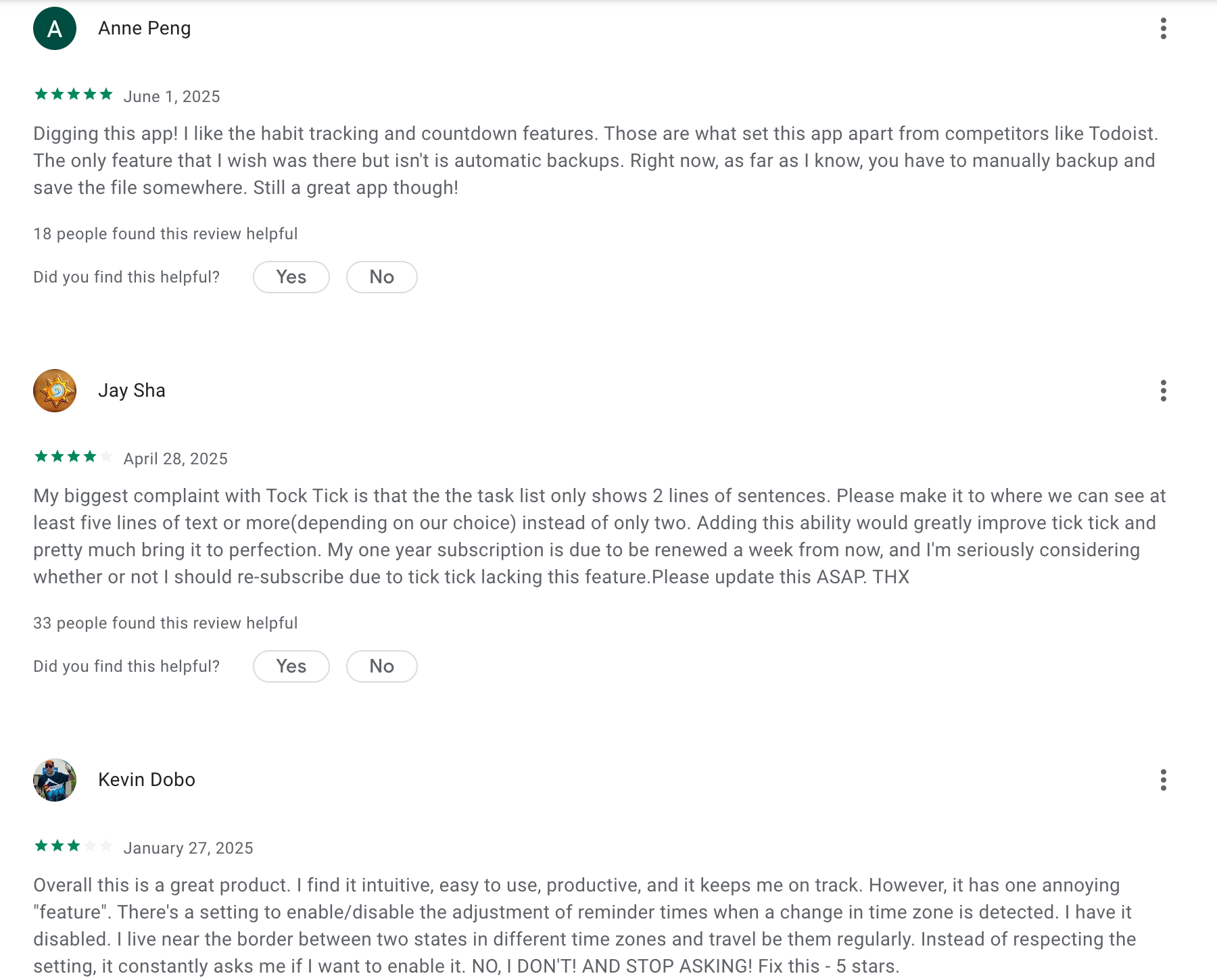
This is for creating good habits - Robert
How to start
- Just download TickTick, set up a few habits or tasks, and try the Pomodoro timer.
5) Llama Life
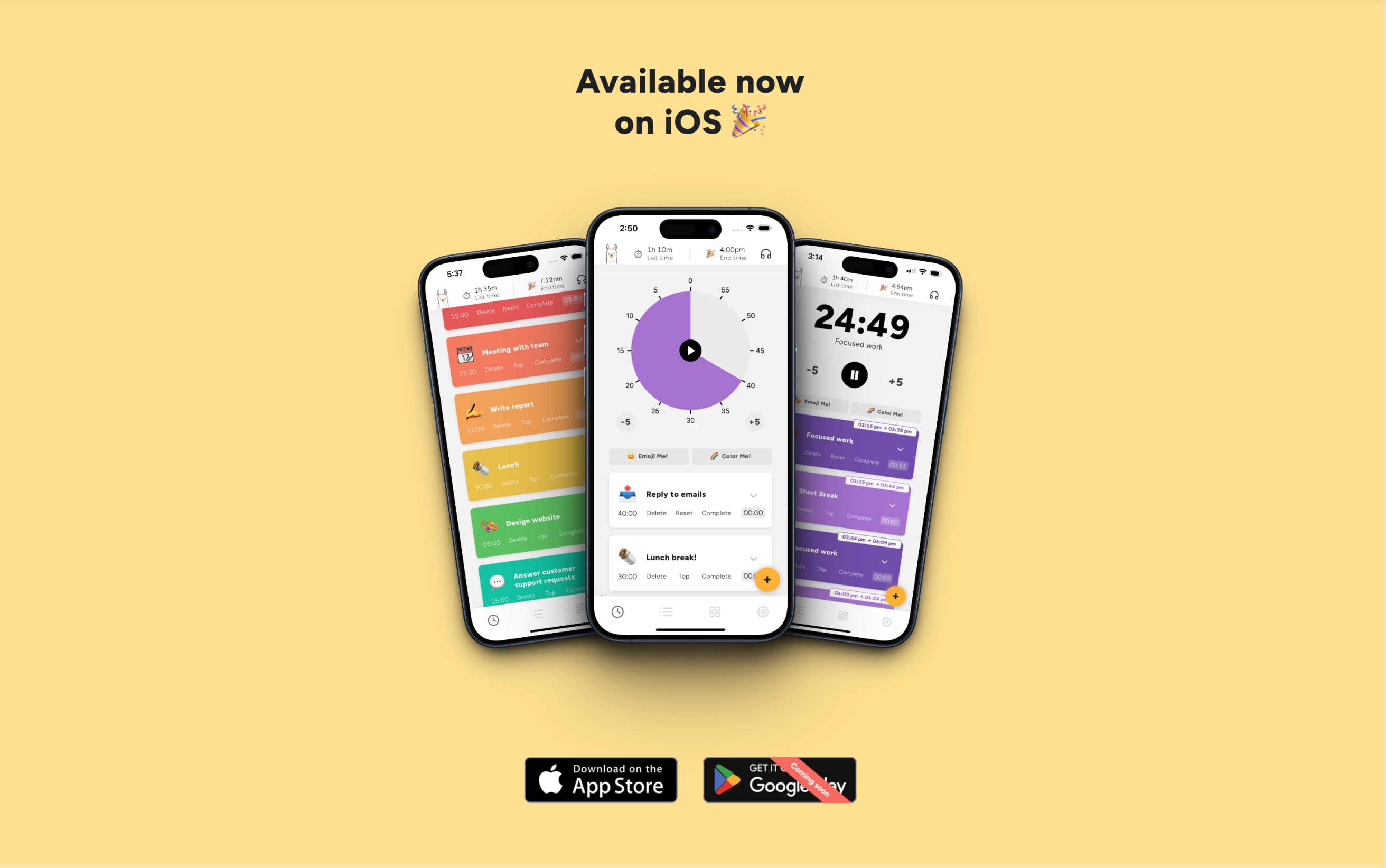
Llama Life is a playful, ADHD-friendly planner that helps you focus on one task at a time. It’s built around timers, sounds, and visual rewards - all designed to tackle time blindness, task paralysis, and overwhelm.
Key features
- Time-boxed task lists with countdown or pie timers
- Soundscapes and chimes to start, pause, or end tasks
- Visual rewards like confetti and emojis when you finish something
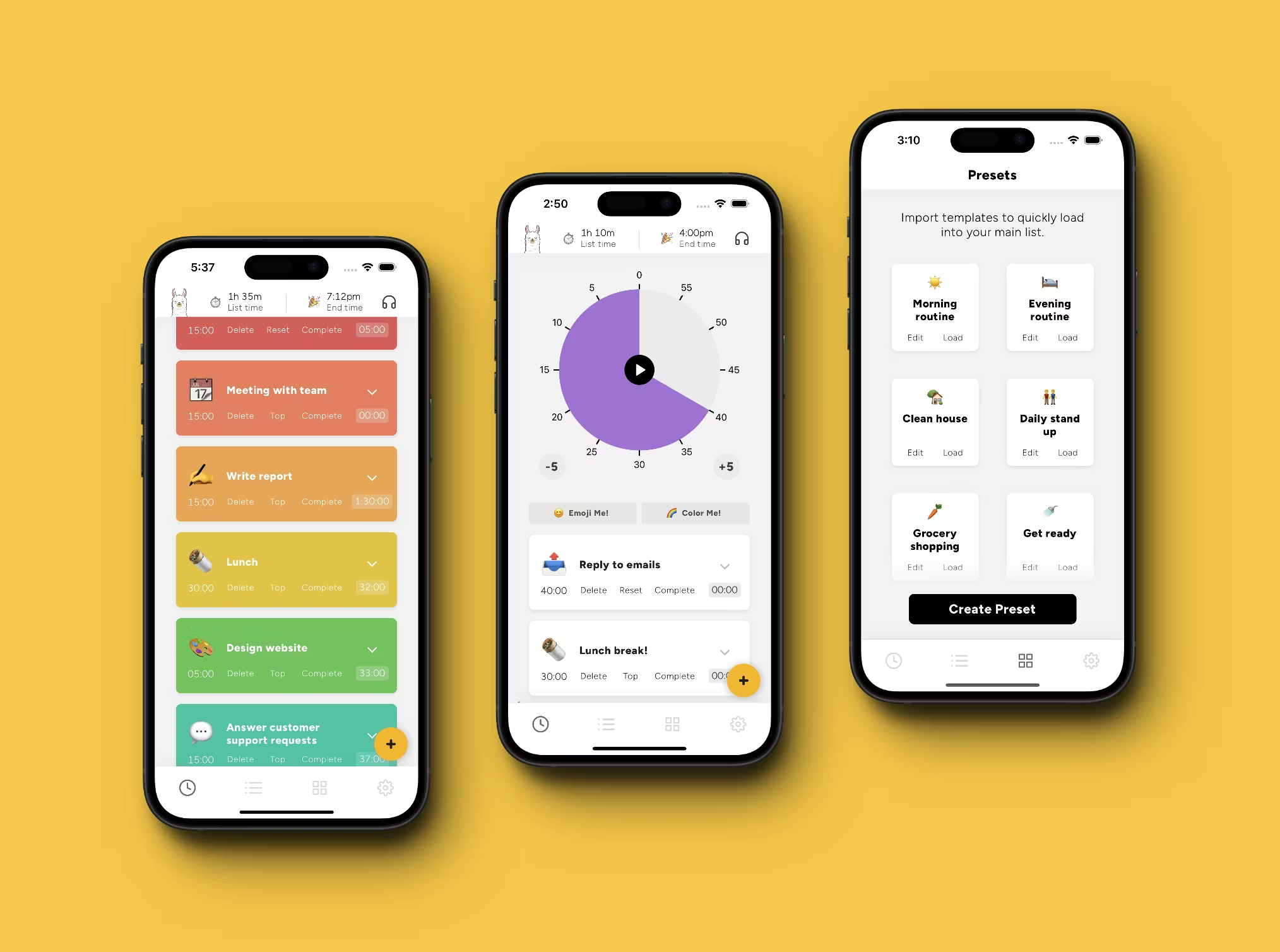
- “Preset Lists” for routines like mornings or shutdowns
Pros
- Simple to use — tasks in, timer running, within two minutes
- Confetti when you finish a task — small, genuinely motivating
"I love the colored tasks and presets" – reviews
- “Preset Lists” are helpful - I don’t have to rebuild my morning routine every day.
Cons
- Not a planner - no calendar, no reminders, no scheduling
- "The app is still very formative and buggy. Lacks mobile support" – reviews
- "The icons are weird and only hog space" – reviews
- "Paywall... Can't use the app without subscribing and paying a monthly fee" – reviews
- You don't have an AI Assistant who you can ask to schedule tasks
Pricing
- Free trial available
- Around $6/month
Suitable for:
- People with ADHD or similar challenges who want an ADHD Planner that’s simple, visual, and fun.
Llama Life reviews (source)
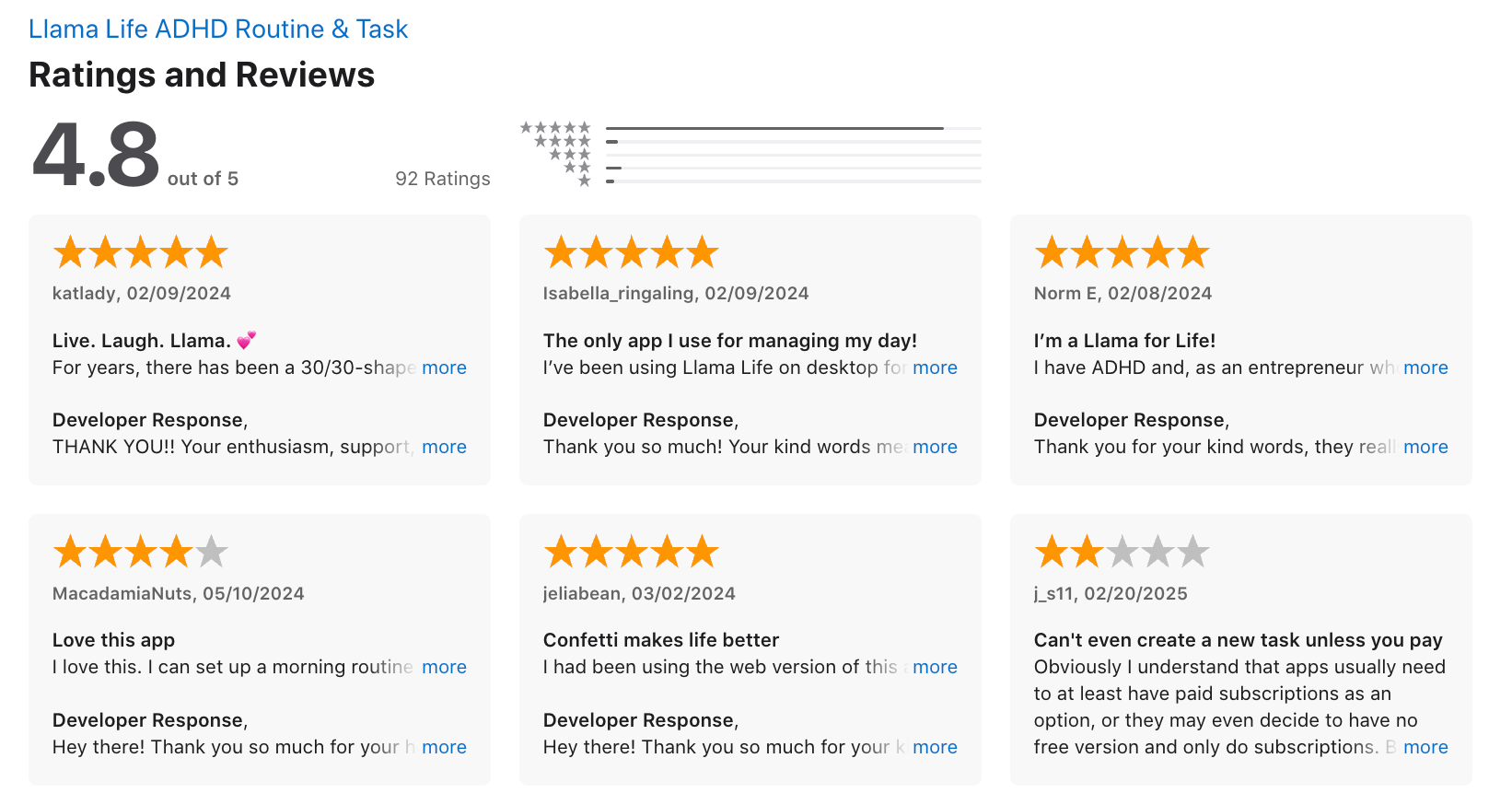
"Its so simple! That makes it easy to use and therefore effective. One of the rare tools I use daily." — reviews
How to start:
- Head to Llama Life, try the free trial, and see how it fits into your day.
6) Structured
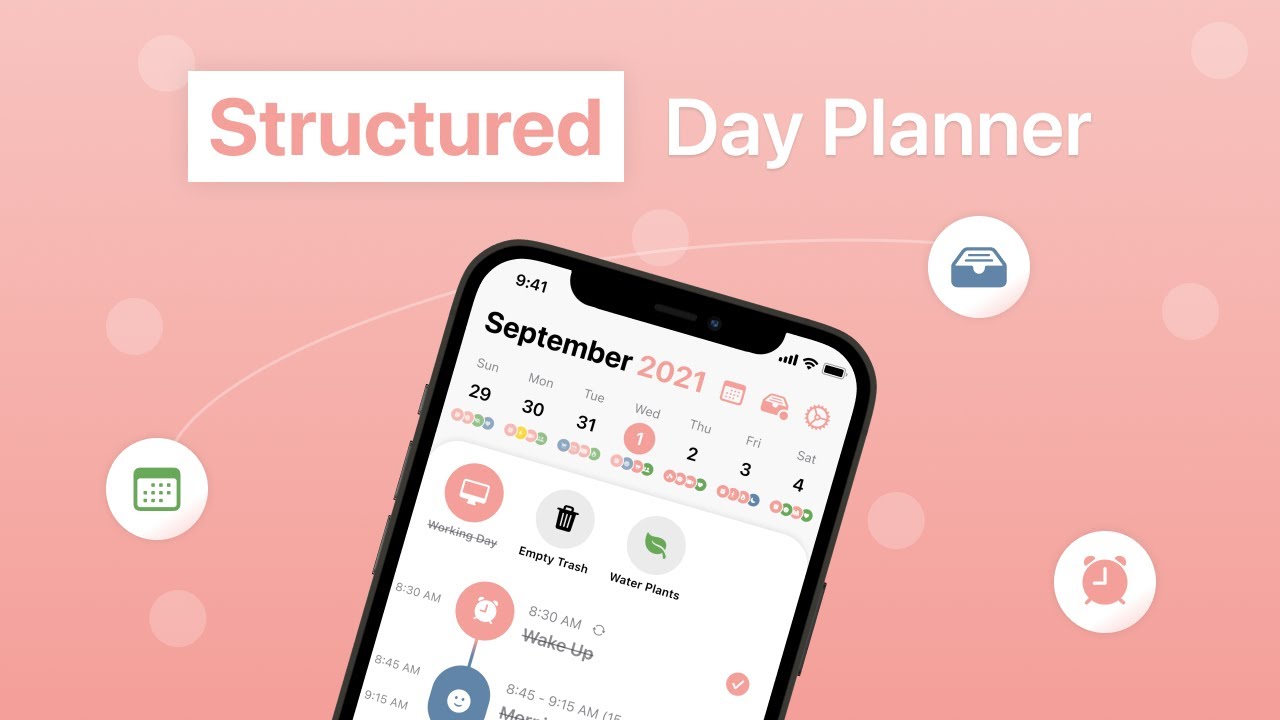
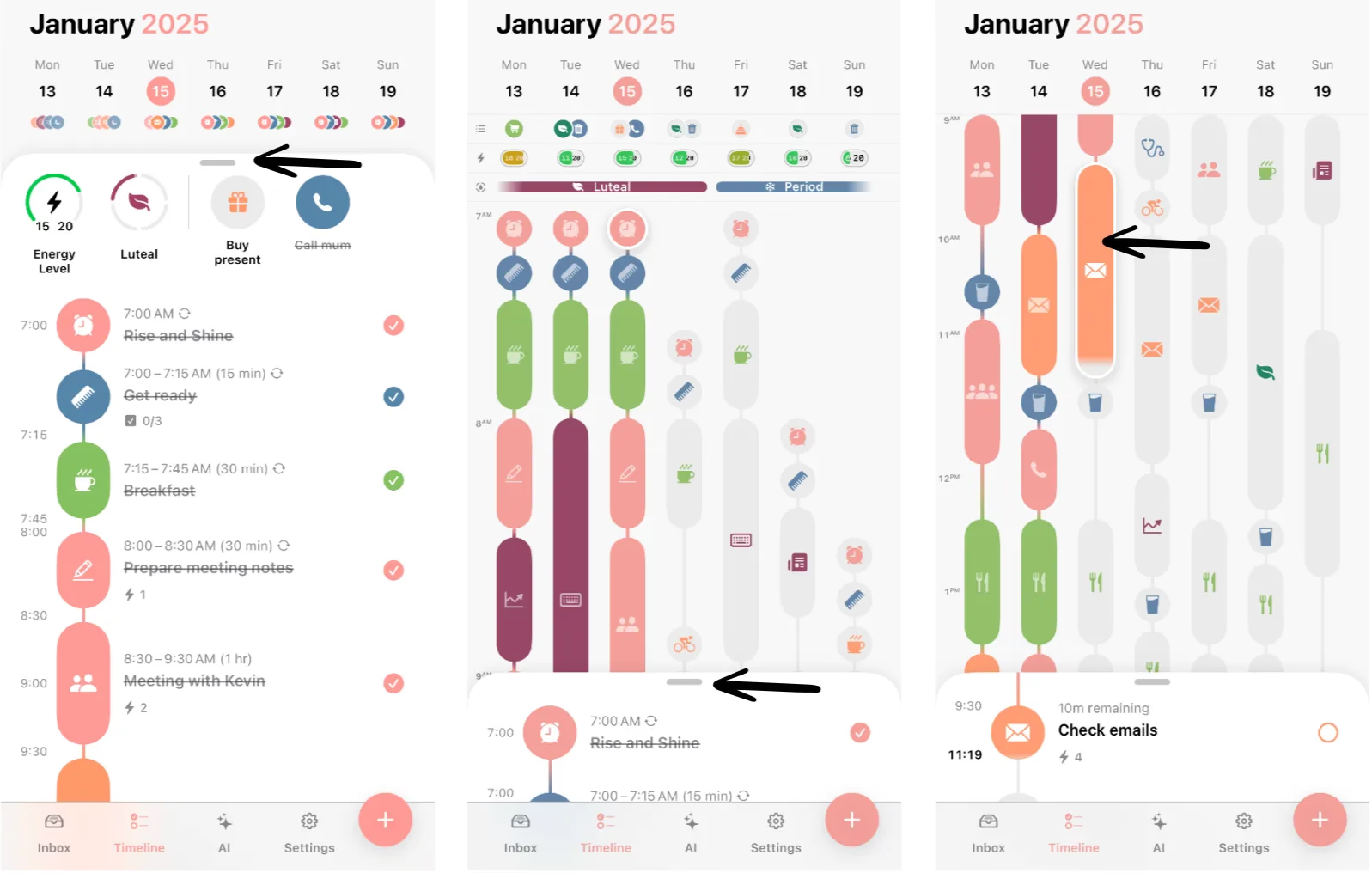
Structured is a visual ADHD planner that helps you see your day at a glance. It combines your tasks, calendar events, and habits into a simple timeline so you don’t have to juggle multiple apps or constantly replan your day.
Key features
- Combines to-dos and calendar events into a single view
- Easily reschedule tasks by swiping them to another time
- Break big tasks into smaller steps so they feel doable
- Works across iOS, Android, Mac, and Apple Watch
Pros
- Clean, intuitive visual timeline that shows calendar events alongside tasks
"Structured is simple, straightforward, ridiculously easy to use, beautiful, and has just the right amount of customization" – reviews
- Free tier is functional for basic planning
- Sub-tasks and Pomodoro timer built in
- Available on iOS, Android, and web
Cons
- There’s no proactive AI help or smart scheduling suggestions
- The app design is cluttered
"It's too cluttered and to navigate is annoying — I hate the modernization of apps, just make it simple. No glam or glow, just what you need" – reviews
"I spent more time fighting the actual app than utilizing it in my actual life… paywalling essential features" – reviews
- It's not ideal for long-term project management. Power users may feel constrained.
- No email or note integration - purely a planner
Pricing
- Free plan
- Pro plan: ~USD $4.99/month or ~$29.99/year (Apple App Store)
Suitable for
- Anyone with ADHD who wants a visual, drag-and-drop planner to organize time, reduce overwhelm, and actually get stuff done
Structured review (source)
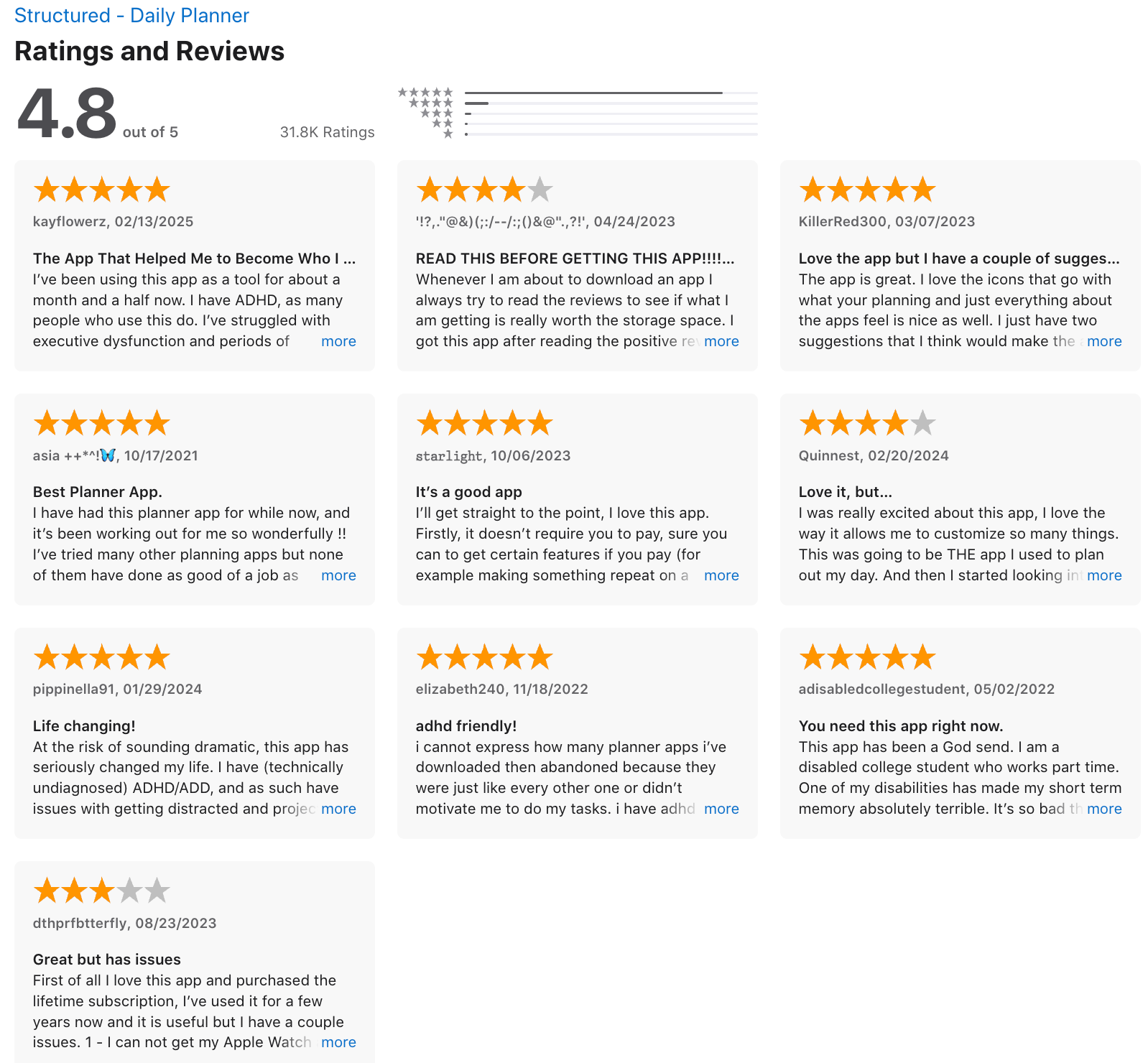
Solid app at a glance but haven't used it very long yet. Inbox tasks can't easily be reordered and the widgets are a little funky on android - Ferris
How to start
- Download the app, connect your calendar, and start adding tasks.
7) Todoist
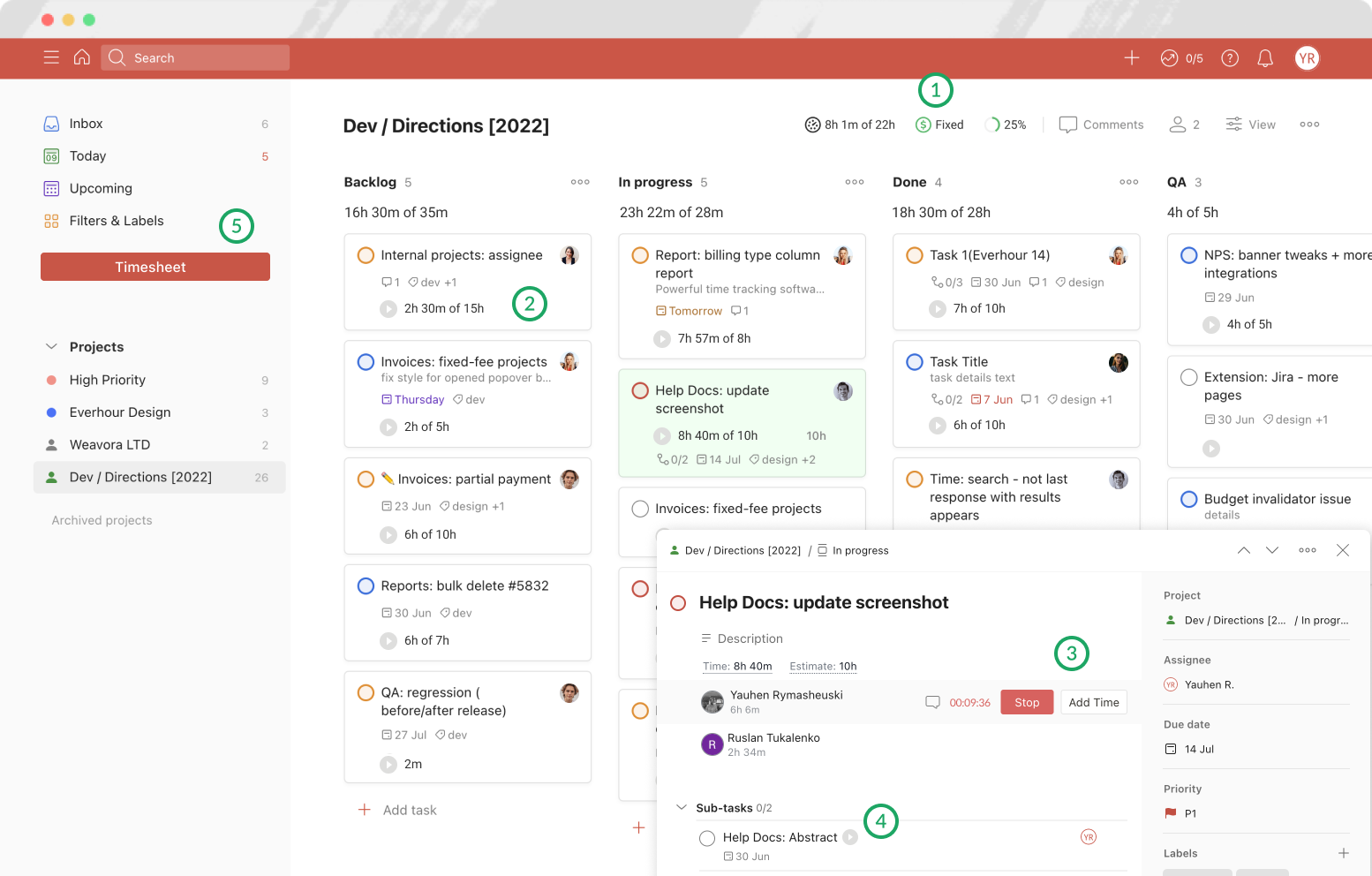
Todoist is a flexible task manager that can work as an ADHD planner. I’ve tried a bunch of tools, and Todoist stands out for how fast it is to capture thoughts, structure routines, and stay on top of daily priorities.
Key features
- Helps you focus on what’s next without getting overwhelmed
- Great for building daily routines and ADHD-friendly habits
- Sort tasks by priority, energy level, or context
- Works on desktop, mobile, and browser
What I liked
- I like that it has 60+ integrations: Google Calendar, Outlook, Slack, Zapier, Asana, Notion, and more
- The “Today” view is good - it gives me a clean list of what I need to do now
- Setting up recurring routines (like journaling or meds) was smooth.
What I disliked
- The free version is limited - no reminders unless you go Pro, which is kind of essential for ADHD.
- No built-in time blocking - ADHD planners need an app that helps manage time as well as tasks
- It’s not visual or gamified, which some ADHD planners are. If you need dopamine boosts or habit tracking visuals, this might feel plain.
Pricing
- Free plan with basic task management
- Pro plan around $4/month with reminders, filters, and calendar sync
- Business plan for teams at $6/month
Suitable for
- Anyone with ADHD looking for a clean, focused way to manage tasks and routines - especially if you already like checklists.
Todoist reviews (source)
"For my day-to-day needs, Todoist ended up being a bit too complex and structured." — reviews
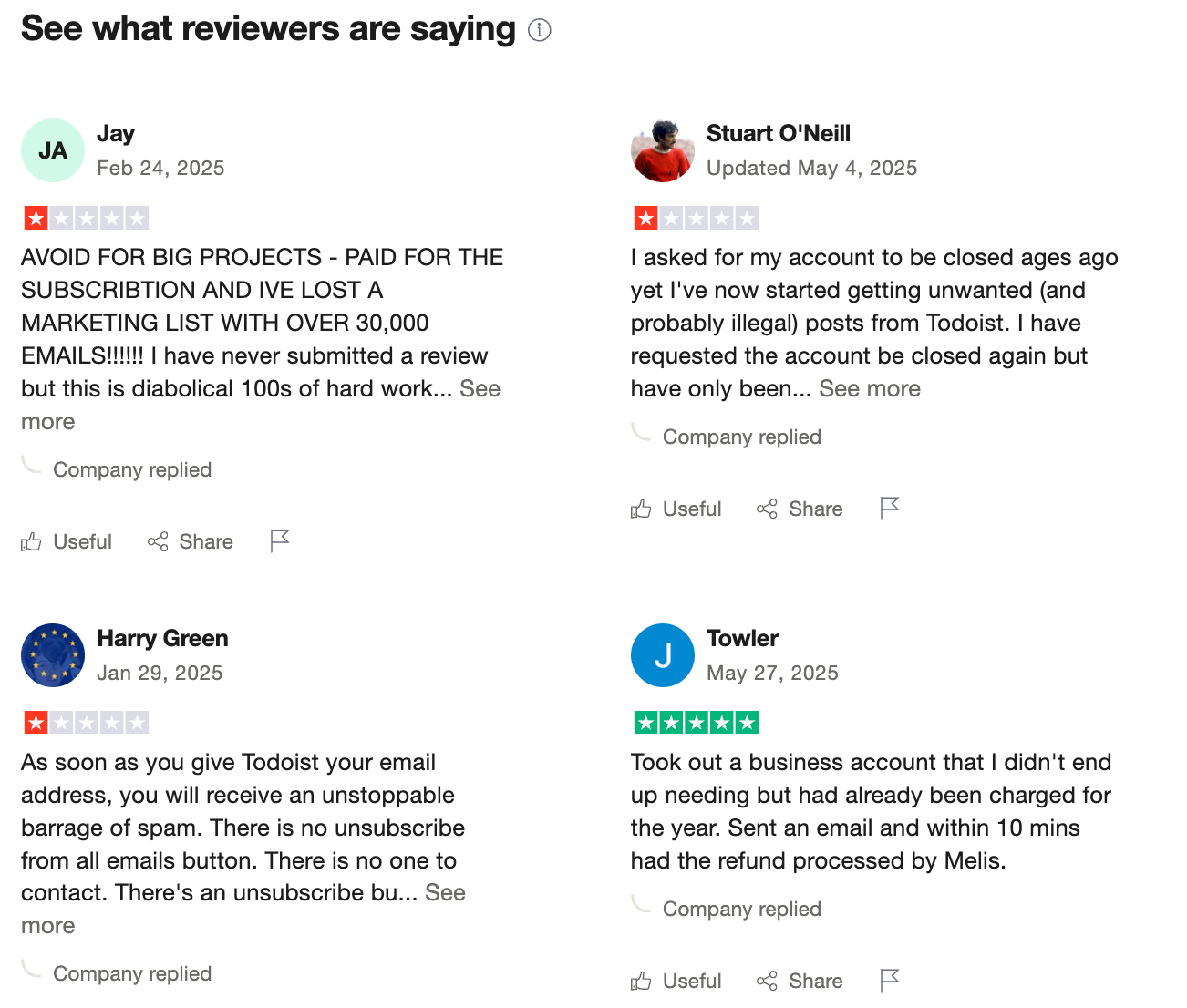
"With a superb interface, apps for every mainstream platform, and effective collaboration tools, Todoist is the to-do list app to beat." - PCmag
How to start
- Just download Todoist on any device, dump a few tasks into your Inbox, and try the “Today” view.
8) Finch

Finch is not a productivity app. It doesn't have a task list, a calendar, or a project manager. What it has is a small virtual bird that grows healthier when you take care of yourself. Every mood check-in, breathing exercise, glass of water, and small goal you complete nudges your Finch forward - and in doing so, nudges you forward too.
Key features
- Add daily tasks like meds, hygiene, water, whatever matters to you
- Quick scale ratings and guided prompts help spot patterns
- You earn rewards and customize your bird and its world
- Reflect on your day with gentle, guided questions
- No time-blocking or deadlines
Pros
- Engaging for ADHD brains with gamification
"I like that Finch doesn't punish you for missing a day. There's no streak anxiety, which is perfect for ADHD. The rewards are actually motivating. It's low effort." – reviews
- I liked how flexible it was.
- Mood tracking is simple and insightful.
What I didn’t like
- No dark mode
"I cannot use this app at night - it's actually been so helpful, but no dark mode makes it incredibly difficult to log things at night or use the app when I first get up" – reviews
- It’s a bit overwhelming at first- lots of icons, tools, journeys. Takes a few days to get the hang of.
- The mobile UI is cute, but not for everyone. If you don’t like gamified designs, this might feel too much.
- There’s no time-blocking or calendar view, so it’s not a traditional planner, more like a self-care tracker.
- You don't have an AI Assistant who you can ask to schedule tasks, search notes, or plan the day
Pricing
- Free plan with core features
- Paid plan is around $9.99/month
Suitable for
- People with ADHD, especially those who enjoy gamified apps and want a planner that feels more like a companion than a tool.
Finch reviews (source)
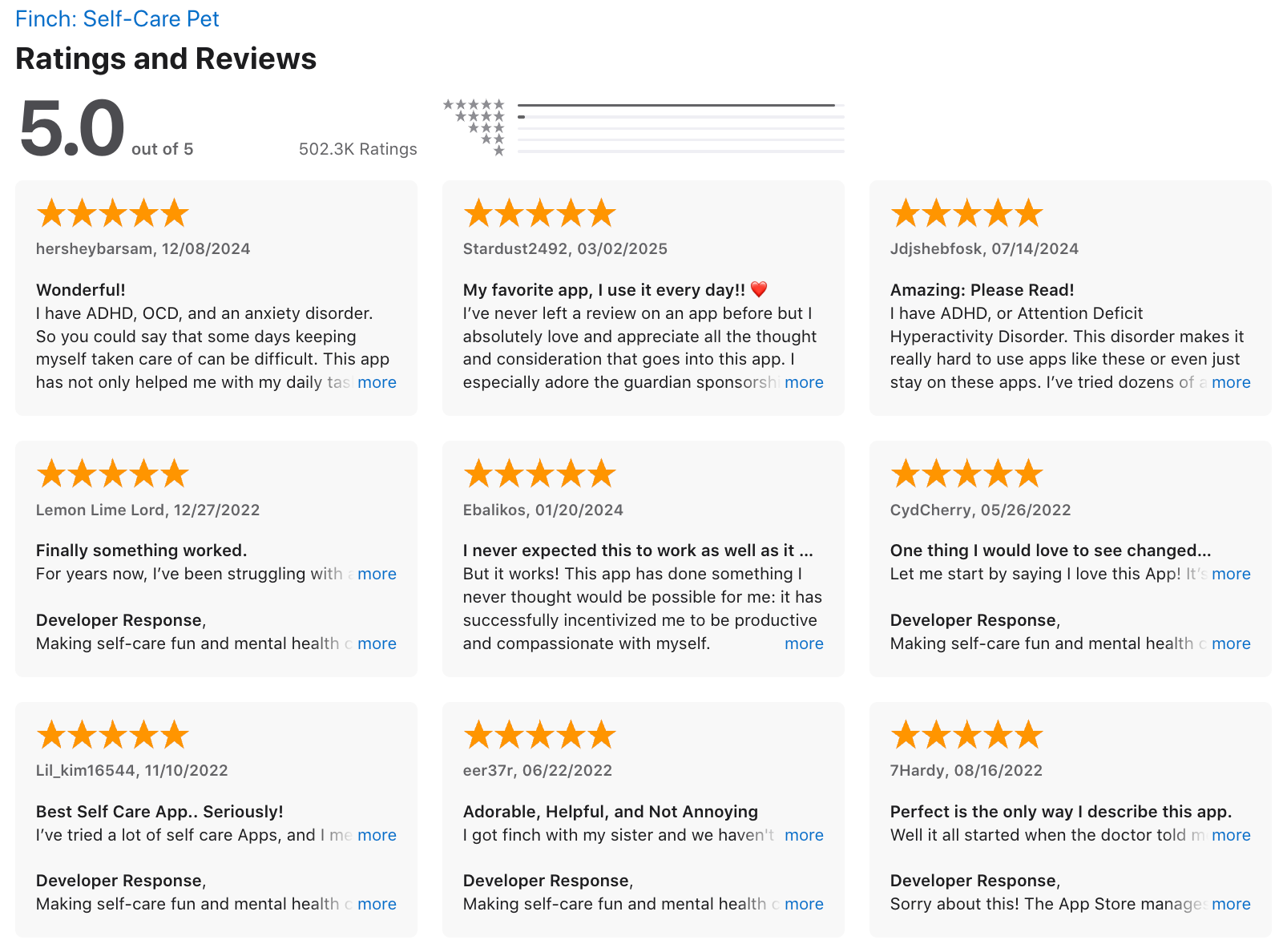
this used to be a lot more self-care focused, but lately the updates have been a lot more focused on cosmetics and gamifying features. The self care activites are hidden behind more menus than before - Ariane
I like finch because it allows me a massive amount of autonomy when it comes to how I make goals and what I need to do to complete them - hallowiener8D
How to start:
- Download Tiimo, try the free plan, and test the AI features during the trial. Stick to a few routines at first so you don’t get overwhelmed.
Conclusion: Choosing the Best ADHD Planner App for You
There’s no single “best” ADHD planner app - because ADHD doesn’t look the same for everyone. The tools in this guide solve different parts of the problem, and that’s a good thing.
- Some apps, like Saner.AI, focus on helping you think, plan, and prioritize when your brain feels scattered.
- Others, like Finch and Goblins.tools, lean into emotional support and breaking tasks down when things feel overwhelming.
- Visual planners such as Tiimo and Structured work well for time-blindness, while tools like Sunsama, Todoist, TickTick, Any.do, and Llama Life shine at task management, routines, or daily structure.
What matters most is whether you actually keep using it. ADHD-friendly tools should be flexible, forgiving, and easy to come back to after you fall off
If a planner helps you start more often, feel less overwhelmed, and follow through even a little better than before, it’s doing its job.
Stay on top of your work and life
Frequently Asked Questions about ADHD Planners
1. What is an ADHD Planner?
An ADHD planner is more than just a calendar or to-do list. It’s a system, digital or physical, designed to help people with ADHD organize their time, reduce overwhelm, and stay on track without burning out.
ADHD-friendly planners often include:
- Flexible scheduling (not rigid time blocks)
- Visual reminders and task breakdowns
- Built-in prompts to review, refocus, and reset
- Space for brain dumps and spontaneous ideas
Think of it as a planning tool that works with your brain, not against it.
2. Why do people with ADHD need a different kind of planner?
Traditional planners assume consistency and focus. Many adults with ADHD have greater difficulty managing time, organizing work, and prioritizing tasks. (According to semi-structured telephone interviews)
An ADHD planner addresses these pain points by:
- Showing the next step, not everything at once
- Using cues to prompt action at the right time
- Organizing tasks in a way that feels intuitive
3. What features should I look for in an ADHD planner?
Look for tools that support:
- Task breakdowns – helps you avoid overwhelm
- Reminders that repeat – so you don’t rely on memory
- Daily prioritization – suggests what to do next, not everything
- Low setup friction – easy to update, even on busy days
- Note linking – connect your thoughts without retyping
Bonus if the planner includes voice input, quick capture, or integrates with your calendar.
4. Are there digital ADHD planners?
Yes - and they’re growing in popularity. Digital ADHD planners often offer:
- Smart reminders and nudges
- Natural language input (“Remind me to call Sam Friday”)
- Integration with tasks, calendar, and notes
Popular digital ADHD planners include:
- Saner.AI – AI planner built by and for ADHDers
- Todoist – Simple to use
- Sunsama – time-blocking
Each has different strengths. Saner.AI, for instance, turns your messy thoughts into structured tasks without tags or checklists.
5. What’s the best ADHD planner for adults?
The best planner depends on your lifestyle, but ADHD adults often prefer:
- Minimal setups
- Mobile access
- Visual cues and reminders
- AI assistance or automation
Saner.AI is a strong option for adults who juggle work and life. It gently nudges you when it’s time to refocus and helps you turn ideas into action without feeling micromanaged.
6. Can AI be used as an ADHD planner?
Absolutely. AI planners like Saner.AI act like personal assistants. It:
- Understand your natural language
- Pull up old notes instantly
- Suggest tasks based on context
- Nudge you when you drift
This is especially helpful for ADHD users who struggle with planning consistency. AI doesn’t forget what you meant - even if you did.
7. How do I start using an ADHD planner?
Start simple. Don’t try to “do it all.” Use your ADHD planner to:
- Dump your thoughts at the start of the day
- Pick 1–3 important tasks (no more)
- Use reminders instead of relying on memory
- Review and reset weekly
If you’re using an AI ADHD planner like Saner.AI, just chat with it like you would with a friend:
“Help me plan tomorrow”
“What did I forget to do from last Friday?”
8. Are there free ADHD planner tools?
Yes! Some ADHD-friendly planners offer free versions:
- Saner.AI – Free plan includes task reminders, smart search, and calendar sync
- Goblin.tools – Basic task management
- Todoist – Free option available
Start with a free plan to explore what works for your brain.
9. What’s the best ADHD planner for students?
Students with ADHD need planners that help them:
- Keep track of assignments
- Break down big projects
- Avoid last-minute cramming
Look for ADHD planners that:
- Remind you about due dates before the panic
- Include checklists for multi-step tasks
- Let you search notes by topic or course
AI tools like Saner.AI work great here - it finds old class notes fast and reminds you of forgotten tasks before it’s too late.
10. Can ADHD planners help with motivation?
Yes. ADHD-friendly planners reduce friction, which helps you start. They also:
- Give structure without feeling rigid
- Remind you why something matters
- Turn big goals into small, doable steps
Many people with ADHD don’t lack motivation - they lack clarity and cues. A well-designed planner gives you both.
11. ADHD Planner vs traditional planner - what’s the difference?
| Feature | Traditional Planner | ADHD Planner |
|---|---|---|
| Fixed structure | ✅ | ❌ (too rigid) |
| Visual cues/reminders | ❌ | ✅ |
| Task breakdown support | ❌ | ✅ |
| Handles distractions | ❌ | ✅ (built for focus) |
| Adaptable scheduling | ❌ | ✅ |
ADHD planners are made for real brains, real distractions, and real chaos. They don’t expect perfection—they help you stay afloat.
12. What's the best ADHD planner for professionals?
Professionals with ADHD often need:
- Smart prioritization
- Fewer apps to juggle
- Automatic follow-up reminders
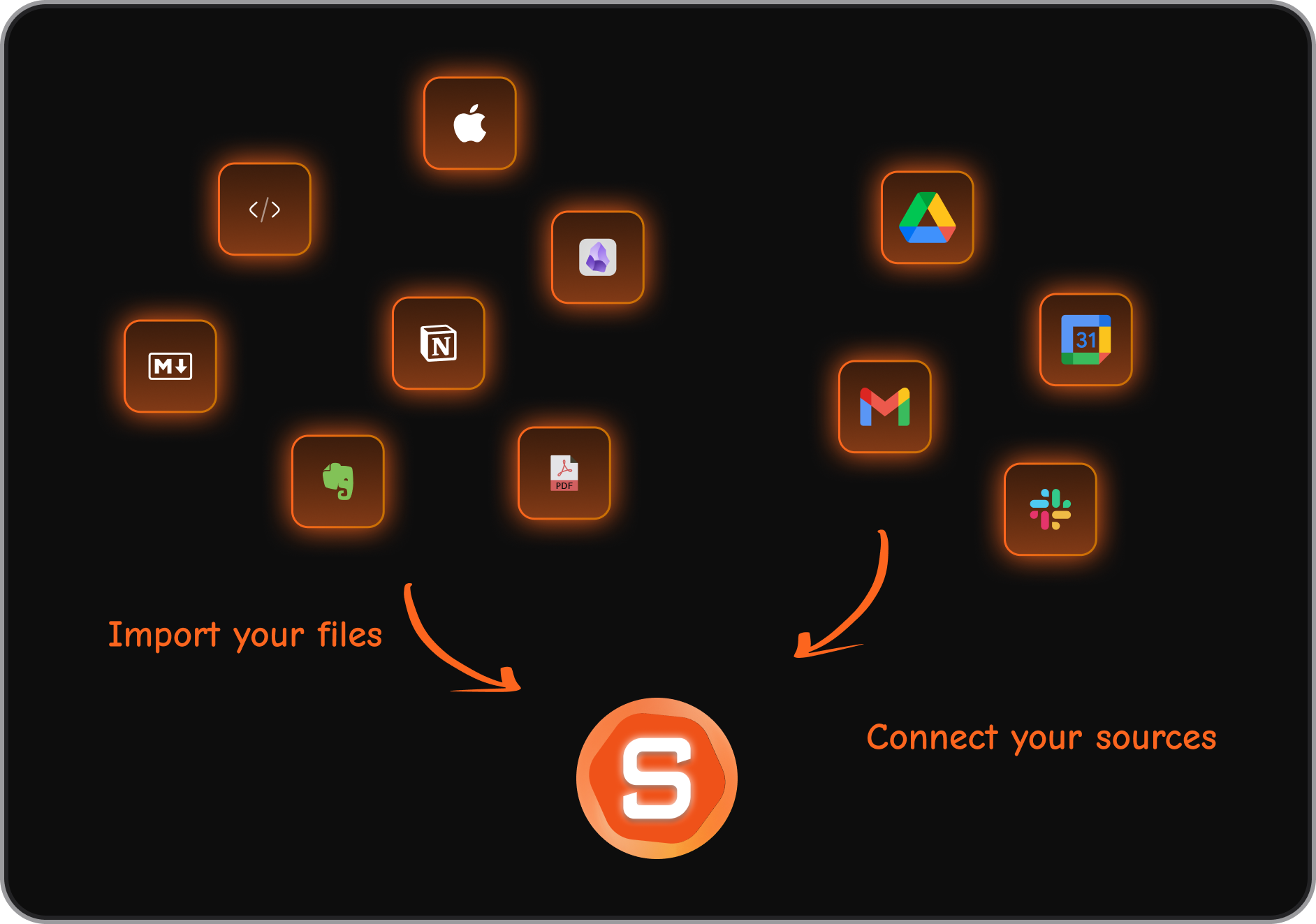
Saner.AI is especially strong here. It combines notes, calendar, and task lists in one brain-friendly space. You can talk to it like a teammate, and it reminds you when things slip.
13. Can an ADHD planner reduce burnout?
Yes - when used correctly. A good ADHD planner like Saner.AI:
- Helps you focus on fewer things
- Gives clarity during chaos
- Nudges you to rest before exhaustion
14. How do I stay consistent with using an ADHD planner?
Staying consistent is one of the hardest parts, especially with ADHD. Most people fall off not because the system is bad, but because it requires too much effort to maintain.
To improve consistency:
- Keep it frictionless: Use a planner you can update quickly (voice input helps).
- Build a habit loop: Pair planning with an existing habit (e.g., review your planner with your morning coffee).
- Allow resets: Missed a day (or a week)? Just pick it back up. No guilt.
- Use reminders that come to you, not ones you have to check.
Planners like Saner.AI are designed to stay with you, even when you drop the ball. It nudges you back gently, no judgment.
15. Can ADHD planners help with emotional overwhelm?
Yes - this is one of the most under-discussed benefits.
For people with ADHD, emotional dysregulation is common. Overwhelm often comes not from the amount of work, but the feeling of being scattered or behind.
A well-designed ADHD planner like Saner.AI helps by:
- Externalizing your thoughts – so they’re not swirling in your head
- Breaking things down – so tasks feel doable, not impossible
- Prioritizing clearly, so you don’t waste energy deciding
- Providing structure during chaos, which creates a sense of control
Even just writing or saying “here’s what I need help with” can start calming your nervous system. ADHD planning isn’t just about getting things done - it’s about feeling grounded while doing them.
Stay on top of your life with the Top ADHD Planner