
The ADHD dopamine menu: how to order a better mood off your own list

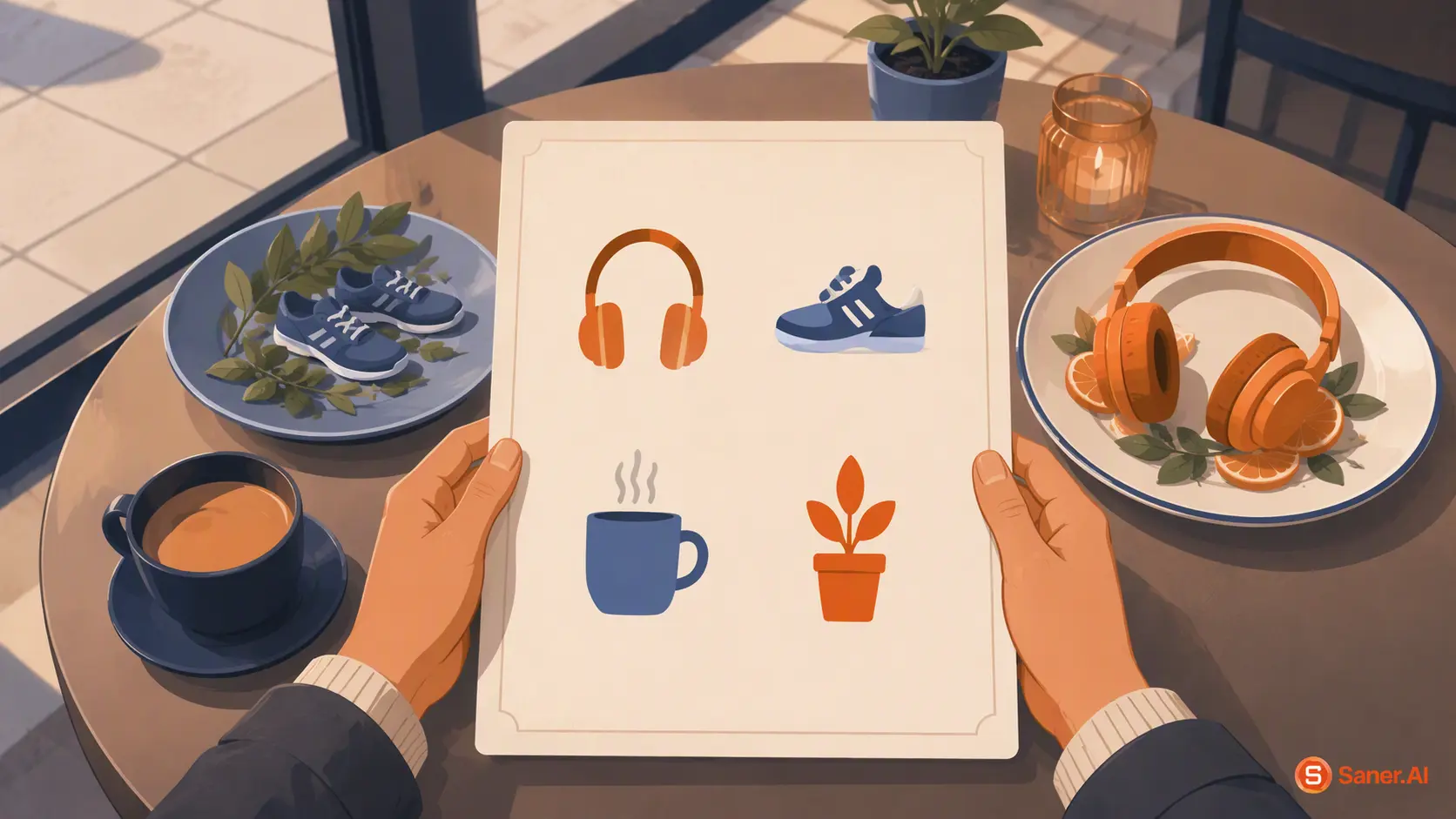
I was skeptical the first time I heard the name (it sounds like something invented for TikTok, and partly it was). But the idea underneath is practical, and it holds up better than most productivity trends.
The term came from a May 2020 How to ADHD video in which ADHD coach Eric Tivers used it in conversation with creator Jessica McCabe. It spread across TikTok in 2023 and has stuck around since.
In this guide you'll find the science behind why ADHD brains go hunting for stimulation, what goes in each section of the menu with real examples, and how to keep your menu somewhere you'll actually see it when you need it.
Why ADHD brains go shopping for dopamine?
1) The reward system works differently
- In a well-known 2009 study in JAMA, researchers led by Dr. Nora Volkow used PET scans on 53 unmedicated adults with ADHD and 44 adults without it. The ADHD group had fewer dopamine receptors and transporters in the brain's reward pathway, and those differences were linked to inattention.
- Volkow, who directs the U.S. National Institute on Drug Abuse, put it plainly when the study came out. She said in a Brookhaven National Laboratory release that these reward-pathway deficits "could underlie these patients' abnormal responses to reward."
In everyday terms, that is why an important task can feel almost impossible to start while a random side quest swallows your whole afternoon. Importance alone doesn't reliably switch the motor on. Interest, novelty, urgency and a bit of challenge often do.
2) Quick hits vs. slow burns
Researchers writing in The Conversation explain that one leading hypothesis is lower "tonic" (baseline) dopamine in ADHD. When your baseline is low, short bursts of reward feel bigger and more tempting, so you keep chasing them.
Quick hits come with a tolerance problem. Activities that give a fast, sharp spike (a sugary drink, a new video, a fresh notification) wear off quickly, and you get used to them. Activities like running can keep dopamine gently raised for hours. Their conclusion: an ADHD-friendly menu should lean on the slower, healthier "main courses" and treat the quick stuff as an occasional treat.
3) Anticipation counts too
You don't have to wait for the fun part to get the reward. A 2011 Nature Neuroscience study from McGill University found that listening to music people loved released dopamine in the striatum, and that anticipating the best moment of a song triggered its own release in a different region. That is good news for anyone who gets a lift just from booking the concert.
What goes on the menu: five courses with examples
Course | Time | What it's for |
|---|---|---|
Starters | 1 to 10 min | A quick spark to get unstuck |
Mains | 30+ min | Real recharge that lasts |
Sides | Runs alongside a task | Makes boring work bearable |
Desserts | Any | Easy pleasure, best in small portions |
Specials | Planned ahead | Novelty and something to look forward to |
1) Starters: small sparks

Starters are tiny, low-setup actions that shift your state when you feel frozen. If one takes more than a couple of minutes to set up, it probably belongs somewhere else.
- Stepping outside for two minutes of sunlight
- Putting on the one song that always gets you moving
- Making tea in the mug you like best
- Ten jumping jacks or a quick stretch
- Texting a friend a meme you saved
2) Mains: the real refuel

Exercise has the strongest evidence: a 2023 network meta-analysis of 44 studies and 1,757 young people with ADHD found physical exercise helped symptoms and executive function, and the authors suggest people do the kind of exercise they enjoy most so they stick with it. (Most exercise trials so far are in children and teens, so treat the adult picture as promising, not settled.)
- A 30-minute walk, run, swim or dance class
- Cooking something new with music on
- An hour on a hobby project you love, like drawing, gardening or fixing a bike
- Coffee or a walk with a friend
- Playing an instrument
3) Sides: the stuff that makes chores go down easier

Sides pair with a task you don't love. They add just enough stimulation to keep you in the chair.
- A podcast or audiobook while you do dishes or admin
- A favorite playlist while you write
- Body doubling, where you work next to someone (in person or on a video call)
- A fidget toy or standing desk during meetings
- Racing a timer to see how much you can clear in 15 minutes
4) Desserts: delicious, in small portions

Desserts are the easy, instant ones: scrolling, short videos, online window shopping, phone games. They aren't bad. They are just very easy to overeat, and per the tolerance research they leave you hungrier for more. Put them on the menu honestly, so you're choosing them on purpose instead of drifting into them. A simple trick is to pair dessert with a timer or have it after a main.
5) Specials: things to look forward to

Specials are bigger, planned treats that bring novelty: a weekend trip, concert tickets, a new restaurant, a class you've wanted to try. Because anticipation carries its own dopamine (remember the music study), even planning and counting down to a special can lift a flat week.
How to build your dopamine menu in 20 minutes
You don't need a cute template to start. A messy list beats a beautiful one you never finish.
- Brain dump first. Spend five minutes writing down anything that has ever made you feel more awake, calm or motivated. Don't sort yet. Weird entries are welcome; if screaming along to 2000s pop gets you through the laundry, it goes on the list.
- Look back before you look forward. Scroll your photos, your playlists and your last few weekends. The things you already reach for on good days are clues.
- Sort into courses. Put each item under starters, mains, sides, desserts or specials based on time and effort, not on how virtuous it feels.
- Make each item specific. "Relax" is too vague to act on when you're stuck. "Sit on the balcony with iced coffee, phone inside, for 10 minutes" comes with instructions.
- Remove friction. If a walk is on the menu, keep shoes by the door. If a playlist helps you start, build it now.
- Put the menu where your eyes already go. A sticky note on your monitor, your phone's lock screen, or the app you open first every morning.
- Review it monthly. ADHD interests shift. Something that worked in spring might feel flat by autumn, and that's normal. Swap it out without guilt.
Keeping your menu alive with Saner.AI
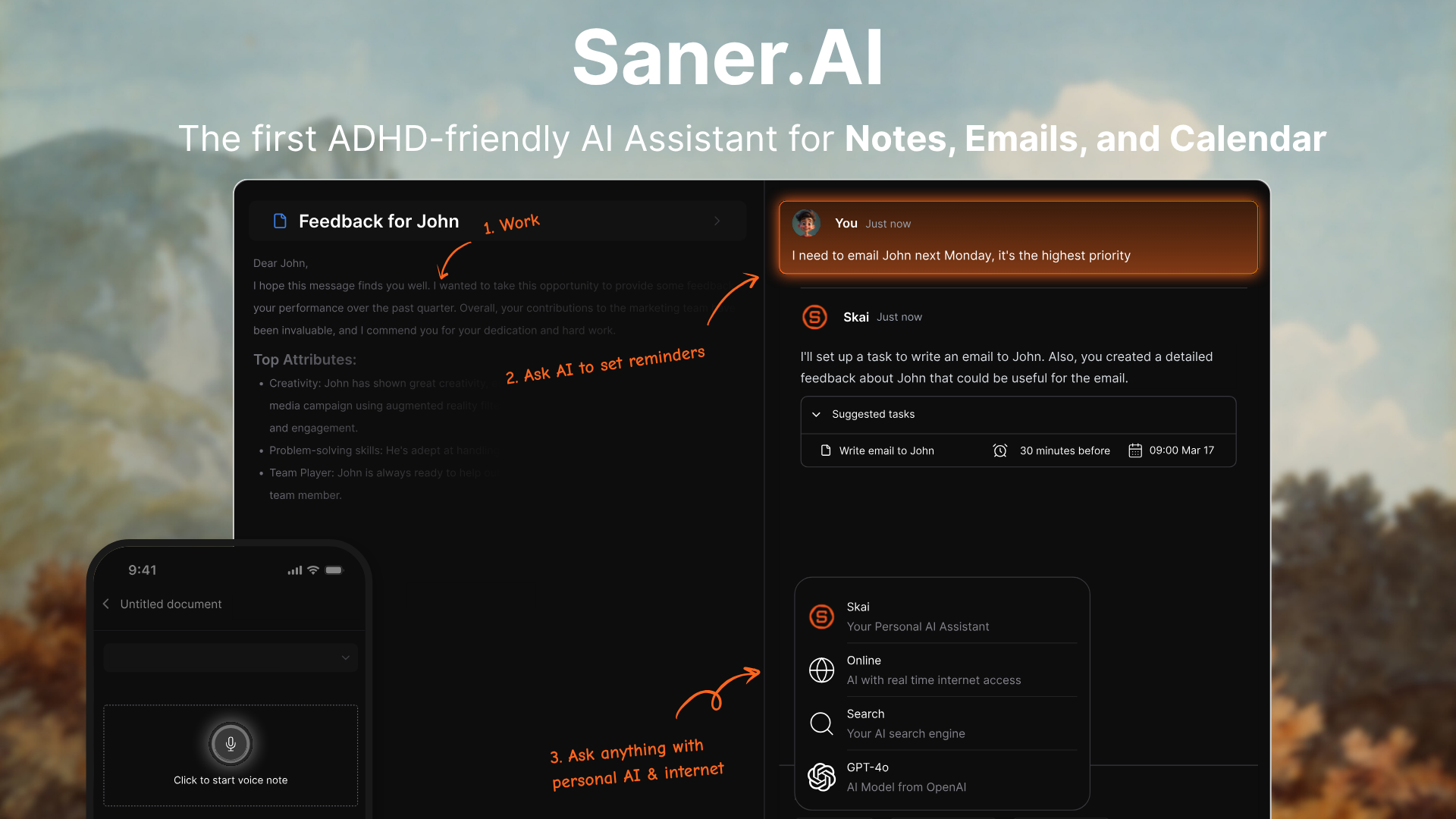
Here is the honest problem with dopamine menus: you write one on a good day, stick it somewhere, and three weeks later it's buried under receipts. The moment you most need the menu is the moment your brain is least able to go find it.
Saner.AI is an AI personal assistant built for people with ADHD. It pulls your notes, tasks, email, and calendar into one place, and you talk to its assistant, Skai, the way you'd talk to a person.
What it does well is the remembering, so your menu shows up when you need it instead of living in a drawer.
- Capture menu ideas the second they show up
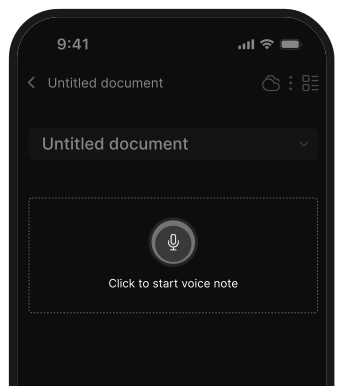
You'll notice menu items at random moments: a song that lifted you on the bus, a café a friend mentioned. Saner.AI's Smart Add lets you type a thought and have Skai save it as a note or task and file it into the right folder.
- Ask for a pick when you're stuck
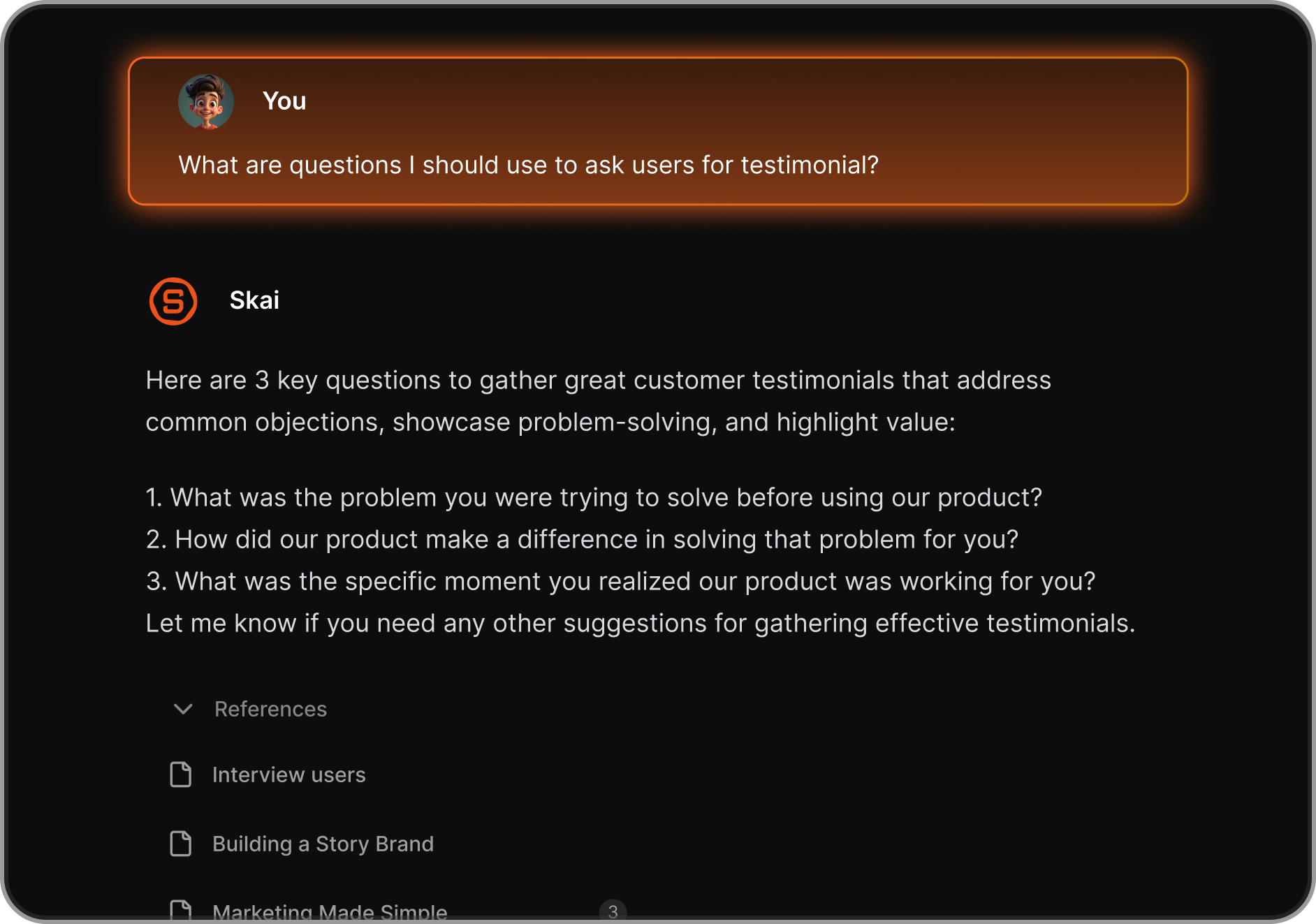
Because Skai searches your notes by meaning, you don't have to remember where you saved the menu or what you called it. When you're frozen, ask.
- Try: "I have 10 minutes and zero energy. What's a starter from my dopamine menu?"
- Try: "I need to get through expense reports. Suggest a side from my menu."
- Let the day plan include a refuel
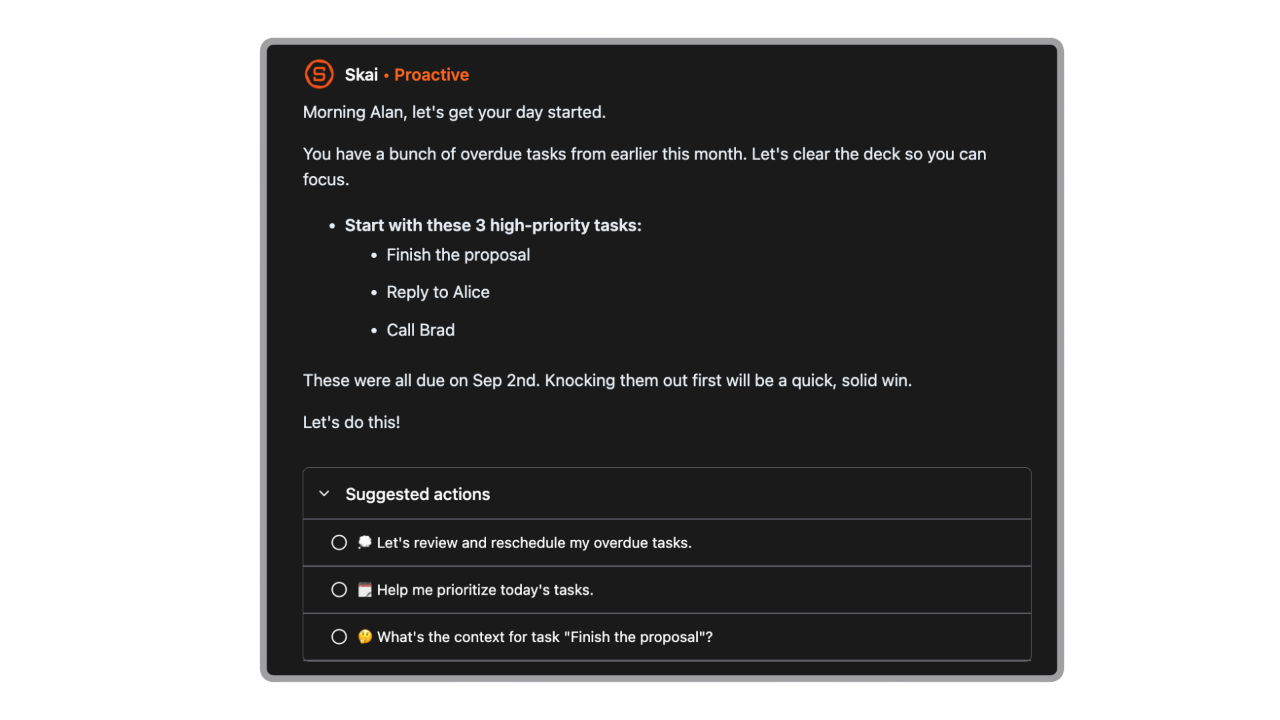
Skai can check in proactively: each morning, or at a time you choose, it scans your calendar, overdue tasks, and recent notes and summarizes what needs attention.
- Shrink the scary task so you can start it
A lot of menu-reaching happens because the next task feels huge. Ask Skai to break it into sub-tasks, then pin your top three in the Focus Box, so they stay visible on every screen.
- Plan your specials (and enjoy the countdown)
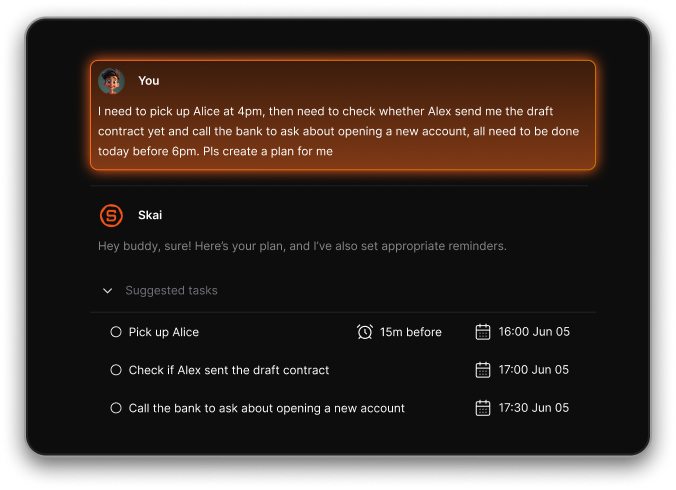
Specials need planning, which is exactly where ADHD brains drop the ball. Save the concert date, the trip idea, or the class link as a task with a reminder. You get the follow-through, plus the anticipation boost every time it pops up.
Pricing
- Free plan
- Starter at $8 a month
- Standard at $16 a month with unlimited notes and messages under fair use.
Mistakes that make a dopamine menu stop working
- Writing the menu for an imaginary, more disciplined you. If you've never enjoyed yoga, it shouldn't be your only main.
- Making every item a dessert. Fast hits feel good for minutes, then leave you flatter, which is the tolerance effect from earlier.
- Using the menu to punish yourself. "I can only have a starter after I finish everything" turns a support tool into a reward chart you'll resent.
- Hiding it. Out of sight really is out of mind with ADHD.
- Never updating it. A stale menu is a menu you stop reading.
A quick, honest note
There is no clinical trial on dopamine menus themselves. The idea borrows from solid research on reward, exercise, and motivation, and many people with ADHD find it useful, but it's a self-help habit. It doesn't replace diagnosis, medication, therapy, or coaching.
The CDC report found that about a third of adults with current ADHD got no treatment in the past year. If daily life feels like a constant uphill fight, talking to a doctor or licensed clinician is worth it, menu or no menu.
FAQ
What is a dopamine menu for ADHD?
A dopamine menu is a personal list of activities that boost your energy, mood, or focus, grouped like a restaurant menu into starters, mains, sides, desserts, and specials. People with ADHD use it to pick a helpful activity quickly when motivation is low, instead of defaulting to scrolling.
Who came up with the dopamine menu?
The term comes from a May 2020 How to ADHD YouTube video in which ADHD coach Eric Tivers discussed it with creator Jessica McCabe. It went viral on TikTok in 2023.
Is there scientific evidence that dopamine menus work?
No study has tested dopamine menus directly. The idea draws on research showing differences in the dopamine reward pathway in adults with ADHD (Volkow et al., JAMA, 2009) and on meta-analyses showing exercise improves ADHD symptoms and executive function, mostly in children and teens.
What should I put on my dopamine menu?
Put activities you already enjoy and will realistically do. Prioritize longer, healthier "mains" like exercise, music, cooking, or time with friends; keep quick "starters" under 10 minutes, and include "desserts" like scrolling, honestly but in small portions.
Can a dopamine menu replace ADHD treatment?
No. It's a self-help habit that can sit alongside medication, therapy, or coaching. If ADHD is affecting your work, health, or relationships, speak with a doctor or licensed clinician.
How can an AI assistant help with a dopamine menu?
An AI assistant like Saner.AI can store your menu, suggest an item based on how much time and energy you have, add refuel breaks into your daily plan, and remind you about planned treats, so you don't rely on memory when your brain is already overloaded.
Sources
- Staley BS, et al. ADHD Diagnosis, Treatment, and Telehealth Use in Adults, United States, October–November 2023. MMWR, CDC, October 10, 2024.
- Volkow ND, et al. Evaluating dopamine reward pathway in ADHD: clinical implications. JAMA, 2009;302(10):1084–1091.
- Brookhaven National Laboratory. Deficits in Brain's Reward System Observed in ADHD Patients. Press release, September 2009.
- Salimpoor VN, et al. Anatomically distinct dopamine release during anticipation and experience of peak emotion to music. Nature Neuroscience, 2011;14:257–262.
- Zhu F, et al. Comparative effectiveness of various physical exercise interventions on executive functions and related symptoms in children and adolescents with ADHD: a systematic review and network meta-analysis. Frontiers in Public Health, 2023.