
ADHD Task Switching: 7 Effective Steps to Overcome It

How to overcome task switching with ADHD
For many adults with ADHD, the problem isn’t focusing. It’s transitioning. You might work intensely on one thing, then feel mentally blocked, exhausted, or resistant when it’s time to switch, even to something important or urgent.
This matters because modern work requires constant transitions: emails, meetings, Slack messages, context changes. When task switching breaks down, people with ADHD often feel overwhelmed, behind, or “lazy,” even though they’re exerting enormous mental effort.
In this article, you’ll learn:
- What task switching really is and how the ADHD brain handles it
- Why switching tasks feels disproportionately exhausting with ADHD
- Common real-world task switching patterns adults with ADHD experience
- Evidence-aligned strategies that actually reduce switching friction
- Why neurotypical productivity advice often fails - and what works instead
1. What is Task Switching
Task switching is the cognitive process of stopping one task, disengaging attention, and re-engaging with a different task that has different goals, rules, or mental demands.
This is not the same as multitasking. Task switching happens sequentially, not simultaneously.
Focus vs switching
- Focus is sustained attention on a single goal
- Switching requires stopping, clearing mental context, and re-initiating attention elsewhere
For many people with ADHD, focus is not the core problem. The difficulty lies in:
- Disengaging from the current task
- Initiating the next task
- Rebuilding context from scratch
2. Why Do People With ADHD Struggle With Task Switching?

Three key factors are involved:
1. Dopamine regulation
ADHD brains tend to have lower baseline dopamine. Dopamine is involved in:
- Motivation
- Anticipation of reward
- Task initiation
When switching tasks, dopamine drops sharply - especially if the next task feels boring, ambiguous, or unrewarding.
2. Executive dysfunction
Executive functions coordinate planning, sequencing, and transitions. With ADHD:
- The “switching” mechanism is inefficient
- The brain resists context shifts
- Transitions feel heavier than they objectively are
3. Context dependency
ADHD attention is often context-locked. Once engaged, the brain prefers to stay in the same mental environment rather than rebuild a new one.
Despite these challenges, it's common for people with ADHD to exhibit remarkable persistence and sometimes even hyperfocus, where they can become deeply engrossed in certain activities to the exclusion of others.
Understanding these aspects can help in developing more effective strategies to support individuals with ADHD in managing their day-to-day activities and achieving their goals.
8 Practical Steps for Task Switching
Having ADHD can sometimes make it challenging to switch from one task to another. But don't worry, some friendly strategies can help make task-switching a bit smoother:
1. Start with a Clear Plan

Outline your day with specific times allocated for each task.
If a task seems too big, slice it into smaller pieces. Each piece completed is a step forward and reduces the anxiety of facing a large, daunting project. This method makes it easier to start each task and provides frequent satisfaction from small victories.
For example, after an hour of focused work, you might plan a 15-minute break to listen to your favorite music or a quick podcast episode. This not only gives you something to look forward to but also refreshes your mind for the next task.
Example: In the morning, write down a schedule:
- 9:00 AM - 10:30 AM: Work on the report.
- 10:30 AM - 10:45 AM: Break (enjoy a snack).
- 10:45 AM - 12:00 PM: Continue with the report.
- 12:10 PM - 12:30 PM: Do laundry.
- 12:35 PM - 1:00 PM: Lunch break.
- 1:10 PM - 2:00 PM: Finish the report.
- 2:10 PM - 3:00 PM: Prepare dinner ingredients.
2. Breakdown task
Task switching fails most often because the next task is too big, too vague, or too mentally expensive to enter.
For ADHD brains, large or unclear tasks trigger executive dysfunction. When your brain can’t immediately see where to start, it treats the task as a threat rather than an action. That’s when avoidance, procrastination, or distraction kicks in.
This is how you can start to break down your task:
- Write tasks as actions, not goals
Instead of “Work on report,” write:- “Open report”
- “Write intro paragraph”
- “Add 3 bullet points”
- Use paper or a notes app
Externalizing steps reduces the mental load on working memory, which is often overloaded in ADHD. - Pre-break tasks down before you need to switch
Do this when your energy is higher, not in the moment of transition.
These approaches help, but they still rely on you to do the planning, sequencing, and updating.
In real life:
- You forgot to break tasks down
- You don’t know how to break them down
- The task changes, and your list becomes outdated
- Planning itself becomes another task you avoid
This is where ADHD-friendly systems, not just techniques, make a difference. Instead of manually breaking everything down, you can offload that cognitive work.
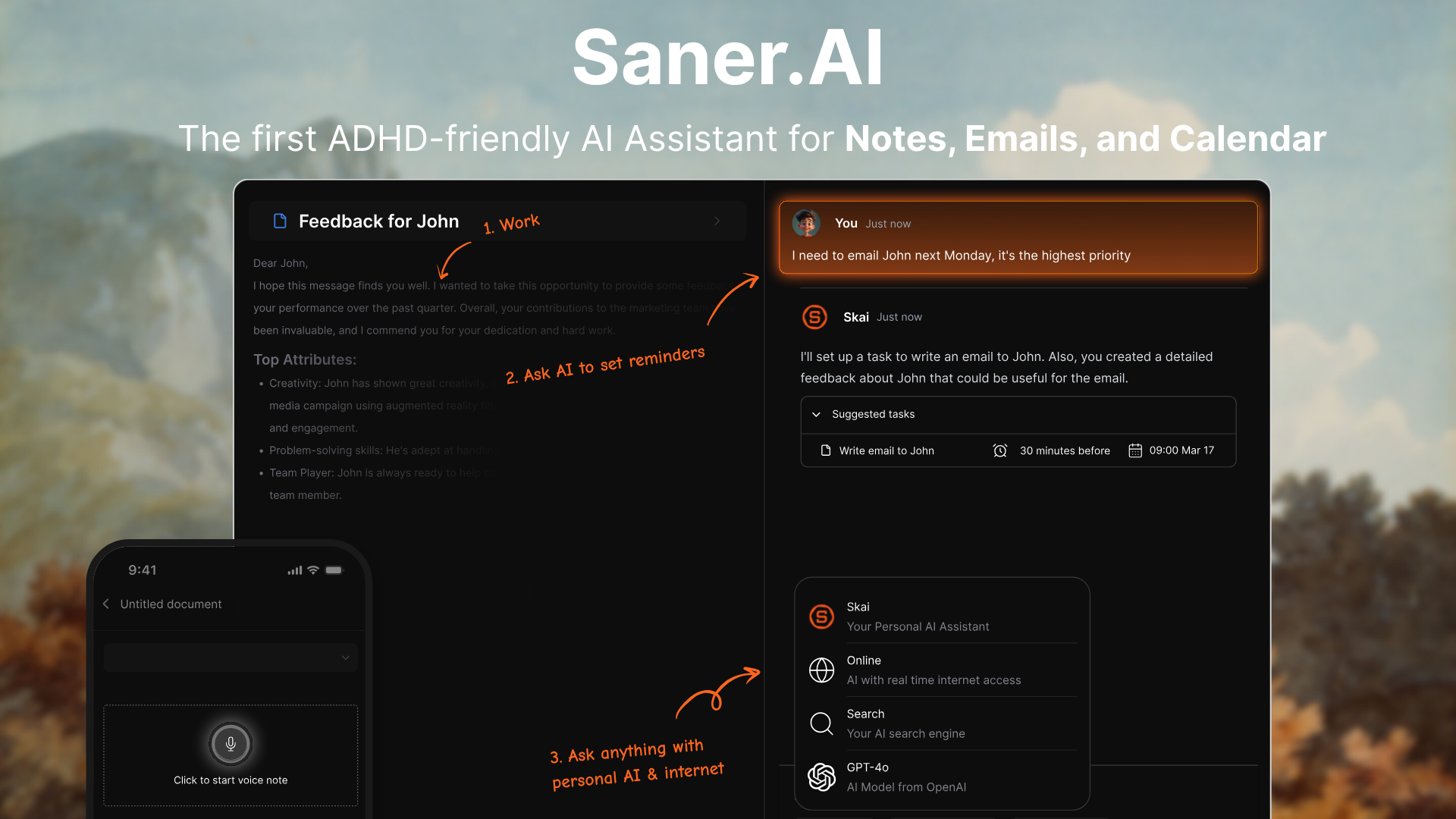
Apps like Saner.AI helps by acting as an external executive function that:
- Turn messy, unstructured notes into clear, actionable tasks
- Identify priorities and suggest what to work on now
- Break vague tasks into concrete next steps
- Surface relevant tasks automatically instead of relying on memor
- Reduce task-switching friction by presenting a clear plan for the day
You don’t have to decide what’s next while your brain is already overloaded. Saner.AI handles sorting, sequencing, and prompting - making transitions easier and reducing the cognitive cost of switching.
Stay on top of your work and life
3. Get Moving
Physical movement helps reset attention and reduces transition friction by shifting your brain out of the previous task’s context. Even light movement can lower mental resistance and make task initiation easier.
Brief physical movement increases dopamine and norepinephrine availability, which supports attention shifting and task initiation, two processes that are often impaired in ADHD.
Example: Take a 1–2 minute walk, stretch, or stand up and change location before starting the next task instead of switching while staying seated.

4. Refresh Your Environment
Small changes in your surroundings can signal your brain that it’s time to shift focus. Try rearranging your desk, opening a window for fresh air, or changing your background music. These cues can help minimize the mental effort required to switch tasks.
Example: After finishing the report and before starting laundry, change your environment by moving to a different room or simply reorganizing your workspace. This physical change can help signal to your brain that it's time for a new task.

5. Use Timers and Alarms
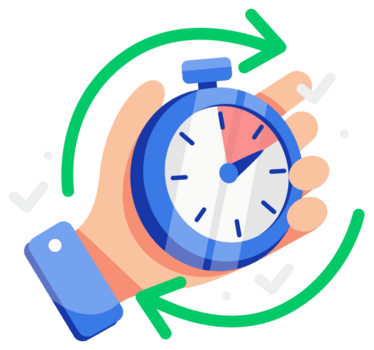
Set a timer for each segment of your work. This helps keep you accountable and ensures that you’re moving on to the next task as planned. It’s a simple tool that can help you stay on track without feeling overwhelmed by the breadth of the day’s responsibilities.
Example: Set a timer for each task segment. For instance, set 90 minutes for working on the report, then a timer for 15 minutes to complete a part of the laundry, and so on. This helps keep you on track and mindful of time.
6. Use transition cues instead of relying on willpower
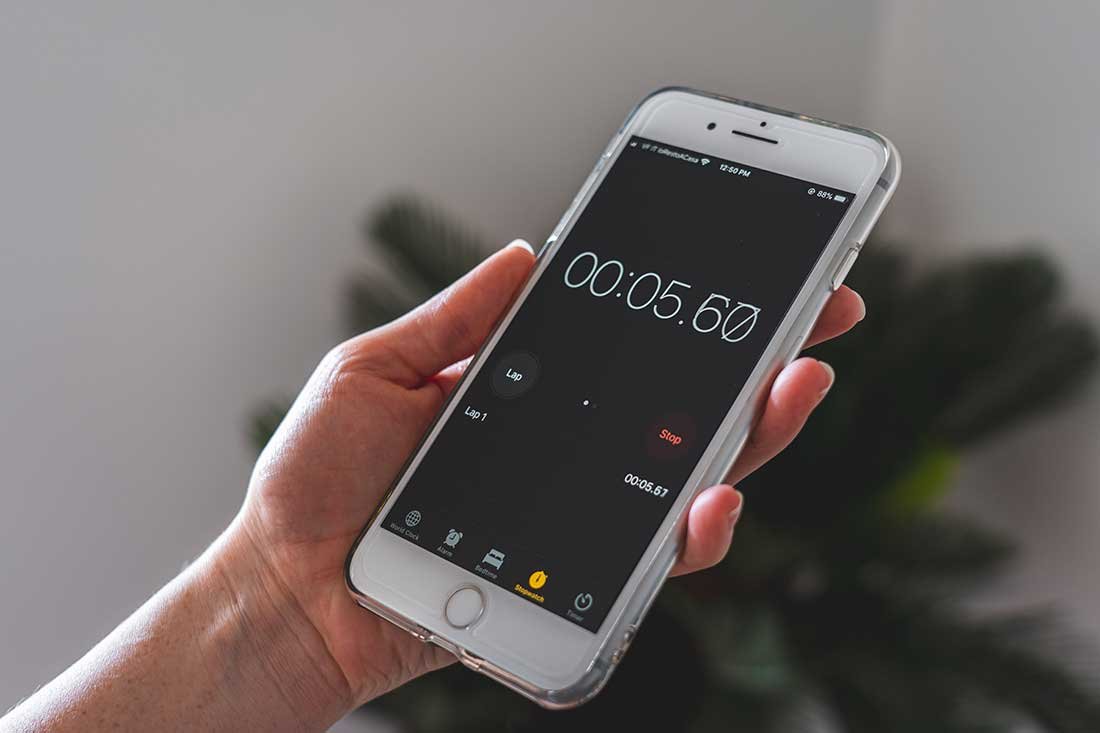
Cues help your brain shift states without forcing it.
Explanation:
ADHD task switching improves when transitions are triggered externally rather than internally. This reduces reliance on motivation.
Example:
- A timer that signals the end of a work block
- A reminder that says “Stand up → switch task”
- A short phrase like “Task done, next action now”
The cue becomes the switch, not your mood.
7. Reduce friction between tasks

The more steps required to start the next task, the more resistance you’ll feel.
Explanation:
Each extra step increases activation energy. ADHD brains are especially sensitive to friction, even if the steps seem small.
Example:
If your next task is writing:
- Keep the document open
- Keep notes visible
- Remove login or setup steps in advance
Switching becomes a continuation, not a restart.
8. Lower the emotional stakes of switching

Pressure and self-criticism make transitions harder.
When switching feels loaded with “I should’ve done more,” the brain avoids it. Neutral, low-pressure transitions are easier to execute.
Replace:
- “I wasted too much time, I need to catch up”
With:
- “This task is complete enough. Moving to the next step.”
The goal is progress, not perfection.
9. Reward Yourself

Set up a reward system for completing tasks or making significant progress.
This could be as simple as a cup of coffee after finishing a challenging assignment or a short walk after a productive morning. Rewards help maintain motivation and make the effort feel worthwhile.
By integrating these strategies into your daily routine, you can enhance your ability to switch tasks more smoothly and maintain productivity throughout the day.
The key is consistency and finding what personally works best for you to create a sustainable and enjoyable workflow.
Conclusion ADHD & Task Switching
If ADHD task switching feels exhausting, it’s not a personal failure. It’s a brain–environment mismatch.
ADHD brains don’t struggle because of a lack of motivation or discipline. They struggle because switching tasks requires extra cognitive effort: deciding what’s next, restarting focus, and holding context in working memory - all at once. When that load isn’t supported, every transition feels heavier than it should.
That’s why there’s no single “best” solution for ADHD task switching.
- Some people manage better with strict routines or visual planning.
- Others rely on reminders, timers, or breaking tasks down on paper.
- And increasingly, many are turning to AI - not to do the work for them, but to reduce the mental friction around starting and switching.
What matters most is reducing cognitive load, not optimizing productivity on paper.
Here’s a simple way to approach it:
✨ Try 2–3 different methods or tools (manual systems, AI assistants, planning apps)
🧪 Test them during real task switches - starting work, changing tasks, picking things back up
🧠 Pay attention to how calm and focused you feel, not just how fast you finish
If a tool helps you switch tasks with less resistance, fewer false starts, and less mental noise. It’s working.
For many people with ADHD, Saner.AI stands out because it acts like a thinking partner: helping clarify what to do next, breaking tasks down when your brain freezes, and proactively organizing plans so you don’t have to restart from scratch every time.
Less friction. Fewer restarts. More follow-through - one transition at a time.
Know what tasks to work on with an AI Assistant
FAQ: ADHD and Task Switching
1. What is ADHD task switching?
ADHD and task switching refer to the difficulty many people with ADHD experience when moving from one task to another. The challenge isn’t laziness or lack of discipline. It’s how the ADHD brain handles attention, momentum, and executive control. Switching tasks often requires more mental effort than staying in the same activity.
2. Why is task switching especially hard for ADHD brains?
ADHD brains tend to struggle with cognitive inertia - once engaged, it’s hard to disengage. Shifting tasks requires inhibiting the current focus, holding the next task in working memory, and re-orienting attention. This triple demand makes task switching uniquely draining for people with ADHD.
3. Is ADHD task switching difficulty an executive function issue?
Yes. ADHD task switching difficulties are closely linked to executive functions like planning, inhibition, and working memory. When these systems are overloaded, transitions feel overwhelming - even when the next task is simple or important.
4. How does task switching affect productivity with ADHD?
Frequent task switching can lead to:
- Mental fatigue faster than expected
- Procrastination between tasks
- Losing track of priorities
- Feeling “busy but unproductive.”
This is why ADHD productivity strategies often focus on reducing transitions, not doing more.
5. What’s the difference between multitasking and task switching in ADHD?
Multitasking is a myth for most brains - but especially for ADHD. What actually happens is rapid task switching. For ADHD users, this constant switching increases error rates, stress, and shutdown, rather than improving efficiency.
6. Does ADHD hyperfocus make task switching worse?
It can. Hyperfocus locks attention tightly onto one activity, making transitions even harder. While hyperfocus can be productive, it often delays necessary switches, like stopping work, starting a new task, or responding to time-sensitive priorities.
7. Are there proven strategies to improve ADHD task switching?
Yes. Research-backed approaches include:
- Clear transition cues (written or timed)
- Breaking tasks into smaller entry steps
- Externalizing priorities instead of holding them in memory
- Reducing decision-making at transition points
The goal is to lower the cognitive cost of switching.
8. Why does writing tasks down help with ADHD and task switching?
Writing tasks down offloads working memory. Instead of mentally holding “what’s next,” your brain can focus on switching. This is why ADHD-friendly systems emphasize external task lists rather than mental planning.
9. How can AI tools help with ADHD task switching?
AI tools can support ADHD task switching by:
- Turning messy thoughts into clear next actions
- Reminding you what to switch to (and when)
- Reducing the need to re-decide priorities
Used well, AI acts as executive support, not motivational pressure.
10. Can Saner.AI help with ADHD and task switching?
Yes, as a method - not a cure. Saner.AI helps by:
- Turning brain dumps into structured tasks
- Surfacing the next best task at the right moment
- Reducing app switching between notes, tasks, and calendar
This lowers friction during transitions, which is often the hardest part for ADHD users.
11. Is reducing task switching better than learning to switch faster?
For ADHD, yes. Most experts recommend minimizing unnecessary task switching rather than forcing faster transitions. Systems that batch tasks or guide focus tend to work better than rigid time blocking.
12. How does planning affect ADHD task switching?
A clear plan reduces decision fatigue at transition points. When the next step is already defined, switching feels lighter. AI-assisted daily planning can help by pre-deciding priorities before the day gets chaotic.
13. Does ADHD medication help with task switching?
Medication can help improve attention regulation, which may indirectly support task switching. However, many people still benefit from external systems, written plans, and tools - especially during high-stress or low-energy periods.
14. What’s a simple daily habit to improve ADHD task switching?
End each task by writing down exactly what comes next. This creates a “soft landing” for your brain when it’s time to switch. Tools like Saner.AI can automate this by capturing next steps as you work.
15. What’s the best overall approach to ADHD and task switching?
The most effective approach combines:
- Fewer unnecessary switches
- Clear external priorities
- Supportive tools that reduce mental load
ADHD task switching improves when the system does more of the organizing - so your brain doesn’t have to.
That's also what Saner.AI is built around!
Stay on top of your work and life
[Last updated in 2026]