
The ADHD tax: 7 ways to pay less of it


Quick answer: what is the ADHD tax?
The ADHD tax is the extra money, time, and emotional energy people with ADHD lose because of their symptoms. It shows up as late fees, forgotten subscriptions, duplicate purchases, missed follow-ups, and hours lost to tasks that "should" take 10 minutes.
Here's a scene a lot of ADHD readers will recognize. A parking fine arrives. You mean to pay it today, so it goes on the counter. Two weeks later it's under a pile of mail, and the penalty has doubled it. The original fine was small. The real cost was the week you spent avoiding that envelope
That's the ADHD tax. It's rarely one big expensive mistake. It's a slow drip of small charges, and every one of them comes with a side of shame.
The good news is that the research is pretty clear about where the tax comes from. Once you know which brain functions are being "charged," you can stop relying on them for the jobs they're worst at.
1. What the ADHD tax actually costs you

"ADHD tax" isn't a clinical term. It started as community slang. But the pattern behind it has been measured, and the numbers are hard to ignore.
A 2024 CDC report estimated that 15.5 million U.S. adults (about 1 in 16) had a current ADHD diagnosis in 2023, and roughly half of them were diagnosed as adults. So a lot of people have been paying this tax for years without knowing why.
The money tax
- In a 2017 study in PLOS ONE, researchers surveyed 544 adults. Even after controlling for age, income, sex, education, and substance use, ADHD symptoms were linked to late credit card payments, higher card balances, more personal debt, and use of pawn shops.
- A much larger 2020 study in Science Advances used real credit records instead of self-reports, drawing on mental health data for all 11.55 million people in Sweden. Adults with ADHD started out with normal default rates. By middle age, though, their defaults grew sharply, leading to poor credit scores and less access to credit.
- In a survey by UK bank Monzo, 60% of people with ADHD said it directly affects their finances, at an estimated average cost of £1,600 a year. 31% reported struggling with debt, compared with 11% of people without ADHD.
>> The tax compounds. A few late fees in your twenties become a credit problem in your forties, which is why fixing the system early matters
The time tax
A WHO World Mental Health survey led by Harvard's Ronald Kessler estimated that adult ADHD is linked to about 35 days of lost work performance per worker each year. Most of that loss came from people who showed up to work but couldn't perform at full capacity
At home, it looks like a 15-minute form that takes three weeks. You put it off, feel anxious about it, avoid it harder, then spend extra time cleaning up the consequences.
The emotional tax
Every forgotten bill or missed reply comes with guilt, and guilt makes you avoid the next envelope or inbox. ADHD coach Brendan Mahan calls this the "Wall of Awful": a barrier built from past failures and shame that makes some tasks feel impossible to start.
The same Swedish study found that among adults with ADHD, financial distress was associated with a fourfold higher risk of suicide. If money stress is starting to feel hopeless, please talk to a doctor, a therapist, or a local crisis line.
2. Why ADHD brains get these taxes
Working memory drops things
Working memory is the mental sticky note that holds "reply to Sam" while you finish your coffee. In ADHD, it's less reliable, and a 2024 study in Frontiers in Psychiatry found working memory problems to be among the most consistent impairments across ADHD presentations. So when an email asks for two things, you do the first and the second disappears.
Time blindness hides deadlines
A 2023 review of a decade of research found adults with ADHD can struggle with estimating time, reproducing time intervals, and managing time. In plain terms, "due Friday" doesn't feel real until it's Friday at 4pm.
Present bias makes now louder than later
The PLOS ONE study above measured something economists call delay discounting, or present bias: preferring a smaller reward now over a bigger one later. ADHD symptoms predicted stronger present bias, and the hyperactive-impulsive symptoms drove more of the financial problems than the inattentive ones.
Avoidance turns small tasks into big ones
Shame from past slip-ups makes the next task feel heavier, so you avoid it, so it grows. Trying harder adds pressure to the exact system that's already overloaded.
7 ways to pay less ADHD tax
1. Put money on autopilot first
This is the boring one, and it saves the most money. Every bill that can run without a decision from you is a bill you can't forget.
- Turn on autopay for rent, utilities, insurance, phone, and at least the minimum on every credit card.
- Schedule an automatic transfer to savings on payday, before the money feels spendable.
- Switch on low-balance and large-purchase alerts in your banking app.
- You can also use a budgeting app, which we have reviewed here.
2. Give every random thought one landing spot
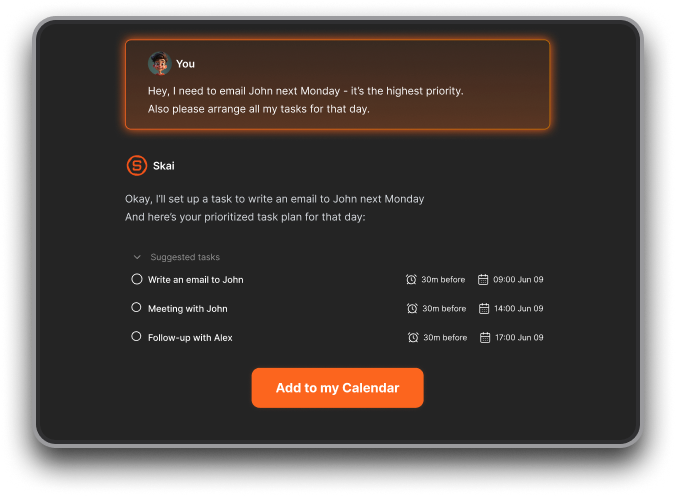
The ADHD tax often starts with a thought that has nowhere to go. You remember the dentist bill while driving, and by the time you park, it's gone. What you need is one inbox you trust, fast enough to use in ten seconds.
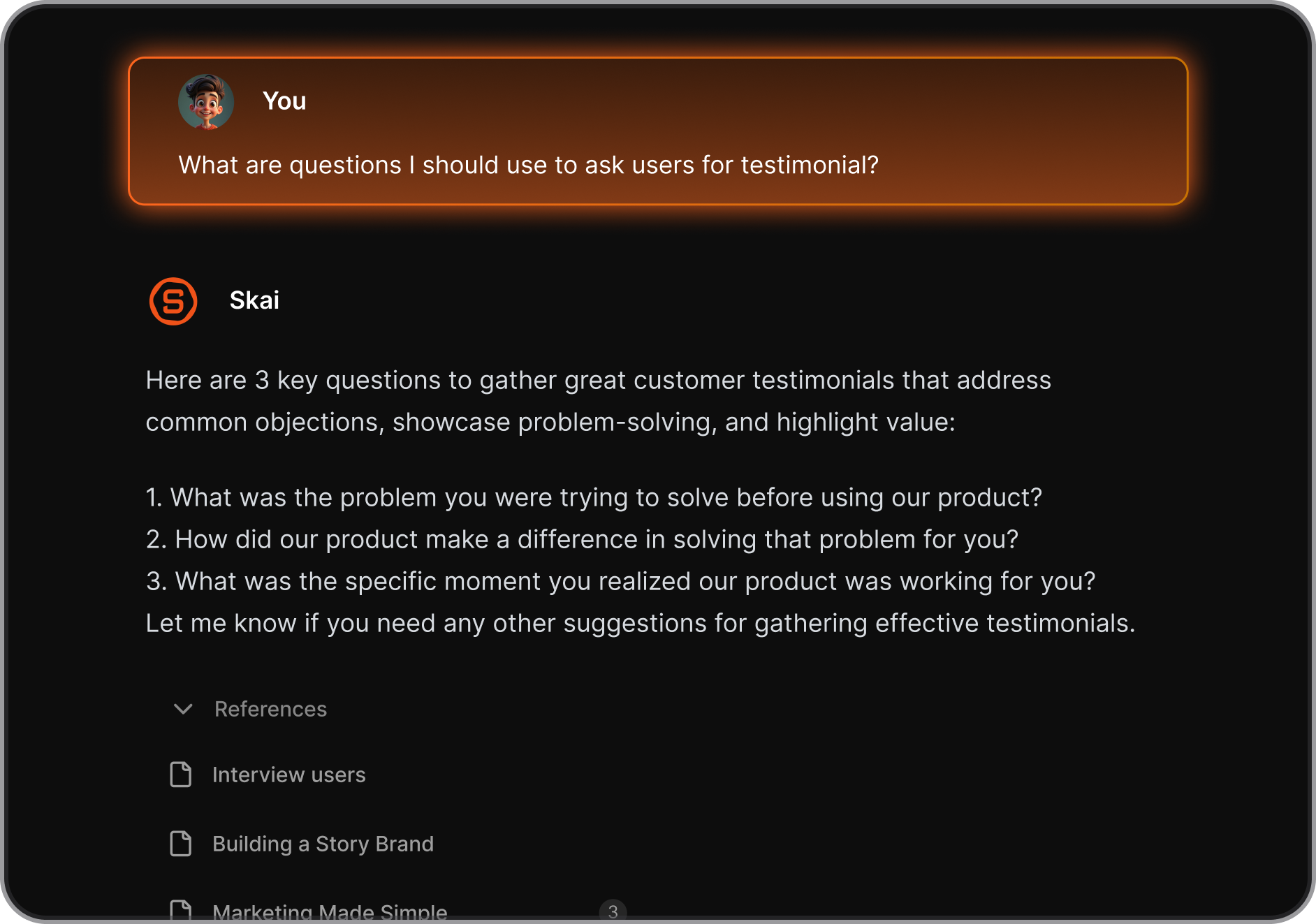
How this looks in Saner.ai: open the app and dump whatever's in your head, typed or spoken, without formatting it. Saner's Smart Add turns that mess into notes and tasks and files them for you. You can also snap a photo of the parking fine or the letter from your landlord and drop it into the chat. Saner can read images, so you can ask it to turn the photo into a task with the due date
Try typing: "pay the parking fine by the 30th, cancel the free trial before Friday, ask Mai about the invoice" and let Saner split it into three tasks.
3. Let your inbox hand you the tasks
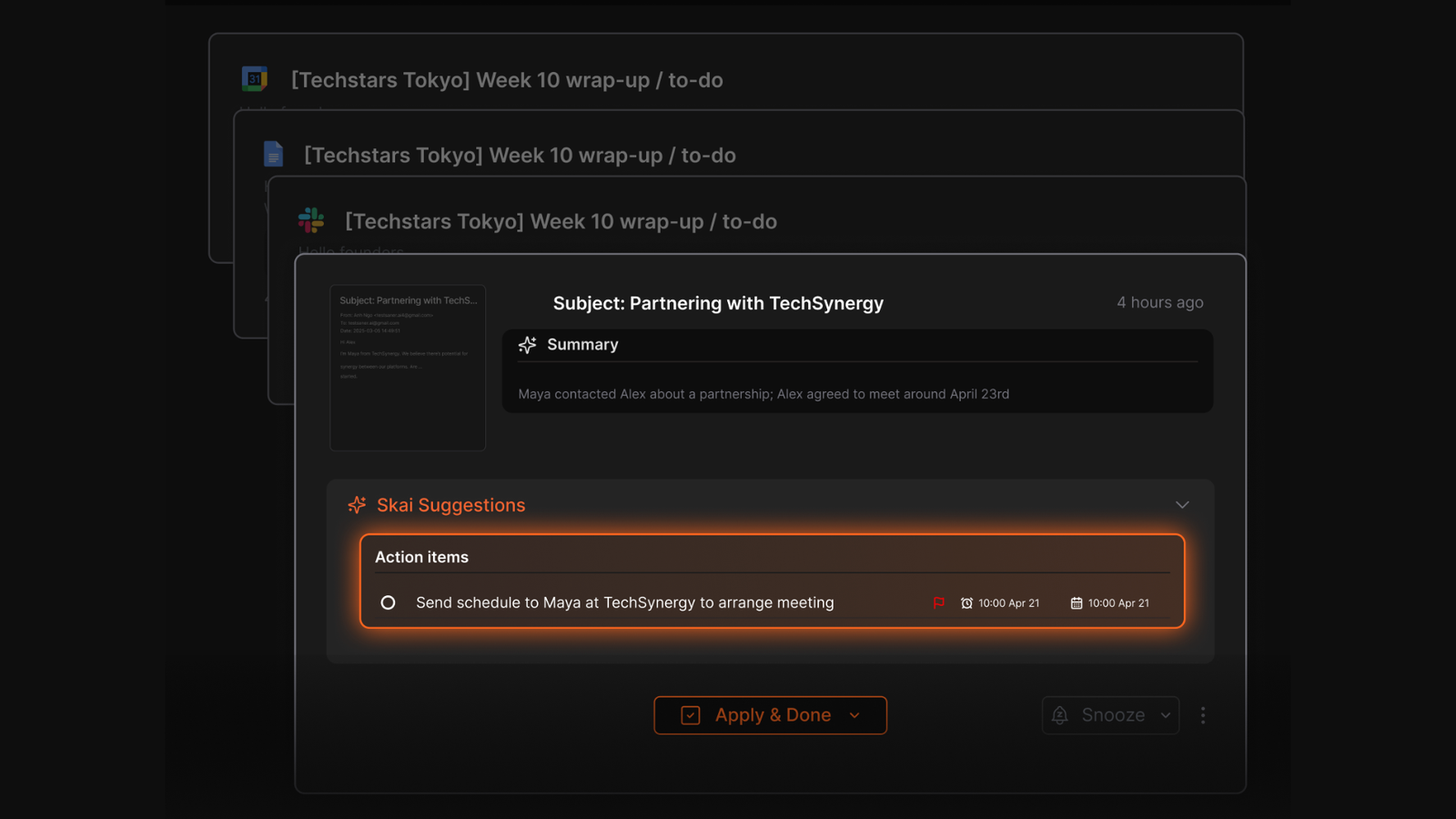
Email is where a lot of the time tax hides. Most email tools expect you to sort, label, and remember. That's three executive-function jobs before you've done any real work.
How this looks in Saner.ai: connect Gmail or Outlook. Saner reviews synced emails, suggests next steps, and turns them into tasks and reminders you can approve in one click. You check a list instead of digging through 70 unread messages.
4. Start the day with a plan you didn't have to make
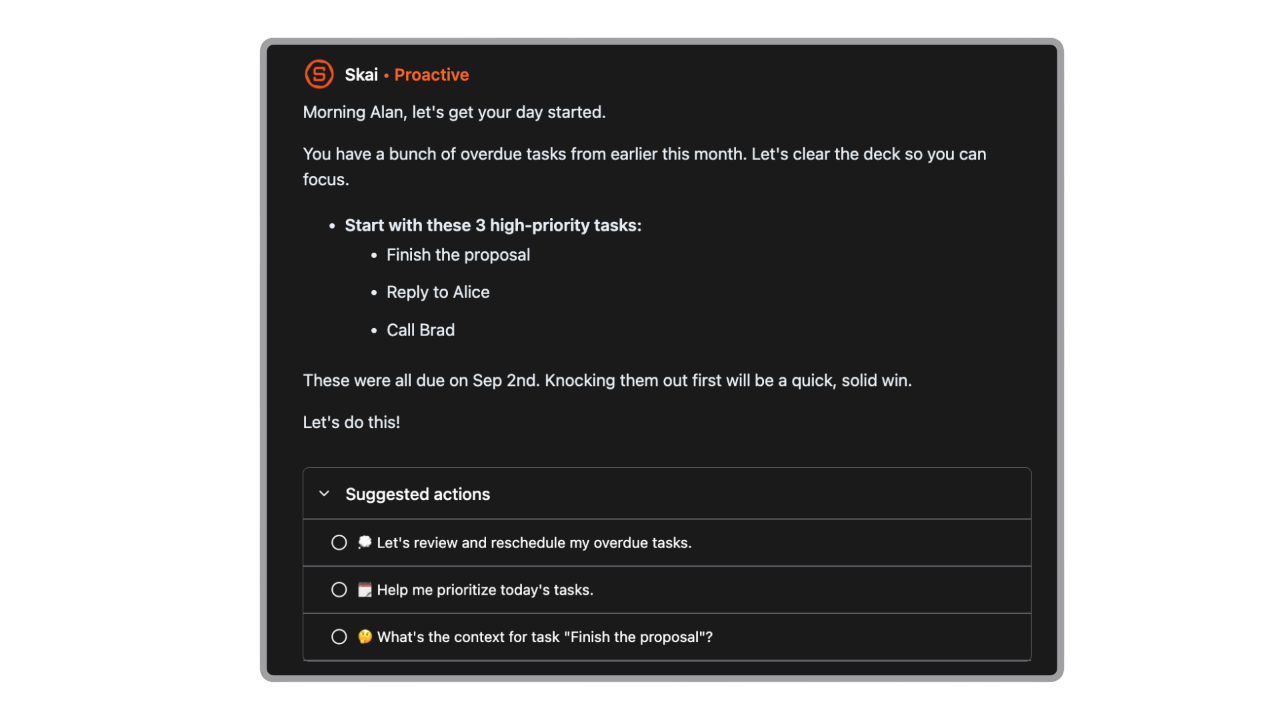
Planning the day is itself a demanding executive-function task, which is why so many ADHD mornings start with the inbox instead of the priority.
How this looks in Saner.ai: Skai Proactive runs every morning (or at a time you choose), scans your calendar, overdue tasks, and recent notes, and gives you a short summary of what needs attention. On mobile, you can show your current focus task on your lock screen through Live Activities.
5. Make time visible
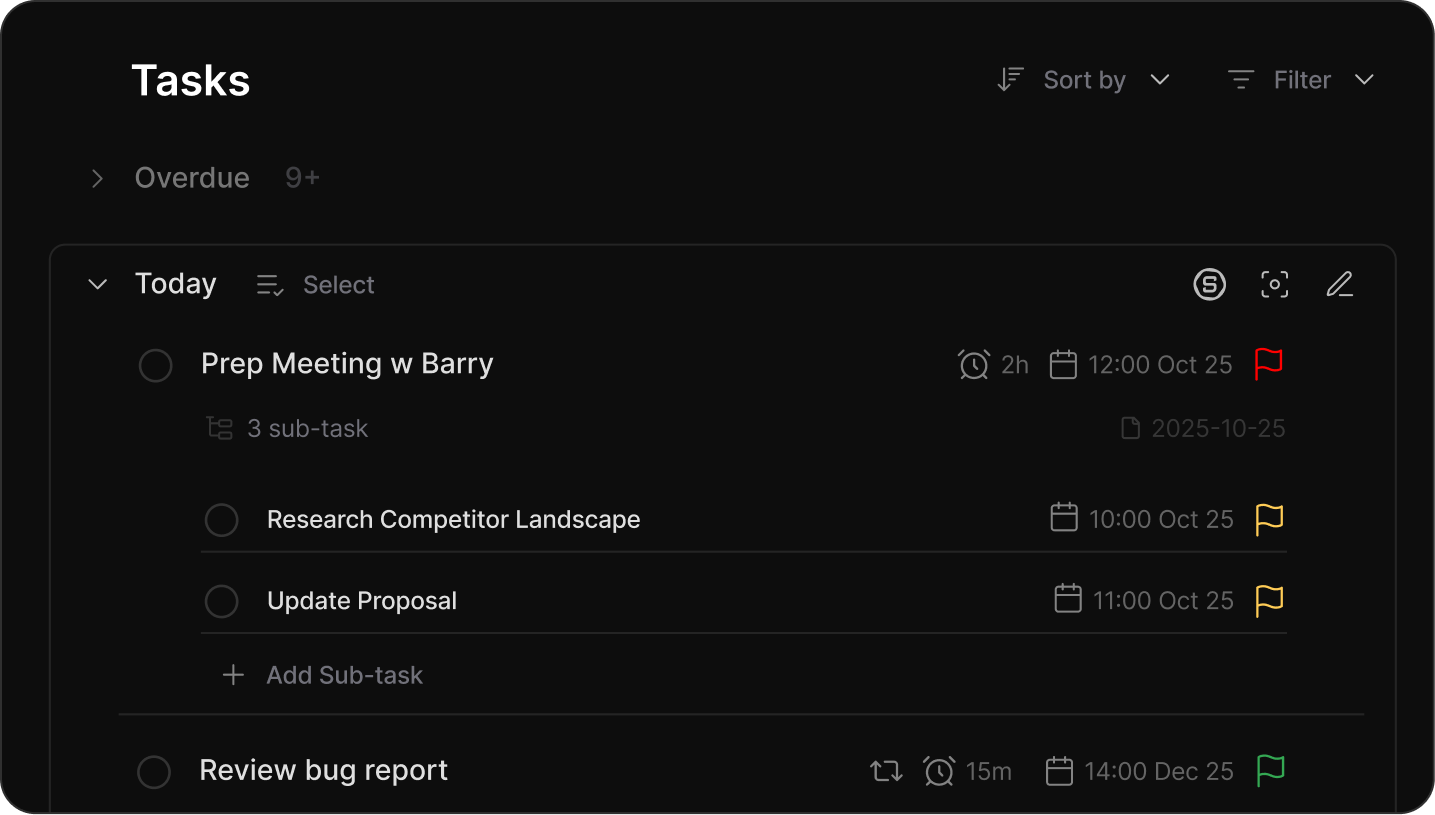
- Guess how long a task will take, then add a buffer. Time estimates are exactly what time blindness throws off, so plan for being wrong.
- Give admin tasks a calendar slot like a meeting. If it's not scheduled, it probably won't happen.
- Do your money admin during the time of day your focus is best, whenever that is for you.
How this looks in Saner.ai: add a duration to each task (30m, 2h), and it shows up as a block on your calendar view, next to your meetings. Seeing "tax form, 45 minutes, Tuesday 10am" is a lot less scary than "do taxes."
6. Shrink tasks until starting feels easy
"Sort out insurance" is a wall. "Find the policy number" is a step. This matches what works in therapy too: breaking overwhelming tasks into smaller steps is one of the core skills taught in the CBT program tested by Steven Safren's team
How this looks in Saner.ai: ask Skai to "break this down for me" on any task, and it creates sub-tasks you can tick off one at a time. Use recurring tasks for the jobs that come back every month
7. Add friction to spending and take your money back
Delete saved cards from shopping sites so every purchase takes a minute of typing.
- Use a 48-hour rule: add it to the cart, then decide in two days.
- Once a quarter, scan your statements for subscriptions you forgot about and cancel them.
- Call and ask for late fees to be waived. A lot of banks and utility companies will do it for a customer with a decent history, and asking costs you five minutes.
How this looks in Saner.ai: set a recurring task called "subscription check" every three months. Because Saner searches across your synced email by meaning, you can ask Skai something like "which subscriptions renewed in the last three months?" instead of hunting for receipts.
Where will you need Saner.ai?
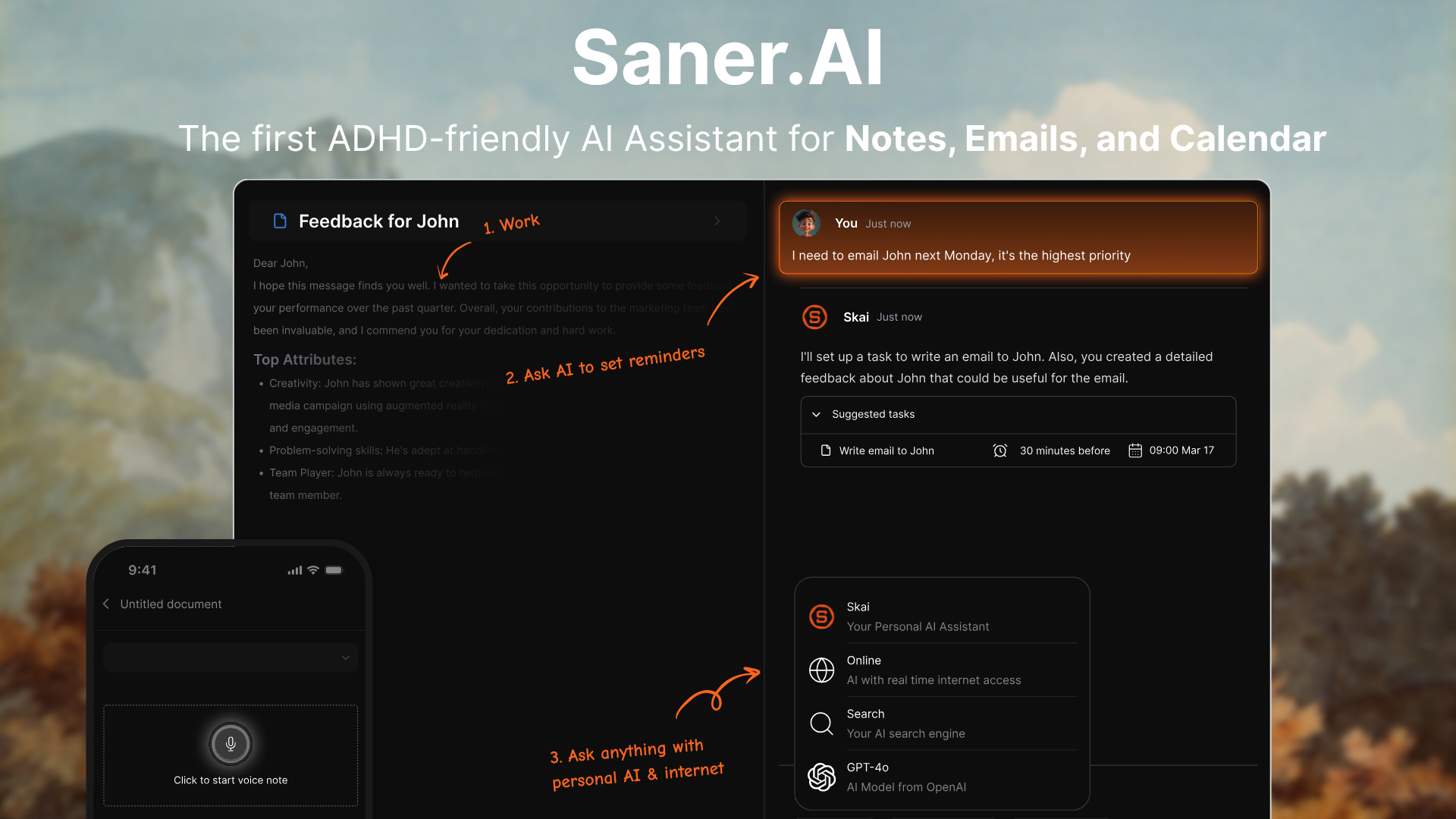
I'll be honest about what an app can and can't do here. Saner.ai is an AI assistant built for people with ADHD that keeps your notes, email, tasks, and calendar in one place, and you talk to it the way you'd text a person.
Its job is to carry the parts of the ADHD tax that come from remembering, sorting, and following up. It connects to Gmail, Outlook, Google Calendar, Google Drive, and Slack, and it runs on web and mobile.
What it's good at:
- Catching tasks from your brain dumps, photos, and emails so they don't depend on working memory
- Building a morning plan so you don't spend your best focus deciding what to focus on
- Finding things by meaning, so you can ask "what did the landlord say about the deposit?" without remembering where you saved it
Pricing:
- A free plan
- Starter at $8 a month and Standard at $16 a month when billed yearly.
What it can't do is treat ADHD.
A tool like Saner can make those skills easier to stick with day to day. Medication, therapy, or an ADHD coach is still the place to start if you haven't been assessed or supported yet. And if starting tasks is your main problem, a body-doubling app like Focusmate covers you
FAQ
What is the ADHD tax?
The ADHD tax is the extra money, time, and emotional energy people with ADHD lose because of symptoms like forgetfulness, time blindness, and impulsivity. Common examples are late fees, unused subscriptions, duplicate purchases, missed deadlines, and the stress that follows them.
Is the ADHD tax real or just a meme?
The name is informal, but the pattern is well documented. Studies link ADHD symptoms to more late credit card payments and personal debt, and a population study of 11.55 million Swedes found defaults among adults with ADHD climbing sharply by middle age.
How much does the ADHD tax cost per year?
There's no official figure. A Monzo survey of UK adults put the average at about £1,600 a year for people who said ADHD affects their finances. The lost work time can be bigger: one WHO-backed study estimated about 35 days of lost work performance per worker with ADHD each year.
What's the fastest way to reduce the ADHD tax?
Turn on autopay for every recurring bill and set low-balance alerts. It takes an afternoon and removes the most common source of late fees. After that, set up one trusted place to capture tasks so they stop living in your head.
Can an AI assistant help with ADHD?
It can help with the organizing side: capturing tasks, pulling action items from email, building a daily plan, and reminding you before things slip. Saner.ai is built for this. It won't treat ADHD, so it works best alongside medication, therapy, or coaching.
Does ADHD medication fix money problems?
Not on its own, according to the Swedish study, which found stimulant prescriptions weren't associated with better financial behavior. Skills-based help like CBT focused on organizing and planning adds something medication doesn't.
👉 You may like this post on how to improve Productivity for adults with ADHD