Daily Phone Planner Apps: I tested 20+ and here are the best 9 in 2026
The best AI Phone Planner apps in 2025 are: Saner.AI, Microsoft To-Do, Apple Reminders, Todoist, and Notion.

We Found 9 Daily Phone Planner Apps in 2026
The best daily phone planner apps in 2026 are tools that help you plan, prioritize, and adjust your day directly on your phone - using a mix of checklists, calendars, and increasingly, AI-assisted planning.
In 2026, daily planning looks very different from a few years ago. Work and life are more fragmented, notifications never stop, and most people manage their entire day from their phone - not a laptop. Traditional to-do lists feel too static, while calendar-only apps often break the moment plans change.
That’s why daily phone planner apps have become essential. They’re designed for phone-first habits, quick check-ins, and flexible daily planning, whether you’re a busy professional, a student, or someone managing ADHD or mental overload.
1. What Is a Daily Phone Planner App?
A daily phone planner app helps you decide what to do today, not just store tasks somewhere.
Unlike traditional tools:
- To-do lists focus on collecting tasks, but don’t help you decide when or what matters today
- Calendar apps show time blocks, but struggle with flexible work, interruptions, or shifting priorities
A daily planner app sits in between.
It typically lets you:
- Capture tasks quickly on your phone
- See a clear plan for today
- Adjust priorities as the day changes
- Review what’s done and what rolls over
Why phone-first planning matters in 2026
In 2026, most daily decisions happen on mobile:
- Checking tasks between meetings
- Replanning while commuting
- Brain-dumping ideas on the go
Daily planner apps are built for fast input, low friction, and quick context switching, something desktop tools were never designed for.
2. How We Chose the Best Daily Planner Apps
Each app was evaluated on:
- Task prioritization: Your app should help you sort "must-do-now" from "maybe-tomorrow"
- Task Reminders: Your app should nudge you with friendly (but firm) reminders.
- Connect with your notes: A great tool connects your notes, tasks, and thoughts into a smooth system
- Ease of use on phone (not desktop-first tools)
- Flexibility when plans change
- AI support
- Great integrations: We have tasks across apps and the right tool brings them together in one place, fast.
Platforms considered
- iOS
- Android
Who this list is for
- Knowledge workers
- Busy professionals
- Students and creators
- People managing ADHD, overwhelm, or inconsistent schedules
Now let's dive in!
What are the best Phone Planner apps in 2026?
The best AI Phone Planner apps are: Saner.AI, Microsoft To-Do, Apple Reminders, Todoist, ClickUp, Todoist, Akiflow, Motion and Notion.
📱 Best Daily Phone Planner Apps – Comparison Table (2026)
| App | 🚀 Key Strengths | 🎯 Best For | 💻 Platforms | 💰 Pricing |
|---|---|---|---|---|
| Saner.AI | AI-first daily planning, frictionless brain dump, auto-organized tasks, context-aware prioritization | People who want thinking → planning handled by AI (busy professionals, ADHD, creatives) | Web, iOS, Android | Free plan available · Paid from ~$10/month |
| Microsoft To Do | Simple task lists, My Day focus, deep Microsoft 365 integration | Microsoft ecosystem users needing a lightweight daily planner | iOS, Android, Web, Windows | Free |
| Apple Reminders | Native iOS experience, Siri support, time & location-based reminders | Apple users who want zero-setup daily reminders | iOS, macOS, iPadOS | Free (included with Apple devices) |
| Todoist | Clean UI, natural language input, powerful recurring tasks | Individuals & small teams wanting a reliable to-do system | iOS, Android, Web, macOS, Windows | Free · Pro ~$5/month · Business ~$8/user/month |
| ClickUp | Highly customizable workflows, tasks + docs + goals | Teams managing complex projects beyond daily planning | iOS, Android, Web, Desktop | Free · Paid from ~$7/user/month |
| Akiflow | Task + calendar unification, strong time-blocking flow | Knowledge workers who plan days around calendar blocks | macOS, Windows | Paid only · ~$15/month |
| Motion | AI auto-scheduling, deadline-driven planning | People who want AI to decide their schedule | Web, iOS | Paid only · ~$19/month |
| Notion | Flexible databases, notes + tasks + docs | Power users who enjoy building custom systems | iOS, Android, Web, Desktop | Free · Paid from ~$10/user/month |
1. Saner.AI
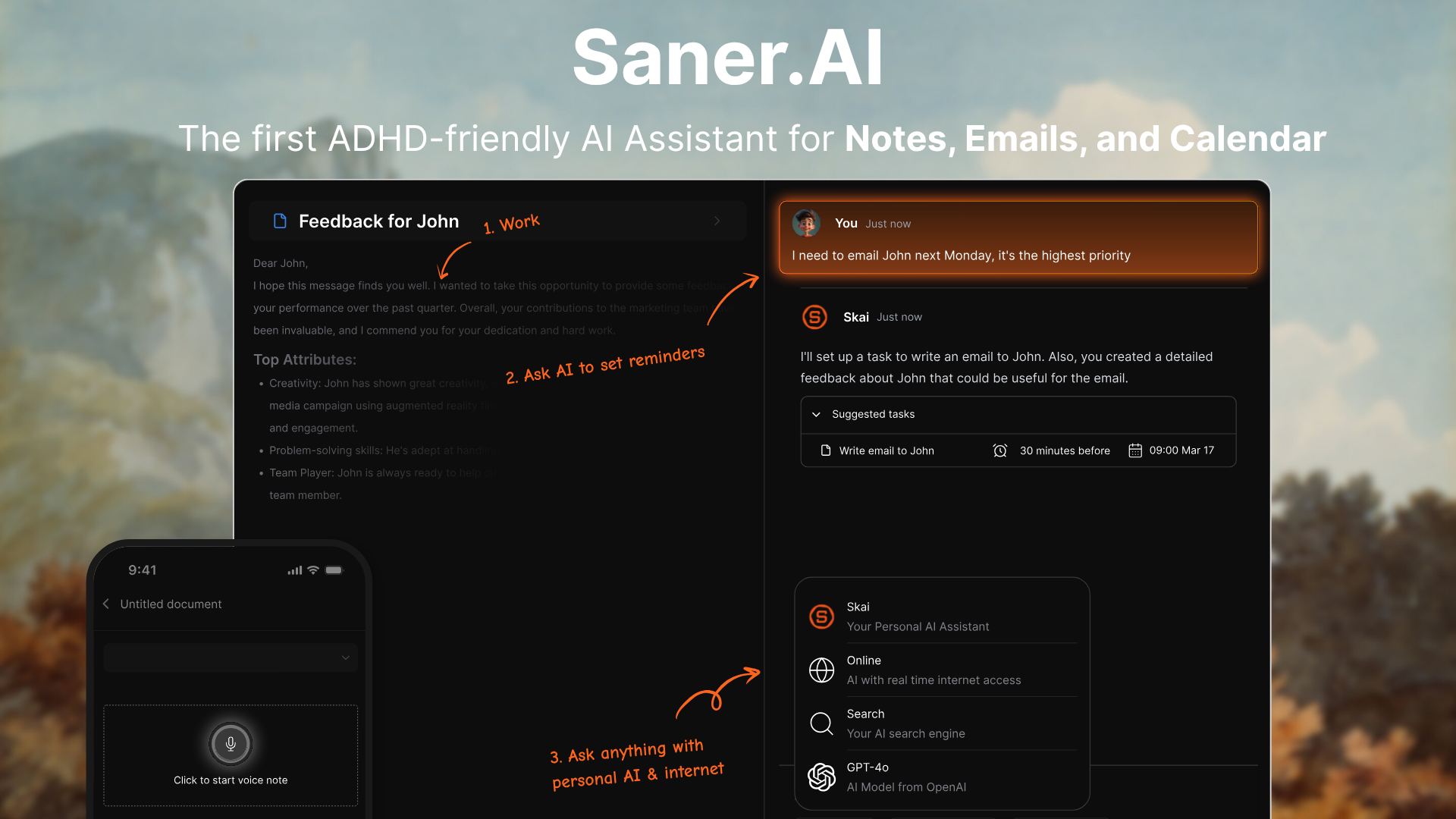
Saner.AI is an AI-first daily planner designed to help you capture tasks, thoughts, and plans the moment they appear, without forcing structure upfront.
Instead of manually organizing to-do lists, you can brain-dump in natural language and let the AI turn it into actionable tasks. The app continuously adjusts priorities as your day changes. It’s built to reduce mental load rather than add another system to manage.
Key features
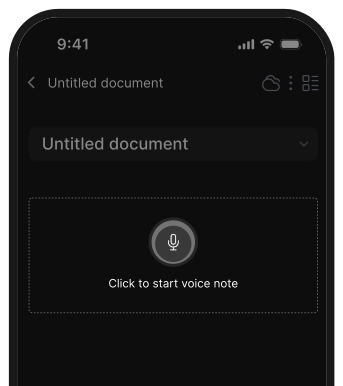
- Captures everything: emails, voice notes, docs, meetings, links and even random thoughts in natural language
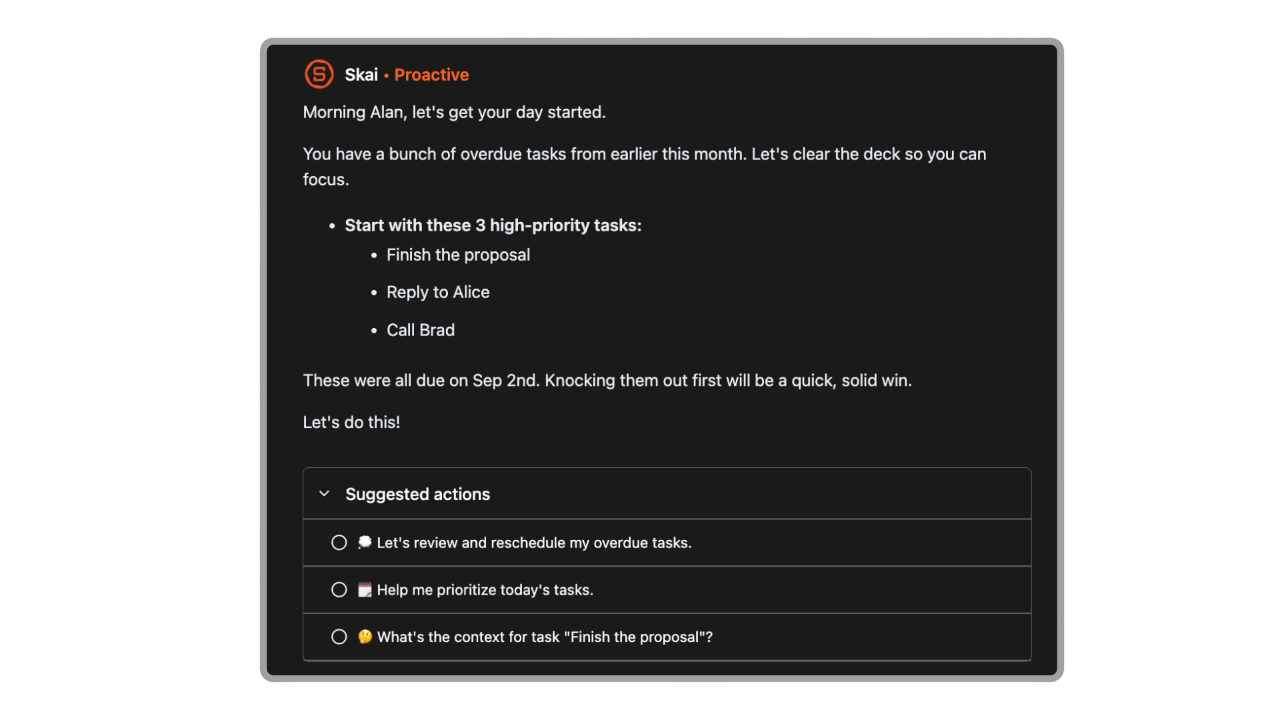
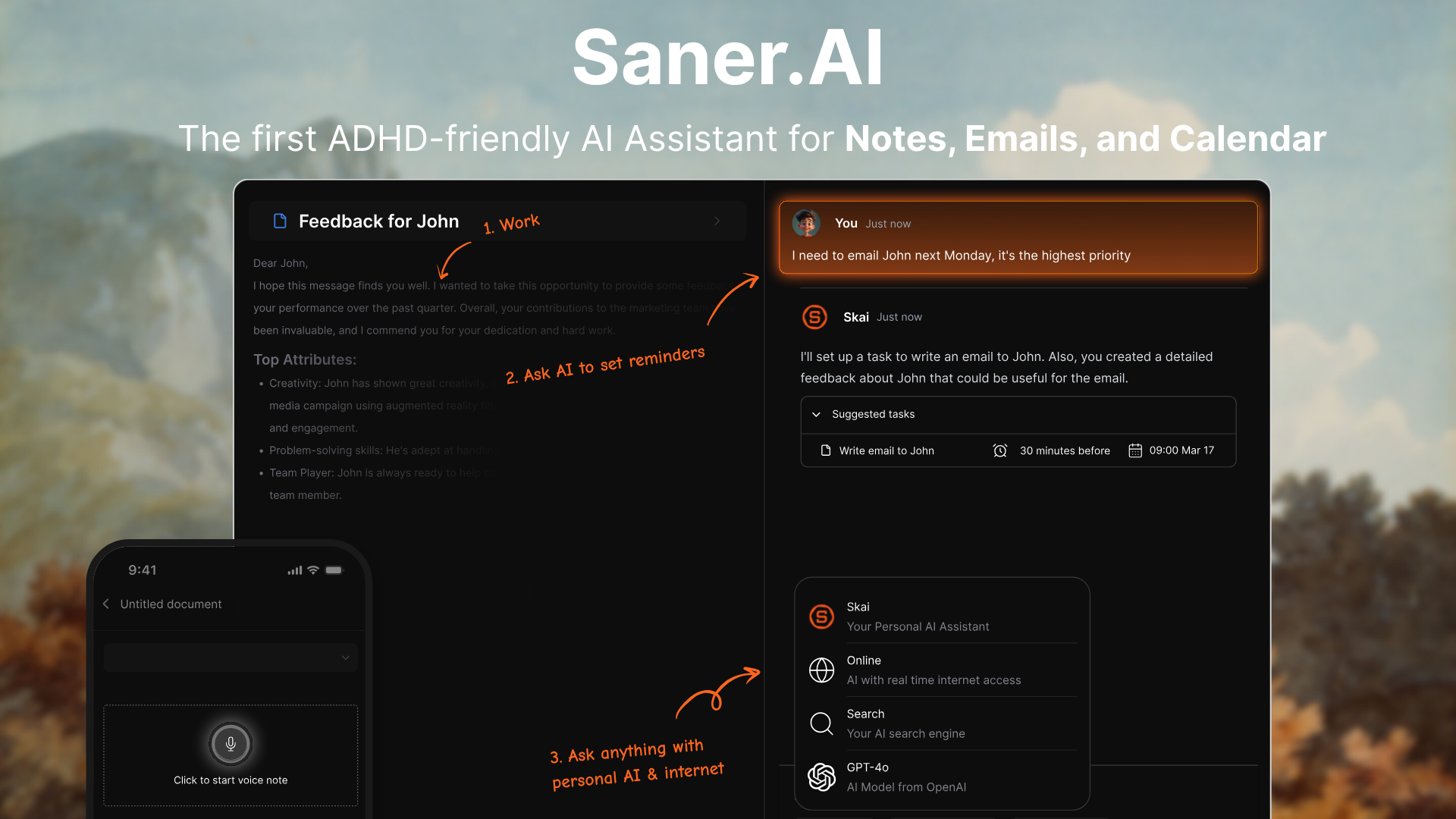
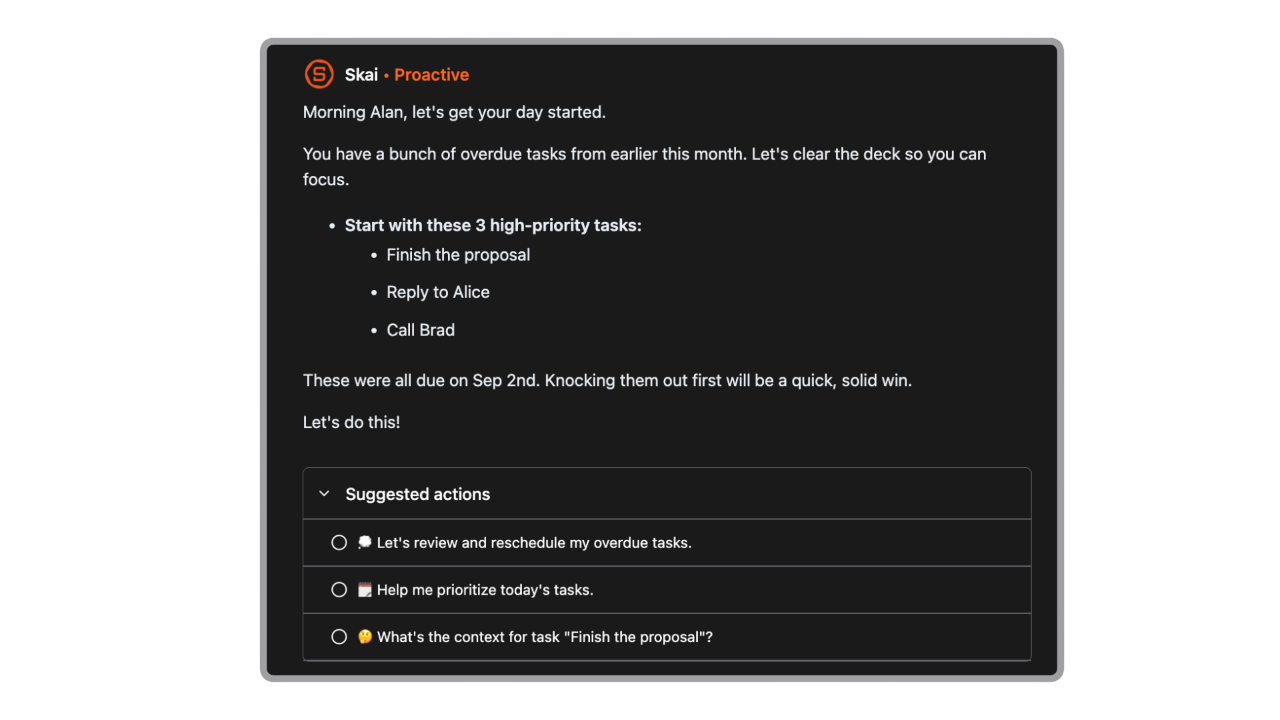
- AI assistant (Skai) - AI-assisted daily planning and task prioritization. This can give you a daily focus view, combined with flexible tasks that can be reprioritized when new work appears or when something is delayed.
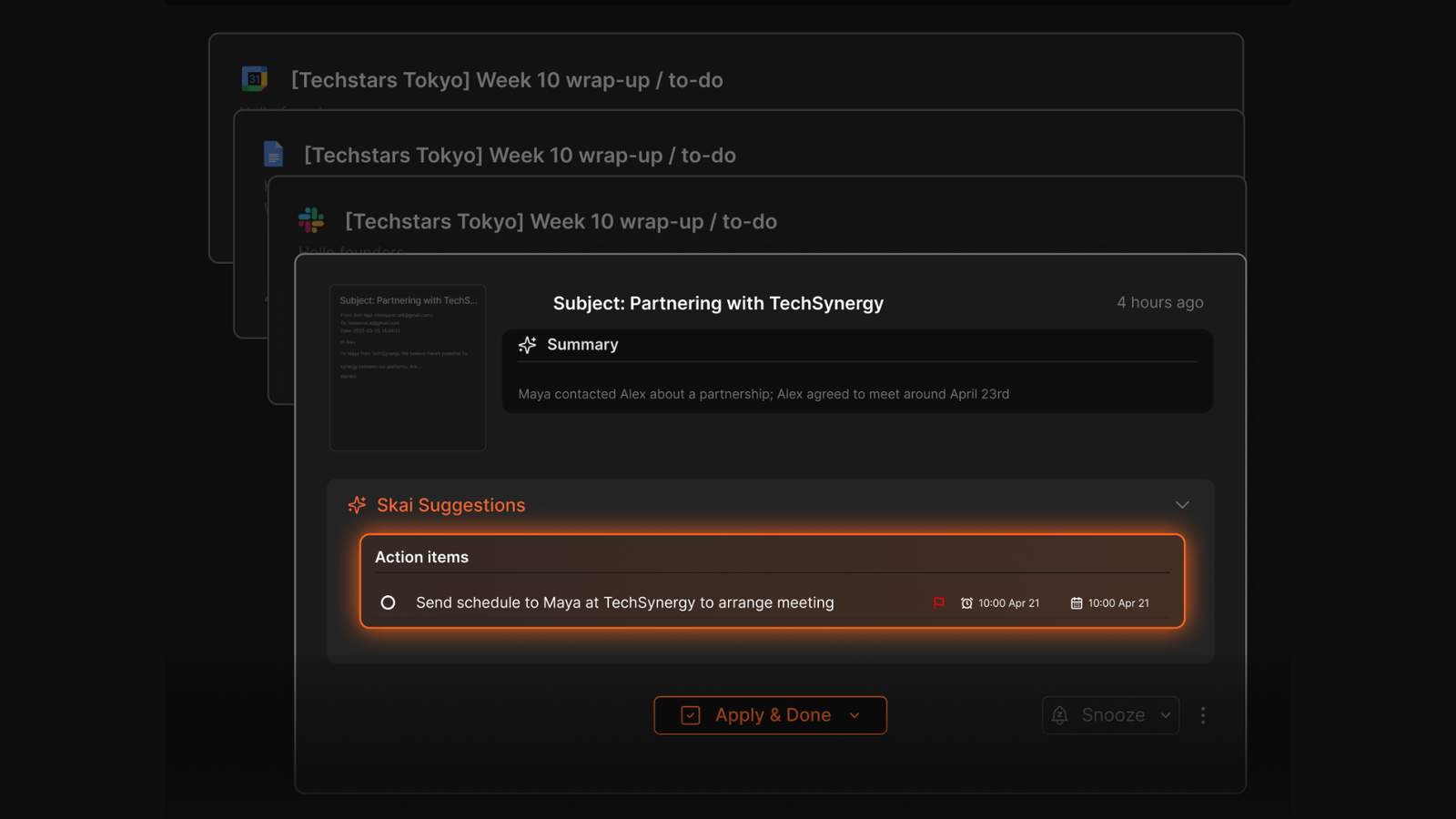
- Task extractor: It pulls to-dos straight from notes and emails, then sets reminders
- Smart scheduling: Blocks time automatically for focus, breaks, or habits
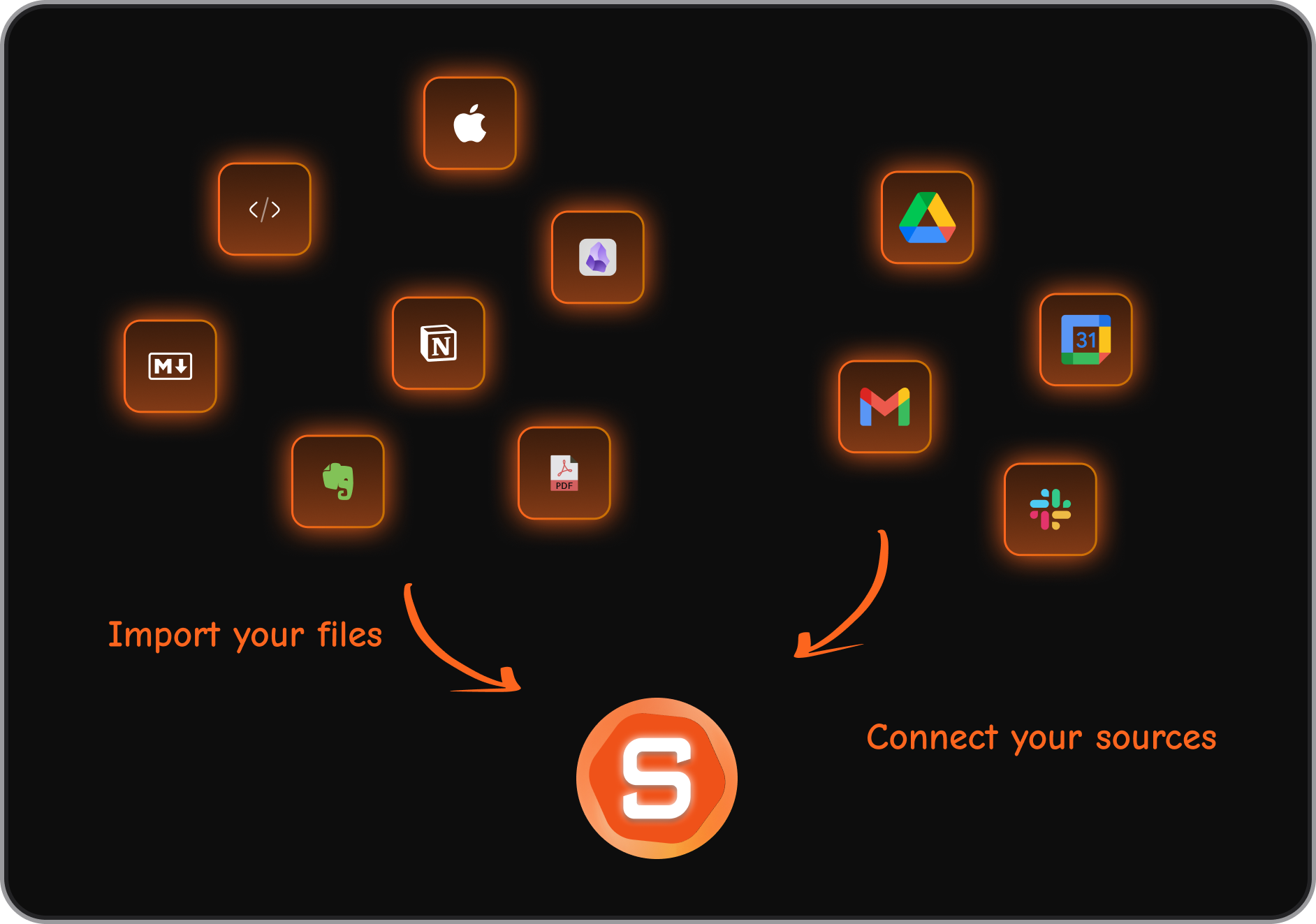
- Cross-platform: Works on web and mobile, and connects with Gmail, Google Drive, Slack, and more
- Suggests related notes as you type (really helpful for writing or research)
- The design stays intentionally simple, so planning doesn’t become another productivity chore.
- OCR and voice capture with support for multiple languages
What I liked
- You don’t need to plan “correctly.” Just write things down and move on - the AI handles the organization.
- When plans shift, you don’t need to rewrite your entire day. The system adapts automatically.
- Reduces decision fatigue by removing constant prioritization and manual reordering.
- It supports how people actually think, not how productivity systems expect them to think.
Cons
- Not ideal for large teams or project timelines - no Gantt charts or complex task dependencies.
Pricing
- Free
- Starter: Monthly at $8/month, Annually at $6/month (with early user discount)
- Standard: Monthly at $16/month, Annually at $12/month (with early user discount)
Who is it suitable for?
Saner.AI is particularly well-suited for:
- Intensive knowledge workers who need to manage large amounts of information efficiently from multiple sources, such as entrepreneurs, researchers, managers, and content creators
- Individuals with ADHD or those who struggle with information organization and time management
- Anyone looking to streamline their workflow without spending too much time learning a new tool
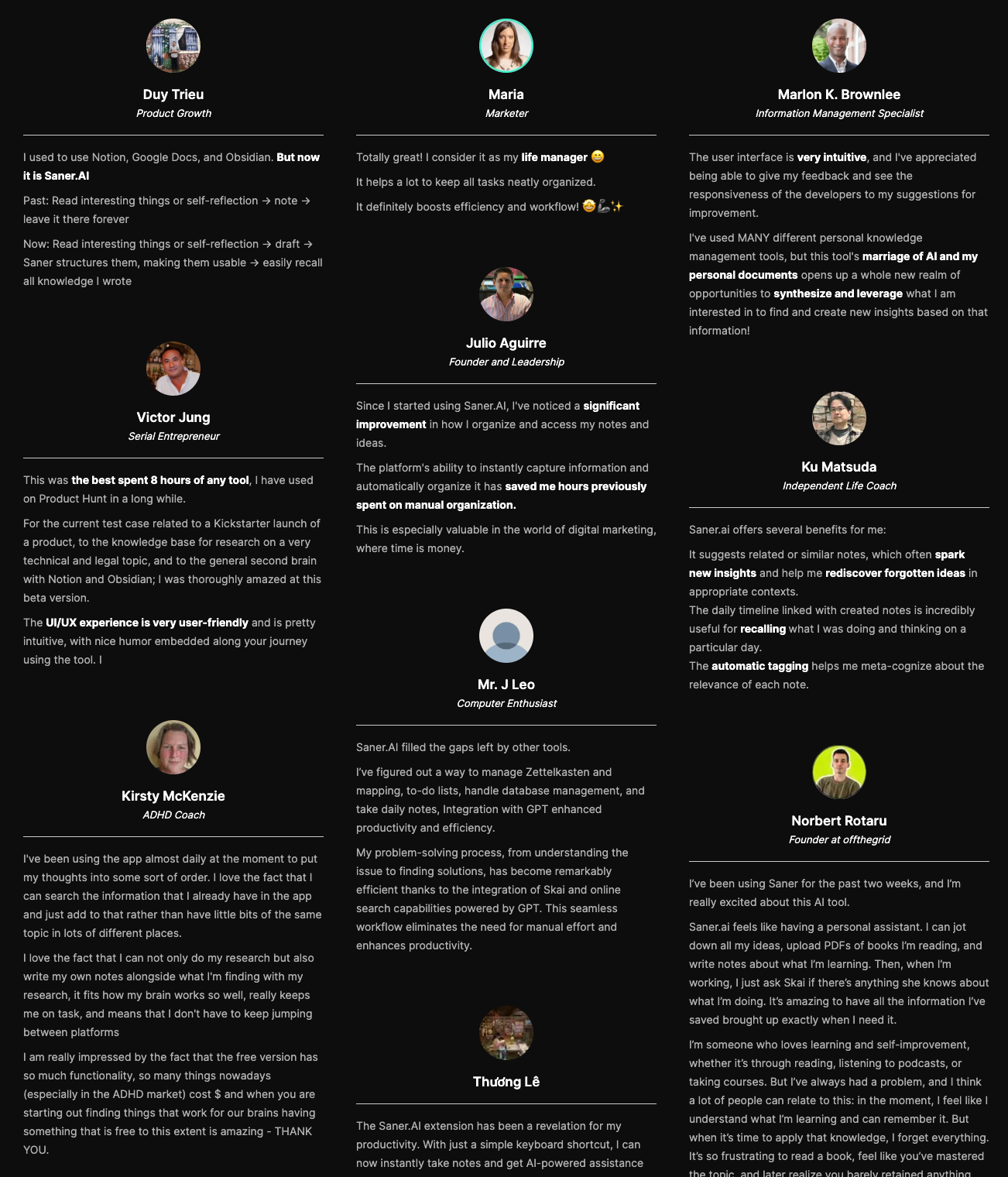
Saner.AI review
How to start using it?
- Visit the Saner.AI website and sign up for an account
- Explore the app's features, starting with basic note-taking and task creation.
- Try out the integrated internet search functionality to streamline your workflow.
The AI Phone Planner App that works with you
2. Motion

Motion is an AI-powered daily planner that automatically schedules your tasks into your calendar. You tell Motion what needs to be done, how long it takes, and when it’s due - the AI then plans your day for you.
When meetings pop up or priorities change, Motion re-optimizes your schedule in real time. The focus is on execution and deadline protection, not note-taking or brainstorming. It’s built for people who want their day decided for them.
Features
- Motion places tasks directly into your calendar based on deadlines, priorities, and available time.
- If a meeting is added or a task runs late, Motion reshuffles your entire day automatically to keep deadlines safe.
- The system actively warns you when your workload exceeds available time.
- Tasks and meetings live in one timeline, so you always see a realistic view of your day.
Pros:
- Automatically plans your day around your real schedule
- Handles rescheduling and shifting priorities
- Combines calendar, to-do list, and project planner
Cons:
- No permanent free plan - only a 7-day trial
- Expensive
- The interface can feel overwhelming
- Requires clear task input to fully benefit from automation
- Doesn't have a chatbot interface
Pricing:
- Paid only
- Individual plan around $19/month (billed yearly) or $34/month (monthly billing)
Suitable For:
- Busy teams looking for an AI assistant to automate scheduling, manage projects, and protect time for focused work
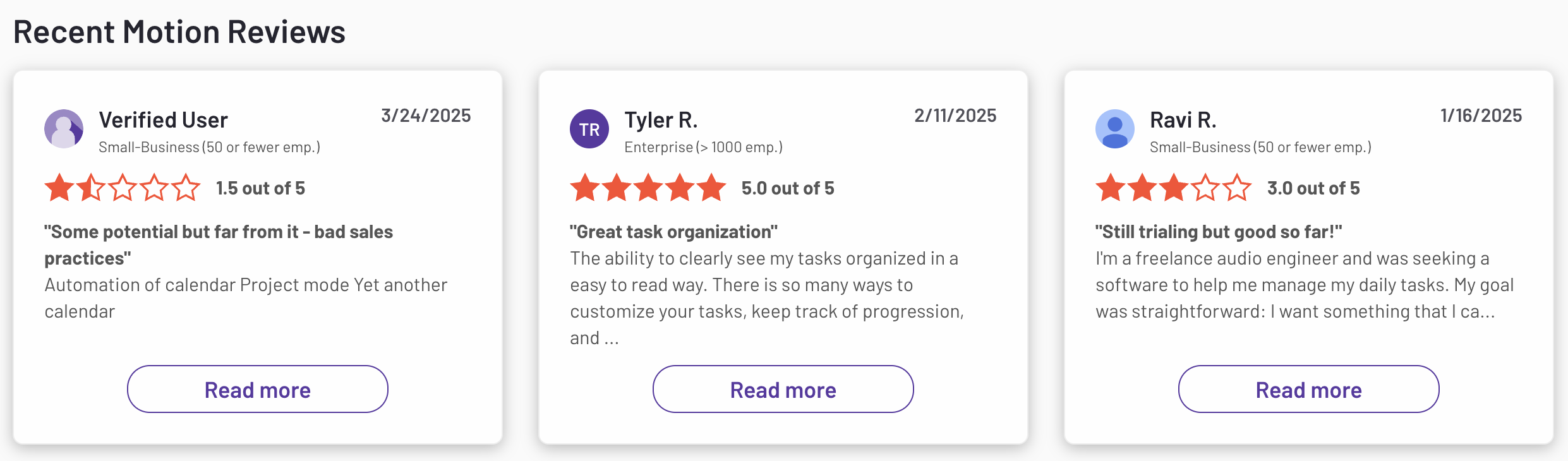
Motion reviews (source)
How to Start:
- Sign up for a free trial on the Motion website, select a suitable plan, and integrate your existing calendars and tools to begin optimizing your workflow
3. Todoist
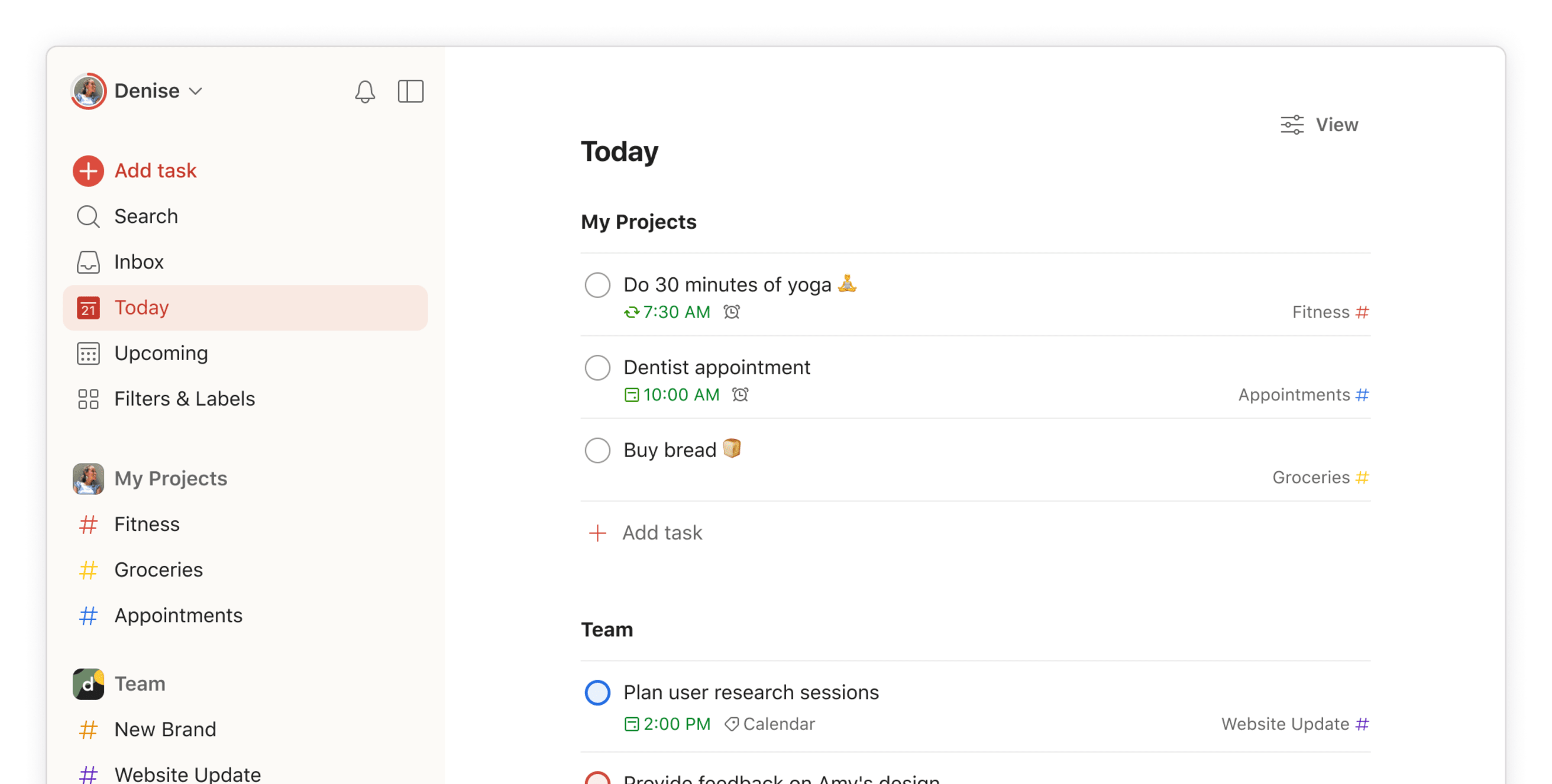
Todoist is a popular task management app that helps you organize tasks, deadlines, and recurring work across devices. You create to-do lists, assign due dates, and track progress over time.
The app focuses on clarity and consistency rather than advanced automation. It’s lightweight, reliable, and easy to adopt for daily planning. Todoist works well as a central place to remember what needs to be done. Planning remains mostly manual.
Features
- Intuitive task lists with due dates and priorities
- Natural language input
- Recurring tasks, sub-tasks, and sections for project breakdowns
- Seamless sync across phone, tablet, desktop, and web
- Collaboration features
Pros:
- Todoist is well-polished and rarely buggy compared to newer planner apps.
- Can be used simply or customized with labels and filters as your system grows.
- Strong value if you don’t need automation or AI-driven planning.
Cons:
- You still need to decide what to work on and when - there’s no automatic daily planning.
- AI features are light and don’t meaningfully change how tasks are organized.
- Without discipline, long task lists can feel overwhelming over time.
Pricing:
- Free
- Pro: $5/month per user
- Business: $8/month per user
Suitable for:
- Users looking for a flexible task management tool with advanced features.
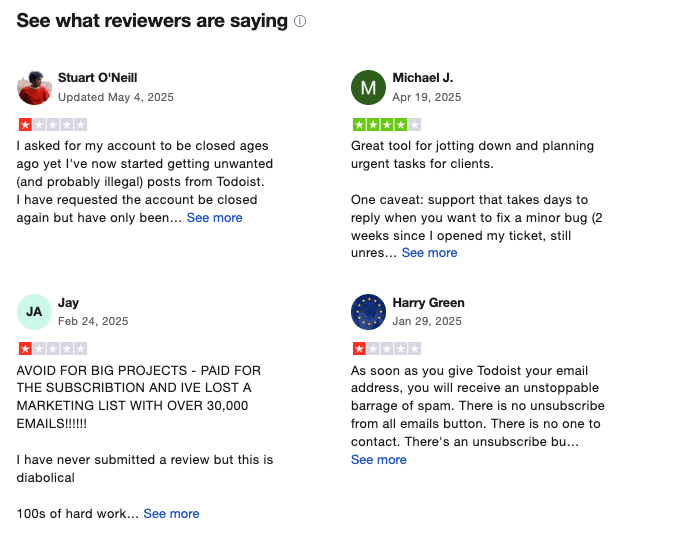
Todoist Reviews (source)
How to get started:
- Sign up on the Todoist website or download the app from your device's app store.
- Create a free account on Todoist
- Add tasks using natural language and organize them into projects
4. Akiflow
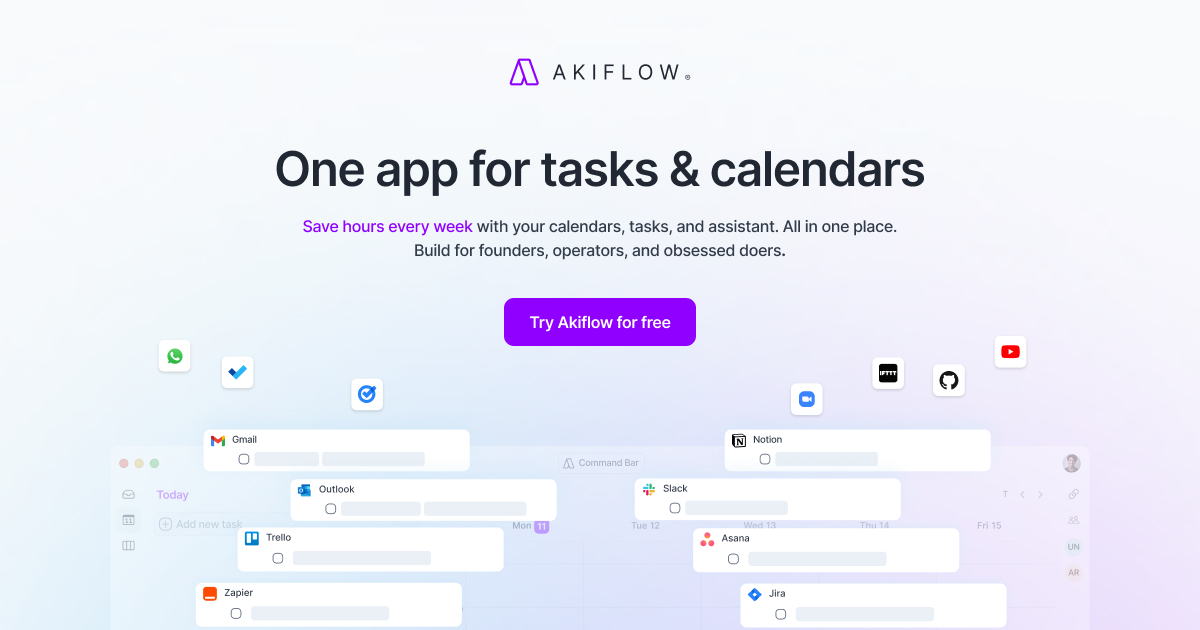
Akiflow is a daily planning and productivity app that centralizes tasks from multiple tools into one place and helps you schedule them into your calendar. It’s designed to turn scattered to-dos from email, Slack, Notion, and other apps into a clear daily plan.
Key features
- Akiflow pulls tasks from tools like Gmail, Slack, Notion, into one inbox
- Drag-and-drop time blocking on the calendar
- The app encourages a structured daily and weekly planning flow. You review, prioritize, and schedule instead of reacting all day
- Fast shortcuts make it efficient for power users who prefer speed over visual complexity
What I liked
- Great for turning tasks into scheduled work instead of endless lists.
- Centralizing tasks from many apps significantly reduces mental clutter.
- Seeing tasks inside your calendar makes overcommitment obvious.
- Useful for people juggling meetings, tasks, and deadlines.
What I disliked
- The workflow takes time to set up and get used to, especially for new users
- Frequent changes can make time-blocking feel heavy or rigid
- Unlike AI-first planners, prioritization and scheduling decisions are mostly manual
Pricing
- Free trial available
- Paid plan around $30–$35/month, billed monthly or yearly
Suitable for:
- People who use multiple tools, love time blocking, and want a fast, AI-supported Phone Planner app to bring it all together.
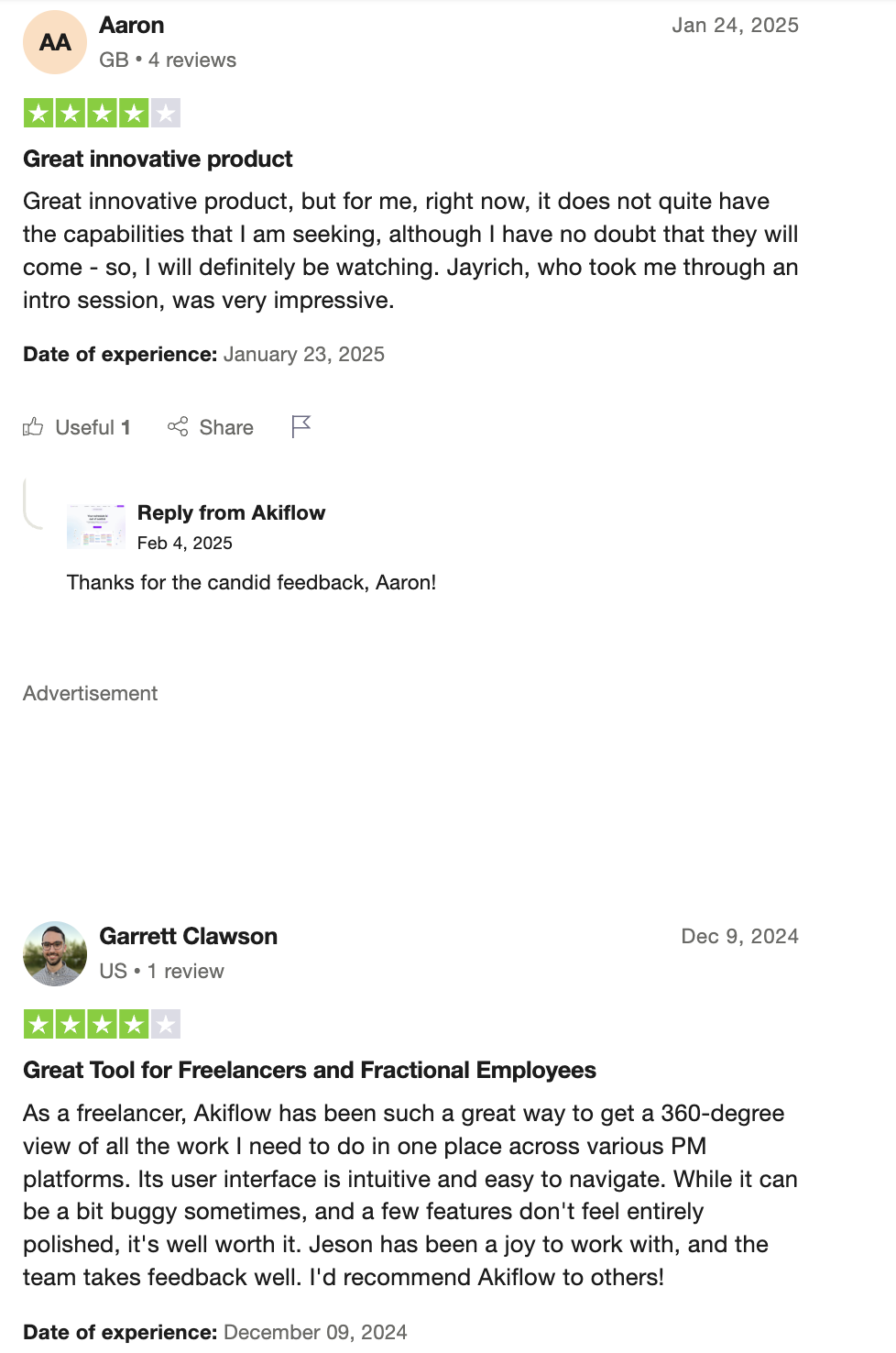
Akiflow Reviews (source)
How to start:
- Just sign up, connect your calendar and task apps
- Start planning. The AI kicks in as you go.
5. Mircosoft Todo
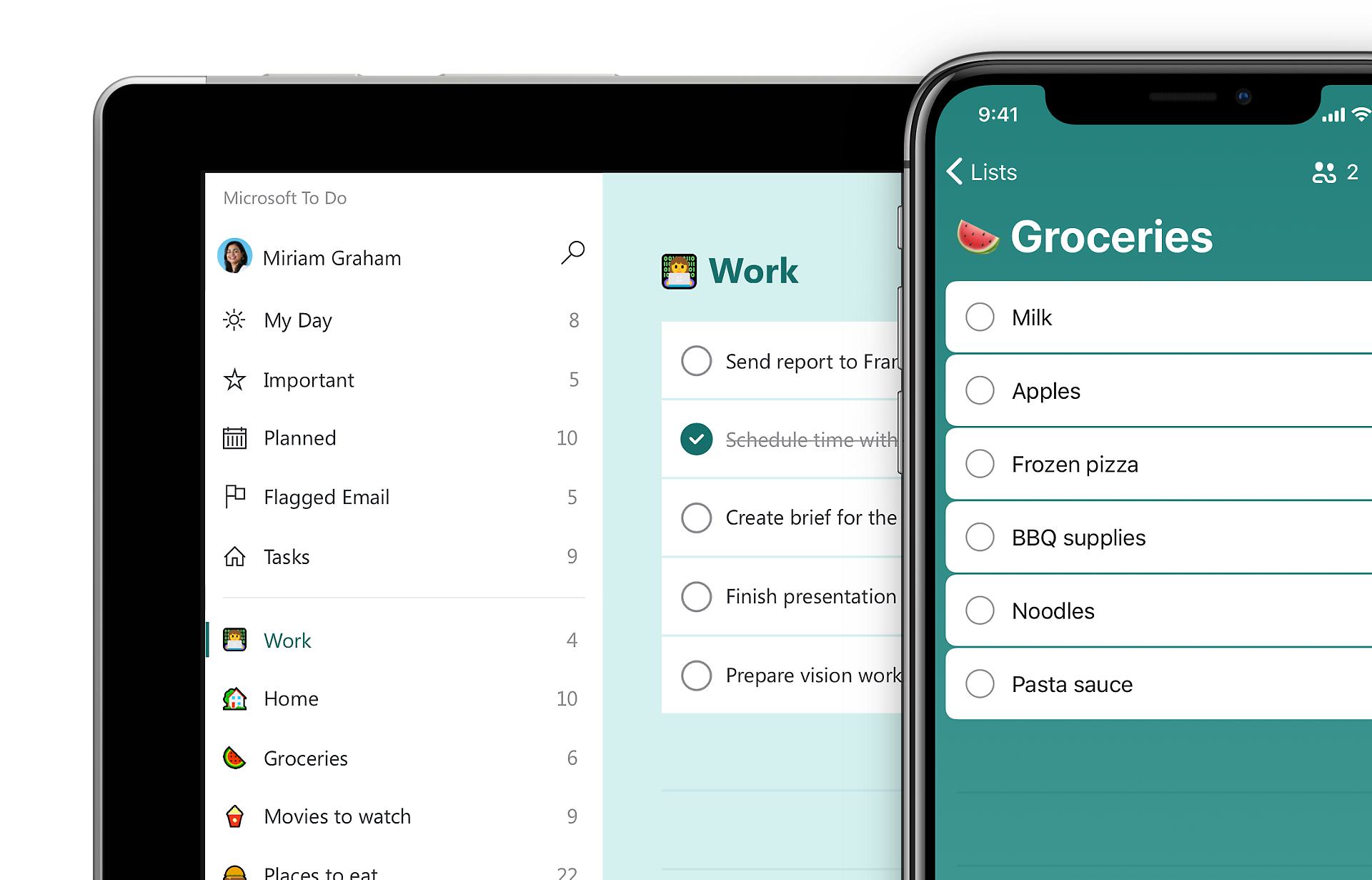
Microsoft To Do is a clean, user-friendly task management app that works seamlessly across devices, including your phone.
Designed for individuals and teams, Microsoft To Do helps you create to-do lists, set reminders, and break big goals into manageable steps in
Features
- Easy-to-use task lists with due dates and reminders
- Daily “My Day” planner for focused scheduling
- Cross-device sync: mobile, desktop, and web
- Seamless integration with Microsoft 365 (Outlook, Teams, etc.)
- Shared lists for team or family collaboration
Pros:
- Simple and intuitive interface, you can just open the app and type the task right away
- Integrates seamlessly with other Microsoft products (Outlook, Teams, etc.)
- Mark tasks as priorities, schedule them, and add due dates.
Cons:
- All planning decisions are manual, with no AI assistant support.
- Not suitable for projects with dependencies or advanced task tracking.
- Power users may find filters, views, and controls too limited.
Pricing:
- Free
- Included with a Microsoft account (no paid tiers)
Suitable for:
- Microsoft users who need a basic to-do list app.
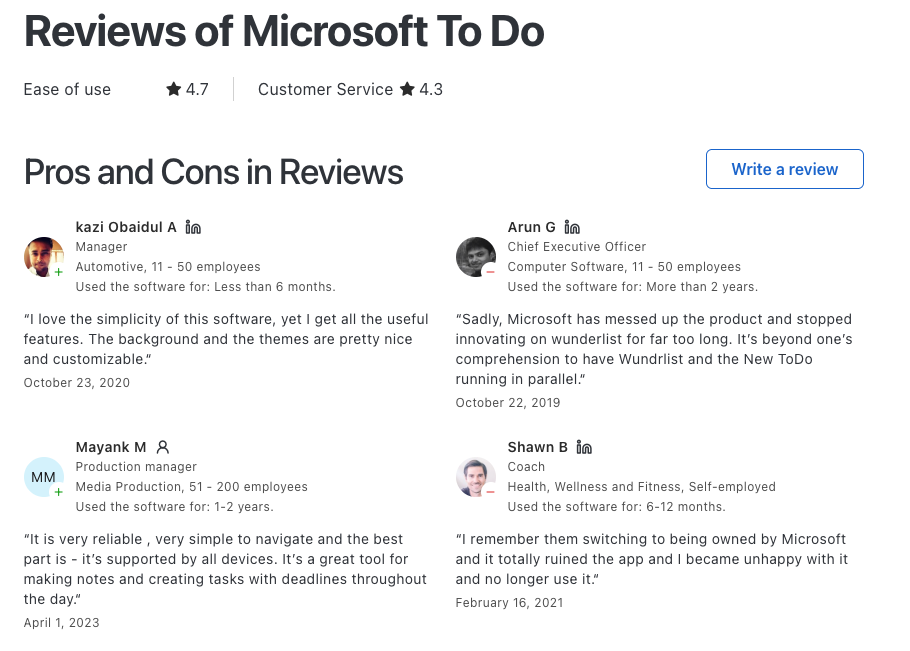
Microsoft To Do Reviews (source)
How to get started:
- Download the app or access it through your Microsoft account
6. Apple Reminders
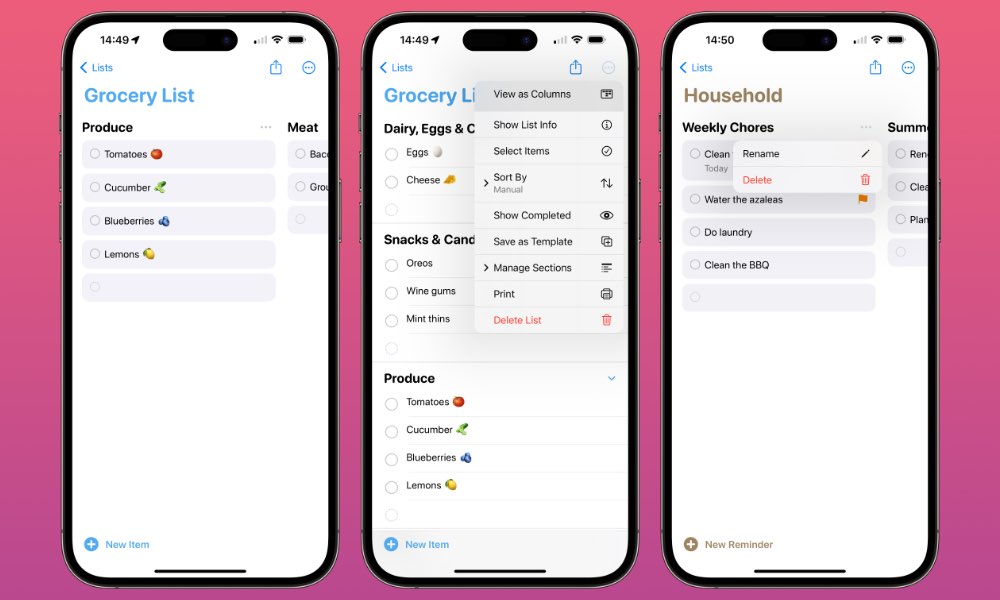
Apple Reminders is a simple yet powerful phone planner that comes pre-installed on every Apple device. Whether you’re managing work tasks, personal to-dos, or collaborative lists, Reminders syncs seamlessly across iPhone, iPad, and Mac
The app works well with Siri, lets you set reminders based on your location, and you can share lists with others. It's a straightforward and useful tool for anyone using Apple devices to help stay organized and get things done.
Features
- Tasks can be automatically grouped by due date, priority, or custom tags. This helps keep daily tasks visible without a complex setup.
- You can trigger reminders when you arrive at or leave a location, or at a specific time - useful for errands and routine tasks.
- Tasks can be added hands-free using Siri, making capture very fast for iPhone users.
- Works seamlessly across iOS, iPadOS, macOS, Apple Watch, and Siri.
Pros:
- No learning curve, most users can start instantly.
- Syncing is stable, and reminders fire consistently.
- Voice input and widgets make adding tasks effortless.
- No extra cost or subscription required.
Cons:
- Not designed for projects, dependencies, or workload management.
- There’s no AI or smart scheduling support like Saner.AI.
- Not ideal if you work across Windows or Android devices.
Who Should Use
- People with Apple gadgets: If you have an iPhone, iPad, or Mac, this app is already there for you to use.
- Anyone who likes keeping it simple: If you want a no-fuss way to remember your daily tasks, this app does exactly that.
Pricing
- Free for Apple users
How to start:
- Just open the Reminders app on your iPhone or Mac and start typing. Sync automatically through iCloud when logged in with your Apple ID.
7. Google Keep
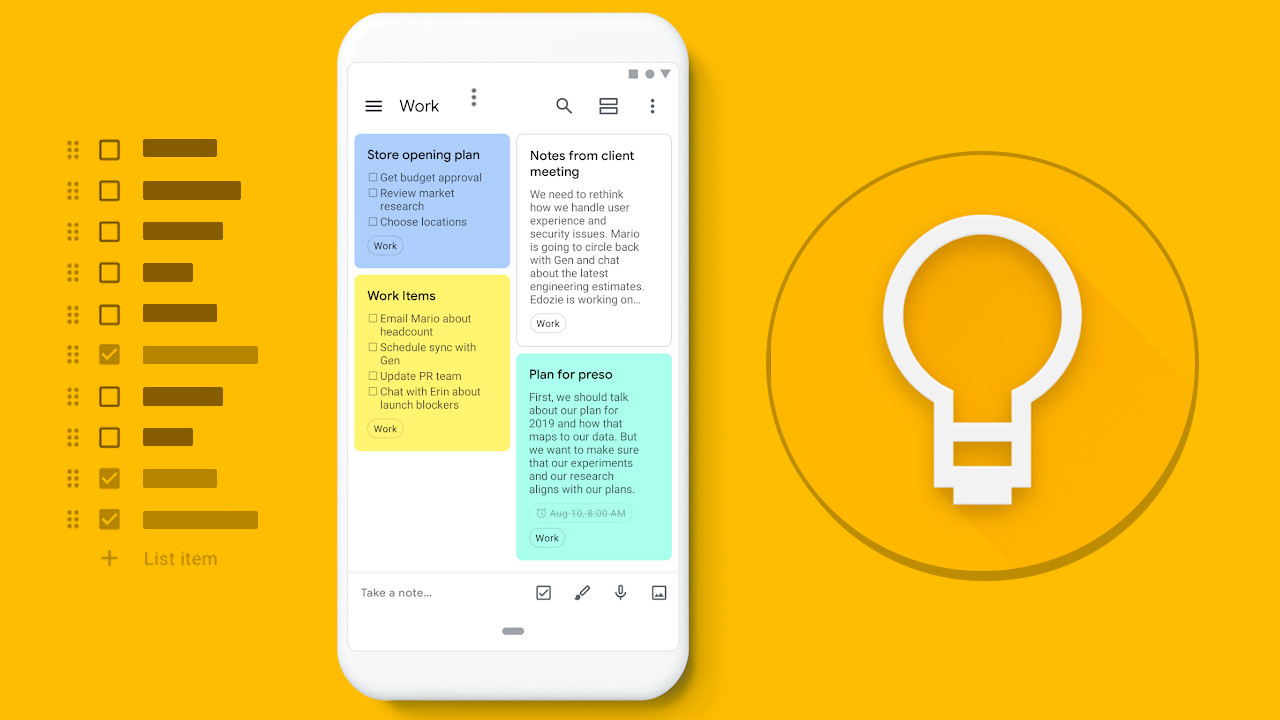
Google Keep is a lightweight phone planner and note-taking app that’s perfect for capturing quick thoughts, to-do lists, and reminders on the go.
Since it works well with other Google services like Gmail and Google Drive, you can easily access your notes and reminders on any device.
Features
- You can create notes or to-do lists in seconds. Ideal for groceries, quick tasks, or things you don’t want to forget.
- Set reminders for a specific time or when you arrive at a place. Useful for errands and daily routines.
- Notes can be color-coded, labeled, or pinned to stay visible.
- Works smoothly across Android, iOS, and web. Syncs instantly with your Google account.
Pros
- No setup, no onboarding. You open the app and start writing immediately.
- No paid tiers or hidden limits. Works consistently across devices.
- Perfect for simple task lists and reminders that don’t need structure.
- You never feel like you’re “managing a system.”
Cons:
- No prioritization, scheduling logic, or workload awareness.
- Notes pile up quickly if you don’t manually clean them.
- Lacks dependencies, recurring planning logic, or smart suggestions.
Best for
- People who want a free, simple daily note and checklist app with zero friction.
Pricing
- Free (included with a Google account)
How to Start:
- Download Google Keep on your phone or access it via web
- Start creating notes or checklists and add reminders as needed
8. ClickUp
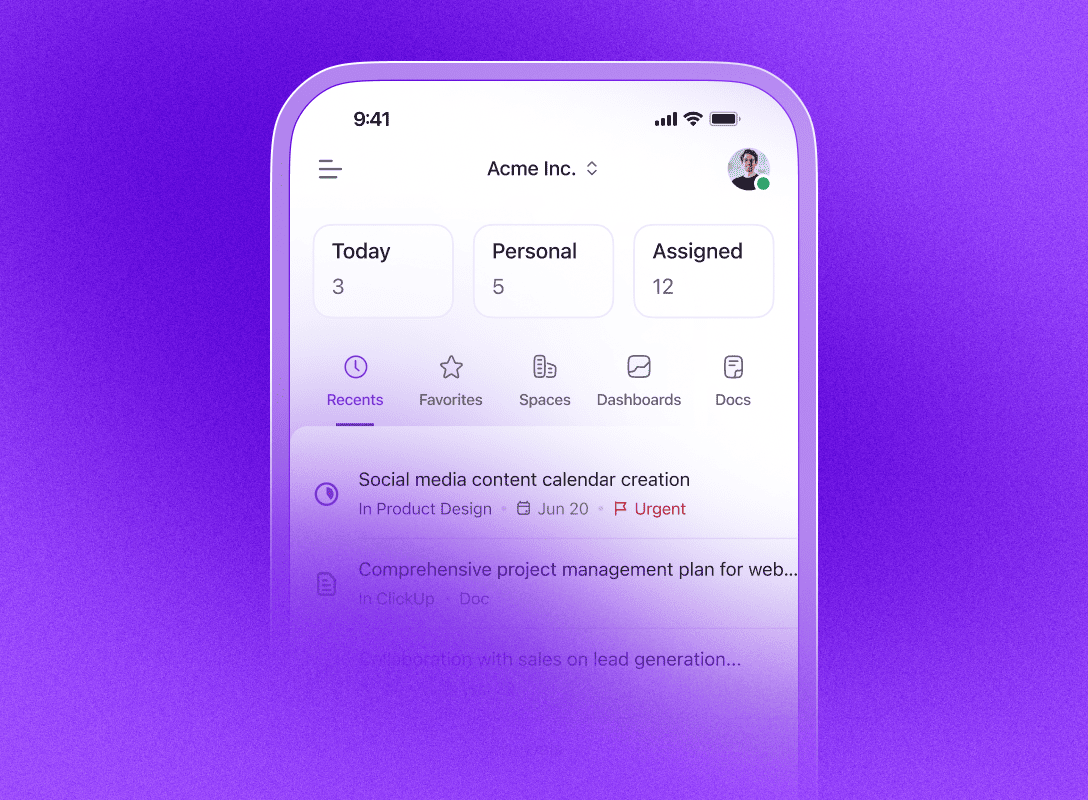
With an almost overwhelming array of features and customization options, ClickUp is a flexible daily phone planner that helps you organize tasks, projects, and schedules in one place. It's designed to replace multiple tools by centralizing work planning and tracking.
Features
- Tasks support priorities, due dates, statuses, dependencies, and assignees. This makes it suitable for both daily planning and complex projects.
- You can switch between list, board, calendar, timeline, and Gantt views. Helpful for adapting how you see your day or project.
- Notes, documentation, and goal tracking live inside the same workspace. Reduces the need to jump between tools.
- Automations handle repetitive actions, while integrations connect ClickUp with calendars, email, and other work tools.
Pros:
- You can model almost any workflow, from personal planning to cross-team execution.
- Even the free tier includes many advanced features compared to competitors.
- Works well as responsibilities, projects, and collaborators grow.
- Easy to see progress, deadlines, and workload at a glance.
Cons:
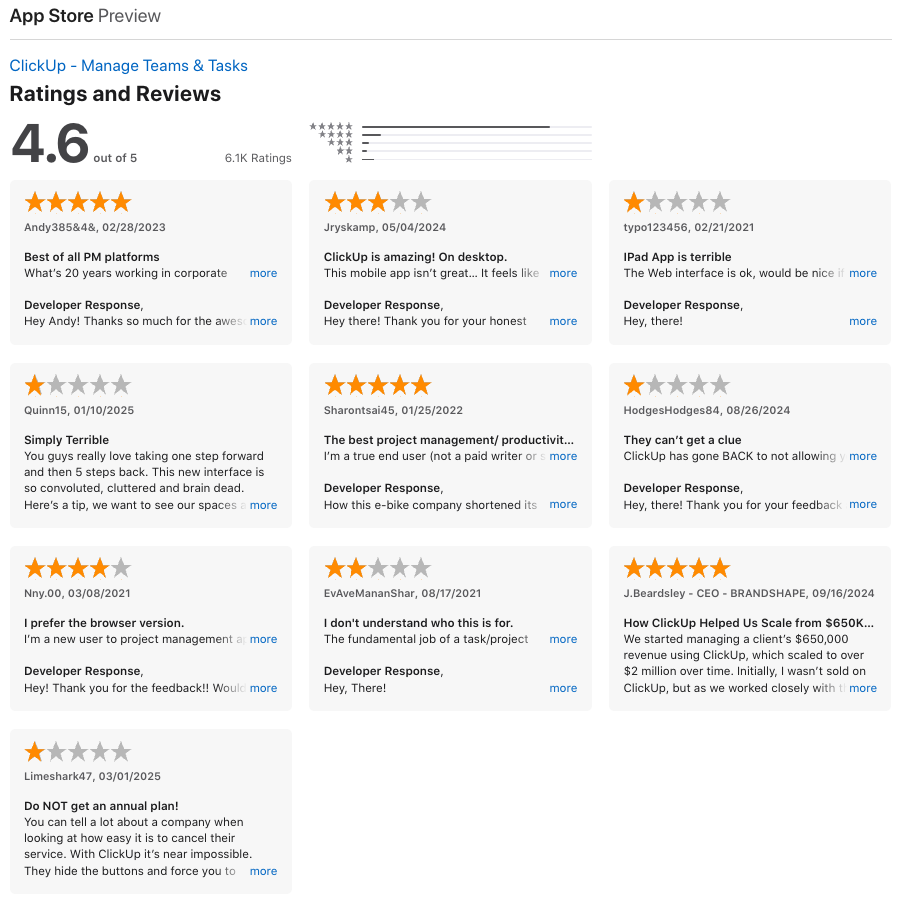
- The number of features can feel overwhelming, especially for personal use.
- Setting up views and statuses may slow you down if you just want a quick planner.
- Not as fast or frictionless as lightweight phone planner apps.
Pricing:
- Free plan available
- Unlimited plan: $10/month
- Business plan: $19/month
Suitable for:
- Teams looking for a comprehensive project management solution.
ClickUp Reviews (source)
How to get started:
- Register on ClickUp’s website or download the mobile app to start organizing tasks.
9. Notion
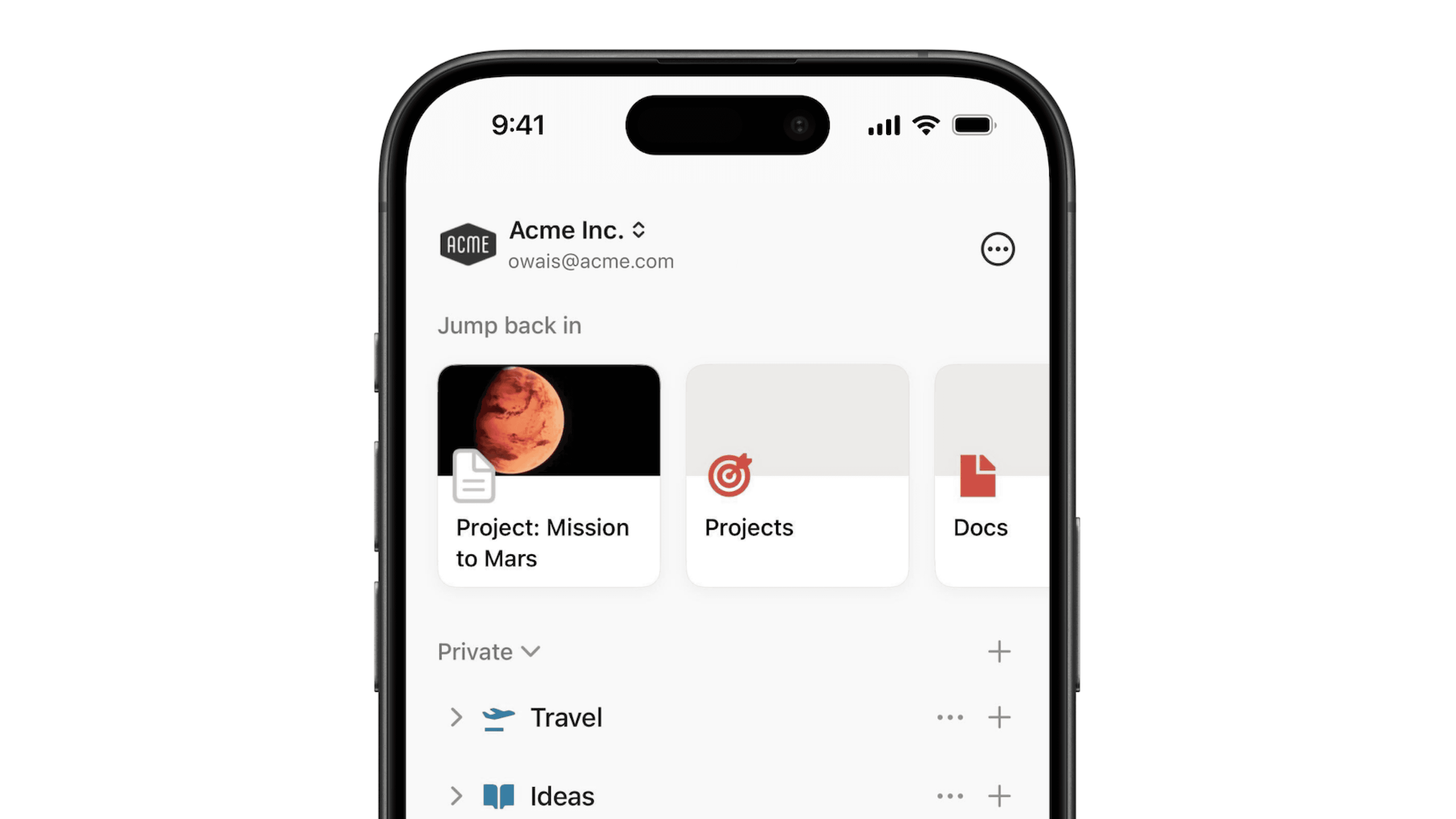
Notion is an all-in-one workspace that combines notes, tasks, calendars, and databases in a highly customizable interface. As a Phone Planner, Notion gives you the flexibility to create your perfect planning system, whether you're managing your daily schedule, setting goals, or tracking habits.
Features
- You can create to-do lists with priorities, due dates, tags, and views.
- Tasks can be shown as lists, boards, calendars, or timelines.
- Notion offers built-in and community templates for daily planners, habit trackers, and life dashboards.
- You can write notes, meeting logs, and plans directly next to your tasks. No need to switch apps.
Pros:
- You can build almost any planning system you imagine, from minimal to very detailed.
- Tasks, notes, and reference materials live together.
- You don’t have to start from scratch if you don’t want to.
- Available on mobile, desktop, and web with sync.
Cons:
- Requires setup time (not plug-and-play)
- Can feel overwhelming at first for new users
- Slow on mobile
Pricing:
- Free plan available
- Paid plans start around $10/month (billed annually)
Suitable for:
- People who enjoy building and customizing their own daily planning system in one flexible workspace.
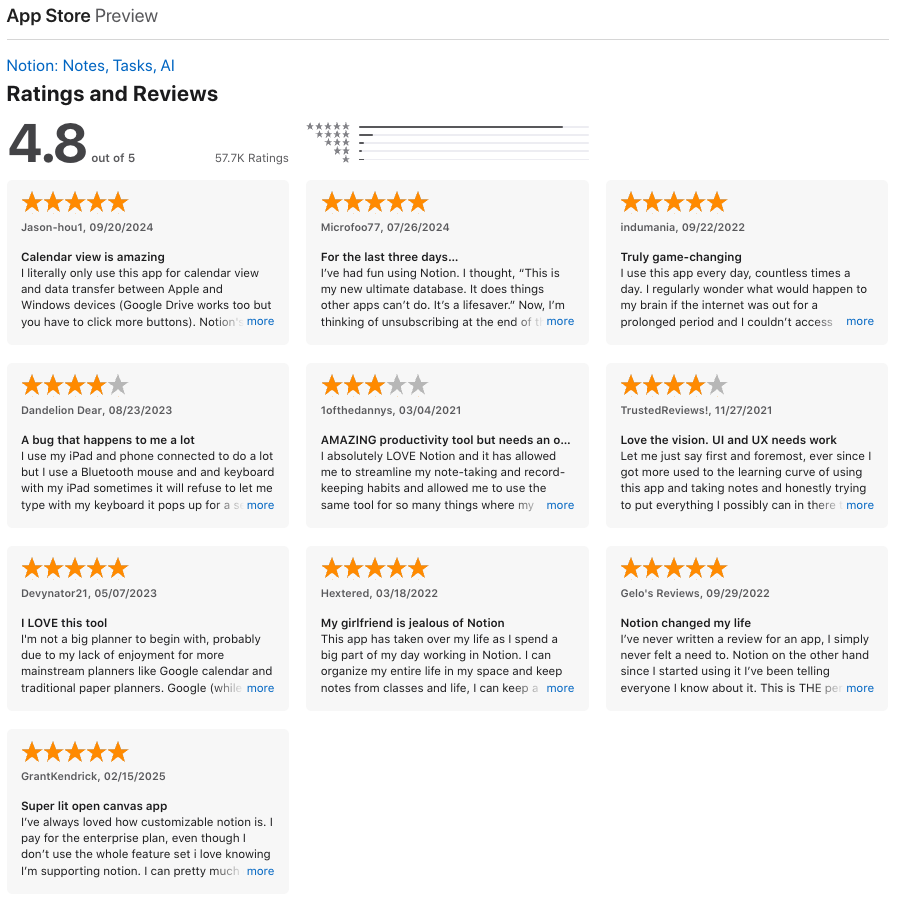
Notions reviews (source)
How to get started:
- Create a free Notion account
- Start with a simple daily planner template and adjust as needed
Conclusion: How to choose a suitable phone planner app?
There’s no single best daily phone planner app for everyone in 2026 — because not everyone plans, thinks, or works the same way.
- Some people need an AI daily planner app that actively organizes messy thoughts, tasks, and priorities into a calm, realistic day - that’s where Saner.AI clearly stands out.
- Others prefer simple, lightweight task capture like Microsoft To-Do or Apple Reminders.
- Power users may lean toward structured systems such as Todoist, ClickUp, or all-in-one workspaces like Notion.
- And if you want time-blocking automation, tools like Akiflow or Motion might fit better.
What truly matters isn’t how many features a planner app has - it’s how well it reduces mental load, keeps you focused, and adapts when your day inevitably changes.
Here’s what we recommend:
✨ Try 2–3 daily phone planner apps from different styles (simple, AI-assisted, time-blocking)
🧪 Use them in real life - work tasks, personal errands, chaotic days
🧠 Judge success by clarity and calm, not just productivity metrics
If a planner app helps you feel less scattered, more grounded, and in control of your day - that’s the best daily planner app for you.
👇 Ready to test one now?
Start with Saner.AI if you’re looking for a context-aware, AI-powered daily planner that turns brain dumps into an organized, stress-free plan - especially if traditional to-do lists no longer work for you.
Stay on top of your work and life
FAQs About Phone Planner Apps
1. What’s the best phone planner app for iPhone?
If you're using an iPhone, your best phone planner apps include:
- Saner.AI - Offers note search, task reminders, and smart context features that support busy iPhone users (especially helpful if you have ADHD or manage lots of projects)
- Apple Reminder - Built-in, clean UI, integrates well with reminders and Siri
- Todoist - Popular for its elegant design and smooth task flow
- Notion - Great for team users
All of these sync across devices and support widgets for quick access from your home screen.
2. What’s the best phone planner app for Android?
Android users have a wide range of powerful phone planner options:
- Saner.AI - Works across platforms, and helps Android users stay focused by surfacing relevant tasks and notes automatically
- Google Keep - Reliable, cloud-based, and easy to sync
- Todos - Integrate with Microsoft Ecosystem
- Todoist - Clean interface
Bonus: Most Android planners support widgets, voice input, and calendar syncing out of the box.
3. What are some free phone planner apps?
Here are some phone planner apps with solid free features:
- Saner.AI - Includes intelligent reminders, context-aware note search, and ADHD-friendly design
- Google Calendar - Simple, clean, and easy to sync across devices
- Todos - Integrate with Microsoft Ecosystem
- Todoist - Clean interface
4. How do I start using a phone planner effectively?
Start small. Pick one app. Add your regular events, meetings, workouts, deadlines, and build the habit of checking it daily. As you go, layer in tasks, routines, or voice notes.
5. What’s the best phone planner for people with ADHD?
Apps like Saner.AI are built with ADHD in mind. They surface what’s relevant when it matters, reduce the need to remember everything, and help avoid context switching that causes overwhelm.
6. What’s the best phone planner app for work?
Look for tools that combine tasks, notes, and schedules in one view. Saner.AI and Todoiest are both strong contenders - ideal if your day involves juggling multiple responsibilities.
7. How do phone planner apps boost productivity?
By centralizing your schedule and reducing friction. For example, some apps can:
- Auto-suggest the best time for tasks
- Surface old notes tied to upcoming meetings
- Remind you of deadlines without you needing to check constantly
8. Do phone planner apps support voice input?
Yes, many do. Examples:
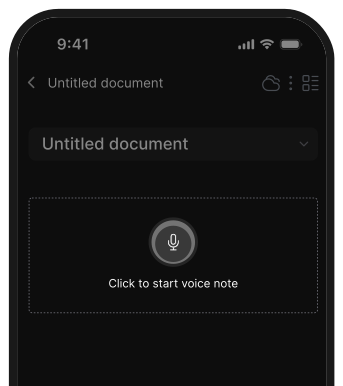
- Saner.AI: Supports voice notes and turns them into tasks
- Google Calendar: Voice input via Google Assistant
9. Which phone planner app can auto-schedule tasks?
- Saner.AI: Suggests time slots based on your workload and task importance
- Motion: Auto-time-block tasks based on your calendar
10. Best phone planner app for entrepreneurs?
Entrepreneurs need a flexible phone planner that adapts quickly. Saner.AI is a good fit if you:
- Want to offload ideas fast
- Hate rigid systems and manual setup
- Need help focusing on multiple projects
11. How do phone planners help busy managers?
Saner.AI is a good phone planner for busy manager. It acts as a second brain:
- Highlight urgent tasks
- Summarize meetings
- Prep your day with the context you need—without digging through notes
12. How can a phone planner help executives and directors?
A strong phone planner like Saner.AI simplifies complexity. You get:
- Instant recall of meetings, notes, and follow-ups
- Reminders that surface automatically
- One searchable space for high-level thinking, not busywork
13. Can phone planners help with meeting prep?
Absolutely. The right app will:
- Pull notes from past meetings
- Show unresolved action items
- Summarize what matters before you walk into the room
14. What’s the difference between phone planner apps and traditional paper planners?
Paper is static. Phone planners are dynamic:
- They remind you, not the other way around
- They integrate with other tools
- They adapt to your habits, helping you stay on track without constant upkeep
15. What’s the best phone planner for leadership roles?
Leaders don’t just need reminders 0 they need clarity. Saner.AI is designed for that:
- Unifies notes, tasks, and meetings
- Surfaces decisions when they matter
- Reduces mental load so you can focus on direction, not detail
Other tools like Motion or Google Calendar are solid for specific scheduling needs. But if you want an assistant-like experience in your pocket, Saner.AI brings it all together.
Plan your life with AI and your phone