How to focus with ADHD - 8 Practical Tips That Actually Work

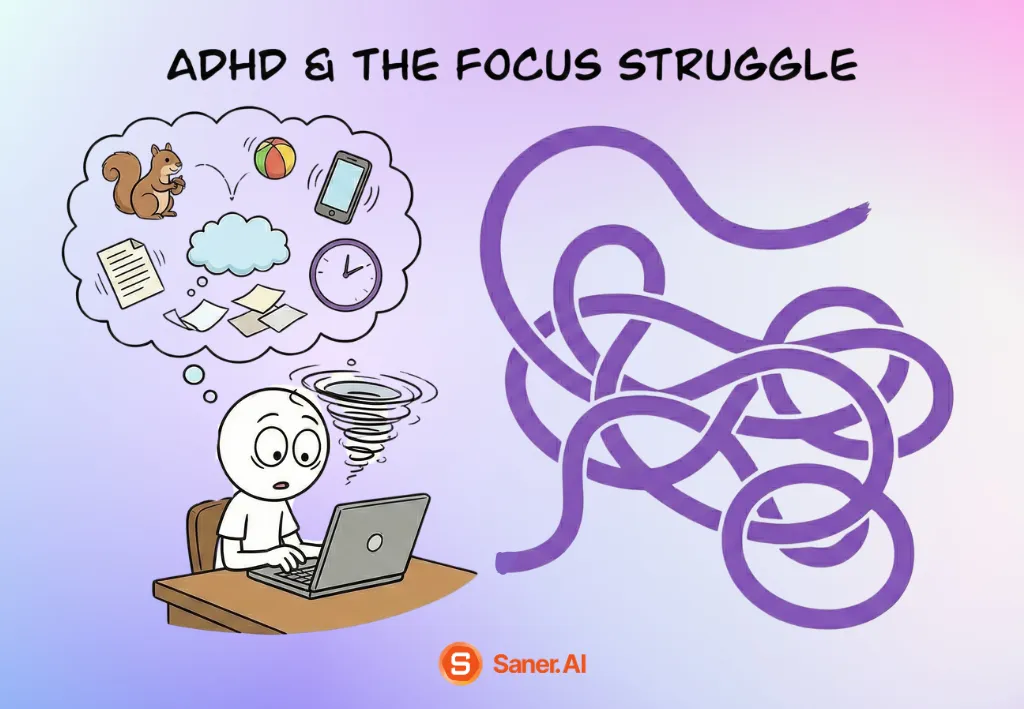
Focusing on ADHD isn’t about willpower or trying harder. It’s about reducing friction, managing attention, and designing systems that work with your brain rather than against it.
If you’ve ever wondered how to focus with ADHD without burning out, feeling guilty, or relying on motivation that never shows up on time, this guide is for you.
This article is designed for:
- People with ADHD have focus problems
- Professionals asking why ADHD is hard to focus
- Anyone looking for ADHD productivity tips that actually stick
- Readers who want practical ADHD focus strategies, not motivational speeches
1. What is ADHD?
ADHD (Attention-Deficit / Hyperactivity Disorder) is best understood as a difference in how attention and executive function are regulated, not a deficit in capability or discipline.
In practical terms, this means someone with ADHD may:
- Struggle to start simple tasks
- Lose focus despite strong intentions
- Feel mentally exhausted from “holding everything in their head.”
- Experience hyperfocus on interesting or urgent tasks, but not boring ones
👉 This is why ADHD focus strategies must focus on environment design and cognitive offloading, not willpower.
2. Why do people with ADHD find it hard to focus?
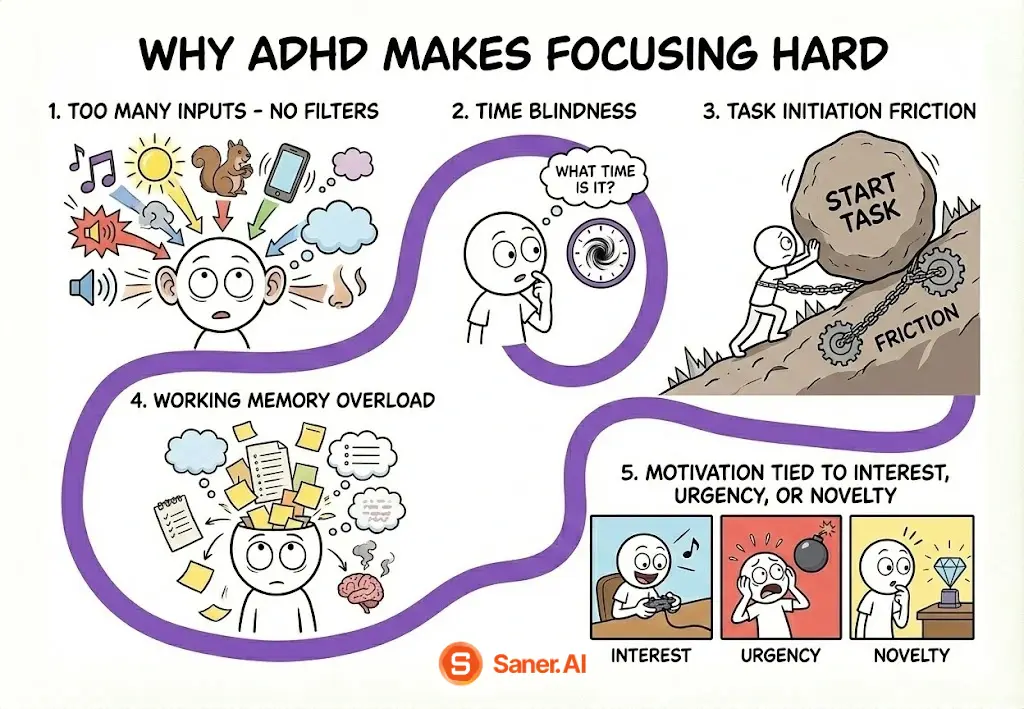
A. Too many inputs → no effective filter
People with ADHD struggle with attentional filtering, meaning the brain has difficulty deciding what not to focus on.
The result: everything feels equally loud and urgent.
B. Time blindness
Many people with ADHD have impaired time perception.
They underestimate how long tasks take or fail to feel the passage of time, which leads to missed deadlines, rushing, or avoidance. Time doesn’t create pressure until it’s almost gone.
C. Task initiation friction
ADHD is associated with executive dysfunction, especially in task initiation.
Even simple tasks feel hard to start because the brain struggles to translate intention into action. This creates procrastination that looks like “laziness” but is actually neurological friction.
D. Working memory overload
Working memory capacity is often lower in ADHD.
Holding multiple steps, reminders, or priorities in the head quickly overloads the system, leading to mental noise, stress, and shutdown—even before real work begins.
E. Motivation tied to interest, urgency, or novelty
ADHD motivation is driven less by importance and more by stimulation.
Tasks that are boring, vague, or long-term don’t activate dopamine, making focus biologically harder - if the person wants to care.
How to focus with ADHD
7 Focus Tips that Actually Work
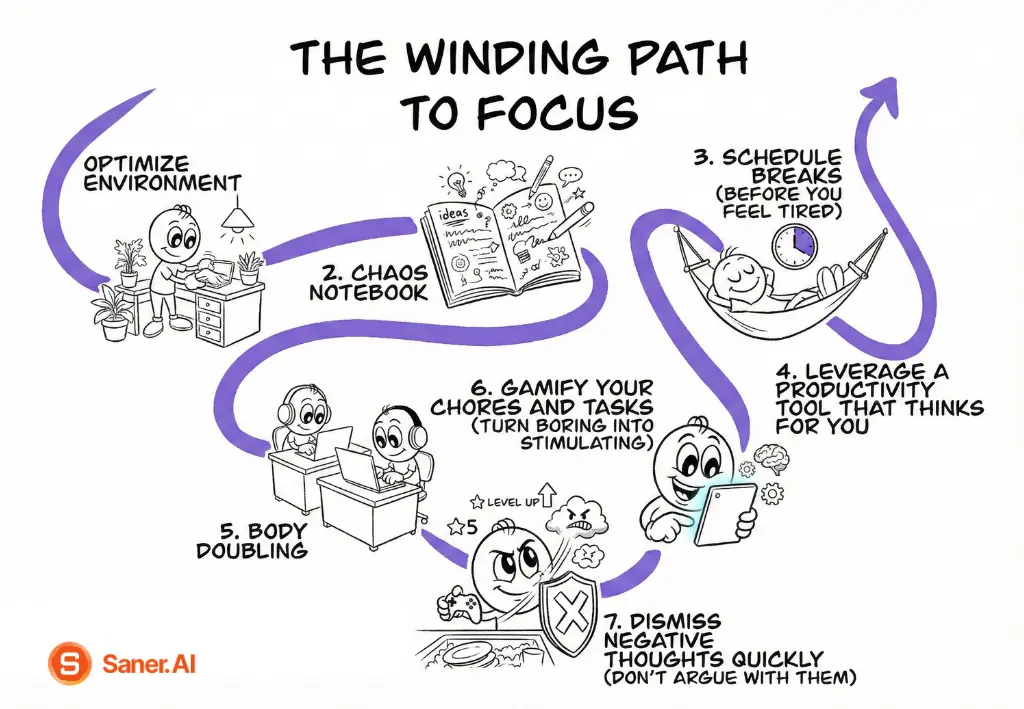
1. Optimize your Environment
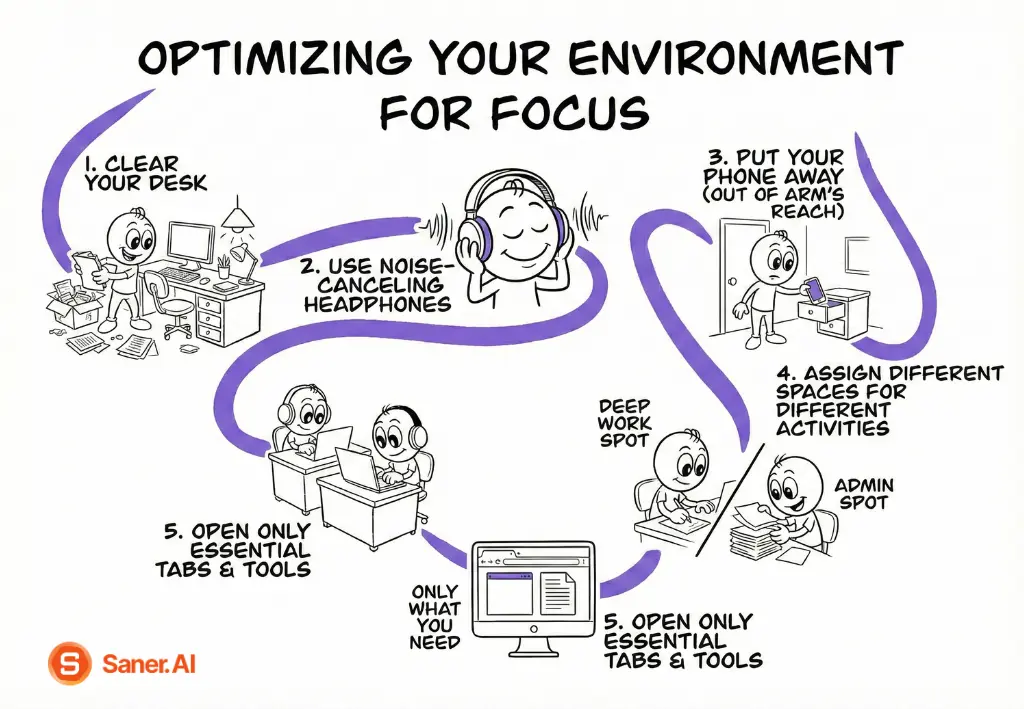
That’s why even small distractions (phone buzzes, open tabs, visual clutter) can completely derail focus. Optimizing your environment reduces external stimuli competing for your attention, which lowers cognitive load and makes focus the default, not a constant battle.
You can start by designing your space so the right behavior is easier than the wrong one:
- Clear your desk except for the one item related to your current task. Even piles you “plan to deal with later” silently drain attention.
- Use noise-canceling headphones, white noise, or instrumental music. Silence isn’t always best - consistent sound often works better than unpredictable noise.
- Put your phone in another room, inside a drawer, or at least out of arm’s reach. Log out of distracting apps or use website blockers during focus sessions.
- Assign different spaces for different activities (one spot for deep work, another for admin). Your brain learns context faster than rules.
- Open only the tabs, tools, or documents you need before working. Decision-making mid-task is a focus killer for ADHD.
Think of environment optimization as pre-deciding for your future self. You’re not trying to resist distractions - you’re removing the need to resist them at all.
2. Chaos Notebook
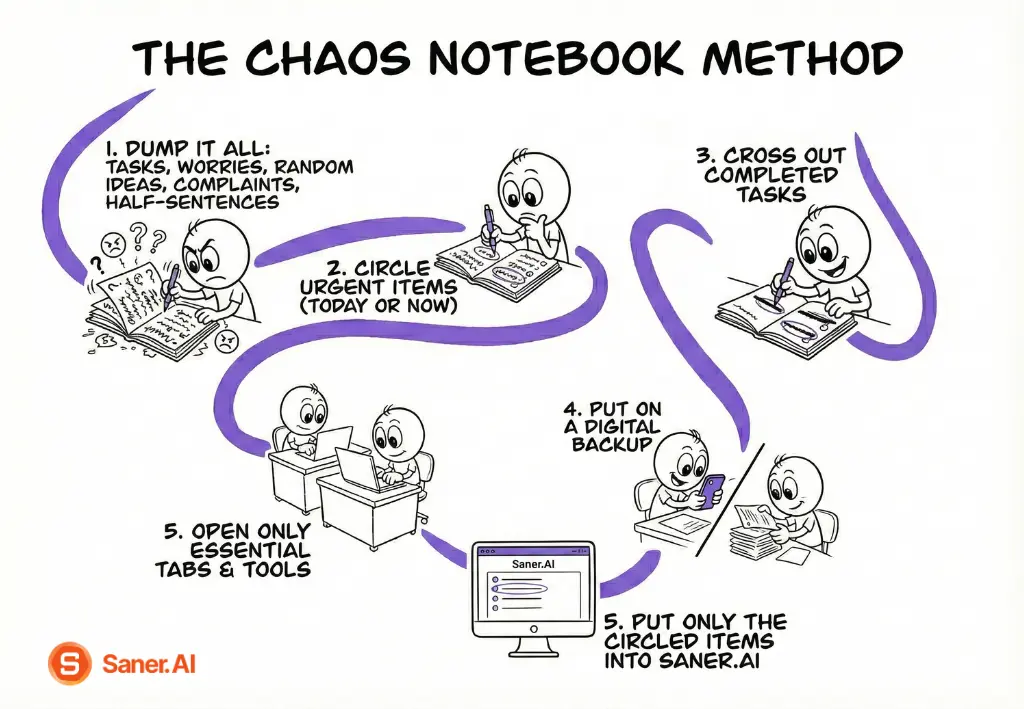
ADHD brains struggle most when thoughts pile up internally. Working memory gets overloaded, focus drops, and everything starts to feel urgent at once. A chaos notebook works because it externalizes your mind without asking you to organize, prioritize, or “think clearly” first.
This reduces mental noise and anxiety, which makes focus possible again. Importantly, it removes perfection pressure - something that often blocks ADHD brains from starting at all.
How to apply it in real life (step-by-step):
Use a plain notebook or blank page. No colors, no sections, no formatting.
- Tasks, worries, random ideas, reminders, complaints, half-sentences - dump it all. Don’t judge, sort, or rephrase. Speed matters more than clarity.
- Only circle items that truly need attention today or now. ADHD brains tend to label everything urgent - this step forces gentle reality-checking.
- Even crossing out something small gives your brain a sense of progress and relief. This visual cleanup matters more than you think.
- If you want a digital backup, put only the circled items into Saner.AI. Let AI turn them into tasks or priorities - don’t reorganize manually.
The chaos notebook isn’t meant to be neat or permanent. It’s a pressure-release valve for your brain. Use it whenever you feel mentally jammed, scattered, or frozen. Once the noise is out, focus usually follows - naturally, without forcing it.
3. Schedule Break
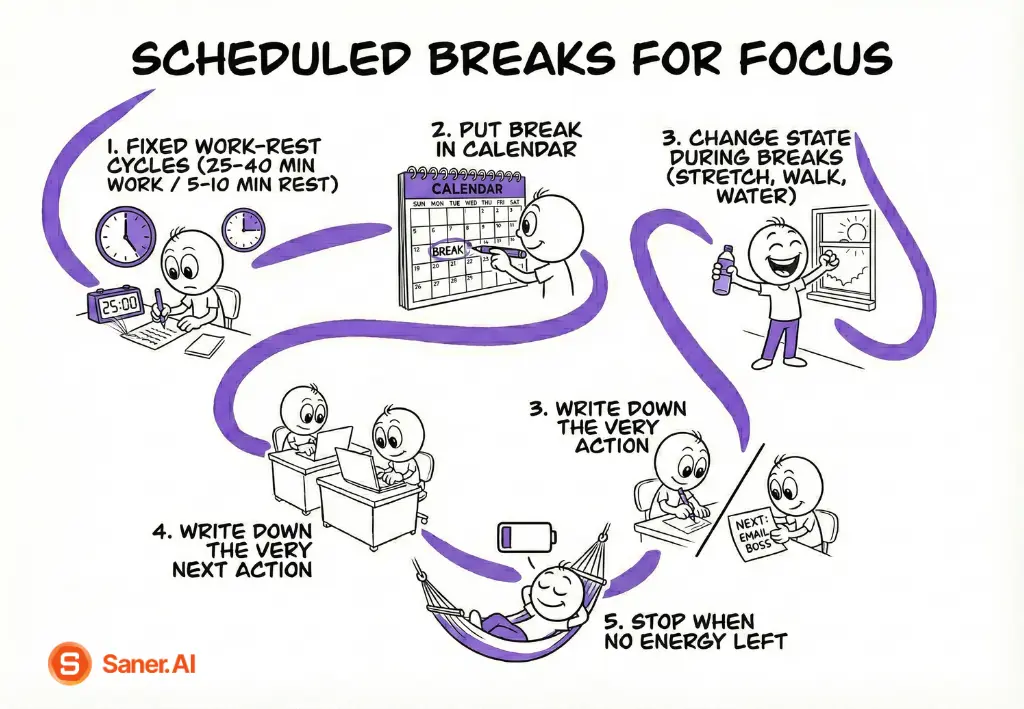
Waiting until you feel tired is risky - by then, your executive function is already depleted. Scheduled breaks protect your focus by preventing overload and helping your brain reset before attention collapses.
Treat breaks as a core part of productivity, not a reward:
- Use fixed work-rest cycles: Try 25–40 minutes of focused work followed by 5–10 minutes of rest. Longer tasks may need shorter cycles to avoid burnout.
- Put breaks on your calendar: Schedule them like meetings so you don’t skip them during hyperfocus.
- Change state during breaks: Stand up, stretch, walk, drink water, or look out a window. Avoid scrolling social media - it keeps your brain overstimulated instead of refreshed.
- Plan your next step before breaking: Write down the very next action you’ll take when you return. This prevents restart friction, which is a major ADHD blocker.
- End on purpose, not exhaustion: Stop while you still have some energy left. This makes it much easier to re-engage later.
For ADHD, breaks aren’t lost time - they’re focus insurance. When rest is intentional, attention lasts longer and feels less painful to sustain.
4. Leverage a productivity tool that thinks with you
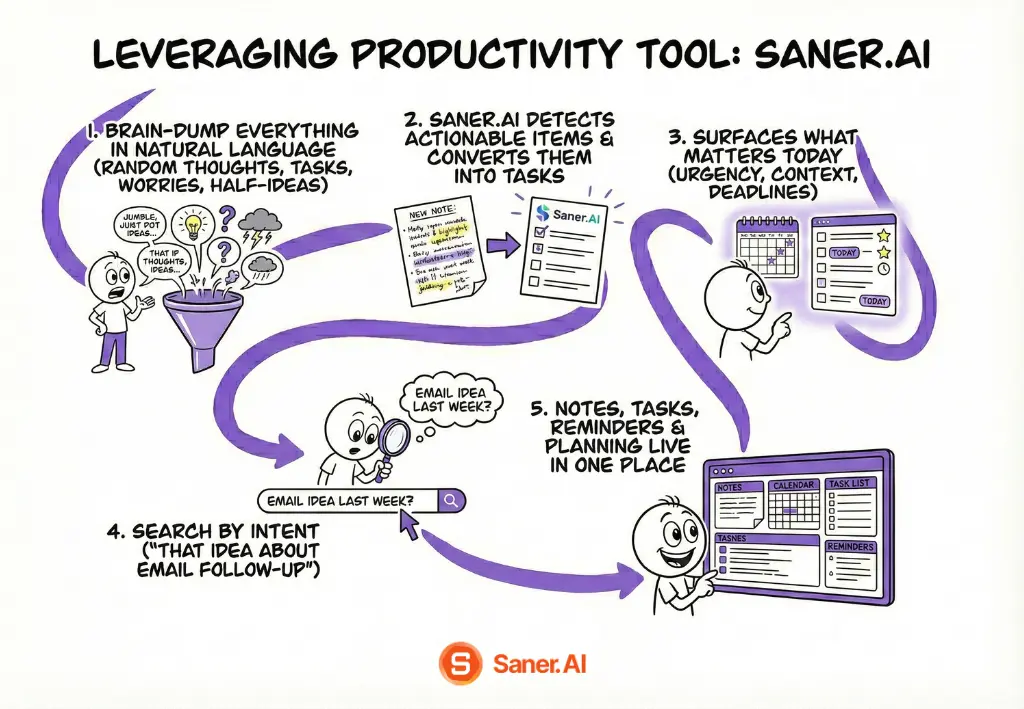
ADHD brains are not bad at thinking - they’re bad at holding and sorting thoughts. The moment you have to decide whether something is a note, a task, a reminder, or “important later,” your focus collapses.
This is why chaos notebooks are effective in the short term: they allow externalization without decisions. A productivity tool that thinks for you takes this one step further by not only capturing chaos but also transforming it into clarity automatically.
That directly reduces decision fatigue, working-memory overload, and planning paralysis - core ADHD challenges.
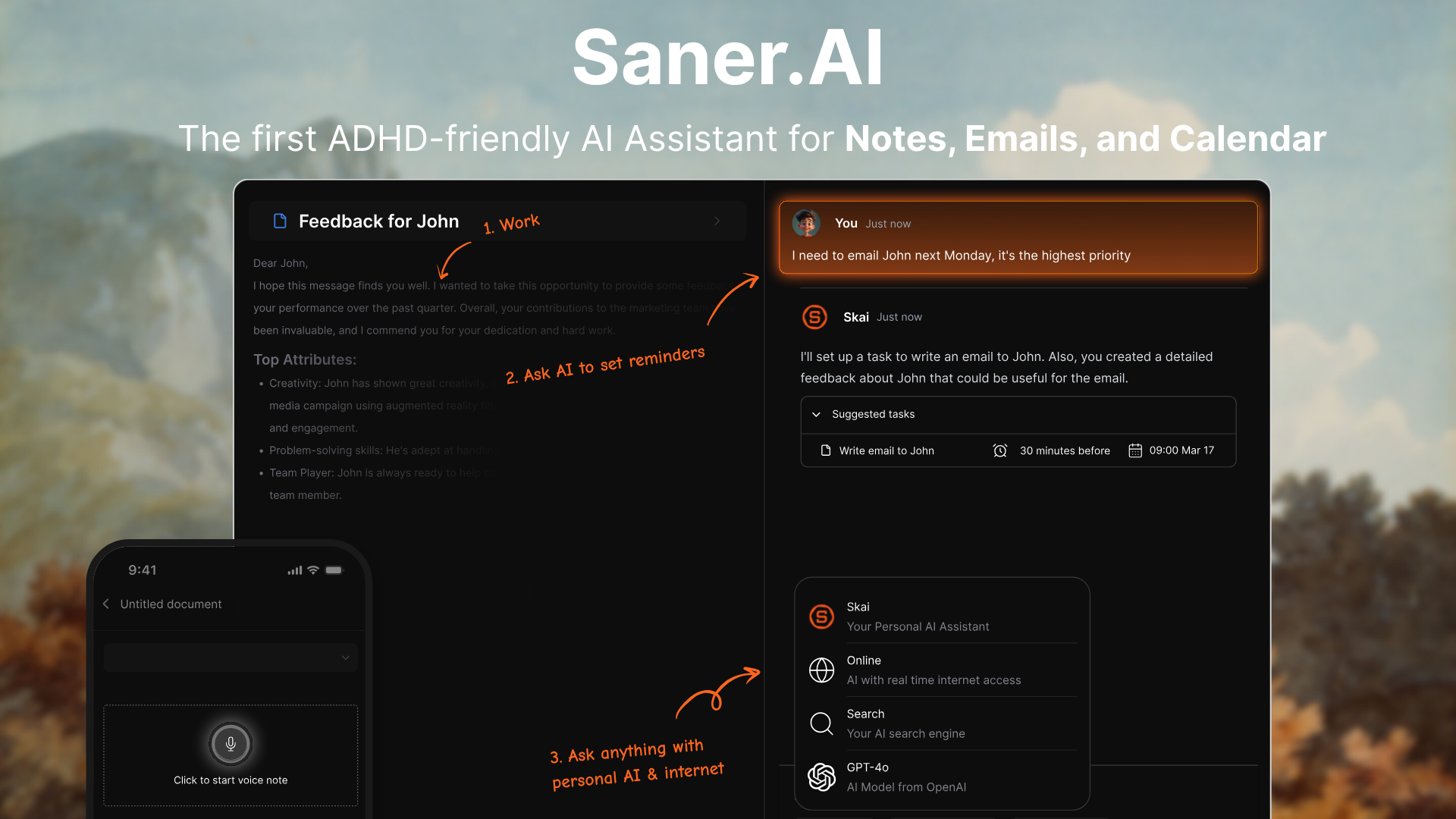
Instead of juggling a chaos notebook, a task app, and a calendar, we recommend using Saner.AI as a second brain assistant:
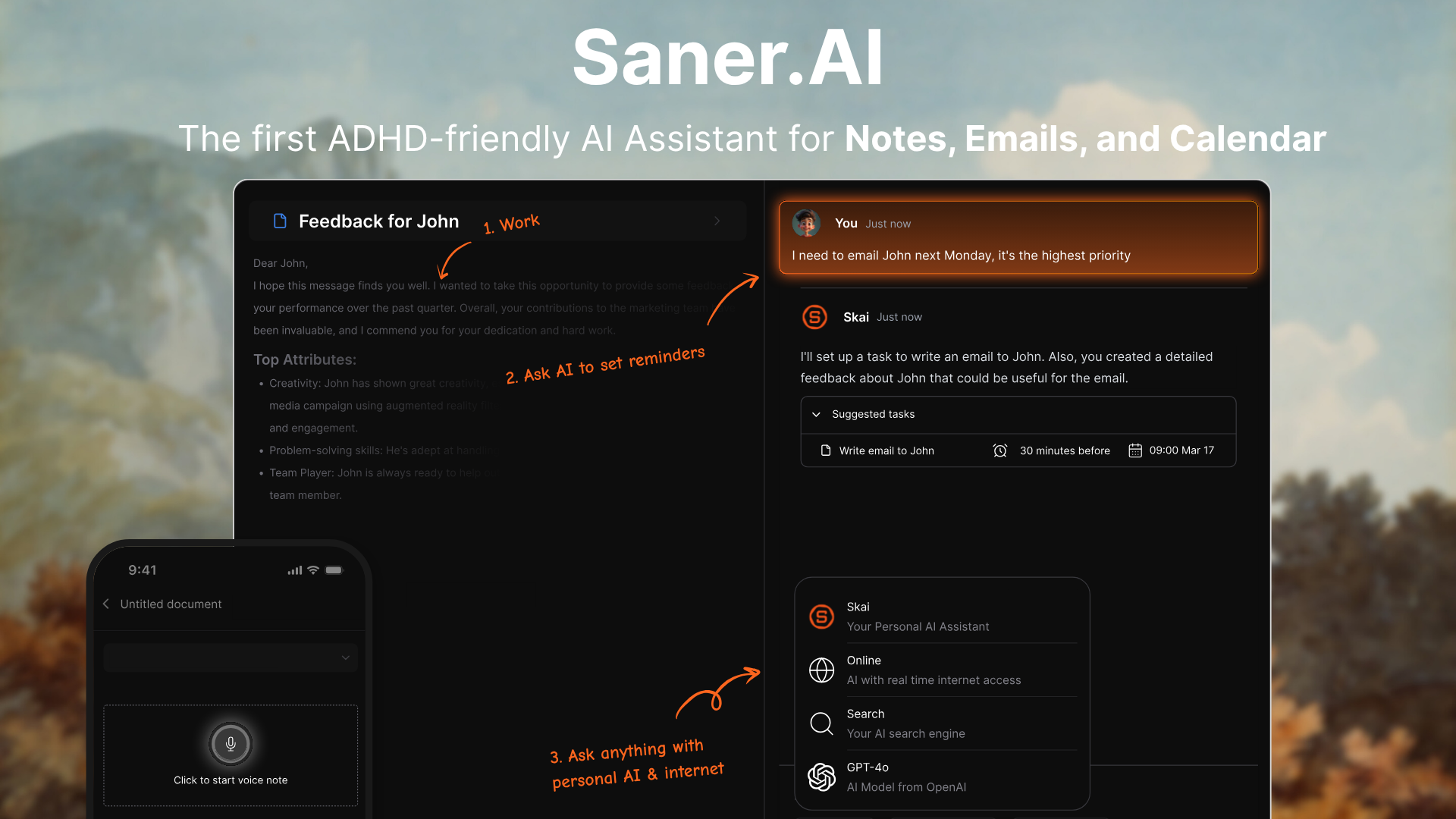
- Brain-dumps everything down exactly as it appears in your head in natural language - random thoughts, tasks, worries, half-ideas. No folders, no tags, no formatting. This replaces the chaos notebook phase entirely, but without losing information later.
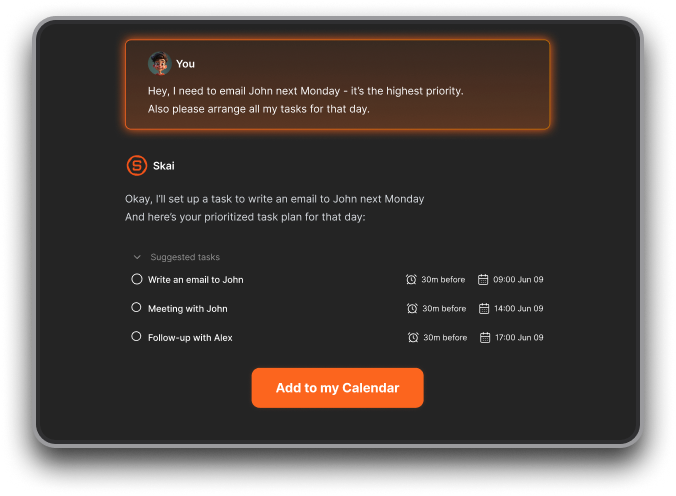
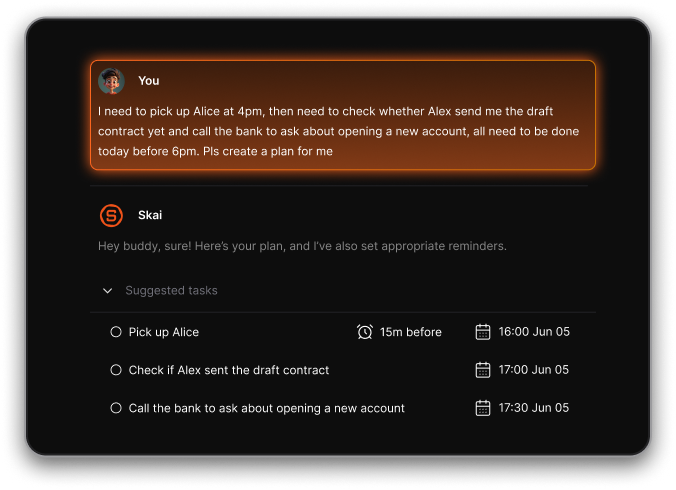
- Saner.AI detects actionable items inside messy notes and converts them into tasks or priorities. You don’t need to reread or rewrite anything, which removes a major friction point for ADHD users.
- Saner.AI offers automatic task breakdown. Instead of asking you to define clear steps (which is often the hardest part for ADHD), you can write something vague like “finish report” or “deal with emails.” The AI then breaks that into smaller, actionable steps you can actually start.
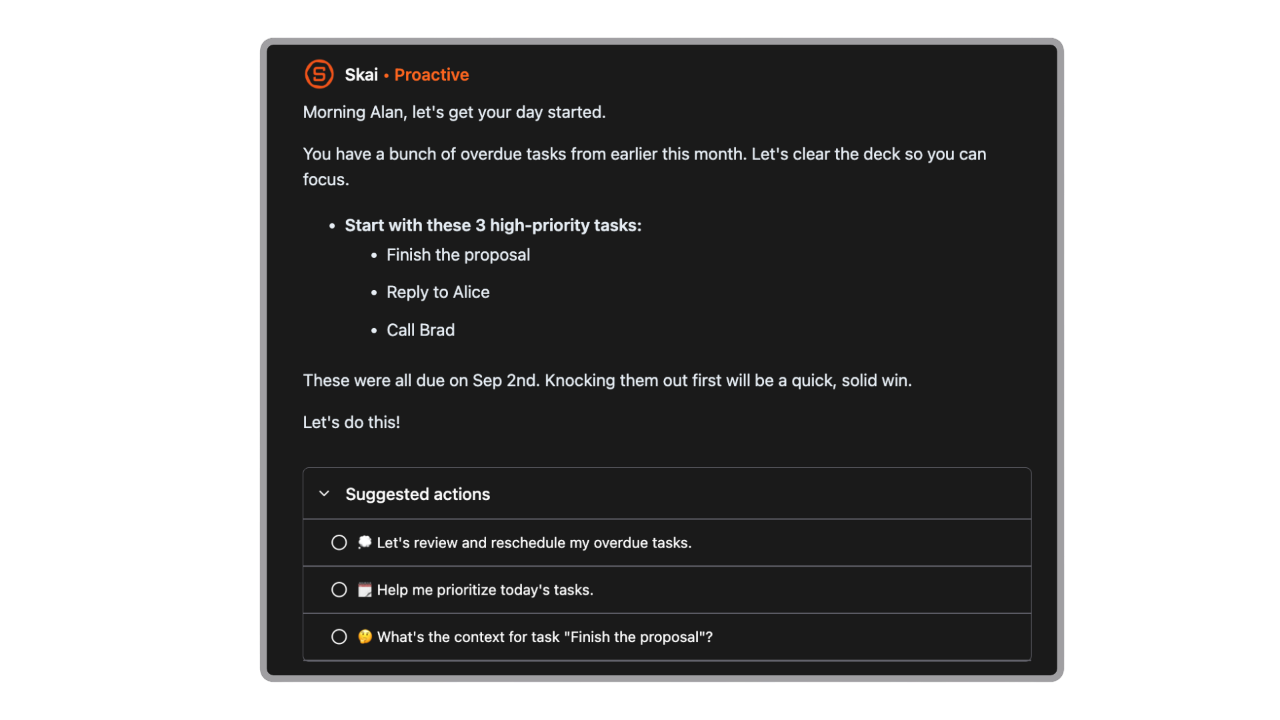
- Instead of forcing yourself to plan the day (which often leads to avoidance), Saner.AI surfaces what matters today based on urgency, context, and deadlines. Planning becomes reactive and supportive, not another task to fail at.
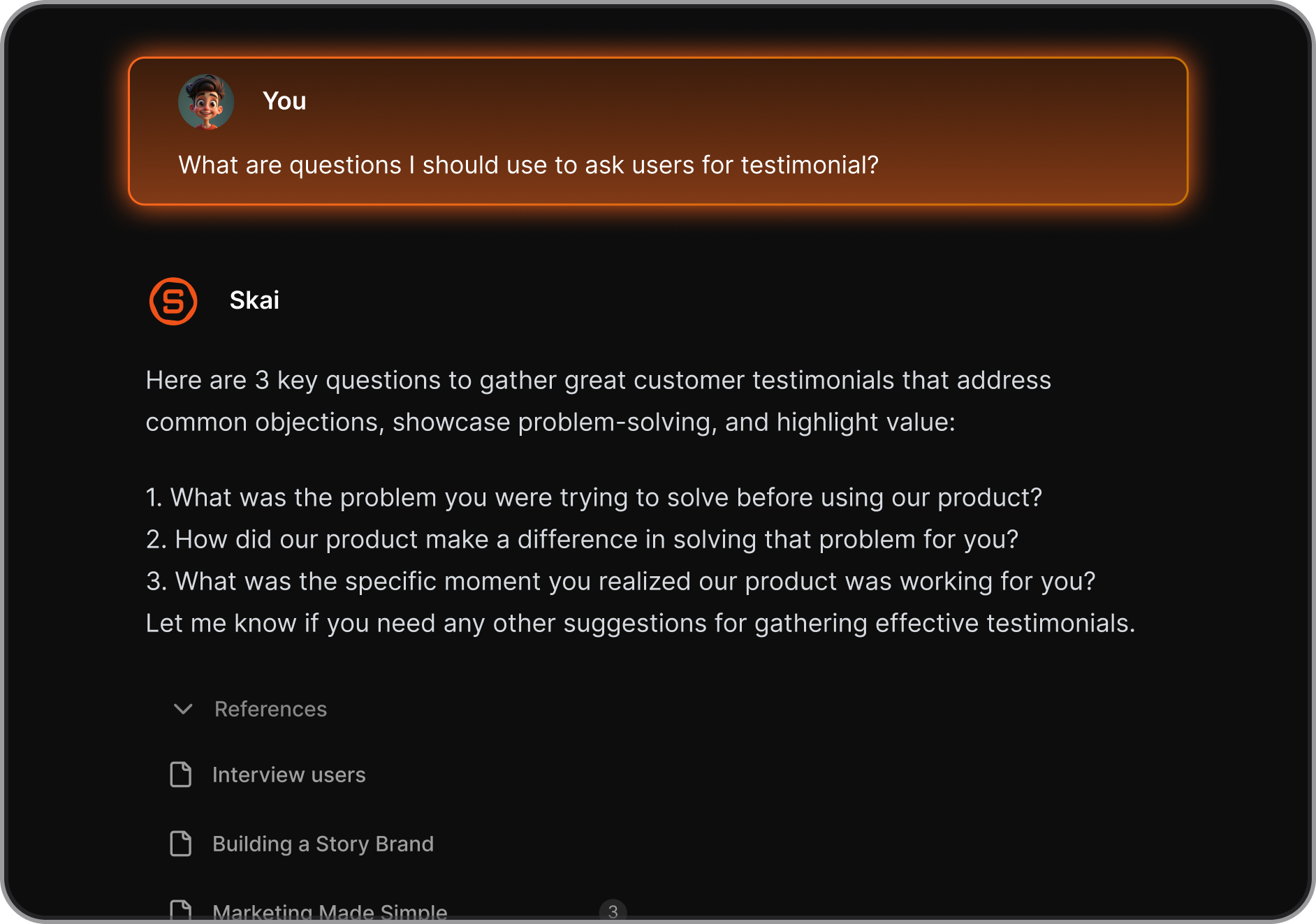
- ADHD makes recall unreliable. You don’t remember titles, keywords, or where you stored things. Saner.AI lets you search by intent (“that idea about email follow-up last week”), so you don’t lose useful thoughts just because your memory didn’t cooperate.
- Notes, tasks, reminders, and planning live in one place. This eliminates app-hopping, duplicate systems, and the mental tax of deciding “where should this go?”
In practice, this means you stop relying on willpower and start relying on systems. You capture first, think later, and act when the system nudges you exactly how ADHD-friendly focus should work.
Stay on top of your work and life
5. Body Doubling
When you work alone, your brain has to manage:
- When to start
- What to focus on
- Whether the task matters
- How long to stay engaged
Therefore, Body Doubling - a focus strategy recommended for people with ADHD, where they work while another person is physically or virtually present. They do not need to interact or work on the same task; the mere presence of another person serves as an external anchor, helping them maintain their attention.
This is how you can apply body doubling in real life
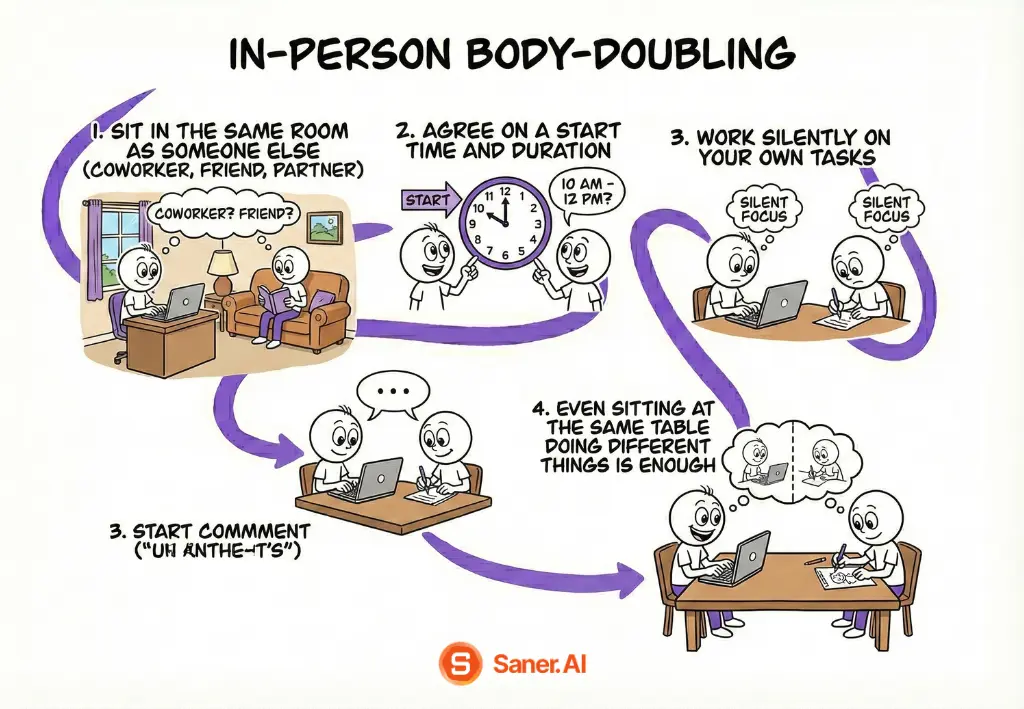
Option 1: In-person body doubling
- Sit in the same room as someone else (coworker, friend, partner)
- Agree on a start time and duration
- Work silently on your own tasks
Even sitting at the same table doing different things is enough.
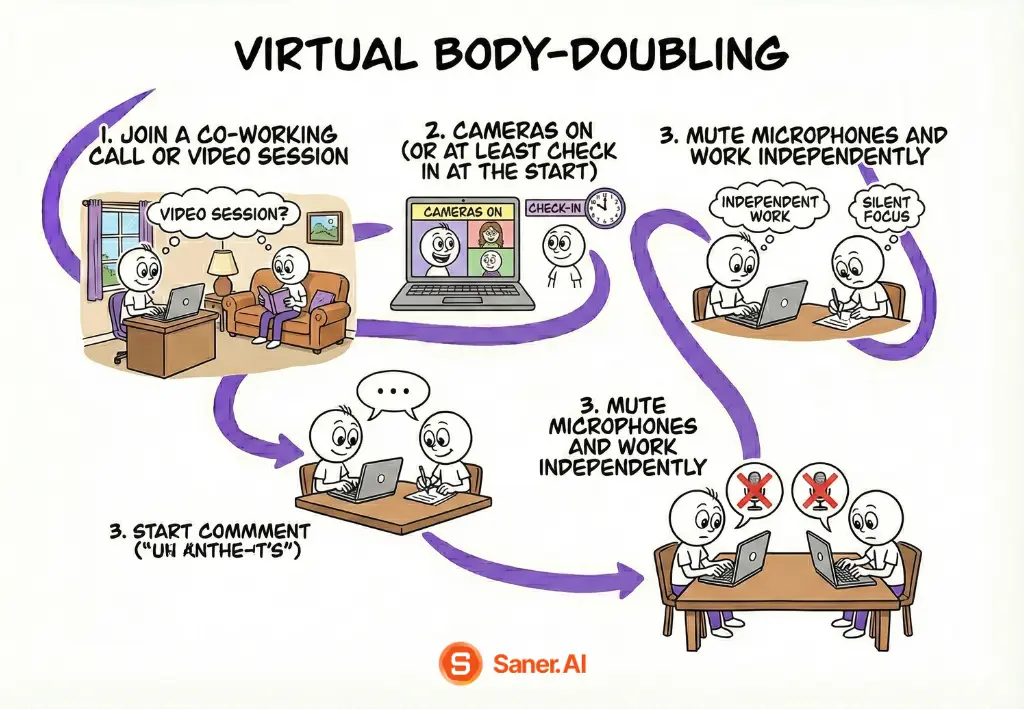
Option 2: Virtual body doubling
- Join a co-working call or video session
- Cameras on (or at least check in at the start)
- Mute microphones and work independently
Many people with ADHD find virtual body doubling just as effective as in-person.
Body Doubling is worth trying when it comes to focus strategy because it is based on these 3 pillars:
- Knowing someone else is “working too” creates a gentle sense of responsibility. It’s not fear-based accountability; it’s social presence.
- ADHD attention is socially sensitive. Another person’s presence stabilizes focus and reduces task-switching, even if you’re not interacting at all.
- A scheduled body-doubling session removes the “should I start now?” debate. You just show up.
6. Gamify Your Chores and Tasks (Turn Boring Into Stimulating)
ADHD brains are dopamine-driven, not priority-driven. If a task feels boring, repetitive, unclear, or low urgency, the brain simply won’t engage, no matter how important it is.
Gamifying chores and tasks means adding artificial rewards, rules, or challenges to work that feels boring, repetitive, or overwhelming. You’re not trying to make tasks “fun” in a traditional sense - you’re making them stimulating enough to start and continue.
How to gamify tasks in real life
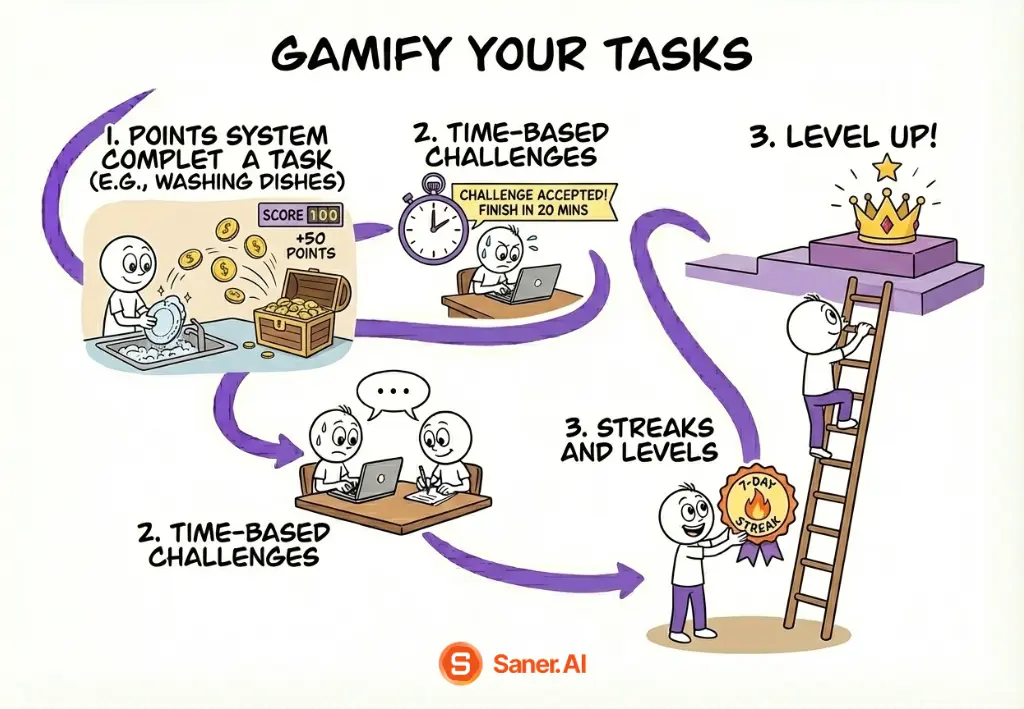
Method 1: Points system (simple but powerful)
Assign points to tasks based on effort, not importance.
- Small task = 1 point
- Medium task = 3 points
- Hard task = 5 points
Set a daily or weekly target (e.g., 10 points/day).
Method 2: Time-based challenges
Turn chores into short missions:
- “Clean the kitchen for 10 minutes.”
- “Reply to emails for one playlist.”
- “Sort files until the timer ends.”
When the timer stops, you stop - even if the task isn’t finished. This removes pressure and increases task initiation.
Method 3: Streaks and levels
Track consistency, not output.
- 3 days in a row = Level 1
- 7 days = Level 2
- Miss a day? No punishment - just reset
This works well for habits such as tidying, journaling, or admin tasks.
Method 4: Rewards that are immediate and concrete
Tie rewards to starting, not finishing.
Examples:
- One task → coffee
- One round → short walk
- Three tasks → guilt-free break
Gamification alters the dopamine equation of a task - making action possible even when motivation is low. If you’re learning how to focus with ADHD, gamifying tasks isn’t childish - it’s strategic.
7. Dismiss Negative Thoughts Quickly (Don’t Argue With Them)
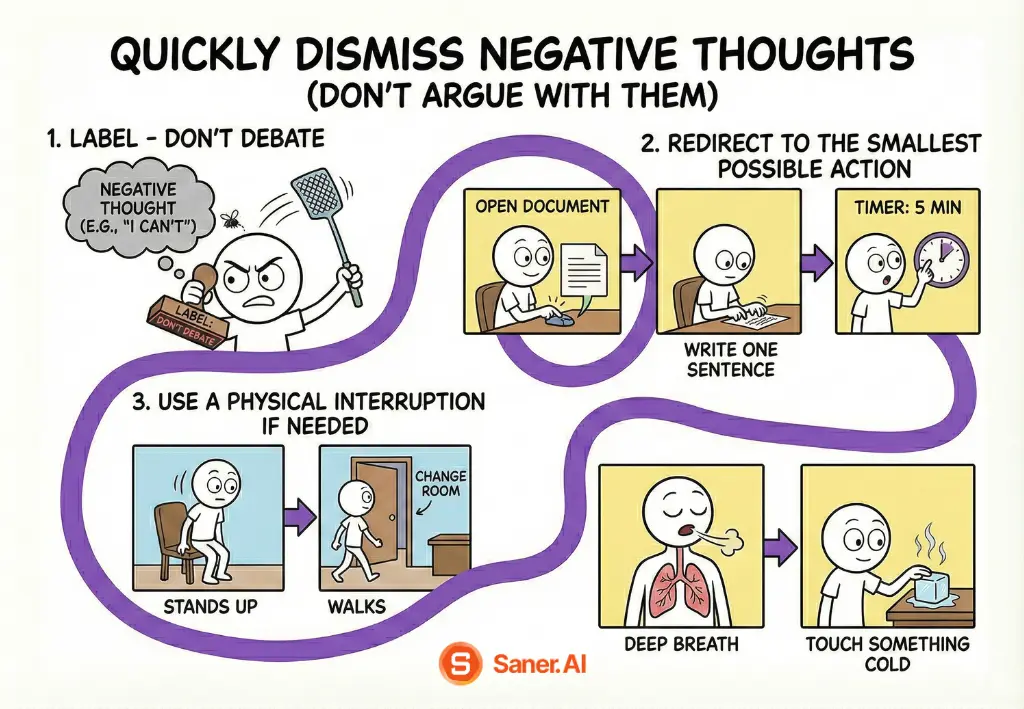
Dismissing negative thoughts doesn’t mean suppressing emotions or forcing positivity. It means refusing to engage in unhelpful mental commentary that drains attention and blocks action. For ADHD, the goal is not to “fix” the thought, but to move past it quickly and maintain the momentum.
How to apply this in real life
Step 1: Label, don’t debate
When a negative thought appears (“I can’t focus,” “I always mess this up”), label it:
- “Not useful”
- “Background noise”
- “Old script”
No analysis. No rebuttal.
Step 2: Redirect to the smallest possible action
Immediately ask:
“What is the next tiny step I can take?”
Examples:
- Open the document
- Write one sentence
- Set a 5-minute timer
Action breaks the loop faster than reasoning.
Step 3: Use a physical interruption if needed
If the thought is sticky:
- Stand up
- Change rooms
- Take one deep breath
- Touch something cold
Physical movement helps reset attention more effectively than mental effort.
What not to do
- Forced positivity often backfires and increases frustration.
- Insight doesn’t equal focus. Momentum does.
Mindset work assumes time, calm, and cognitive bandwidth. ADHD moments rarely offer those. Dismissing negative thoughts works because it protects limited mental energy and keeps attention pointed toward movement, not meaning.
If you’re learning how to focus with ADHD, remember this:
You don’t need better thoughts - you need fewer interruptions between you and the next small action.
4 Useful AI tools to hack focus for ADHD
Goblin Tools

Goblin Tools is a suite of AI utilities designed specifically for neurodivergent users. Its standout feature breaks down overwhelming tasks into tiny, manageable steps - perfect for ADHD task initiation. It also helps rephrase harsh internal thoughts into more neutral interpretations, which supports emotional regulation and focus.
Saner.AI
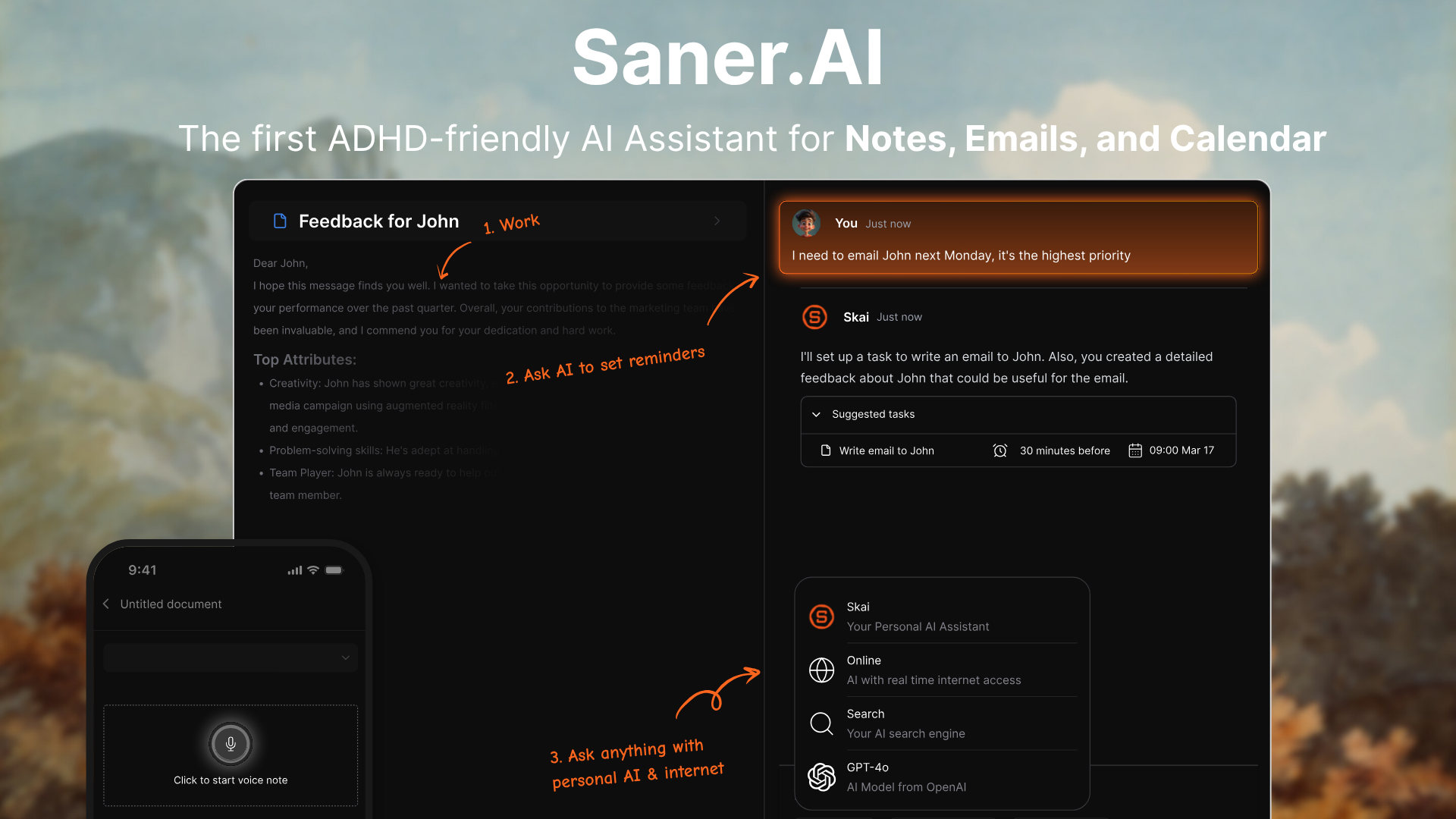
Saner.AI is built for ADHD-style thinking: fast, messy, and non-linear. You can brain-dump unstructured thoughts, tasks, or ideas, and the AI turns them into organized tasks, priorities, or reminders.
This reduces decision fatigue and removes the need to constantly “manage” your system. It’s especially helpful for people who abandon planners because they’re too rigid.
RescueTime

RescueTime runs quietly in the background and shows you where your attention actually goes. For ADHD, this awareness is powerful - it replaces guilt with data. The AI insights help identify focus patterns, distraction triggers, and the best times of day for deep work.
Brain.fm
Brain.fm uses AI-generated music designed to support focus, not just sound nice. The audio patterns are engineered to reduce distraction and help sustain attention, which is especially useful for ADHD brains that struggle with silence or inconsistent noise.
Conclusion: How to Focus with ADHD
Learning how to focus with ADHD isn’t about forcing discipline or “trying harder.” It’s about designing systems that work with an ADHD brain - not against it.
Across this guide, you’ve seen a clear pattern: focus improves when friction is reduced, stimulation is intentional, and thinking is externalized. Simple shifts - like optimizing your environment, using a chaos notebook, scheduling breaks early, body doubling, and gamifying tasks - can make a noticeable difference in daily focus and energy.
If you want to experiment further, tools like Goblin.tools (task decomposition), RescueTime (focus awareness), and Brain.fm (stimulating soundscapes) can support specific focus challenges - but they work best as complements, not replacements, for a solid core system.
One of the most reliable ways to sustain that progress is using a productivity tool that reduces decision fatigue. That’s where Saner.AI stands out.
Instead of asking you to organize perfectly, it lets you brain-dump freely and uses AI to turn scattered thoughts into tasks, priorities, and next steps - a workflow that aligns naturally with how ADHD minds operate.
What to remember:
- Focus with ADHD is built through structure, not willpower
- Externalizing thoughts lowers mental overload
- The best tools save energy, not just time
Practical takeaway:
- 🧪 Test 1–2 strategies at a time
- 🧠 Measure clarity and energy saved, not just productivity
- 🔁 Keep what feels lighter, drop what feels heavy
If you’re looking for a practical, ADHD-friendly way to stay focused without micromanaging yourself, start with Saner.AI - and build the rest of your focus system around what genuinely helps you feel calmer, clearer, and more in control.
Stay on top of your work and life
How to Focus with ADHD FAQ
1. Can people with ADHD actually learn to focus better?
Yes. While ADHD affects attention regulation, focus can be improved with the right strategies and systems. Most progress comes from:
- Designing environments that reduce distraction
- Externalizing thoughts instead of holding them mentally
- Using tools that reduce decision fatigue
With consistent support (not willpower), many people with ADHD build reliable focus over time.
2. How can people with ADHD improve focus without medication?
Many people improve focus by changing systems, not themselves. Practical strategies include:
- Optimizing the environment
- Externalizing thoughts into notes
- Using tools that reduce decision-making
- Structuring breaks before fatigue hits
Medication can help, but systems matter just as much.
3. What’s the fastest way to focus when you have ADHD?
The fastest method is externalization:
- Write everything down
- Remove choices
- Start with the smallest next action
Tools like Saner.AI help by turning messy thoughts into clear, actionable steps automatically.
4. How does a “chaos notebook” help ADHD focus?
A chaos notebook gives your brain a place to unload thoughts without organizing them. This reduces mental noise.
The key is not structure - it’s getting ideas out of your head so your working memory can focus on one thing at a time.
5. Why do scheduled breaks help ADHD more than pushing through?
ADHD fatigue builds before you notice it. Scheduling breaks early:
- Prevents attention crashes
- Maintains consistent energy
- Reduces emotional overwhelm
Waiting until you’re exhausted makes refocusing much harder.
6. What is body doubling and why does it work for ADHD?
Body doubling means working while someone else is present (physically or virtually). It works because:
- External presence increases accountability
- Reduces task avoidance
- Lowers activation energy
Even silent co-working sessions can significantly boost focus.
7. How does gamification help ADHD brains focus?
ADHD brains respond strongly to novelty and reward. Gamifying tasks:
- Adds stimulation
- Makes progress visible
- Triggers dopamine through completion
Turning chores into “levels” or timed challenges often works better than willpower.
8. How can ADHD users stop negative self-talk when distracted?
Arguing with negative thoughts usually backfires. A better approach is:
- Acknowledge the thought
- Label it as noise
- Redirect attention to the next small action
This prevents emotional spirals that further reduce focus.
9. What productivity tools work best for ADHD?
ADHD-friendly tools share three traits:
- Low friction input
- Minimal setup
- Automatic prioritization
Saner.AI stands out because it thinks with you - organizing notes, tasks, and reminders without manual systems.
10. How does Saner.AI help people with ADHD focus?
Saner.AI helps ADHD users by:
- Allowing brain dumps without structure
- Turning thoughts into tasks automatically
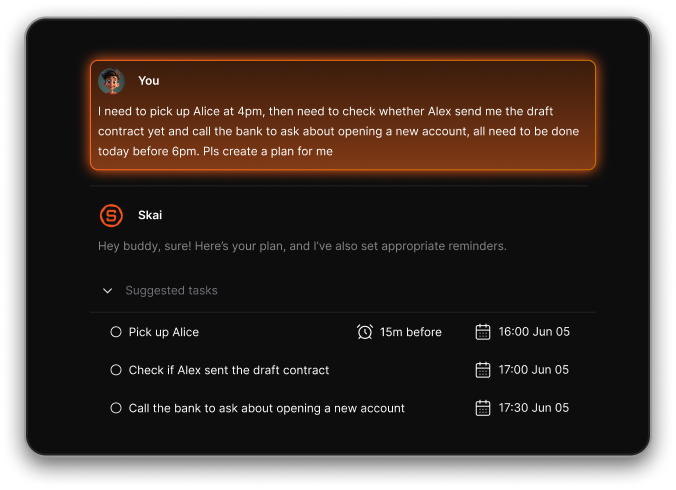
- Surfacing the right task at the right time
- Reducing context switching
It replaces mental juggling with external clarity.
11. Is Saner.AI better than traditional to-do apps for ADHD?
For many ADHD users, yes. Traditional to-do apps require:
- Planning
- Categorizing
- Constant maintenance
Saner.AI removes that overhead by managing prioritization and reminders automatically - critical for ADHD brains.
12. Can AI tools really improve ADHD focus?
Yes - when they reduce cognitive load instead of adding complexity. AI tools help by:
- Automating decisions
- Reducing task initiation friction
- Providing gentle structure
The key is choosing tools that stay out of your way.
13. How do other AI tools support ADHD focus?
Several tools complement different focus needs:
- Saner.AI – auto-schedules tasks into your calendar
- Goblin.tools – breaks tasks into smaller steps
- RescueTime – builds awareness of focus patterns
- Brain.fm – uses sound to support sustained attention
They work best alongside a central system like Saner.AI.
14. What’s the biggest mistake people with ADHD make when trying to focus?
Trying to rely on motivation or discipline. ADHD focus improves through:
- Environment design
- External systems
- Clear next actions
Not by forcing yourself to “try harder.”
15. What’s the most practical way to focus with ADHD long-term?
Long-term focus comes from building a supportive system, not perfect habits:
- Externalize thoughts
- Reduce decisions
- Use tools that adapt to your brain
For many, Saner.AI becomes the central layer that quietly keeps everything on track - without friction.
Stay on top of your work and life