How to Work Efficiently: 10 Practical Tips (That Actually Work)

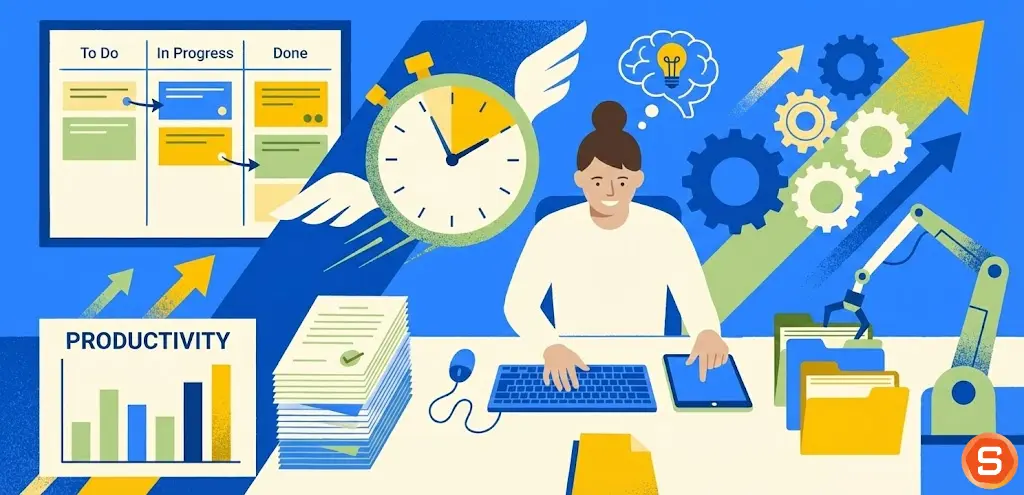
Working longer has never been the problem. Working blindly has.
Most people don’t struggle because they’re lazy or unmotivated. They struggle because their effort is poorly directed. Hours get filled, calendars get crowded, yet real progress stays stubbornly small.
In today’s digital work, efficiency isn’t about squeezing more tasks into your day. It’s about eliminating wasted motion - unclear priorities, constant switching, and decisions you shouldn’t be making repeatedly. When effort isn’t aligned with outcomes, even the hardest work produces mediocre results.
This article breaks down
- what working efficiently really means,
- why so many capable people fail at it, and
- the practical systems you can use to turn effort into results, without adding more hours to your day.
What Does It Mean to Work Efficiently?
Working efficiently means designing how you work before you start working.
It’s the difference between pushing harder on the pedals and choosing the right route. With the same number of hours, an efficient system can produce dramatically better outcomes - less stress, clearer focus, and work that actually moves forward.
It’s not about doing more tasks. It’s about ensuring that the effort you invest actually produces meaningful outcomes.
A. Efficiency vs. Productivity (A Crucial Difference)
Productivity asks: How much did you do?
Efficiency asks: How much did that effort matter?
You can be highly productive in clearing emails, attending meetings, checking tasks off a list, and still be inefficient if none of that work meaningfully advances your goals. Efficiency filters activity through impact.
- Productivity measures output volume
- Efficiency measures outcome quality per unit of effort
This distinction is why busy days often feel unsatisfying, while efficient days feel lighter yet more effective.
B. What Efficient Work Actually Looks Like
Efficient work has a few consistent signals:
- Clear priorities before execution begins
- Fewer tasks, but higher leverage
- Less decision-making during the day
- Systems that reduce mental load
- Energy directed toward outcomes, not motion
When you work efficiently, progress becomes predictable. You rely on structure.
Why Most People Struggle to Work Efficiently
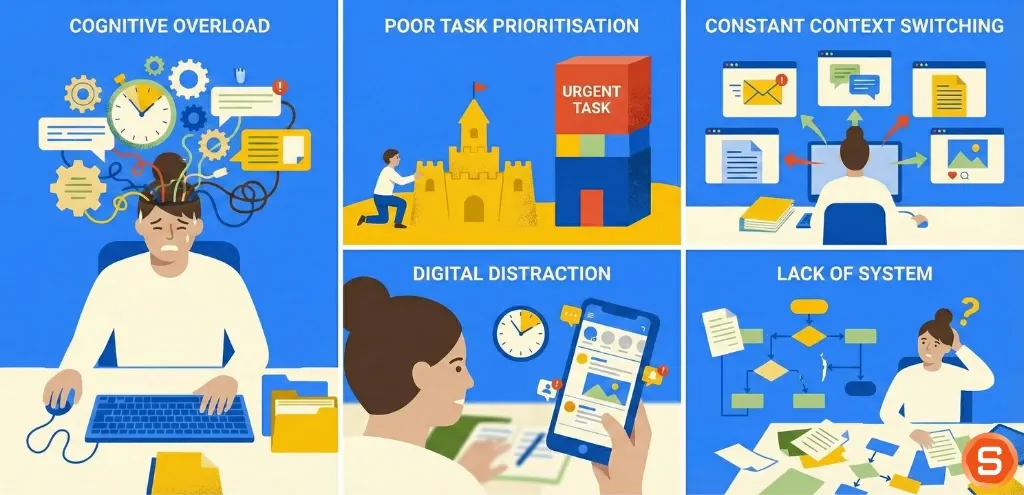
Most people don’t struggle with efficiency because they lack discipline or ambition. They struggle because modern work environments are designed to fragment attention, overload the mind, and reward visible busyness over real progress.
1. Cognitive Overload
Your brain is not a storage device. When tasks, ideas, worries, and reminders live in your head, they compete for attention even when you’re not actively thinking about them.
This constant background noise makes it harder to focus deeply, prioritize accurately, or feel “done” at the end of the day. Mental clutter quietly drains energy before real work even begins.
2. Poor Task Prioritization
Most to-do lists fail because they treat all tasks as equal. Without a clear way to distinguish what matters most from what’s merely urgent, people default to:
- Easy tasks
- Reactive work
- Whatever arrives most recently
Efficiency requires ranking work by impact, not convenience. Without that filter, effort gets scattered.
3. Constant Context Switching
Modern work rewards responsiveness, but responsiveness kills efficiency.
Every time you switch between email, chat, documents, meetings, and tabs, your brain pays a cognitive switching cost. The result isn’t just lost time - it’s shallower thinking and slower progress on meaningful work.
You may feel busy all day while making little real headway.
4. Digital Distractions by Default
Notifications are designed to interrupt.
Open tabs are designed to tempt.
Most tools are optimized for engagement, not focus.
When distractions are the default, efficiency requires intentional counter-design. Without it, attention leaks in small but constant ways.
5. Lack of Systems (Not Lack of Motivation)
Motivation is unreliable. Systems are not.
Many people try to work efficiently by “trying harder” or using willpower. But willpower fades quickly when every task requires a fresh decision: What should I do now? Is this important? Should I respond?
Efficient people reduce decisions through simple, repeatable systems - so their energy goes into execution, not constant choosing.
10 Practical Strategies to Work Efficiently
1. Start With "Why"
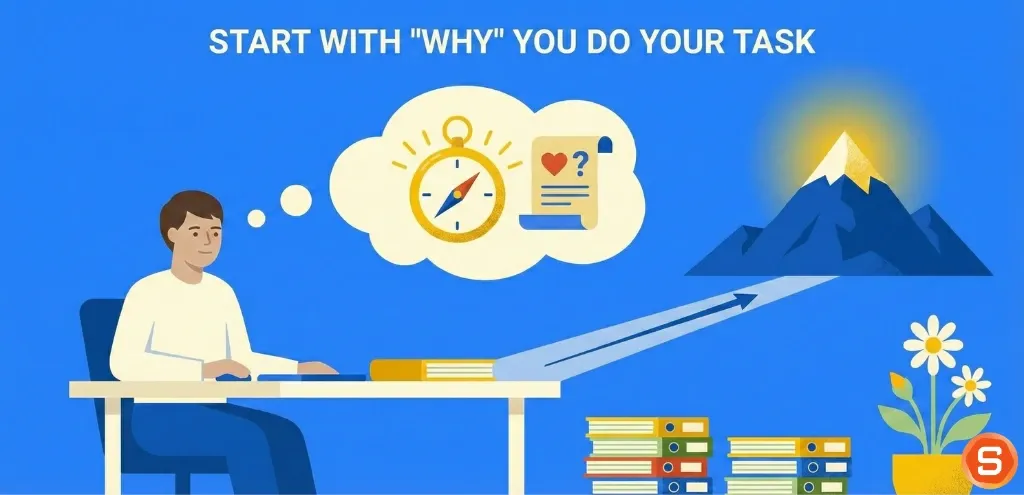
Have you noticed this? Some tasks feel heavy before you even open the file, while others somehow pull you in without effort. Research on goal-setting shows that connecting actions to outcomes improves persistence and performance because the brain is worth the energy.
Efficient work starts when you can see what you’ll get out of doing the task. Make just a simple, human question:
- If I do this well, what do I gain?
Maybe it’s:
- Visibility with your boss
- Momentum toward a promotion or raise
- Trust, autonomy, or credibility
- A finished output you’re genuinely proud of
- Simply just is the quiet satisfaction of knowing you showed up properly
How to apply it in real life (example)
Before starting any task, write one simple sentence answering:
“What do I gain if this is done well?”
Example:
- “Finishing this proposal increases my chance of leading the next project.”
- “Completing this task now frees my evening later.”
When a task has no clear value, your brain resists it. When the value is obvious, momentum follows. If you feel stuck, don’t push harder. Ask better questions.
2. Choose a Time that works for you to plan
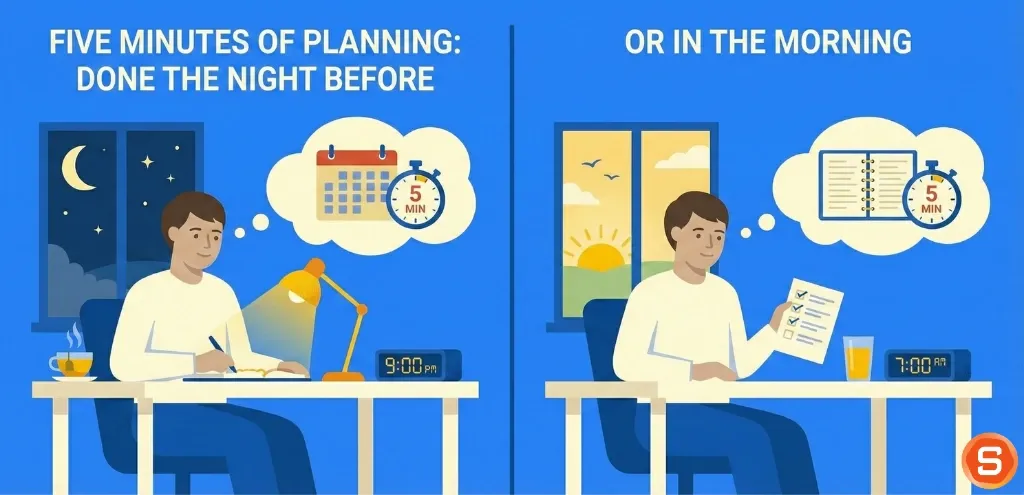
You don’t need a perfect plan. What you just need is enough structure to stop waking up in panic mode.
Five minutes of planning - done the night before or in the morning, with 3 simple steps:
- Scan tomorrow's calendar like a hit list,
- What absolute HAS to happen (or world ends)
- What would make tomorrow feel like a W?
The goal isn’t control. The goal is waking up knowing what you can actually do immediately.
3. Fix the Room Before You Fix Yourself
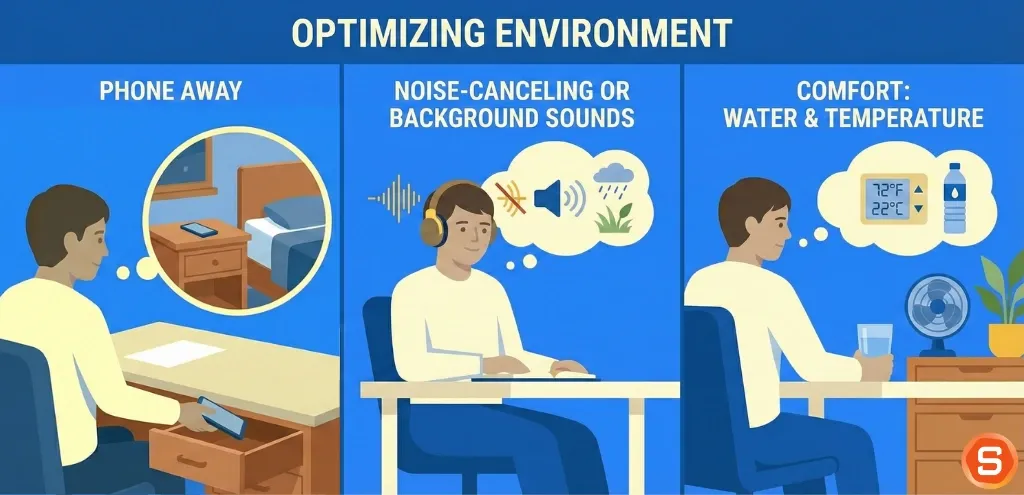
Your environment shapes your behavior more than motivation does. When distractions are visible and within reach, your brain constantly switches attention, draining focus and energy.
A well-designed environment eliminates unnecessary decisions, making it easier to stay in a state of flow without relying on willpower.
How to apply it in real life (example)
Create a setup where focus is the default:
- Put your phone in another room or inside a drawer
- Use noise-canceling headphones or neutral background sounds
- Keep water nearby and adjust the room temperature for comfort
4. Stop Re-Remembering the Same Things
There’s a subtle mental cost to carrying unfinished work in your head.
Not enough to stop you from working, but enough to make everything feel heavier than it should.
- Tasks you’re afraid of forgetting.
- Plans you’ll “figure out later.”
- Notes you wrote somewhere… but can’t quite remember where.
This is why offloading matters. Not because people are disorganized, but because attention is a limited resource.
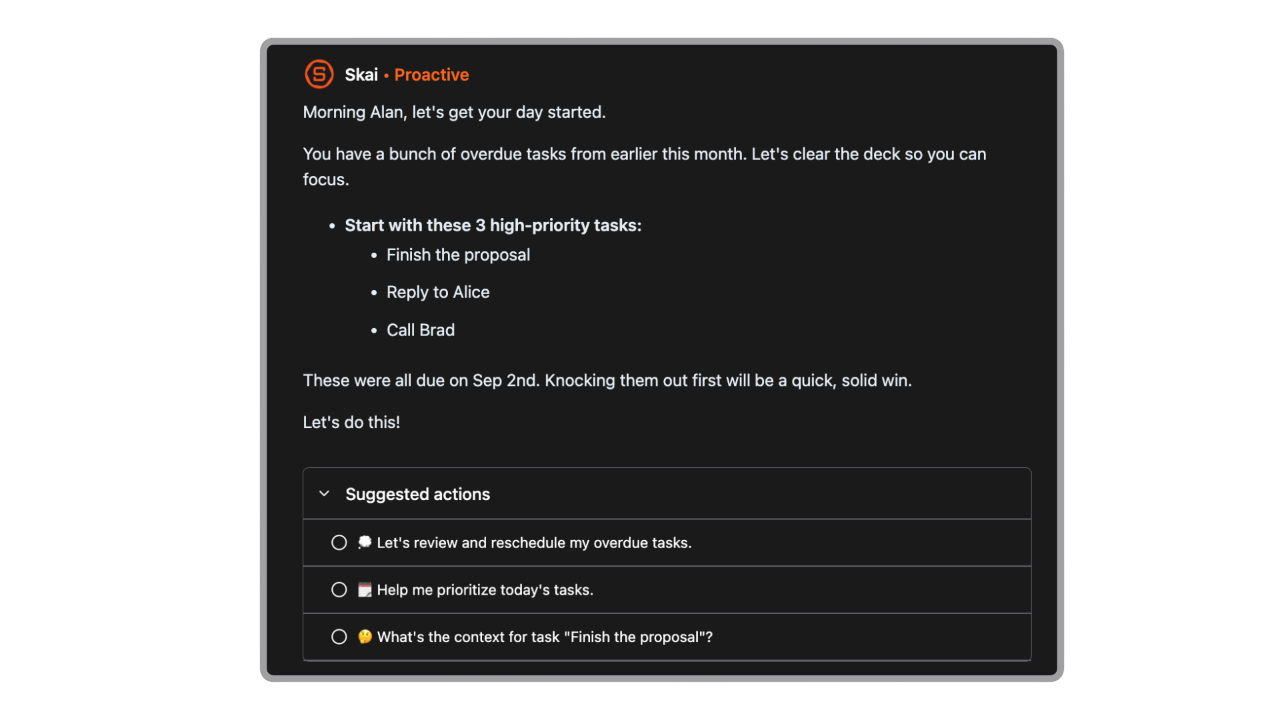
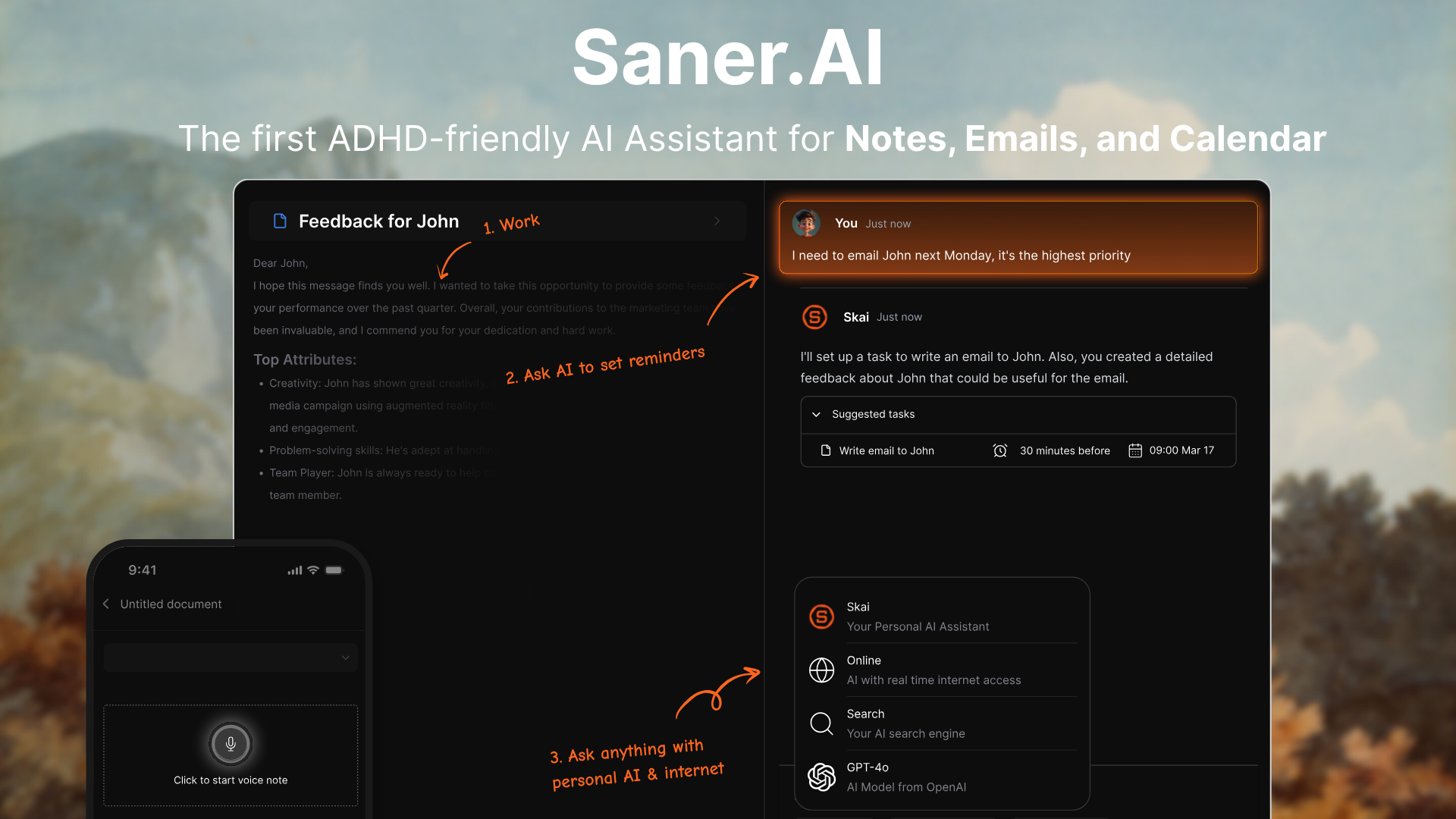
Tools like Saner.AI are built around this idea. Instead of forcing you to organize everything upfront, Saner lets you capture tasks and notes exactly as they come: messy, incomplete, and unstructured.

From there, the system helps:
- Capture tasks instantly, before they slip through. Turn raw thoughts into a daily plan, so priorities are clear
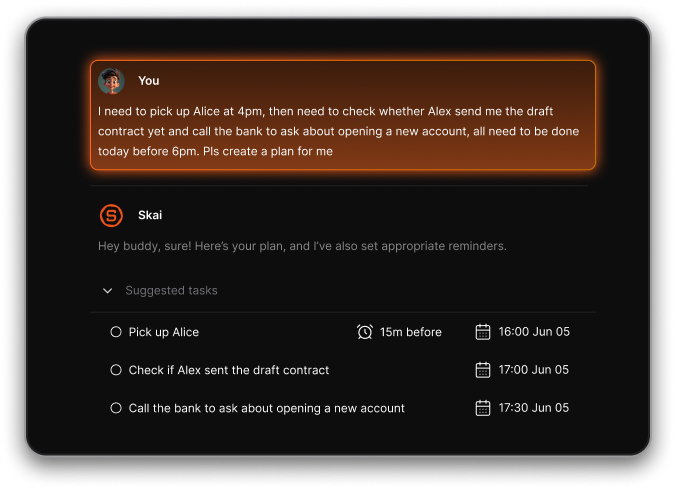
- Use an AI assistant to clarify, break down, or resurface what matters
- Retrieve notes and past context quickly, without digging
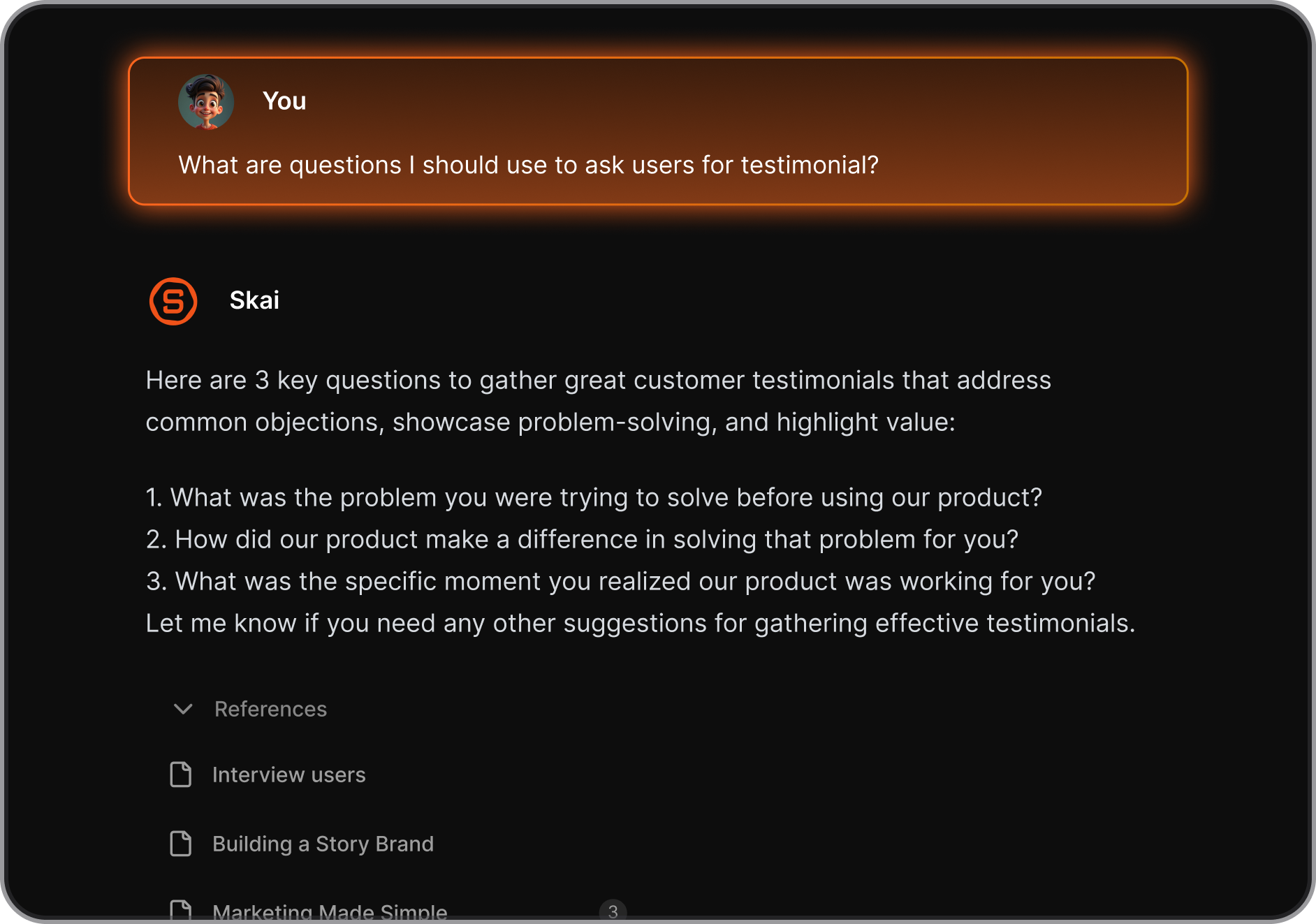
- Keep schedules and reminders aligned, so deadlines don’t live in your head
When you trust that your system is holding the details, you stop mentally checking on them, and your attention becomes available for work that actually requires judgment, creativity, and presence.
That’s what efficiency feels like when it’s done right: quieter, steadier, and far less exhausting.
Stay on top of your work and life
6. Make Tasks So Small They Feel Almost Silly
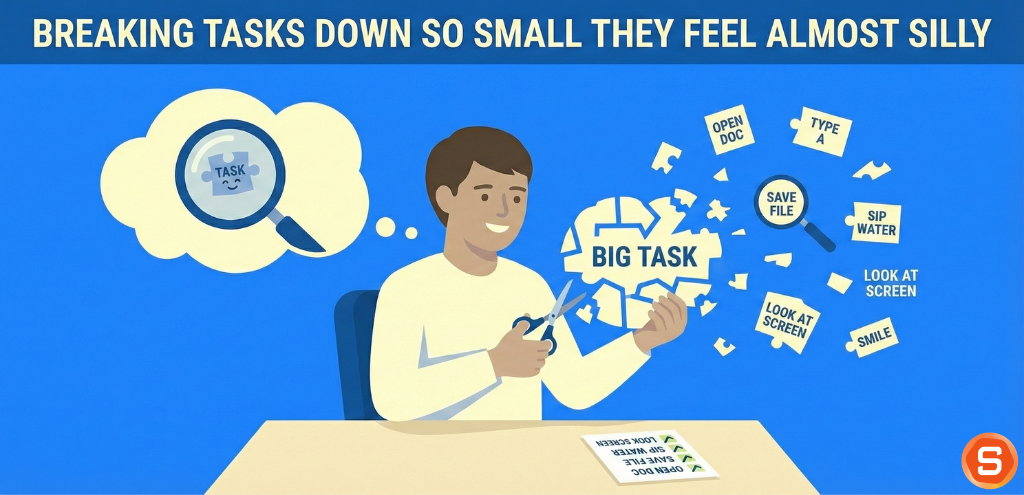
Your brain avoids tasks that feel vague or overwhelming. Large tasks create uncertainty, which triggers procrastination. When a task is broken into very small, concrete steps, the brain perceives it as safe and doable, making it easier to start and continue.
How to apply it in real life (example)
Instead of writing “Prepare presentation,” break it down into steps like:
- Open last month’s deck
- Write slide titles only
- Add one data point per slide
Once the first tiny step is done, momentum kicks in naturally, and finishing the task feels far less intimidating.
7. Use the 2-Minute Rule to Defeat Procrastination
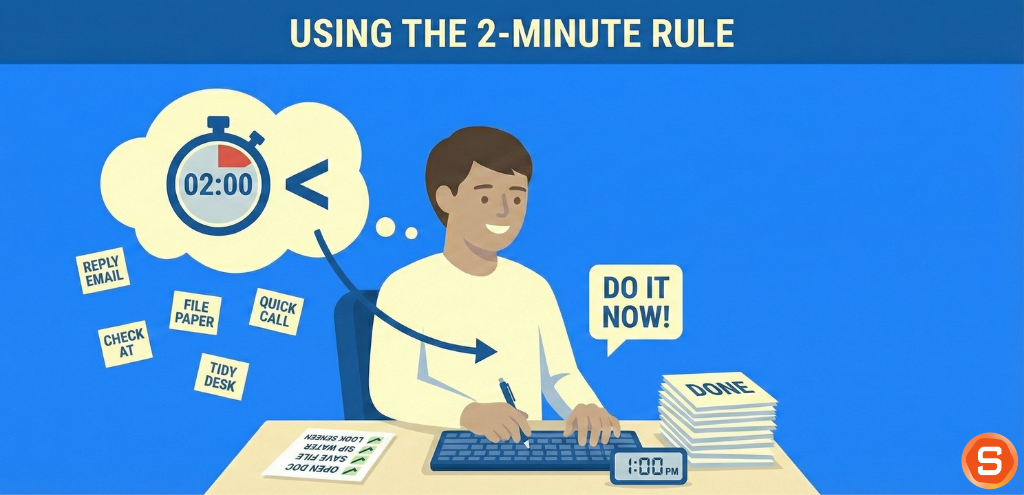
Procrastination is usually about starting, not doing. The 2-minute rule lowers the mental barrier by making the task feel non-threatening. Once you begin, your brain naturally wants to continue, turning a small action into real progress.
How to apply it in real life (example)
- If a task takes less than two minutes, do it immediately.
- If it’s bigger, commit to working on it for just two minutes.
Example: Open the document and write one sentence. More often than not, you’ll keep going long after the two minutes are up.
8. Allow Imperfection (Especially at the Start)
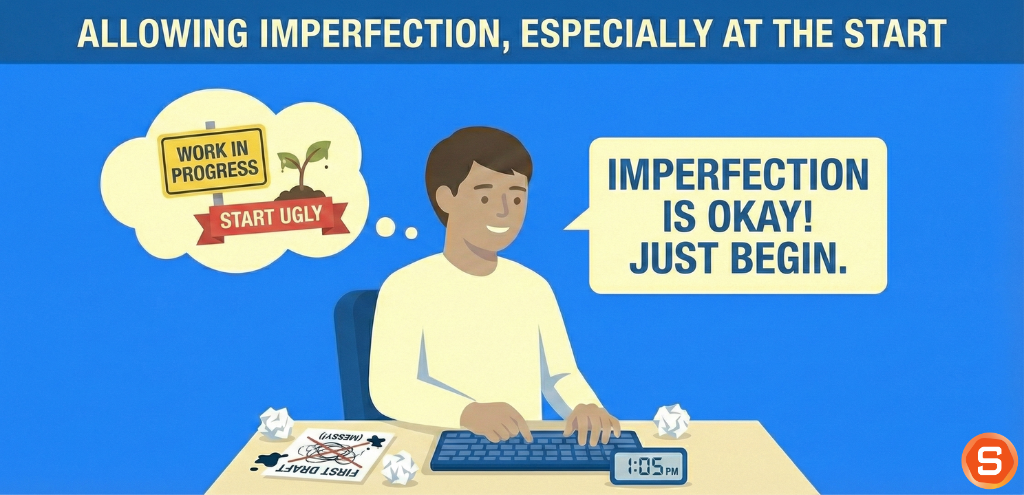
Perfectionism creates friction before work even begins. When your brain believes the output must be perfect, it delays starting to avoid failure or judgment. Allowing imperfection lowers emotional resistance and unlocks progress.
How to apply it in real life (example)
- Give yourself explicit permission to create a “bad first version.”
Example: Write rough notes instead of polished sentences, or sketch ideas without worrying about structure.
Once something exists, improving it is far easier than starting from nothing.
9. Dismiss Negative Thoughts Quickly (Don’t Debate Them)
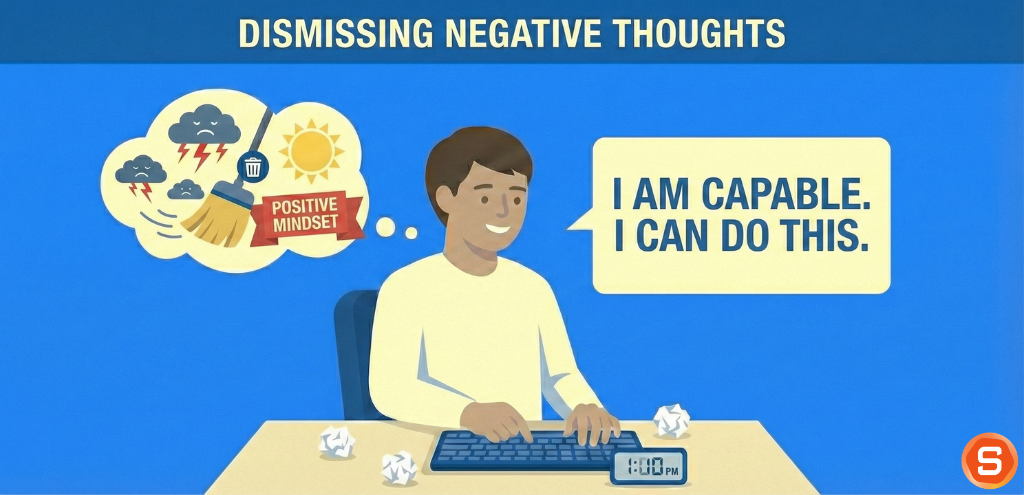
Negative thoughts drain focus when you engage with them. Arguing, analyzing, or trying to “fix” them keeps your attention away from the task. Letting them pass without debate preserves mental energy and keeps momentum intact.
How to apply it in real life (example)
- When a thought like “I’m not good at this” appears, label it as noise and return to the next small action.
Example: Acknowledge the thought, then immediately continue writing one sentence or completing one step - no discussion, no delay.
10. Be Grateful That You Get to Do the Work
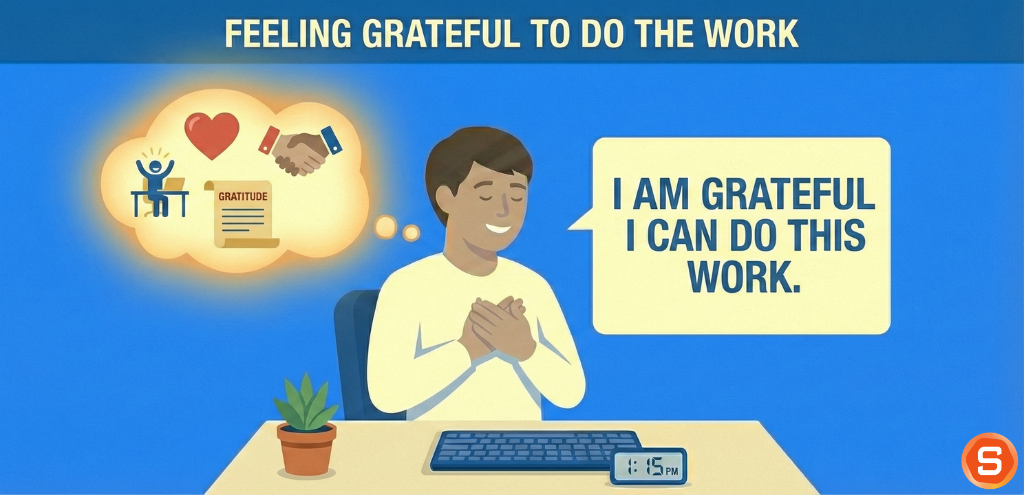
Gratitude changes how your brain interprets effort. When work is framed as a burden, the brain responds with stress, resistance, and avoidance. When the same task is framed as an opportunity, stress levels drop, and motivation becomes more sustainable.
Much research in positive psychology shows that gratitude improves emotional regulation and reduces burnout because it shifts attention away from pressure and toward meaning.
How to apply it in real life (example)
Before starting a task, pause for a few seconds and consciously reframe it.
Remind yourself: “This task exists because someone trusts me with responsibility.”
For example:
- A report means your input matters to decision-making.
- A deadline means others rely on your contribution.
- A difficult task means you’re developing skills that will compound over time.
This small shift turns obligation into ownership. When work feels chosen rather than forced, focus improves naturally, and motivation lasts longer - even on days when energy is low.
How to Build an Efficient Work System (That Doesn’t Collapse After a Week)
Most people don’t fail at efficiency because they choose the wrong tools.
They fail because their “system” depends on memory, motivation, and good days.
Step 1: Capture Everything (Before It Starts Leaking)
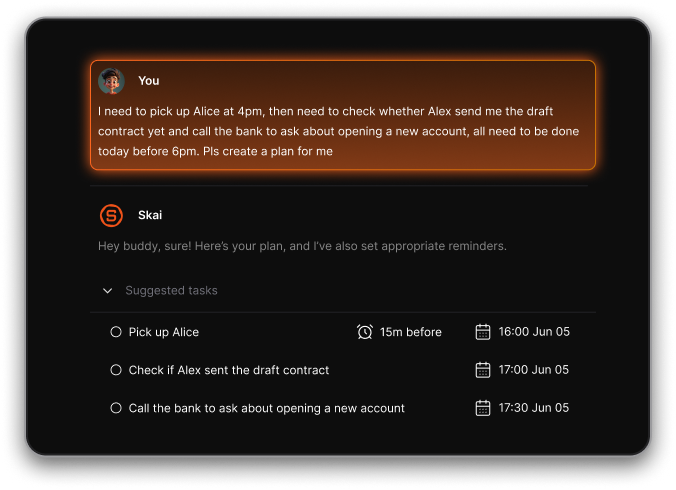
Ideas don’t arrive politely. Tasks show up mid-meeting, mid-walk, mid-thought. If your system only works when you’re calm and focused, it’s not a real system.
Therefore, it's very important to give your brain a "way out' - when thoughts are stacking up, you have to write - voice - type them down.
Step 2: Clarify What Each Thing Actually Means
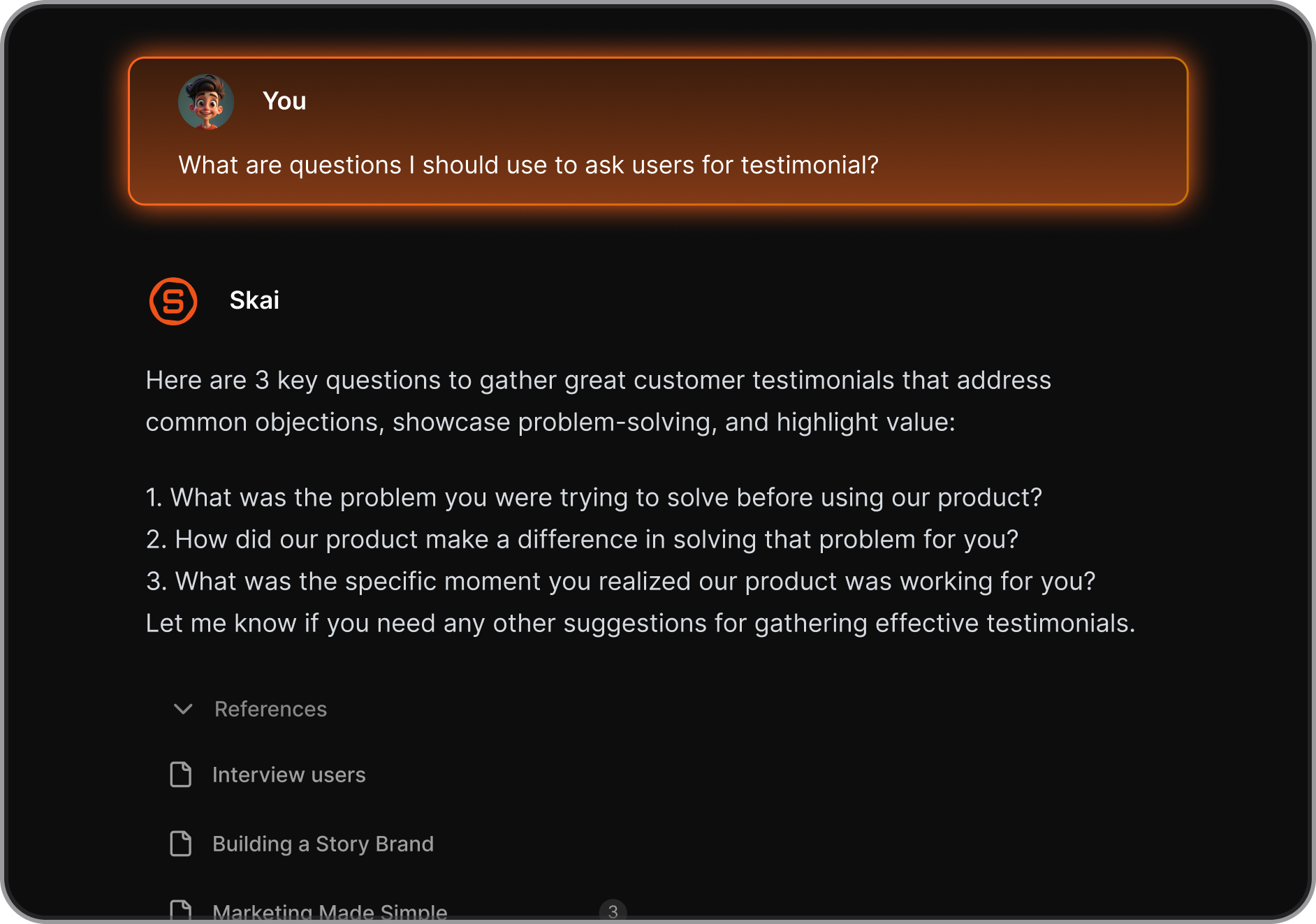
A list full of vague items is just anxiety in bullet-point form.
- Prepare report
- Think about the proposal
- Follow up soon
Make an important question: What is this, really - and what’s the next move?
- Is it a task, a note, or a reminder?
- Does it need to happen now, later, or not at all?
- Can it be broken down?
Step 3: Prioritize So Everything Isn’t Important
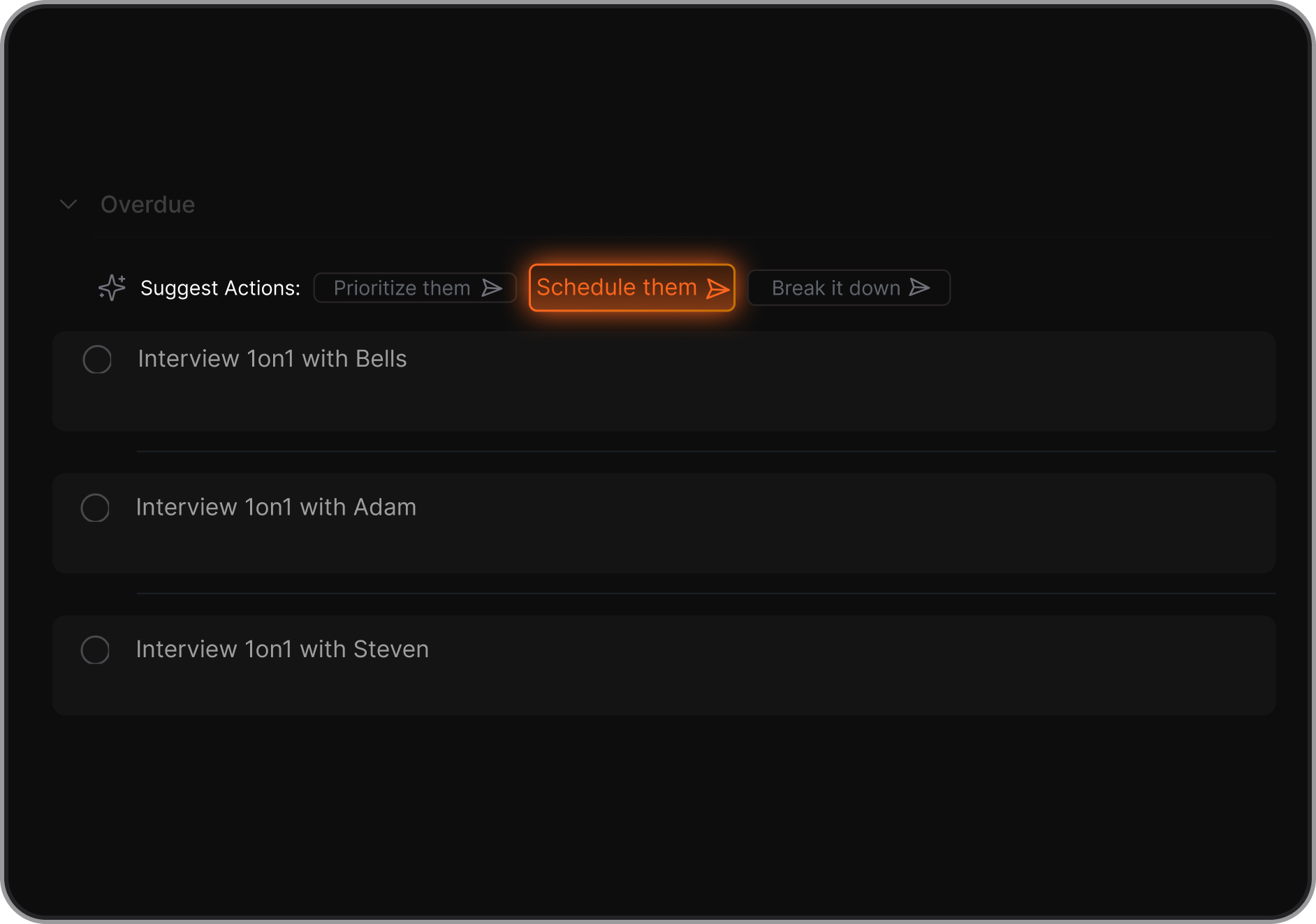
When everything feels important, you default to whatever is loudest.
- What must happen?
- What would be nice?
- What can wait?
This isn’t about ranking 27 tasks. It’s about choosing a few things that make the day feel meaningful when they’re done.
Step 4: Execute Without Constant Re-Deciding
The most draining part of work isn’t the work itself.
It’s constantly asking: What should I do now?
When your daily plan is already shaped, it is based on priorities, deadlines, and energy. You can move from task to task without negotiating with yourself every time.
Step 5: Review Gently, Not Obsessively
Efficiency can come from small, regular adjustments. A short weekly review is enough:
- What worked?
- What felt heavy?
- What needs to change?
No judgment. No over-optimization.
Just keeping the system aligned with real life.
Conclusion: How to work efficiently
Working efficiently doesn’t mean turning yourself into a machine.
Real efficiency is what happens when work no longer lives entirely in your head. When priorities are clear, progress is visible, and effort feels purposeful instead of draining. It’s the shift from constantly managing work to actually doing it.
This is why systems matter more than motivation. When your tasks, plans, notes, and deadlines are captured reliably - when they’re organized and resurfaced at the right time- you stop fighting your brain.
Tools like Saner.AI work because they value how people actually think. You can write things down as they come. The system helps you plan your day, retrieve context when you need it, and let AI handle the organizing in the background. Not so you can do more - but so you can think less about managing and more about working.
Start small. Build a system you can rely on.
Stay on top of your work and life
How to Work Efficiently FAQ
1. Why do smart, capable people still struggle to work efficiently?
Because efficiency is a system problem, not an intelligence problem.
Modern work overloads attention with tasks, messages, and decisions. Without a reliable system to capture and organize work, even high performers feel scattered.
2. What’s the biggest mindset shift needed to work efficiently?
Stop equating effort with results.
Efficiency improves when you evaluate work by outcomes, not by how busy or tired you feel at the end of the day.
3. Why do I feel busy but not effective?
Because activity isn’t the same as progress.
Most people spend time reacting - emails, messages, meetings, rather than working on high-impact tasks that move goals forward.
4. Do I need to work longer hours to be more efficient?
No. Efficiency improves outcomes without increasing hours.
Clear priorities and fewer distractions often produce better results in less time.
5. How do I decide what to work on first?
Start with outcomes, not urgency.
Ask which task would make the day feel successful if completed. Efficient work favors impact over convenience.
6. Why is prioritization so hard in daily work?
Because everything feels important when there’s no structure.
When tasks live across notes, chats, and memory, the brain struggles to rank them clearly.
7. Is multitasking ever an efficient way to work?
Almost never.
Multitasking increases cognitive load, slows thinking, and reduces quality- especially in knowledge work.
8. Why does my energy drop even when I manage my time well?
Because time management isn’t the same as energy management.
Deep thinking and decision-making require mental energy, not just available hours.
9. How does decision fatigue reduce efficiency?
Repeated small decisions quietly drain focus.
When you constantly decide what to do next, mental energy is spent before meaningful work begins.
10. How can systems help me work more efficiently?
Systems remove repetitive thinking, so execution becomes easier.
When tasks, reminders, and plans are externalized, your brain is free to focus on judgment and creativity instead of remembering details.
11. Do productivity tools actually improve efficiency?
Yes, especially when they reduce mental load instead of adding complexity.
Tools like Saner.AI help by capturing tasks as they come, shaping daily plans, and using AI to organize work so you don’t have to constantly re-plan.
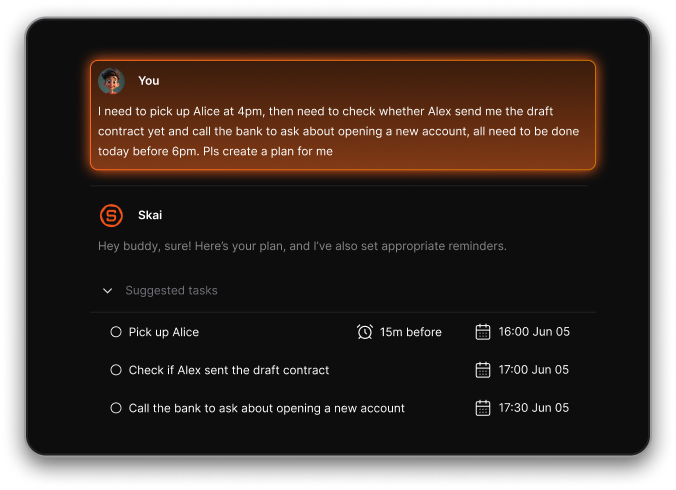
12. How do I stay efficient when I feel overwhelmed?
Capture everything before trying to prioritize.
Once thoughts are out of your head and into a system: tasks, notes, deadlines. This is where AI-assisted tools like Saner.AI are especially helpful.
13. How does note retrieval affect work efficiency?
Poor retrieval wastes time and breaks focus.
When you can’t quickly find past decisions or context, work slows. Systems that surface relevant notes when needed - like Saner.AI to protect momentum.
14. Is perfectionism bad for efficiency?
Yes - perfection delays progress.
Efficient work values completion and learning. Momentum matters more than flawless output.
15. What’s the simplest way to start working more efficiently today?
Get work out of your head and into a reliable system.
Start by capturing everything, choosing one meaningful priority, and letting tools like Saner.AI handle reminders, planning, and organization in the background.
Stay on top of your work and life