5 Simple AI Apps for Non-Technical People to Try in 2026

AI apps: We Tested the Best 5 Easy-to-use apps [2026]
Simple AI apps for non-technical people are tools that use artificial intelligence behind the scenes, but feel as easy as using email, notes, or a messaging app.
They don’t require coding.
They don’t ask you to “configure models.”
They don’t assume you understand how AI works.
This article is for people who say:
- “I’m not tech-savvy.”
- “AI sounds powerful, but also overwhelming.”
- “I just want something that works.”
For non-technical users, simplicity matters more than raw power. An AI tool is only helpful if you feel confident opening it.
In this guide, you’ll find 5 simple AI apps that are genuinely beginner-friendly, practical, and easy to use in everyday life - no technical setup, no jargon, no stress.
1. What “simple AI apps” really mean (and why most AI tools feel hard)
A. What makes an AI app simple?
A simple AI app usually has these traits:
- No code required
- Minimal setup (or none at all)
- Natural language interaction (you type or talk like a human)
- Clear outcomes (you immediately see what it does for you)
You don’t need to understand how the AI works. You only need to know what it helps you do.
B. Why non-technical people struggle with most AI tools
Many AI tools are built by technical teams, for technical users.
That often means:
- Too many features upfront
- Unfamiliar terms (models, prompts, workflows)
- Pressure to “optimize” instead of just use
For beginners, this creates tool anxiety - the feeling that you’re already behind before you start.
That’s why AI for everyday use needs a different design philosophy: start simple, reduce thinking, and guide the user gently.
2. How we selected these AI apps
The apps in this list were chosen using clear, beginner-first criteria:
- Ease of use: Can a non-technical person use it in minutes?
- No technical setup: No integrations, scripts, or configurations required
- Immediate value: You see results on day one
- Everyday usefulness: Work, planning, writing, or daily life
- Low learning curve: You don’t need tutorials to feel comfortable
These aren’t the most powerful AI tools on the market. They are the most approachable.
What are Simple AI Apps for Non-Technical People?
Simple AI Apps for Non-Technical People are Saner.AI, Otter.ai, Grammarly, Perplexity, and Wispr Flow.
🤖 Simple AI Apps for Non-Technical People — Comparison Table
| App | ⭐ Key Strengths | 🎯 Best For | 💻 Platform | 💰 Pricing (Clear & Simple) |
|---|---|---|---|---|
| Saner.AI | • AI-first daily planning that connects tasks, notes, and reminders automatically• You can brain-dump freely — no manual organizing needed• Proactive AI suggests what to work on and adjusts during the day | People who feel overwhelmed by planning and want AI to think with them | Web, iOS | Free plan availablePaid plans start around $8-$12/month |
| Otter.ai | • Automatic meeting transcription with speaker detection• Real-time notes and summaries• Very little setup required | Meetings, interviews, and people who hate note-taking | Web, iOS, Android | Free plan (limited minutes)Paid from $16.99/month |
| Grammarly | • Instantly fixes grammar, tone, and clarity• Works across email, docs, and browsers• No learning curve at all | Writing emails, docs, and everyday communication | Web, Browser extensions, Desktop | Free plan availablePremium from $12/month (annual) |
| Perplexity | • AI-powered search with direct, cited answers• Replaces Googling + reading multiple tabs• Clean, distraction-free interface | Quick research and fact-finding without complexity | Web, iOS, Android | Free plan availablePro at $20/month |
| Wispr Flow | • Fast, natural voice-to-text across apps• Feels more conversational than traditional dictation• Reduces typing friction significantly | People who think faster than they type | macOS (Windows in development) | Free trial availablePaid plans start around $12/month |
1. Saner.AI
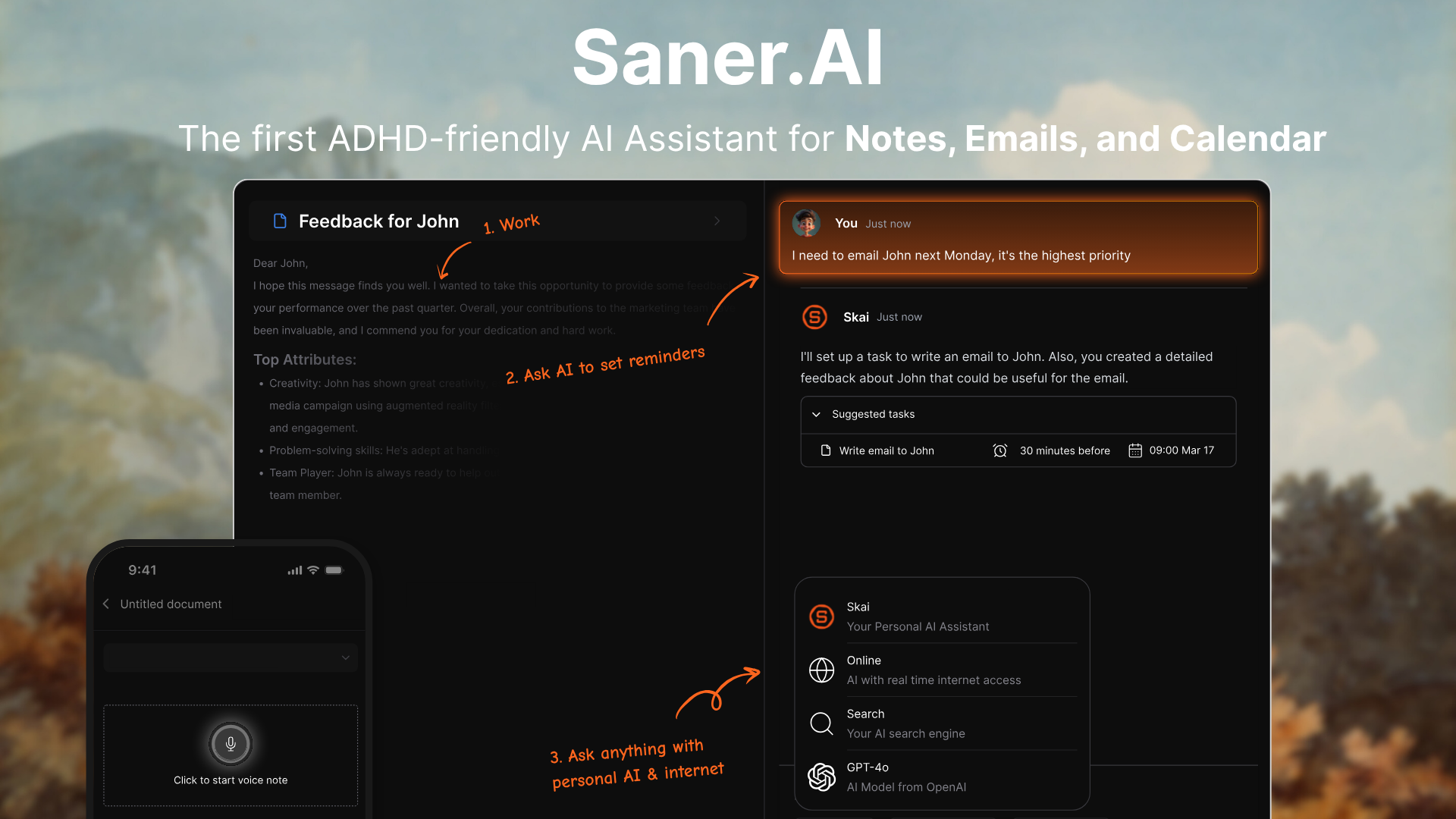
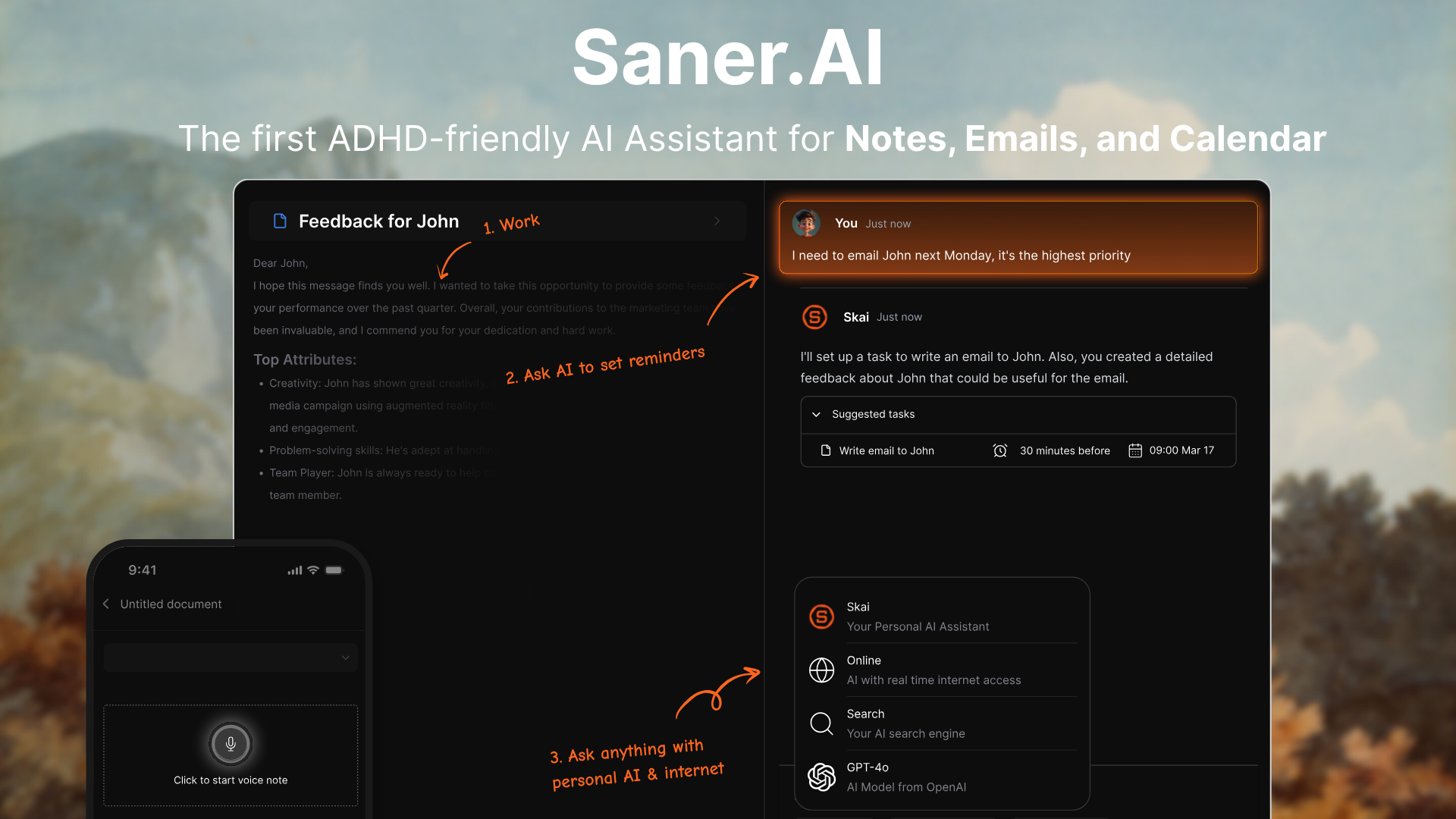
Saner.ai is a simple AI app that helps you think, plan, and stay organized - without needing to be tech-savvy.
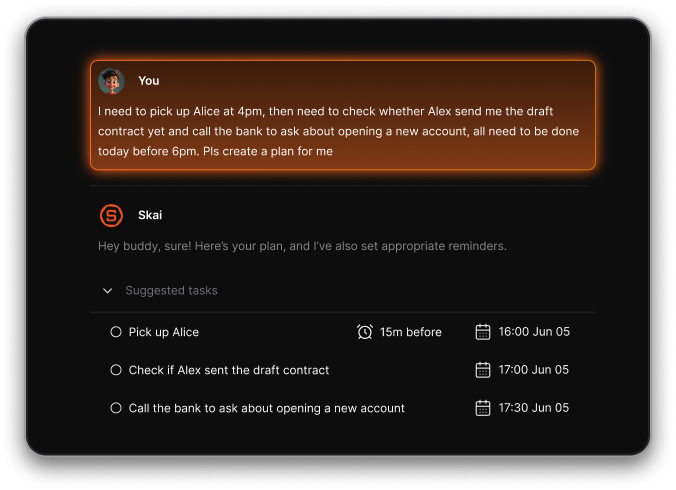
It works like a second brain: just dump your ideas, emails, or tasks, and its built-in assistant, Skai, connects the dots for you. No tagging, no foldering, no complex setup.
It’s ideal for professionals, creatives, and ADHD people who want clarity without the overwhelm.
Key features
- AI Note Organization: Skai automatically tags, categorizes, and groups your notes by topic - no manual sorting required
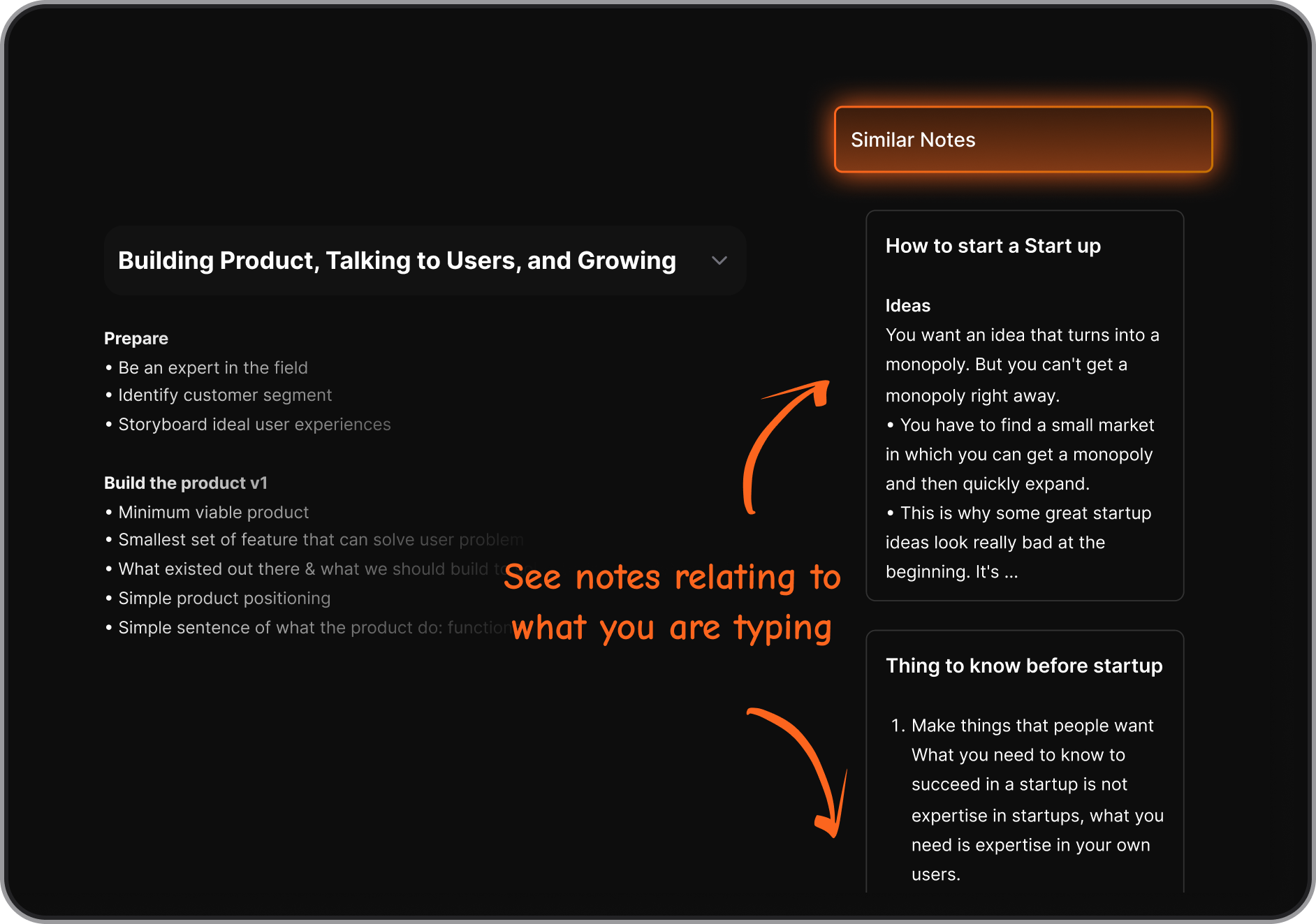
- Smart Search: Just ask questions like “What did I say about the Q2 campaign?” or “Remind me of that idea from last week,” and it finds the answer fast
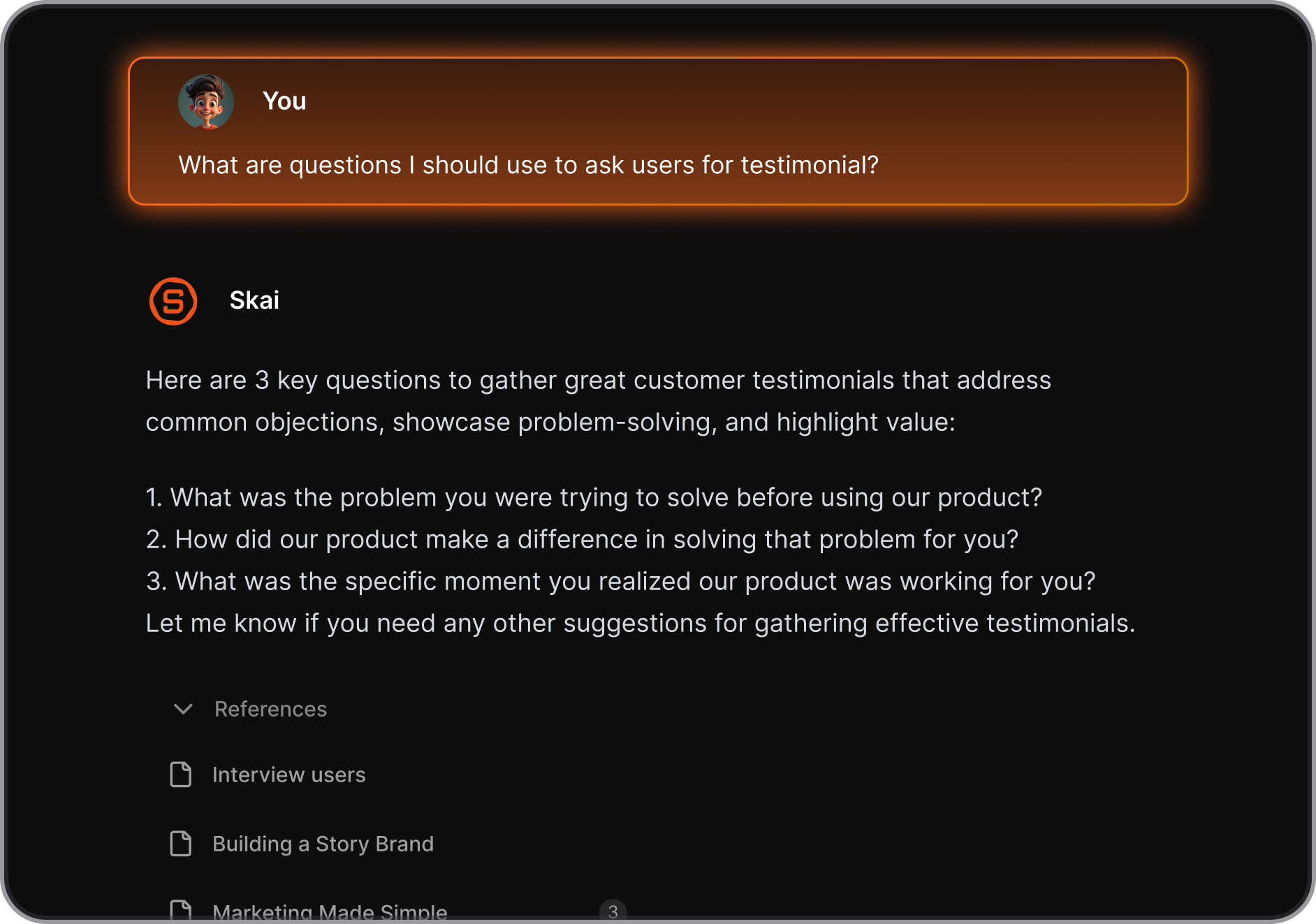
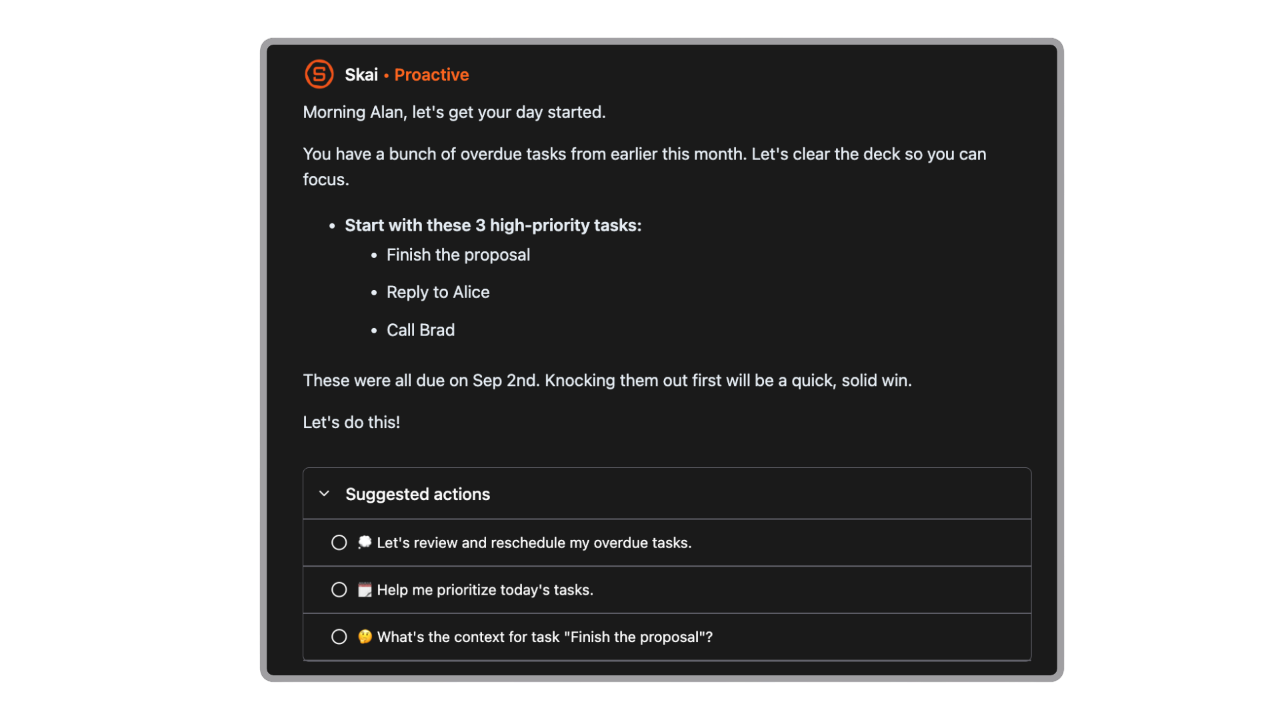
- Proactive Planning: Every morning, AI automatically scans your inbox, to-dos and gives you an optimal day plan
- Task Extraction: Pulls tasks from emails, notes, or rants automatically
- Chrome Extension & Mobile App: Quickly capture thoughts or emails on the go
- ADHD-Friendly Design: Clean interface with minimal distractions - built by neurodivergent founders who get it
What I liked
- Everything’s searchable in one place - notes, emails, docs, tasks, and calendar
- The AI assistant feels genuinely helpful. I could type a messy rant, and it turned it into clean, prioritized tasks
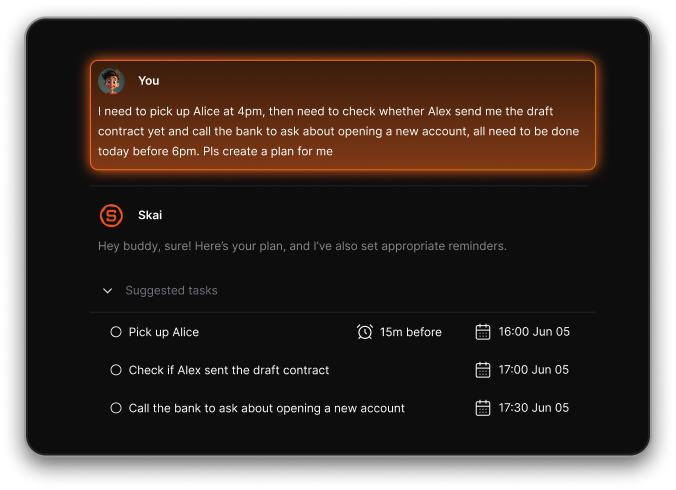
- You don’t need to learn anything technical. It just works. Perfect for non-tech people who get lost in tools like Notion
- I liked how it surfaces related notes without me doing anything manually
Cons
- Designed for personal task management, might not be optimal for large team management.
Pricing
- Free
- Starter: Monthly at $8/month, Annually at $6/month (with early user discount)
- Standard: Monthly at $16/month, Annually at $12/month (with early user discount)
Suitable for
- Non-technical professionals who want to feel in control of their work and ideas
- ADHD individuals who get overwhelmed by complex systems
- Researchers, writers, entrepreneurs - anyone who juggles thoughts, tasks, and documents
- People looking for a simple AI app that works quietly in the background without needing setup
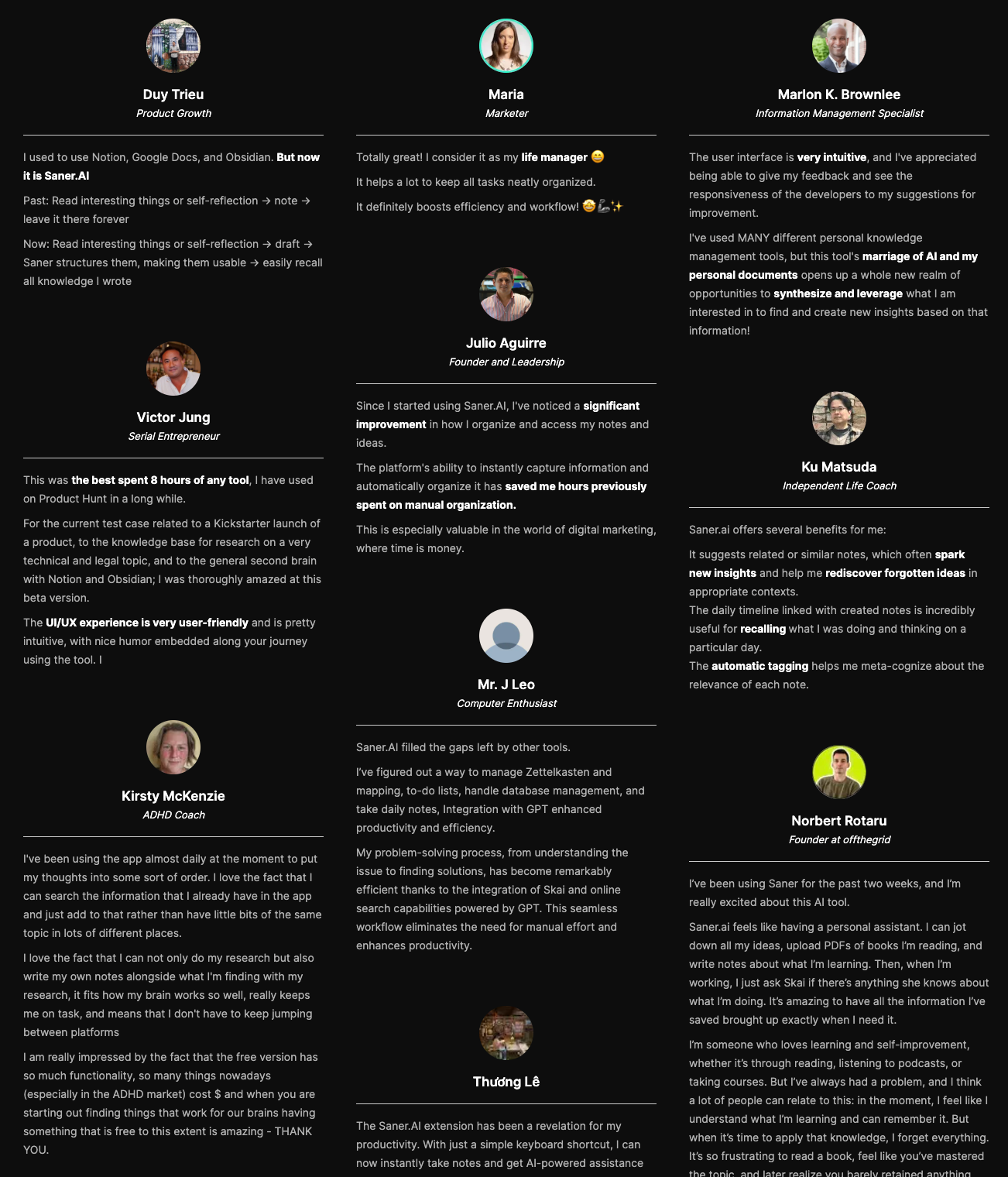
Saner.AI Reviews
How to start
- Go to saner.ai
- Create a free account
- Start adding notes, thoughts, or questions
Stay on top of your work and life in minutes
2. Otter.AI

Otter.ai is a simple AI app that helps you capture, transcribe, and summarize meetings automatically. It joins your Zoom or Teams calls, records what’s said, and delivers a clean summary with action items
It’s great for busy professionals and small teams who want to stop juggling meeting notes and just focus on the conversation.
Key features
- See words appear live, and ask follow-up questions to Otter after the meeting
- Joins meetings automatically, transcribes, summarizes, and can even respond with contextual info with the help of a meeting agent.
- Recognizes and labels different speakers
- Gives you key points, highlights, and action items without manual note review with an AI assistant.
- Supports transcription in English, French, and Spanish
What I liked
- It joins meetings automatically
- Summaries are concise and helpful, especially for catching up after missing a meeting
- I like that it picks up shared slides and inserts them into the transcript
What I disliked
- Accuracy drops with strong accents or background noise
- The free plan is very limited
- No translation support, only transcription in 3 languages
Pricing
- Free - 300 min/month, 30 min max per meeting
- Pro - $8.33/month (billed yearly), 1200 min/month, 90 min per meeting
Suitable for
- Professionals and small teams who want a simple AI app to take notes, summarize discussions, and stop worrying about capturing what was said in meetings.
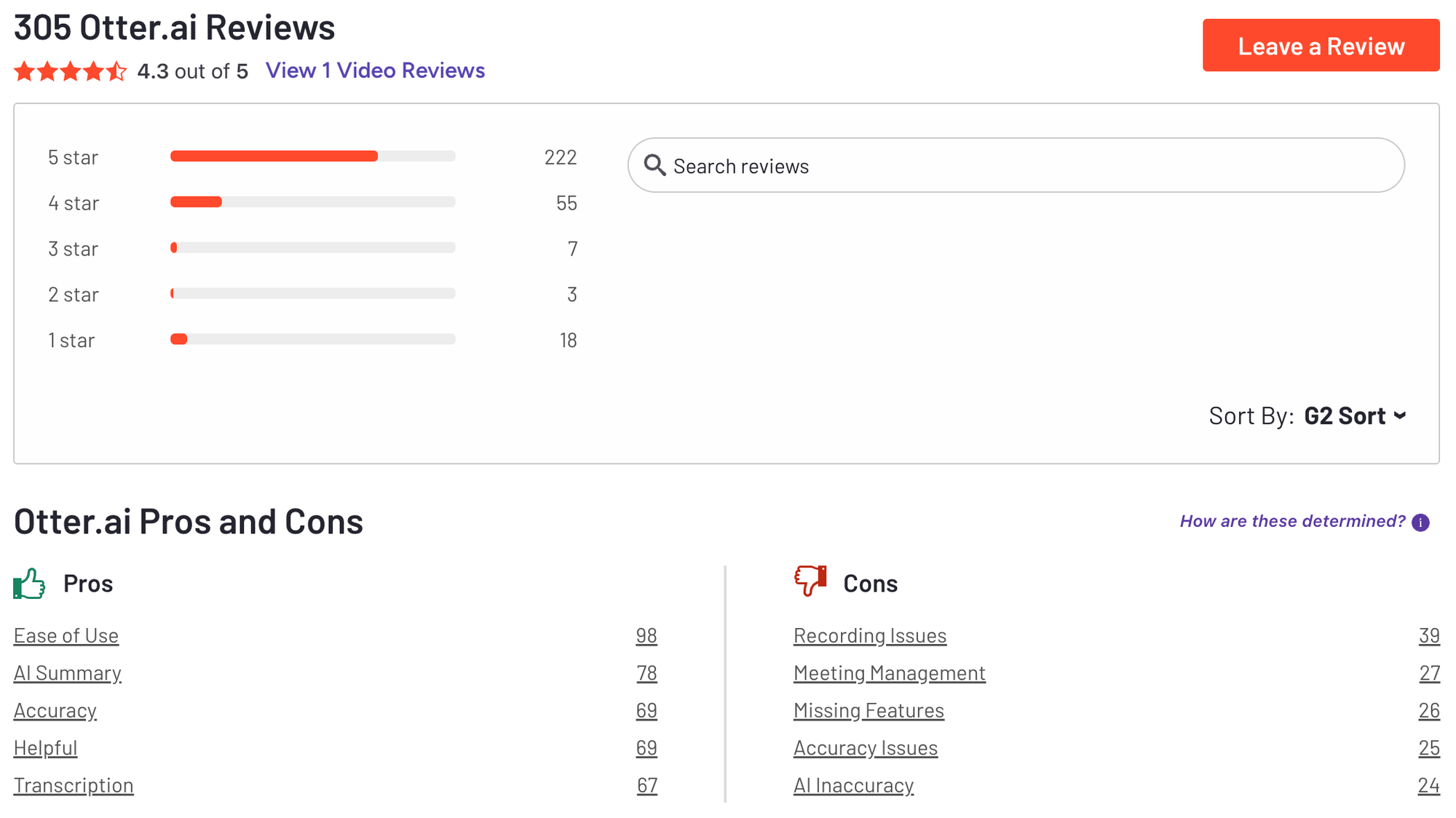
Otter AI reviews (source)
How to start
- Just go to otter.ai, create a free account, and connect your calendar or meeting tool to get started.
3. Grammarly
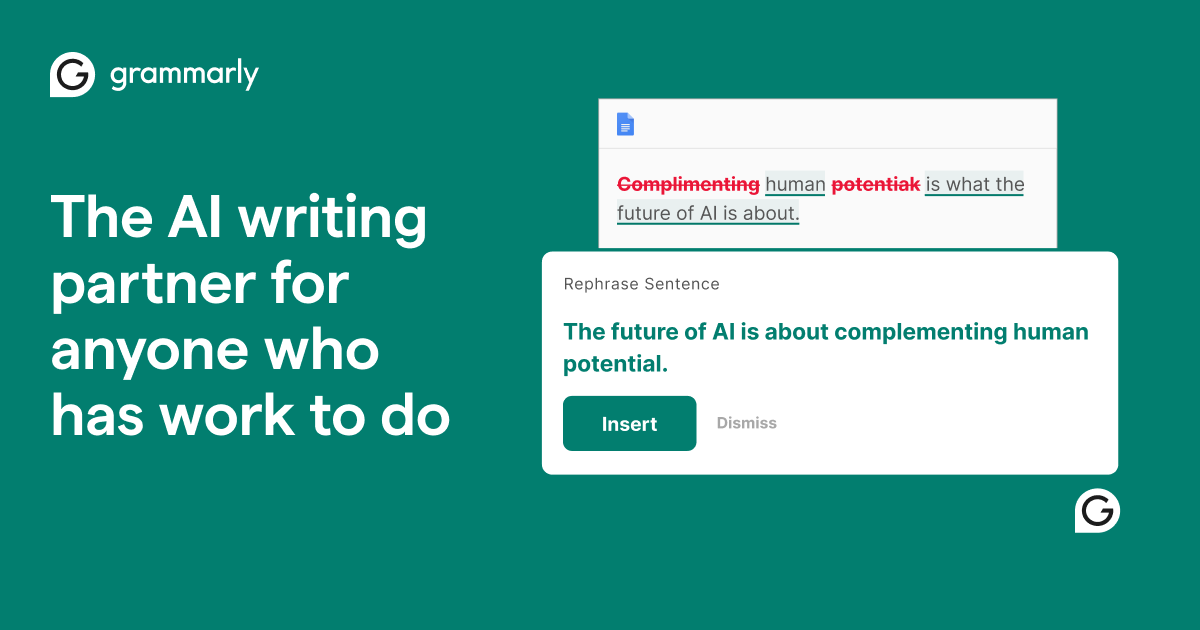
Grammarly is a simple AI App that enhances your writing across platforms with real-time grammar, clarity, tone, and style suggestions.
It works behind the scenes to polish your communication wherever you type, helping you write clearly and confidently.
Key features
- Instantly corrects grammar, punctuation, and spelling errors as you type
- Helps you sound more confident, polite, or professional depending on the context
- Rewrite, summarize, brainstorm, or generate content with simple prompts
- Works in Google Docs, Gmail, Slack, MS Word, LinkedIn, and over 500+ apps
What I liked
- Seamless AI writing tools that let you draft, rewrite, or summarize directly where you’re typing
- One-click tone suggestions that adjust how your message sounds
- Works almost everywhere
What I disliked
- Premium plans can get pricey, especially for students or light users
- AI detection isn’t always accurate and may flag false positives
- It’s not a conversational AI - no chat-style interactions or natural back-and-forth
- Not built for long-form content planning or project management
Pricing
- Free plan available with basic grammar checks
- Premium for individuals from 12$/month
Suitable for
- Professionals, students, and teams looking for an AI App that improves writing quality, clarity, and tone
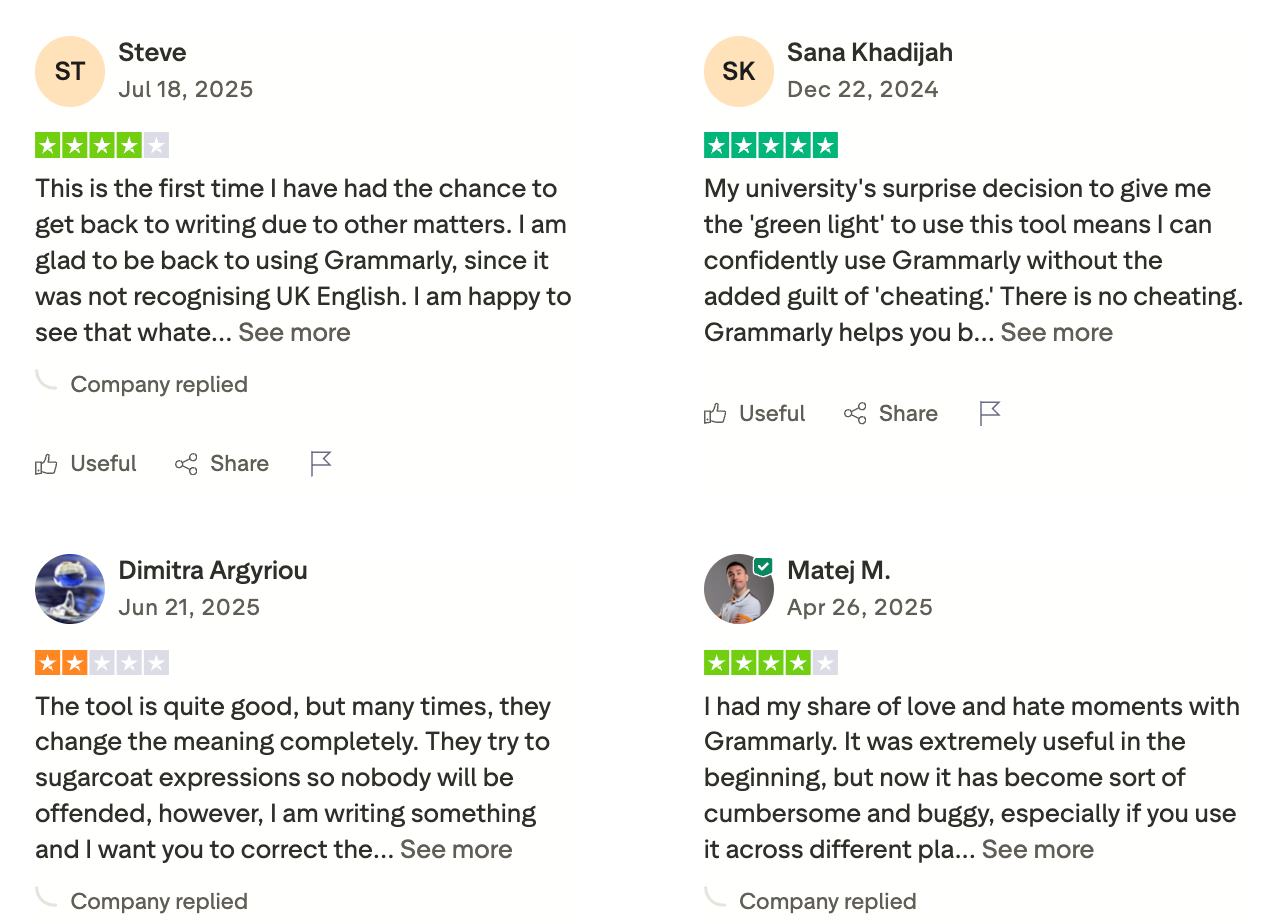
Grammarly Review (source)
How to start
- Go to grammarly.com, create a free account, and add the browser extension or mobile app to get started in minutes.
4. Perplexity

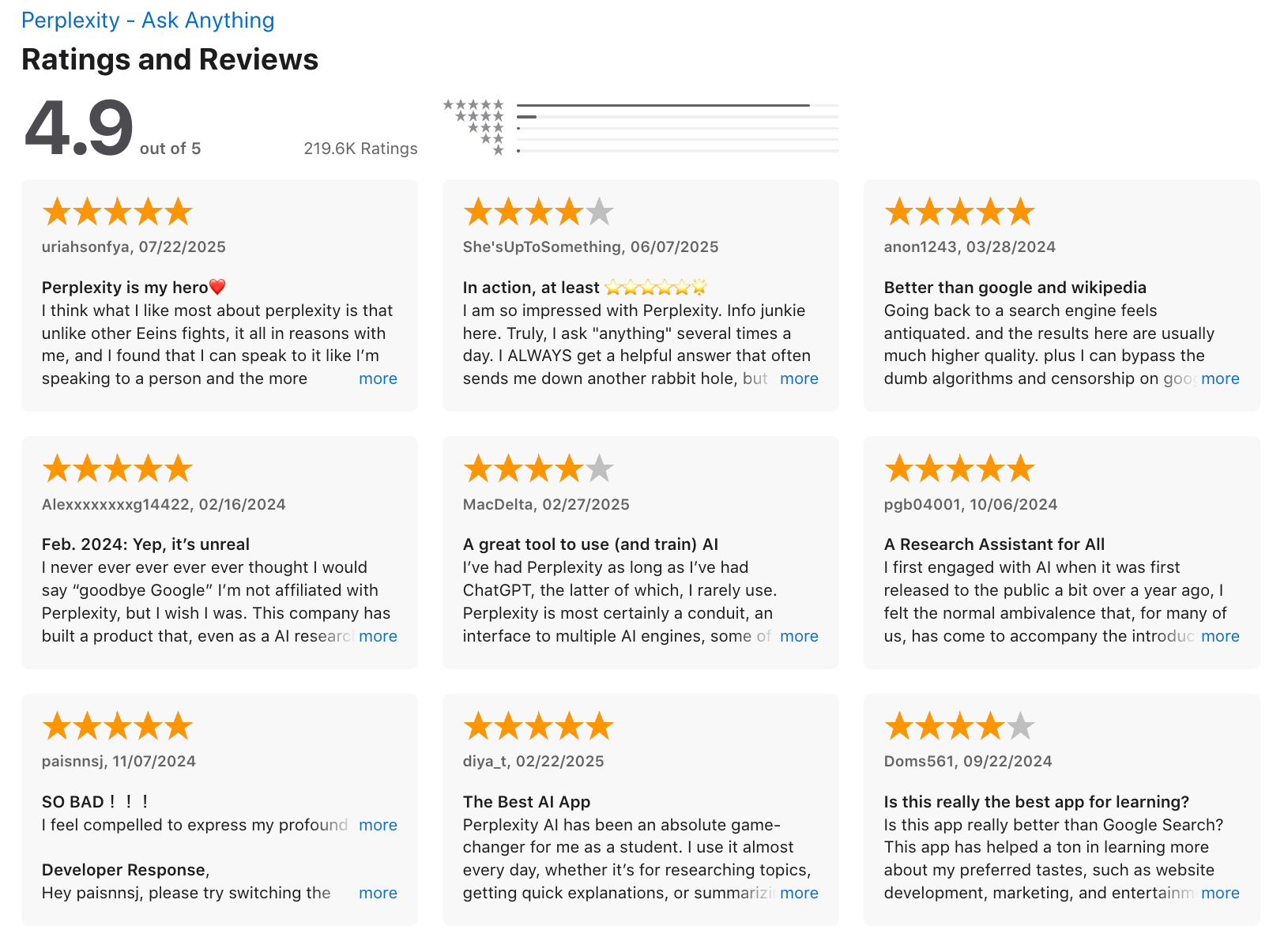
Perplexity is a fast, conversational AI search engine that feels more like a Simple AI App than a traditional chatbot. You just ask, and it searches the web in real-time, returning trustworthy answers with sources you can verify.
Key features
- Pulls fresh results from the web and cites every source
- Keeps the context so you can go deeper in one thread
- Organize your research in folders and save your best finds
- Automatically scans hundreds of pages to create full reports
What I liked
- Clean, cited answers that feel more like a helpful assistant than a search dump
- Deep Research mode actually does the heavy lifting for you
- You can save threads in Spaces, which makes long-form research way easier to manage
What I disliked
- Deep Research and Labs are locked behind paid plans, which might be overkill for casual users
- Not as customizable as some AI Personal Assistant tools
- Some newer features (like Comet or mobile actions) are still a bit limited or experimental
Pricing
- Free basic plan available
- Pro plan around $20/month for power features
- Max plan includes full model access, Labs, and early experimental tools
Suitable for
- Anyone looking for a Simple AI App that gives fast, verifiable answers, who wants to skip the search rabbit hole and just get to the point.
Perplexity reviews (source)
How to start
- Head to perplexity.ai, create a free account, and start asking questions.
5. Wispr Flow
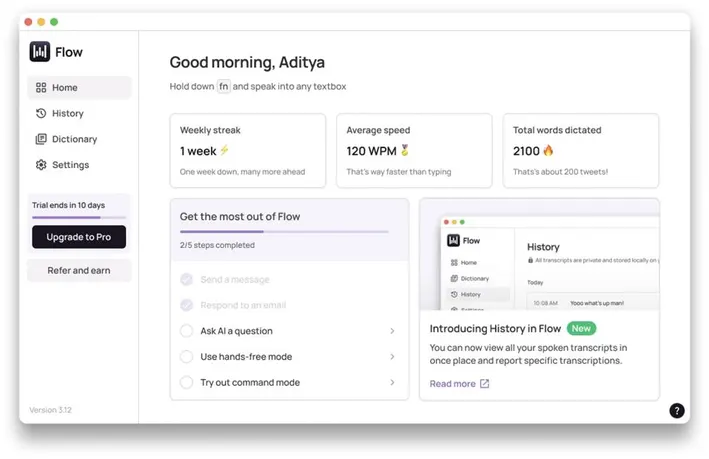
Wispr Flow is an AI-powered voice-to-text tool that lets you speak instead of typing in any app across your devices. It listens to your natural speech and transcribes it into polished text, trimming fillers and formatting as you go.
It works on Mac, Windows, and iPhone, supporting over 100 languages and learning your custom vocabulary over time. You can use it for emails, documents, messaging, coding, notes, and more.
Key features
- Convert speech into text inside any app - browsers, editors, email, chats, and IDEs, without needing manual copy-paste.
- The system not only transcribes but also auto-corrects grammar and spacing, and supports voice commands for simple edits (like “new paragraph”).
- Wispr Flow learns your names, jargon, and preferred phrases, plus lets you define voice shortcuts for phrases you use often.
What I liked:
- Dictation feels natural and fast - like writing at the speed of thought
- Works anywhere, you don’t have to switch tools
- Supports multiple languages and tones, which is helpful for bilingual users
What I disliked:
- The desktop app is large (~800MB) and uses noticeable CPU even when idle
- Automatically adds itself to the login and can clutter your right-click menu
- Context-awareness feels a bit invasive unless you disable it manually
- Mobile experience is limited
- Privacy settings could be more transparent during onboarding
Pricing
- Free tier available (2,000 words/week)
- Pro plan: ~$15/month for unlimited use
- Team plan: ~$10/user/month with admin controls
Suitable for
- Writers, developers, and busy professionals looking for a hands-free, fast way to write and edit content across any platform.
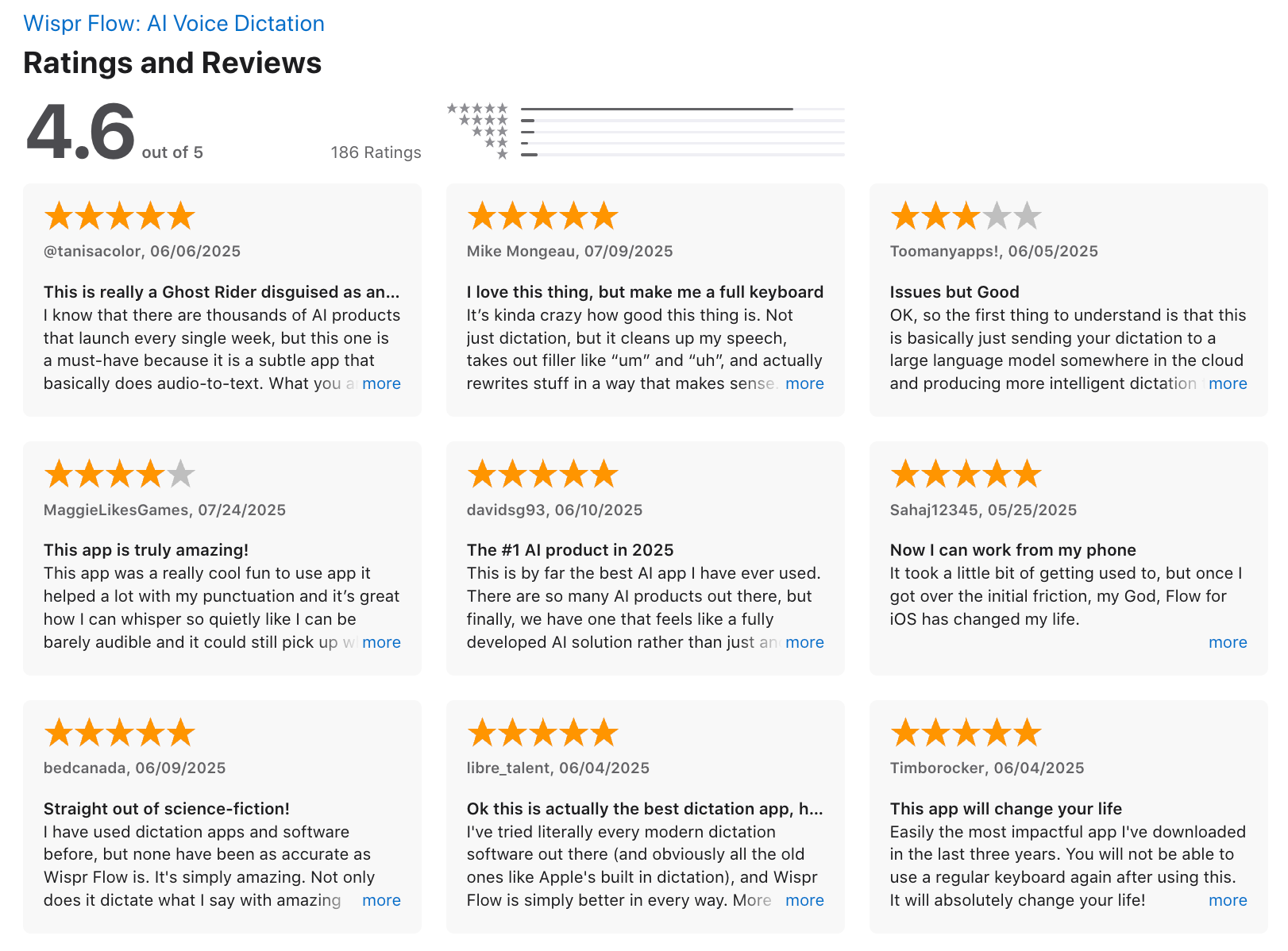
Wispr Flow reviews (source)
How to start
- Go to wisprflow.ai, download the app for your device
Quick Tips to Get Started
- Start Small: Pick one AI tool that addresses your most pressing need. Implement it and get comfortable before adding more.
- Set Clear Objectives: Know what you want to achieve with each tool. Whether it’s reducing time spent on emails or organizing project files, having a clear goal will help you measure success.
- Leverage Tutorials: Many AI tools offer quick-start guides and tutorials. Spend a few minutes exploring these resources to get the most out of your chosen app.
Conclusion: Simple AI Apps That Actually Make Life Easier
There’s no single “best” AI tool in 2026 - because non-technical people don’t all work the same way.
Some need simple AI apps that quietly organize their day, surface priorities, and reduce decision fatigue (that’s where Saner.AI shines).
Others prefer tools that handle one clear job really well: Otter.ai for meetings, Grammarly for writing clarity, Perplexity for fast research, or Wispr Flow for turning thoughts into text without friction.
What actually matters isn’t how powerful the AI sounds - but how well it fits your real workflow. The best simple AI apps for non-technical people are the ones that lower mental load, feel intuitive from day one, and help you stay focused without learning curves or complex setups.
Our practical advice:
- ✨ Try 2-3 simple AI apps from different categories (planning, writing, research, capture)
- 🧪 Use them in real situations - emails, meetings, content, daily planning
- 🧠 Measure energy saved, not just time saved
If a tool helps you feel calmer, more in control, and less scattered - that’s the right AI for you.
👇 Want a strong starting point?
Try Saner.AI if you’re looking for a calm, context-aware personal assistant built specifically for non-technical users who just want their day to feel easier.
Stay on top of your work and life
Simple AI Apps for Non-technical People: FAQ
1. What are simple AI apps for non-technical people?
Simple AI apps for non-technical people are tools designed to work out of the box—no coding, setup, or technical knowledge required. You interact with them using everyday language to write, plan, organize, or search for information.
Think: type what you’re thinking → the app does the work.
2. Why are simple AI apps great for non-tech users?
Because they don’t make you learn the tool before using it. You just:
- Speak or type normally (no weird commands)
- Let AI handle the formatting, sorting, or summarizing
- Focus on your real work, not fiddling with settings
Even if you’ve never used AI before, these tools are intuitive and helpful from day one.
3. Who are simple AI apps actually for?
They’re built for people who:
- Aren’t technical (and don’t want to be)
- Feel overwhelmed by complex tools
- Want AI to help with real work, not experiments
- Prefer “just tell it what to do” over learning features
This includes marketers, managers, founders, students, and busy professionals.
4. Which simple AI app is best for staying organized?
For overall organization, Saner.AI is the most complete choice:
- Combines notes, calendar, and tasks in one place
- You just talk to it - “Plan my day,” “Remind me to follow up,” “What’s next?”
- No tags, folders, or complicated setups
If you need a calm system to reduce overwhelm, Saner.AI is built for you.
5. Can I use simple AI apps for free?
Yes - many of them offer free plans:
- Saner.AI – Free plan includes task reminders, note search, and calendar sync
- Otter – Free tier includes limited transcriptions
- Perplexity – Core search is free, no login needed
- Grammarly – Free for grammar, spelling, and tone fixes
- Wispr Flow – Free tier includes basic voice-to-text and idea structuring
6. How are simple AI apps different from advanced AI tools?
Advanced AI tools often require:
- Configuration
- Prompt engineering
- Integrations
- Multiple steps
Simple AI apps focus on immediate usefulness, not flexibility. They trade customization for clarity - and that’s a win for most users.
7. Which simple AI app should I try first?
It depends on what’s most frustrating in your day:
| Struggle | Try this AI app |
|---|---|
| Forgetting tasks | Saner.AI |
| Messy notes or thoughts | Wispr Flow |
| Dreading meeting recaps | Otter |
| Rewriting awkward emails | Grammarly |
| Researching something fast | Perplexity |
8. Do simple AI apps replace traditional productivity tools?
Not exactly - they simplify them.
Instead of juggling separate apps for notes, tasks, and planning, some simple AI apps combine these into one experience, reducing app switching and mental load.
9. Are simple AI apps good for people with ADHD?
Yes - especially apps that reduce friction and decision-making.
Simple AI apps help by:
- Externalizing memory
- Breaking tasks into next steps
- Reducing context switching
- Avoiding rigid systems
That’s why many ADHD users gravitate toward all-in-one tools like Saner.AI.
10. Can non-technical users trust AI with real work?
Yes - when the scope is clear.
Simple AI apps work best for:
- Drafting and summarizing
- Planning and reminders
- Note retrieval
- Light decision support
They’re assistants, not replacements for judgment.
11. Do simple AI apps require training or onboarding?
No—and that’s the point.
You usually start by typing or speaking naturally, like:
- “Remind me to follow up tomorrow”
- “Summarize this meeting”
- “What should I focus on today?”
If it feels intuitive, the tool is doing its job.
12. How do simple AI apps save time?
They reduce:
- Manual organizing
- App switching
- Searching for information
- Rewriting or rethinking
Time savings come from less thinking about the system, not faster clicking.
13. Which simple AI app is best for work, not just writing?
If you need action - not just text, look for apps that:
- Create tasks automatically
- Understand context
- Follow up for you
Saner.AI is designed around execution, not just generation.
14. Can simple AI apps work alongside tools like Notion or Google Docs?
Yes. Many users keep their existing tools and use simple AI apps as a thinking-and-planning layer on top - especially for capture, prioritization, and recall.
15. How should non-technical users choose the right AI app?
A good rule:
- Pick one app
- Use it for one real problem
- Test it for a week
The best simple AI app is the one that reduces effort without adding complexity. If it feels calm instead of clever, you’re on the right track.
Stay on top of your work and life
[Last updated in 2026]