
ADHD Object Permanence: How To Deal With It?


You bought spinach on Sunday. You found it on Friday, at the back of the fridge, turned into something closer to soup. You didn't forget spinach exists. You just stopped thinking about it the second you closed the fridge door.
The same thing happens with the email in your drafts folder, the library book under the passenger seat, and the friend you really do love but haven't texted in four months. If you have ADHD, there's a good chance you've heard someone online call this "object permanence." Maybe you've said it yourself.
What is object permanence, and do people with ADHD lack it?

Object permanence is a baby milestone. It's the moment an infant understands that a toy hidden under a blanket is still there, so they lift the blanket instead of looking confused. The idea comes from developmental psychology, and it has nothing to do with adult forgetfulness.
So, do people with ADHD lack object permanence? No.
Healthline points out that no research shows children or adults with ADHD failing to reach this milestone, and it isn't a formal ADHD symptom. Psychiatry provider Talkiatry, in an article reviewed by an MD, says the same thing: clinicians don't recognize it as part of ADHD, even though many people use the phrase informally.
What ADHD does involve is officially listed. In the diagnostic criteria, two of the inattention symptoms are losing things you need and being forgetful in daily activities.
- A clinical review of adult ADHD translates those into grown-up life: constantly misplacing your keys, wallet, or phone, missing time-sensitive obligations, and forgetting to finish important tasks later in the day.
"Object permanence" spread in ADHD communities because it names a feeling that's hard to describe: the thing is real, you know it's real, and yet your brain acts like it vanished.
Why "out of sight, out of mind" happens with ADHD
Working memory: the brain's sticky note
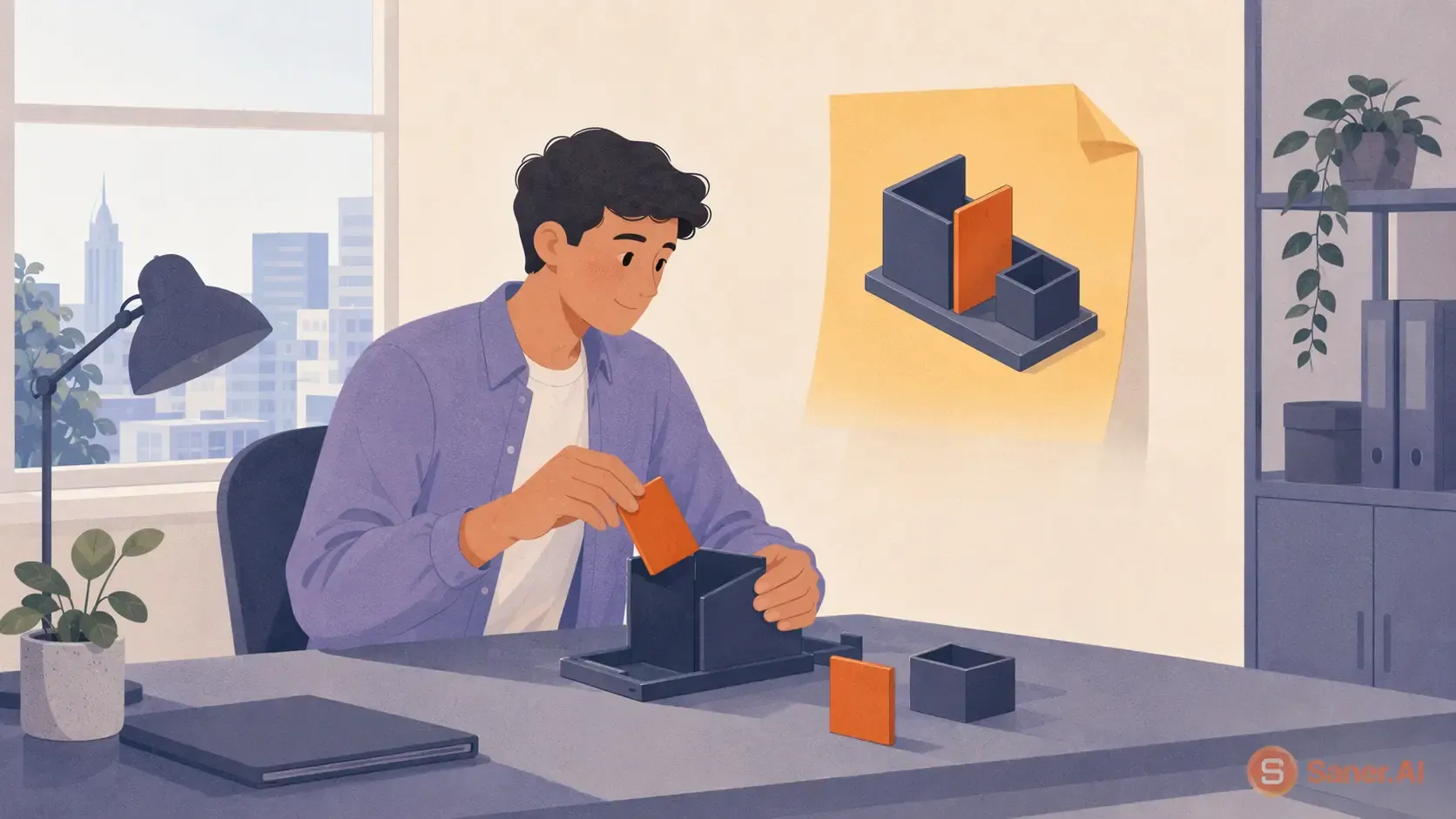
Working memory holds information "online" while you use it. It's what keeps "buy spinach, cook spinach" active after you've closed the fridge. In a 2013 meta-analysis of 38 studies, Alderson and colleagues found moderate working memory gaps between adults with ADHD and adults without it, and concluded that these differences carry on into adulthood.
A larger review of 34 meta-analyses found that people with ADHD scored lower than controls in almost every thinking skill measured (96% of comparisons). Working memory was among the bigger gaps, with an average effect size of 0.54.
In plain English: the sticky note is smaller and peels off faster. Once the cue is gone, the thought goes with it.
Prospective memory: remembering to remember

Prospective memory is remembering to do something in the future, like calling the doctor at 3 pm or replying to your manager after lunch. A 2019 study by Altgassen and colleagues tracked adults' real-life intentions and found that people with ADHD remembered and completed fewer of their own plans. Those memory slips also partly explained their procrastination.
Research summarized in a 2013 PLOS ONE study found that time-based reminders ("do X at 3 pm") were harder for people with ADHD, while event-based ones ("do X when you see Y") held up much better. Your brain may drop a plan tied to the clock, but it can catch one tied to something you'll actually bump into.
What "ADHD object permanence" looks like in real life
It rarely shows up as one big dramatic moment. It's more like a slow leak across different parts of your life.
Things
- Food going bad in the fridge or pantry because it was behind something else.
- Clean laundry living in the basket for a week, because once it's put away in a drawer, you forget what you own.
- Buying a third pair of scissors because the other two are "somewhere."
Tasks and work
- A project that's on track for two weeks, then quietly disappears the moment it leaves your open browser tabs.
- Saying "I'll reply after lunch" and remembering three days later, mid-shower.
- Notes spread across five apps, so the one you need is technically saved and practically gone.
Money and admin
- Subscriptions you forgot you signed up for.
- Bills paid late even though the money was there. People in the ADHD community call these costs the "ADHD tax."
People
You can think about a friend warmly every time you see them and then go months without reaching out. It isn't that you care less. Without a cue, the reminder to reach out never fires. Licensed counselor Minkyung Chung, writing for Talkspace, notes that how much this affects someone varies a lot from person to person, which matches what most ADHD adults describe.
Object permanence vs. object constancy vs. ADHD forgetfulness
These three terms get mixed up constantly online. The difference matters, because the right label points you to the right fix.
Term | What it actually means | Is it an ADHD symptom? |
|---|---|---|
Object permanence | A baby learning that hidden objects still exist | No |
Object constancy | Keeping a steady emotional bond with someone while they're away or while you're upset with them | Not on its own; it comes up more in attachment and personality research |
ADHD forgetfulness | Losing things and forgetting daily tasks, tied to working and prospective memory | Yes, it's part of the inattention criteria |
Simply Psychology puts it neatly: in ADHD, "object permanence" works as a metaphor. People don't believe things stop existing. They just stop thinking about them.
One more honest note. Forgetfulness isn't unique to ADHD. The CDC says there's no single test for ADHD, and sleep problems, anxiety, depression, and some learning disabilities can look similar. If this section feels uncomfortably familiar, that's a reason to get checked, not a diagnosis.
7 ways to keep important things "in sight"
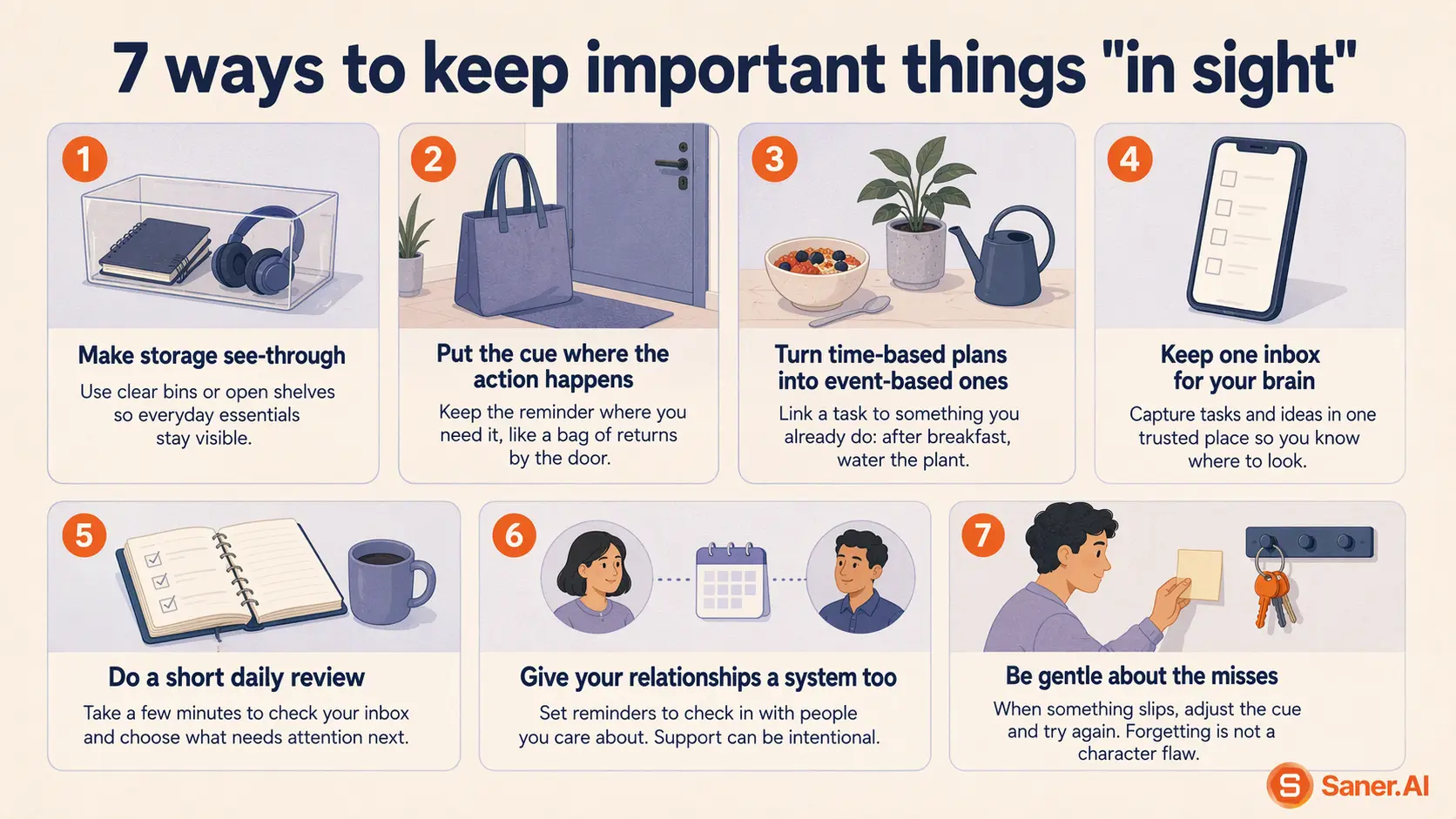
1. Make storage see-through
Clear bins, open shelves, a fruit bowl on the counter instead of the crisper drawer. If you can't see it, assume you'll forget it. Some people with ADHD keep vegetables at eye level in the fridge and snacks in the back, on purpose.
2. Put the cue where the action happens
Hang the gym bag on the front door. Put the package you need to return on top of your car keys. A reminder on your phone doesn't help much if the medication is in the kitchen and you're in the bedroom.
3. Turn time-based plans into event-based ones
Since event-based memory holds up better in ADHD, rewrite your intentions as "when X, then Y." Instead of "text Mai this weekend," try "when I sit down for Saturday coffee, I text Mai." Instead of "follow up next week," try "when I open my laptop Monday, I check the follow-up list first."
4. Keep one inbox for your brain
Scattered notes are where tasks go to disappear. Pick one place to dump every thought, task, and idea as it shows up, whether that's a notebook, a notes app, or an AI assistant. One place you check beats five places you don't.
5. Do a short daily review
Five minutes each morning to look at what's coming up today. This is the habit that brings buried tasks back into view. It's also one of the core skills taught in cognitive behavioral therapy for adult ADHD. In a 2010 JAMA trial led by Steven Safren at Massachusetts General Hospital, adults already on medication who added CBT focused on organizing and planning had a 67% response rate, compared with 33% for those who got relaxation training and education instead.
6. Give your relationships a system too
It can feel unromantic to schedule a call with your best friend. It's much kinder than six months of silence. Try a recurring reminder, a shared photo album, or a standing weekly voice note. And tell the people close to you how your brain works, so a quiet stretch doesn't read as "I don't care."
7. Be gentle about the misses
You will still find spinach soup sometimes. Shame doesn't improve working memory, and it tends to make people avoid the very systems that help. When something slips, fix the system rather than blaming yourself.
How an AI assistant can act as your external memory
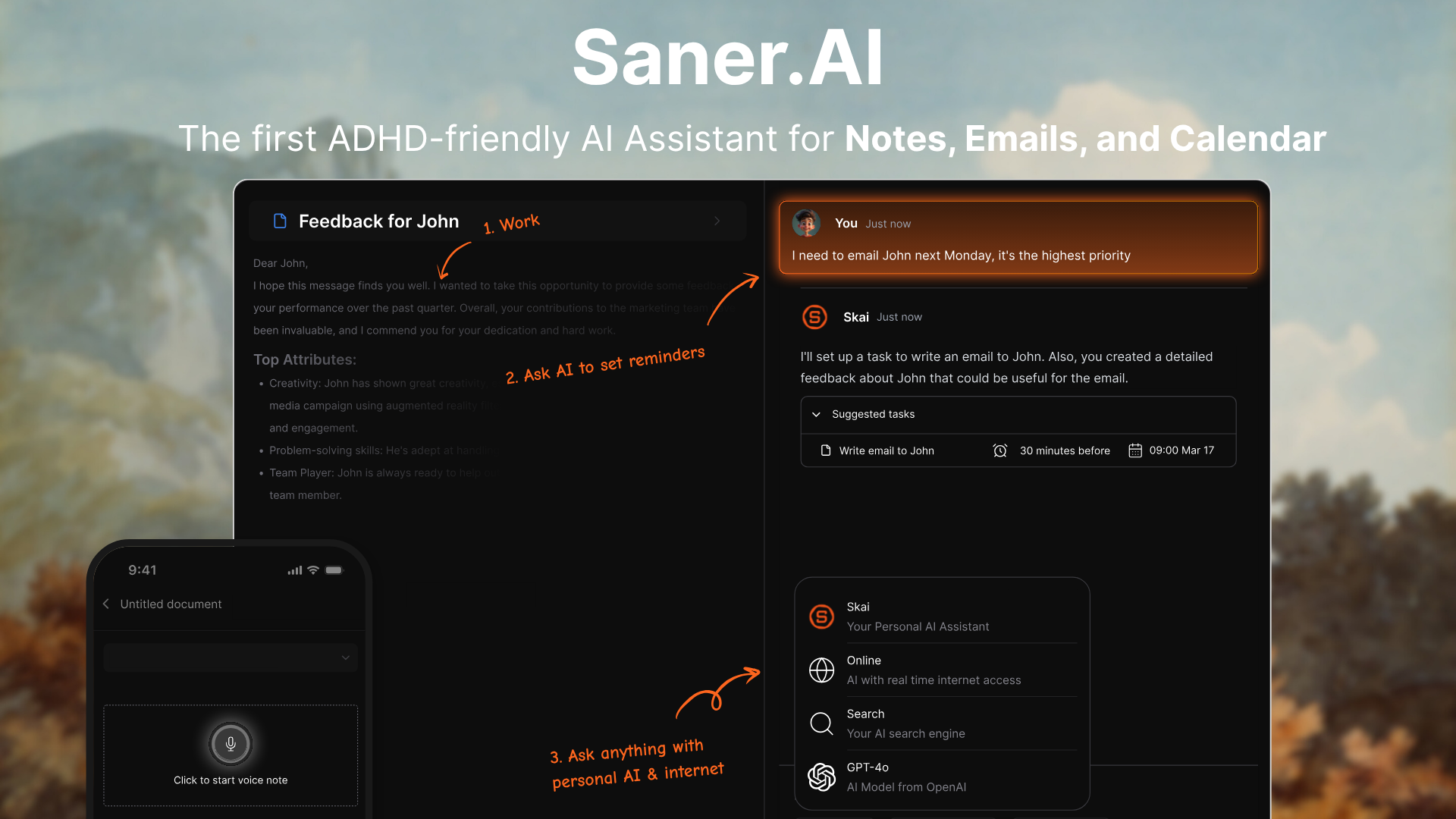
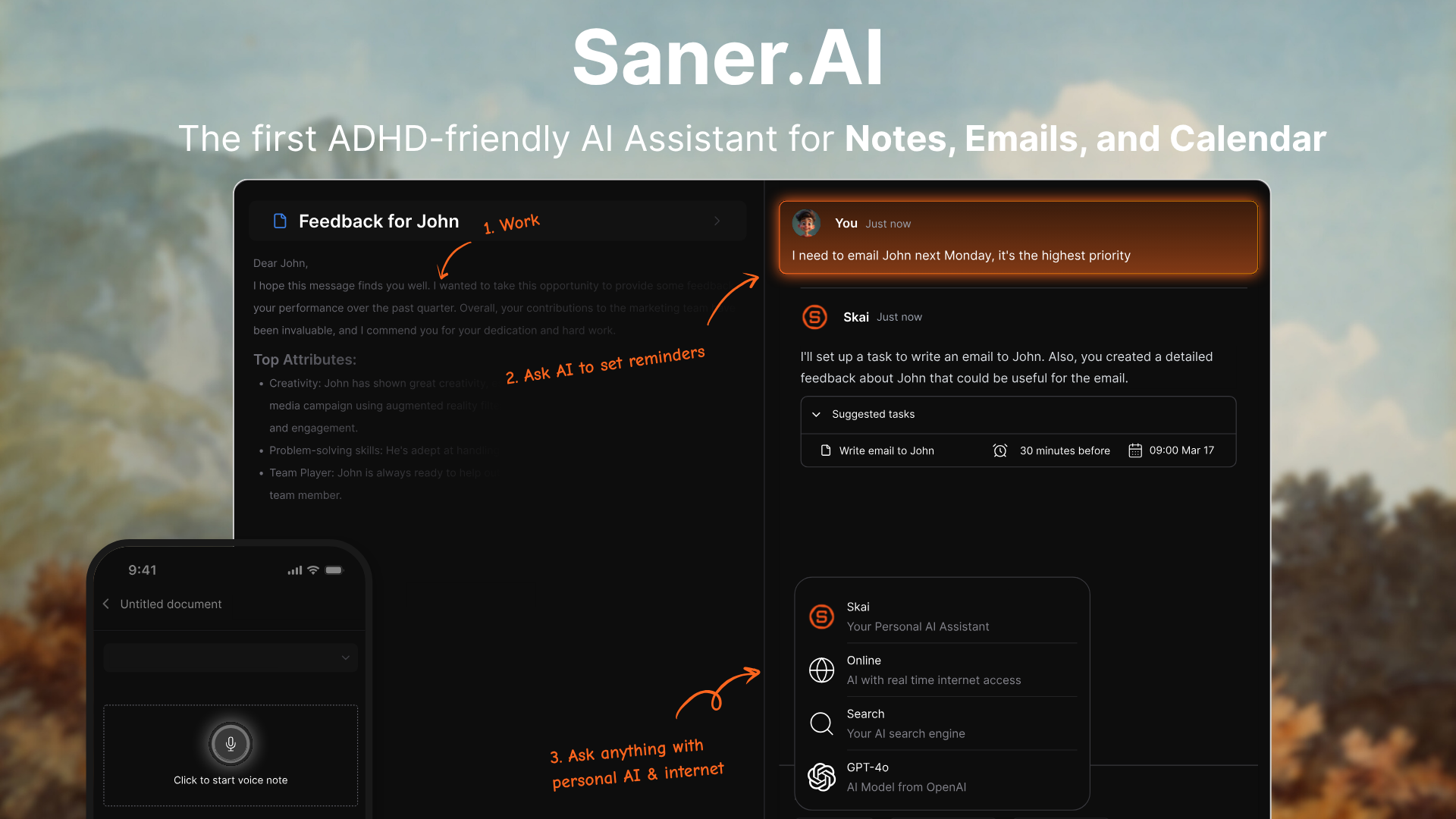
Paper lists and sticky notes work, and plenty of people should stick with them. The weak spot is that you still have to remember to look. That's where an assistant that brings things back to you can help.
Here's how Saner.AI maps onto the problems above. I'm biased, so I'll include where it falls short too.
- Saner.AI's brain dump feature lets you type or speak messy thoughts, and the AI tags and organizes them for you. Like you're walking out of a meeting and remember three things. Say them into your phone in one ramble. They show up later as separate tasks.
- Saner.AI pulls tasks out of your notes and emails and breaks big projects into smaller steps.
- Each morning, Saner.AI scans your inbox, notes, and calendar and builds a plan for the day. It's the daily review from tip 5, except you don't have to remember to start it.
- Saner.AI's assistant, Skai, lets you ask questions about your own notes and files in normal language. "What did I promise the design team last week?" is a lot easier than remembering which app you wrote it in.
Where it falls short
- It's organization software, not ADHD treatment. It won't replace a diagnosis, therapy, or medication.
- It's not ideal for large teams or complex project timelines. It's built for individuals.
Final thoughts
You don't have a broken sense of reality. Your brain holds onto things for a shorter time once they're out of view, and that's a known, studied part of ADHD.
Start small. Pick one thing from this list, maybe the clear fruit bowl or the "when X, then Y" trick, and try it for a week. Notice what actually sticks.
If your out-of-sight problem lives mostly in emails, notes, and tasks, an assistant can carry some of that load. Saner.AI gives you one place to dump every thought, pulls tasks out of your inbox, and hands you a plan each morning, so the important stuff finds you instead of the other way around. There's a free plan, so you can see whether it fits your brain before paying anything.
Stay on top of your work and life effortlessly
👉 You may like this post on how to improve Productivity for adults with ADHD
FAQ - ADHD object permanence
Is object permanence a real ADHD symptom?
No. Object permanence is a developmental milestone that people with ADHD reach like everyone else. The "out of sight, out of mind" pattern is real, but it comes from working memory and prospective memory differences, which are recognized parts of ADHD.
Why do I forget things as soon as I can't see them?
ADHD affects working memory, which holds information in mind while you use it. When the visual cue disappears, the thought is more likely to drop. A 38-study meta-analysis found these working memory differences continue into adulthood.
Does ADHD object permanence affect relationships?
It can. People with ADHD may go long stretches without contacting friends or family they care about, because nothing in their day prompts them to. Scheduled check-ins and open conversations about how your brain works help a lot.
What's the difference between object permanence and object constancy?
Object permanence is knowing a hidden object still exists. Object constancy is keeping a stable emotional connection to someone when they're absent or when you're upset with them. Neither is a formal ADHD symptom.
What's the best way to cope with out of sight, out of mind?
Make important things visible and tie reminders to events rather than times. Keep one place for all your notes and tasks, and review it daily. Research suggests event-based reminders work better than time-based ones for people with ADHD.
Can an app fix ADHD object permanence?
An app can't treat ADHD, but it can work as an external memory. AI assistants like Saner.AI capture notes, pull tasks out of emails, and build a daily plan, so things come back into view without you having to remember them.
Sources
- Healthline, Object permanence and ADHD
- Talkiatry, Understanding object permanence and ADHD
- Simply Psychology, Object permanence and ADHD
- Talkspace, Understanding object permanence in ADHD
- PubMed Central clinical review, DSM-IV criteria and adult clinical presentations
- Alderson et al. (2013), ADHD and working memory in adults: a meta-analytic review, Neuropsychology
- Pievsky & McGrath (2018), The neurocognitive profile of ADHD: a review of meta-analyses
- Altgassen et al. (2019), Prospective memory (partially) mediates the link between ADHD symptoms and procrastination
- Fuermaier et al. (2013), Complex prospective memory in adults with ADHD, PLOS ONE
- ADDitude, Why working memory fails and how to bolster it (Russell Barkley)
- Safren et al. (2010), JAMA trial of CBT for adults with ADHD and WRAL interview
- Song et al. (2021), Global prevalence of adult ADHD, Journal of Global Health
- CDC, Diagnosing ADHD (updated October 21, 2026)