Best AI for HR Managers: Elevate you and your team

We've spent the last couple of weeks testing recruiting bots, performance platforms, and analytics tools against real HR workflows, and cross-checking every claim here against McKinsey, Deloitte, Gartner, and APQC data instead of secondhand blog summaries. This is written for HR managers and HRBPs at companies with 50-2,000 employees who are choosing tools for 2026, not for enterprise buyers with a six-month procurement cycle.
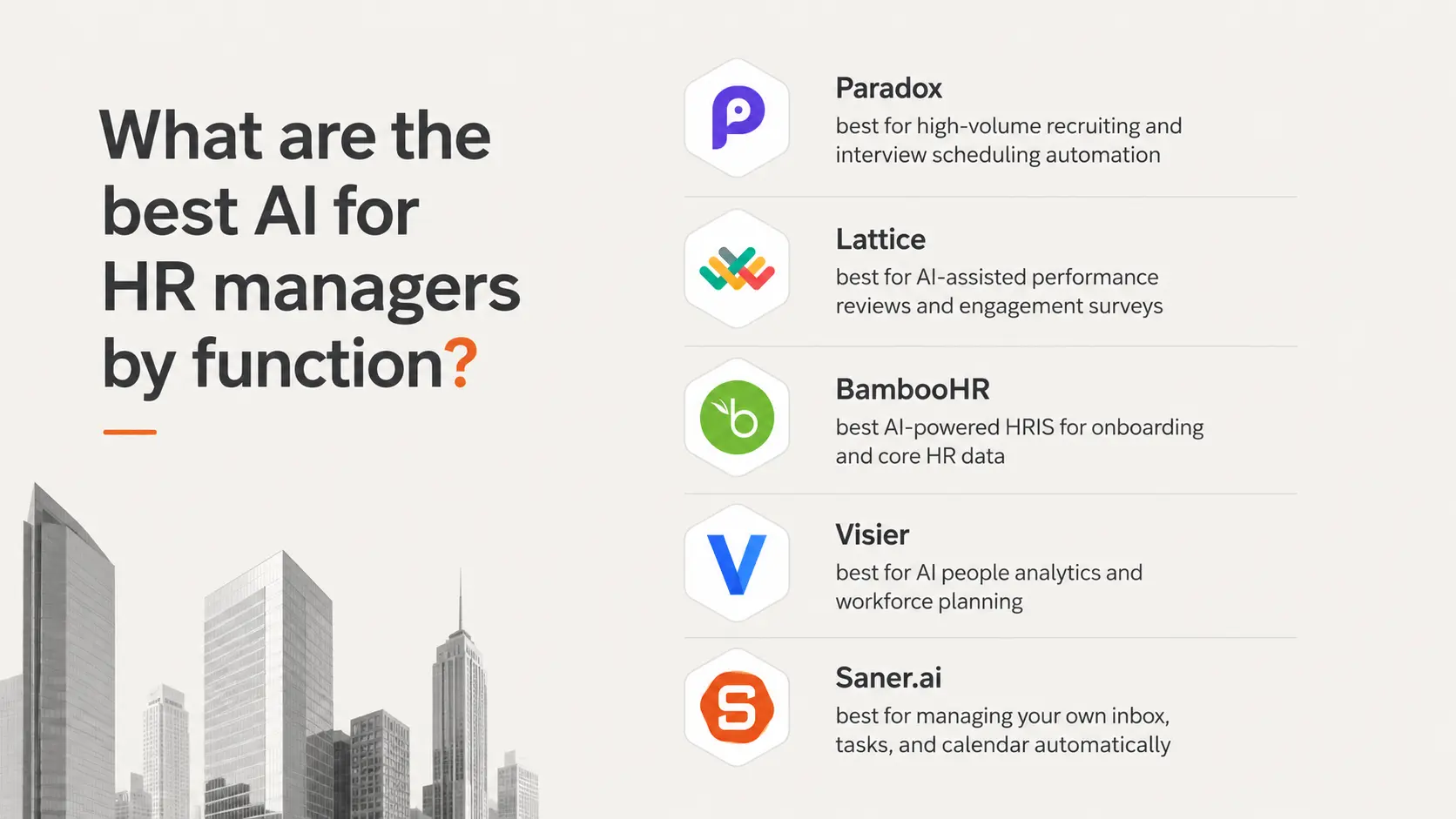
Key takeaway: What are the best AI for HR managers by function?
- Paradox — best for high-volume recruiting and interview scheduling automation
- Lattice — best for AI-assisted performance reviews and engagement surveys
- BambooHR — best AI-powered HRIS for onboarding and core HR data
- Visier — best for AI people analytics and workforce planning
- Saner.ai — best for managing your own inbox, tasks, and calendar automatically
Each tool owns a different part of the job. Pick based on which bottleneck is costing you the most hours right now.
What is an AI for HR?
An AI for HR uses machine learning and natural language processing to automate or speed up a specific HR function: screening resumes, running review cycles, answering policy questions, or surfacing turnover risk before it becomes a resignation letter.
How I evaluated these AI tools
We tested each tool against sample HR workflows: setting up a recruiting pipeline, running a review cycle, building an onboarding flow, and querying workforce data in plain English. Evaluation ran across five criteria:
- AI depth — whether the AI is core to the product or a feature added on top of an older system
- Setup time — whether you get value in a day or need an IT project first
- Integration coverage — whether it connects to the ATS, HRIS, and calendar tools you already run
- Output quality — whether the AI's suggestions are usable as-is or need heavy editing
- Real user sentiment — pulled from G2, Capterra, and Trustpilot reviews, not vendor case studies
What are the best AI for HR managers?
The best AI for HR managers are Paradox, Lattice, BambooHR, Visier and Saner.AI
1) Paradox — best for high-volume recruiting
Paradox is a conversational hiring platform built around Olivia, an AI assistant that screens candidates and schedules interviews over text, chat, or WhatsApp. It's built for high-volume, hourly hiring at retail, healthcare, and hospitality employers, not for filling niche professional roles.
Key features:
- Conversational apply: candidates apply by text or chat instead of filling out forms
- Automated interview scheduling across recruiter and hiring manager calendars, including timezone handling and reminders
- 24/7 candidate FAQ handling for pay, benefits, and role questions
- Career site chat that recommends open roles and starts screening on contact
Pros:
- Cuts scheduling and screening time dramatically for high-volume roles
- Candidates get instant responses instead of waiting days
- Strong ATS integrations (Workday, iCIMS, SAP SuccessFactors)
Cons:
- Enterprise-only pricing puts it out of reach for small and mid-size HR teams
- Weak fit for complex or executive hiring, where judgment can't be automated
- Reporting can be clunky, requiring manual spreadsheet work for basic breakdowns
Pricing:
- No published pricing; third-party estimates put entry around $1,000+/month
- Mid-market deployments commonly run $25,000-$60,000/year
- Enterprise contracts run $75,000-$150,000+/year depending on hiring volume
Best for: HR teams hiring dozens to hundreds of hourly workers a month across multiple locations.
Getting started: Expect a multi-week implementation, not a same-day setup. Start by mapping Olivia to your highest-volume job req first, then expand once your ATS integration is confirmed working end to end.
2) Lattice — best for performance reviews and engagement
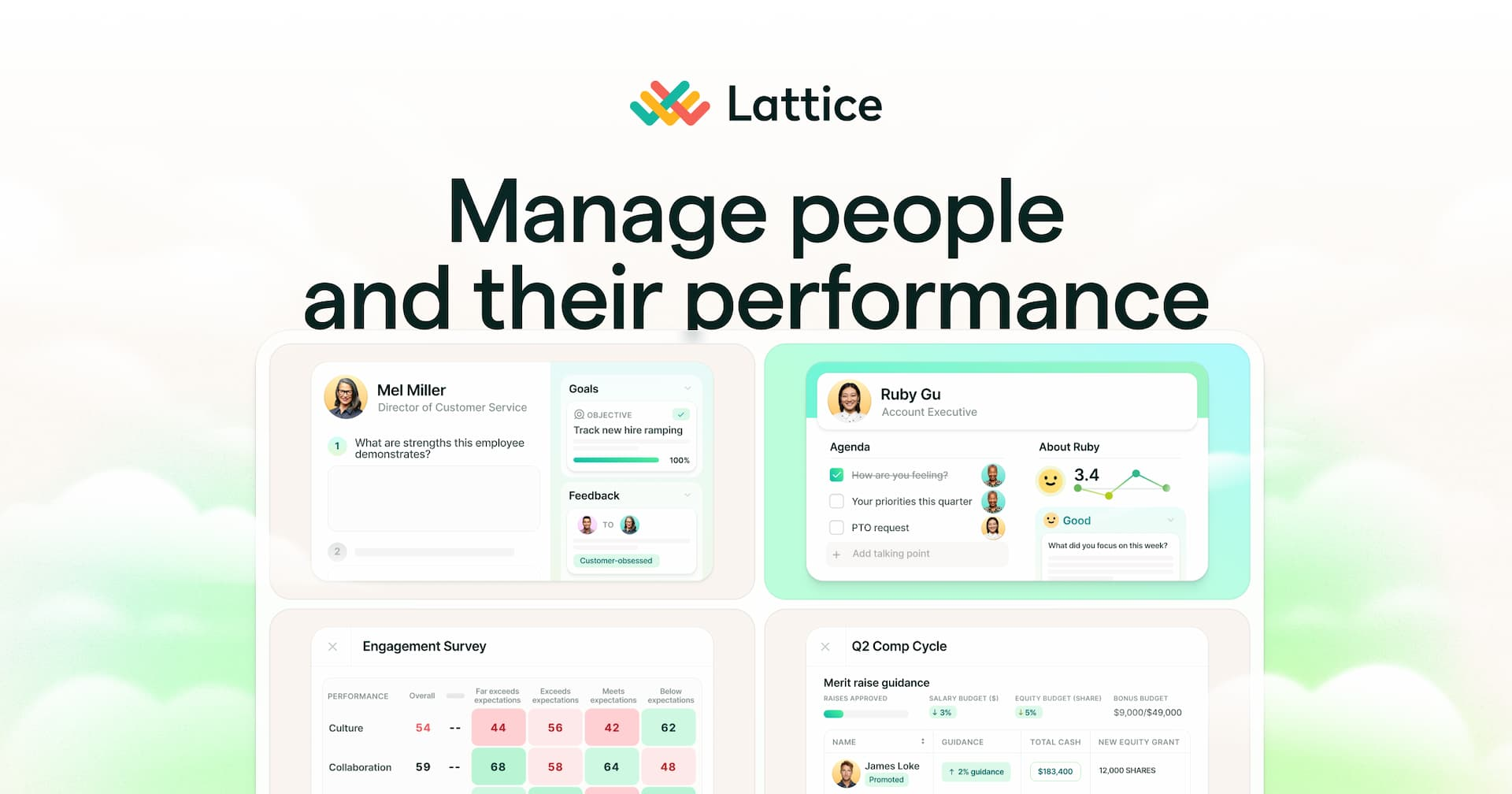
Lattice centralizes performance reviews, goal tracking, continuous feedback, and engagement surveys in one system. It replaces the spreadsheet-and-email version of performance management most companies start with, and its AI assistant now drafts review language and flags feedback patterns automatically.
Key features:
- AI review writing: summarizes peer and self-feedback into draft review language
- Customizable review cycles (annual, quarterly, 360-degree) with self, peer, and manager input in one packet
- Engagement and eNPS surveys with AI-generated theme summaries from open-ended responses
- OKR tracking tied directly into review context
Pros:
- Strong integrations with Slack, Teams, and major HRIS platforms
- Responsive customer support comes up repeatedly in reviews
Cons:
- Real learning curve: new admins report settings and permissions are buried several clicks deep
- Modular add-on pricing (compensation, engagement, HRIS) stacks up fast for smaller teams
- Mobile app lags behind the desktop experience
Pricing:
- HRIS: $10/seat/month
- Talent Management (performance, goals, feedback): $11/seat/month
- Compensation add-on: $6/seat/month
- No permanent free plan
Best for: Companies of 50-1,000 employees ready to move performance management off spreadsheets and into a structured cycle.
Getting started: Set up one review cycle before turning on every module at once. Most teams that try to launch OKRs, engagement surveys, and reviews simultaneously report the steepest adoption friction.
3) BambooHR — best AI-powered HRIS for onboarding
BambooHR is the core system of record most small and mid-size HR teams start with: employee database, time-off tracking, onboarding checklists, and now AI-generated reporting layered on top.
Key features:
- Automated new-hire packets: e-signatures and paperwork completed before day one
- AI-powered reporting that surfaces trends without building custom queries
- Built-in ATS for job posting and applicant tracking
- Employee self-service for time-off requests, documents, and directory lookups
Pros:
- Consistently the highest-rated HR platform for ease of use on G2 and Capterra, with minimal training required (reviews)
- Excellent, fully functional mobile app for time-off and directory access
- 150+ integrations covering most common HR tech stacks
Cons:
- Custom pricing only, no published rates, which makes comparison-shopping slow
- Rigid for complex or non-standard workflows; custom fields often require workarounds
- Payroll integration requires manual work rather than being fully automated
Pricing:
- Core: ~$10/employee/month (estimated)
- Pro: ~$17/employee/month (estimated)
- Elite: ~$25/employee/month (estimated)
- Quote required; some reviewers report price increases of roughly 30% after tier restructuring
Best for: Small to mid-size companies (25-1,000 employees) that want one simple system of record instead of a patchwork of spreadsheets.
Getting started: Migrate your employee database first and run it in parallel with your old system for one pay cycle before fully cutting over. Confirm which features are core plan vs. paid add-on before you sign, since time tracking and performance modules are priced separately on lower tiers.
4) Visier — best for people analytics and workforce planning
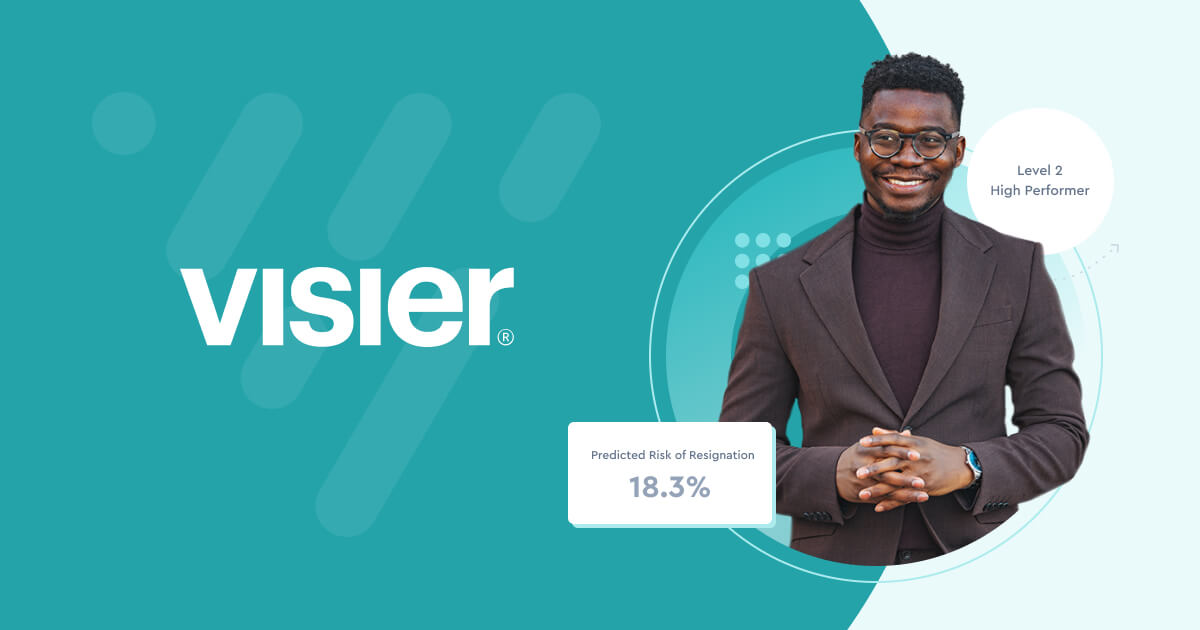
Visier pulls data from your HRIS, ATS, and payroll systems into one place and layers AI-driven predictive analytics on top: turnover risk, headcount forecasting, and natural-language querying through its AI assistant, Vee. It's built for organizations that need to answer "what's actually happening across our workforce" without a dedicated data science team.
Key features:
- Vee, an AI assistant that answers natural-language questions about workforce data
- Predictive analytics for turnover risk and hiring demand forecasting
- 50+ pre-built metrics and customizable dashboards
- Data governance and security controls built for enterprise compliance needs
Pros:
- Strong filtering and cross-metric analysis for telling a data story to leadership
- Solid data security model, valued by enterprise buyers
Cons:
- Pricing sits at the high end of the market, which reviewers say is hard to justify for smaller teams
- Steep learning curve; granular functionality often requires hunting through menus
- Less flexible than general BI tools like Power BI for building your own data model
Pricing:
- No published pricing; custom enterprise quotes only
- Positioned for mid-to-large organizations, generally not cost-effective for small teams
Best for: HR teams that need to partner with finance and leadership on headcount planning and turnover forecasting, not just run reports.
Getting started: The implementation is data-integration-heavy, so budget real time for connecting your HRIS, ATS, and payroll sources before you see your first dashboard. Start with one metric you already report on manually (like turnover) to validate the data model before expanding.
5) Saner.ai — best for managing your own inbox, tasks, and calendar
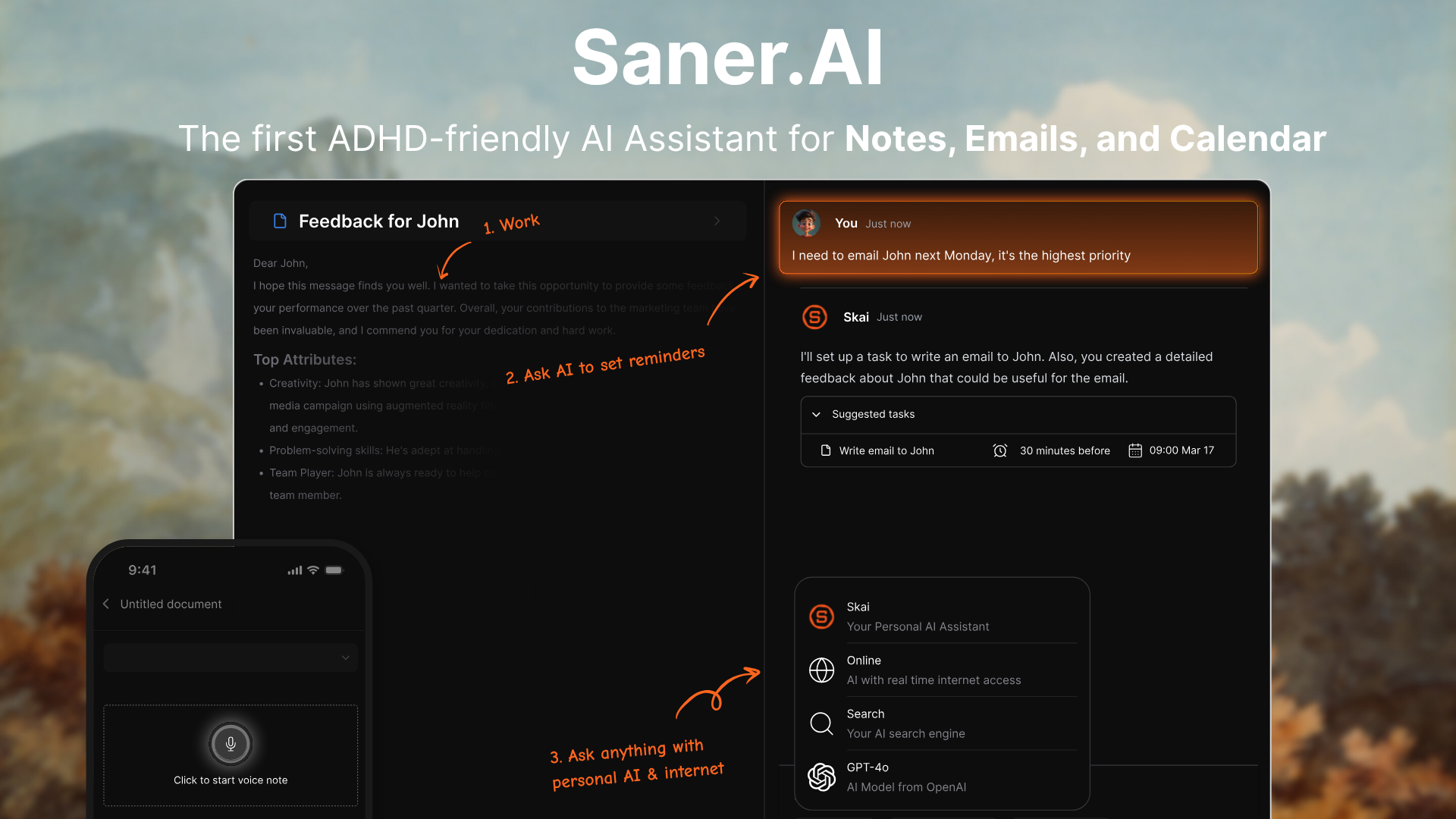
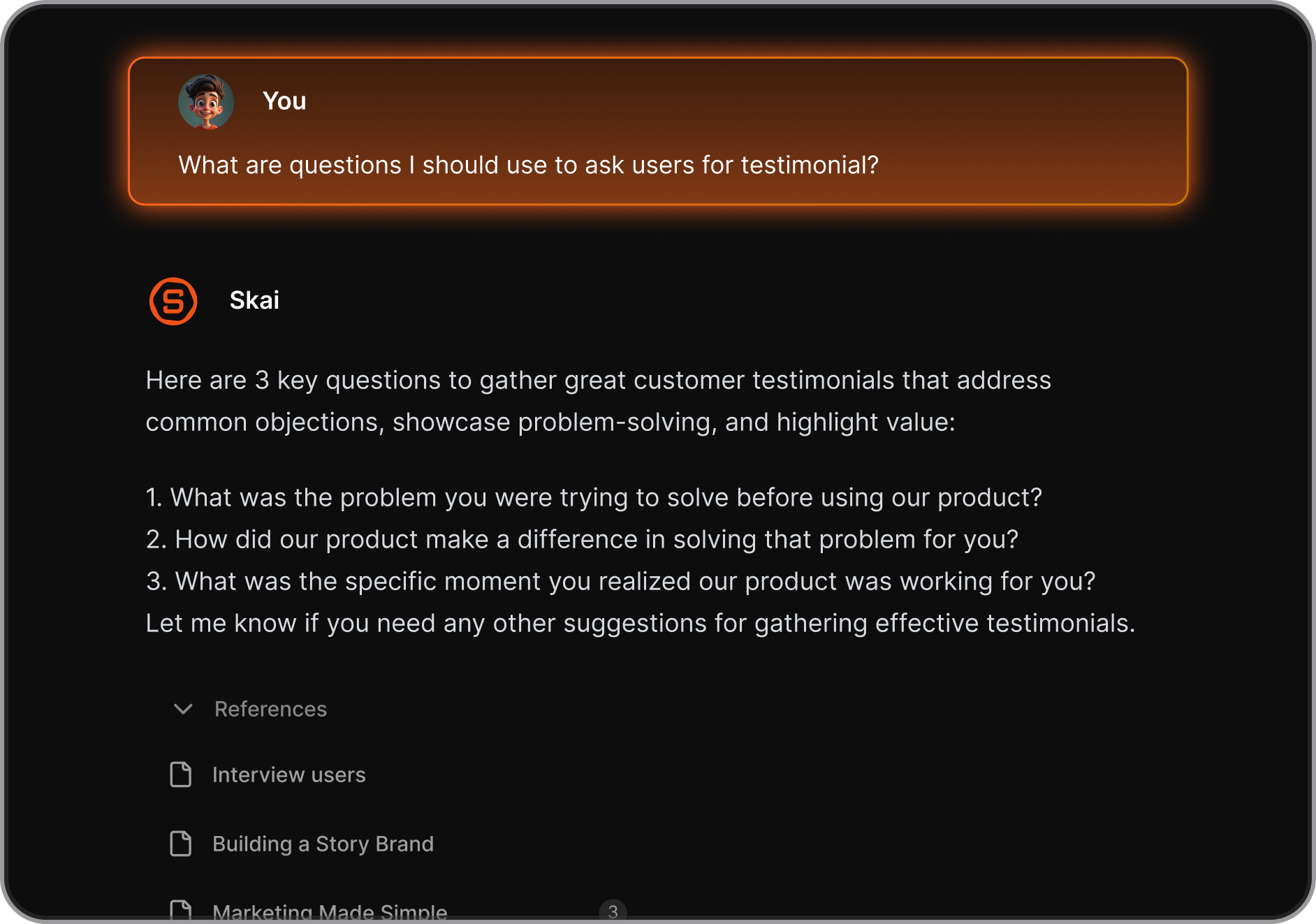
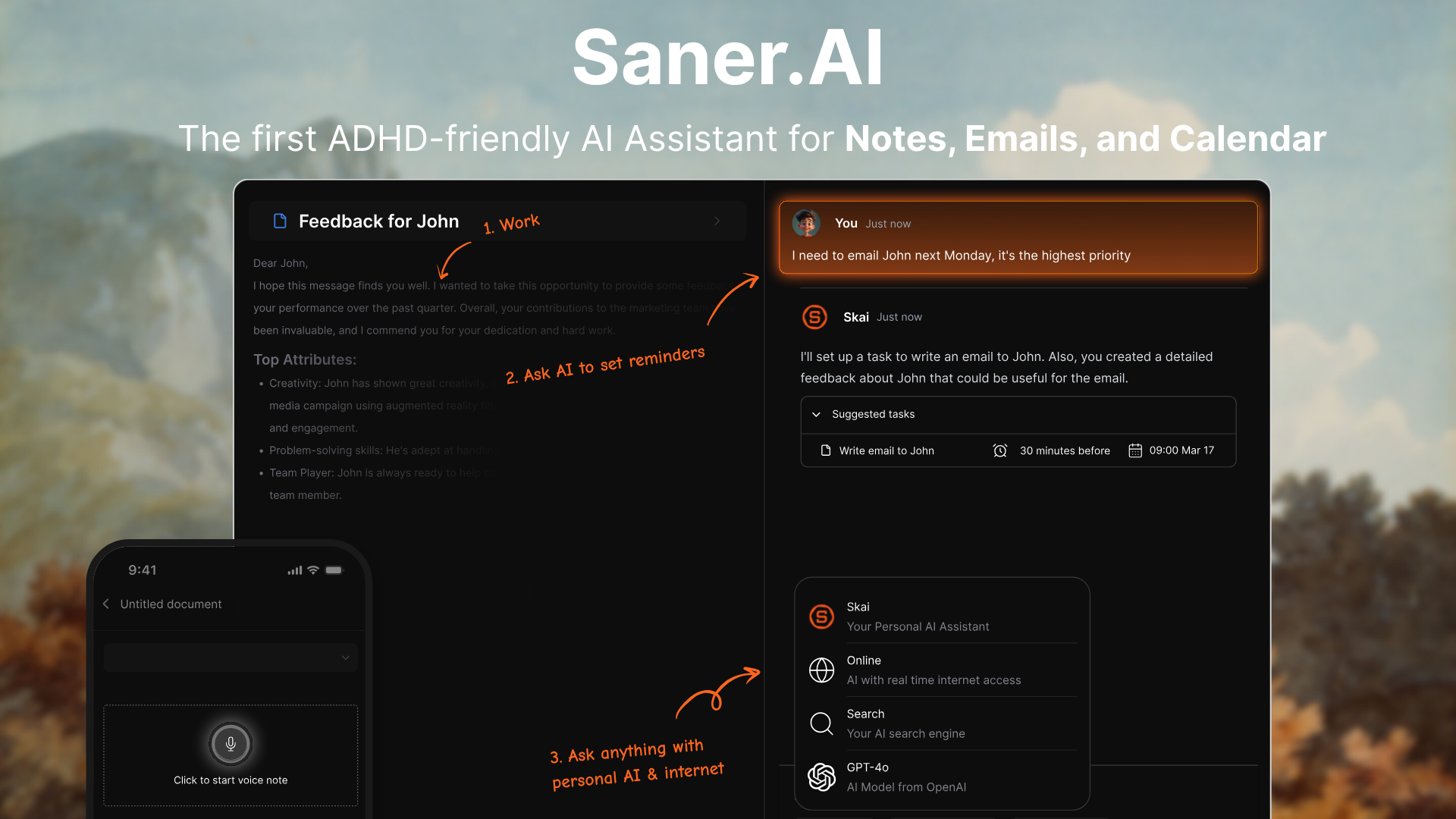
None of the tools above manage the one thing that eats an HR manager's actual day: the inbox, the task list, and the calendar sitting between all those specialist platforms. Saner.ai connects your notes, tasks, email, and calendar, and its AI assistant, Skai, builds a suggested plan for your day each morning based on what's actually pending across all of them.
Key features:
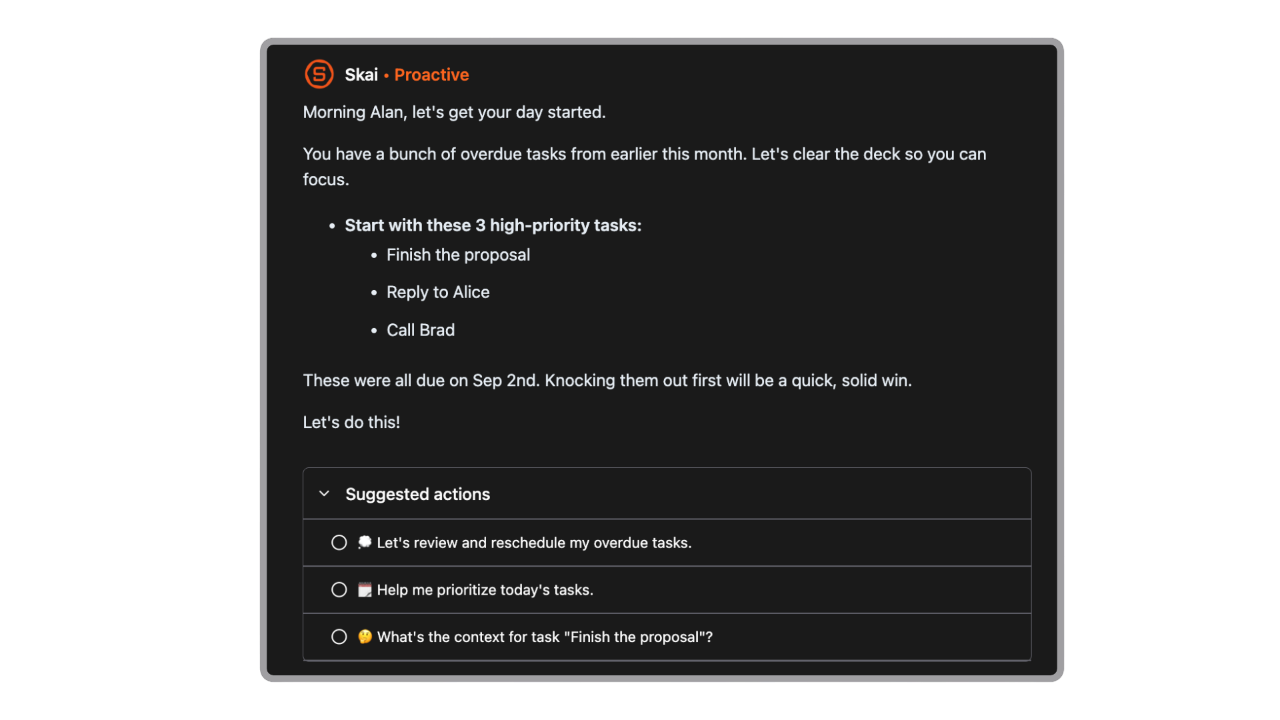
- Automatic daily planning: Skai scans tasks, email, and calendar each morning and proposes a prioritized plan
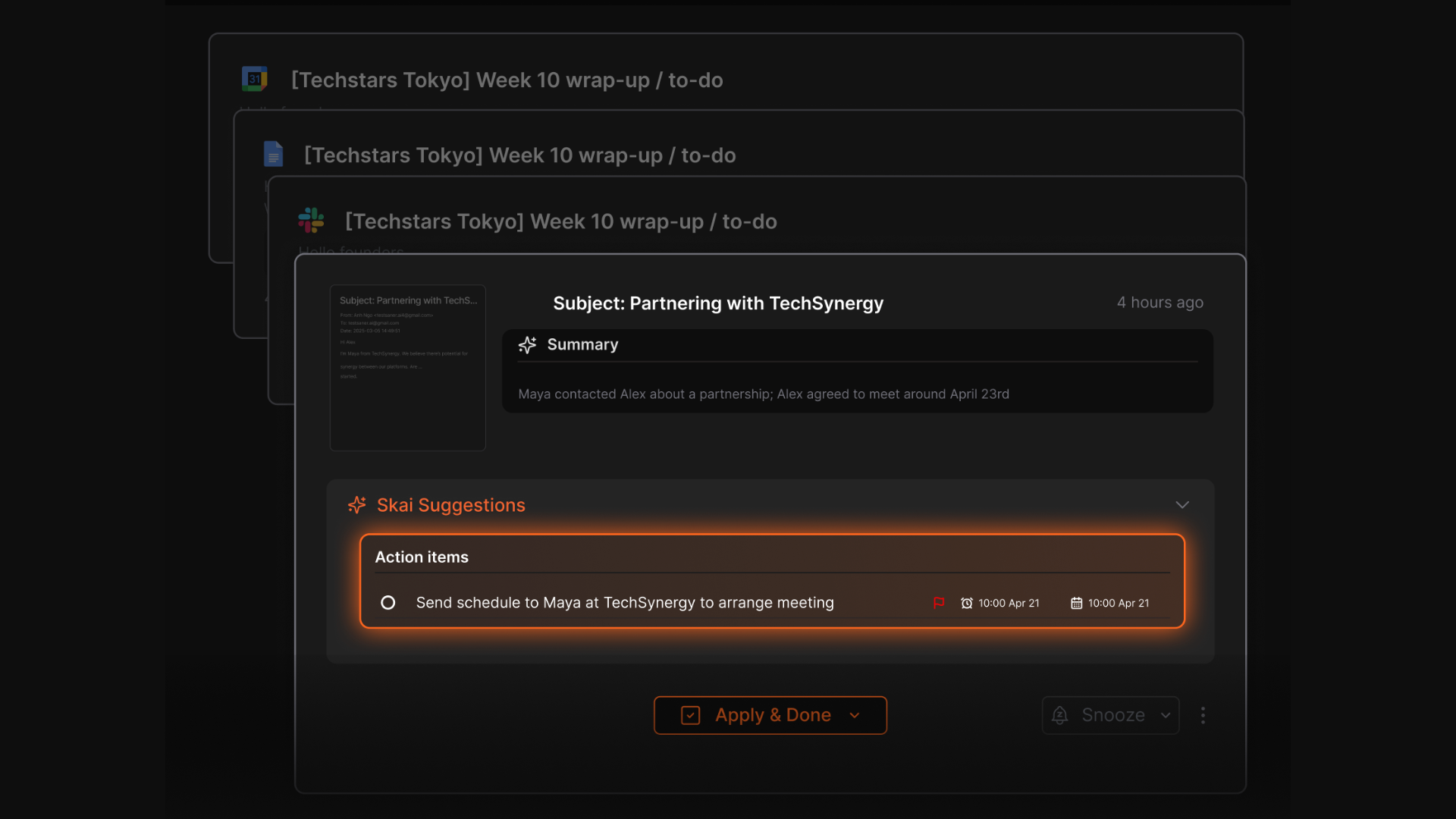
- Email-to-task extraction: pulls action items out of policy questions, candidate follow-ups, and manager requests buried in your inbox
- Voice notes and quick capture for logging things between meetings without opening a full app
- Semantic search across notes, documents, and past conversations, so nothing gets lost between systems
Pros:
- No lengthy implementation. You connect your calendar and one email account and get value the same day
- Handles the coordination layer that sits between your ATS, HRIS, and performance platform, instead of trying to replace any of them
Cons:
- Doesn't replace your HRIS, ATS, or performance system, it sits alongside them
Pricing:
- Free: notes, tasks, basic email sync, daily planning
- Starter: $8/month, full email and calendar integration, AI task extraction, voice notes
- Standard: $16/month, advanced AI features, priority support, higher usage limits
Best for: HR managers juggling recruiting coordination, policy Q&A, and review cycles across multiple systems who need one place that tracks what's actually on their plate.
Getting started: Connect your calendar first, then sync one email account. Brain-dump your current open items as a voice note on day one; by day three the morning plan starts to feel like an actual briefing instead of a task list you have to build yourself.
Stay on top of your work and life
Conclusion
None of these five tools solve the whole HR job on their own, and that's the point.
- Paradox owns recruiting volume,
- Lattice owns the review cycle,
- BambooHR owns your core employee data, and
- Visier owns the analytics leadership actually asks you for.
- Saner.ai manages your inbox, task list, and calendar
If you're picking one place to start, match it to your biggest bottleneck. Drowning in candidate scheduling, start with Paradox. Stuck running reviews out of spreadsheets, start with Lattice. Still onboarding people on paper, start with BambooHR. Can't answer a basic turnover question without pulling three reports, start with Visier. And if your actual problem is that you can't find twenty uninterrupted minutes in a day, start with Saner.ai; it's the one tool here built around your calendar instead of your org chart.
Pick the tool that matches the hour you're actually losing, not the one with the longest feature list.
Stay on top of your HR work and life
FAQ
What is the best AI tool for HR managers who work solo without a full HR team?
Saner.ai and BambooHR are the strongest fits. Saner.ai handles the personal coordination load (inbox, tasks, calendar) without requiring IT setup, and BambooHR gives a solo HR manager a full HRIS without needing a dedicated admin to run it.
What's the difference between Paradox and a regular applicant tracking system?
A regular ATS stores and tracks applications; Paradox's Olivia actively conversates with candidates, screens them, and books interviews without a recruiter touching each step. Think of the ATS as the filing system and Olivia as the person doing the scheduling calls.
Is Lattice worth it in 2026?
Yes, for companies between roughly 50 and 1,000 employees running structured review cycles. It's less worth it for very small teams, where the modular add-on pricing can outweigh the benefit relative to a simpler tool.
Does BambooHR handle payroll well?
Not on its own. Multiple reviewers report that payroll requires manual work and doesn't integrate as smoothly as the rest of the platform, so budget for a payroll add-on or a separate payroll tool if that's a priority.
What should I look for in an AI HR tool?
Look for AI that's built into the core workflow rather than bolted on as a chatbot, transparent data handling, real integrations with your existing HRIS and calendar, and a setup time you can actually complete without a multi-month IT project.
Can AI tools replace an HR manager?
No. Every tool in this list automates a specific task, recruiting screens, review drafts, data queries, but none of them replace judgment calls on compliance, conflict resolution, or culture. SHRM's 2026 research on AI in HR found the least AI adoption in exactly the areas requiring the most human judgment: employee relations, ethics, and talent strategy.
Is there a free AI tool for HR?
Saner.ai has a free tier covering notes, tasks, basic email sync, and daily planning. Lattice, BambooHR, Paradox, and Visier are all paid, quote-based, or per-seat products with no permanent free plan.
How much does an AI HR platform typically cost?
It ranges widely by function. Lattice and BambooHR start around $10 per seat per month, Saner.ai starts free with paid tiers from $8/month, and enterprise recruiting and analytics platforms like Paradox and Visier require custom quotes that can run from the low thousands to well over $50,000 annually depending on company size.
What's the best AI tool for reducing HR administrative work specifically?
Saner.ai is built for exactly this: automating the daily planning, email triage, and task extraction that make up the bulk of the admin burden Deloitte measured at 57% of HR time. For hiring-specific admin, Paradox removes the scheduling and screening load.
Does Visier work with a small HR team?
It can, but reviewers consistently note the pricing and learning curve are steeper than smaller teams need. Visier is built for organizations that need to partner with finance on workforce planning, not for a two-person HR department running basic reports.
What's the best AI tool for HR managers dealing with high-volume seasonal hiring?
Paradox is purpose-built for this. Its conversational scheduling and screening are designed for retail, hospitality, and healthcare employers hiring dozens to hundreds of workers on a recurring basis.
How do I get started with an AI HR tool without a big IT project?
Start with tools that don't require deep data integration on day one. Saner.ai and BambooHR both offer same-day setup; Visier and Paradox involve longer implementation because they depend on pulling in data from your existing HRIS or ATS.
Stay on top of your work and life