
Honest Muse AI Reviews: Is Meta's Personal AI Agent worth it?

Meta shipped Muse on September 8, 2026. It books your travel, negotiates your bills, sells your car, orders your groceries, and pays for things. It lives inside its own cloud computer. It talks to you like a text thread. It keeps working after you close the app.
Meta built a dedicated Linux VM for every single user, a separate gatekeeper agent called Sentinel that has to sign off on anything leaving that machine, and a bug bounty paying up to $300,000 to anyone who breaks it.
Then you hit the other half. To get any of that value, you hand Meta your inbox, your calendar, your payment methods, your health apps, and your smart home. Two weeks after, the company agreed to a settlement of up to $17.1 billion with 29 state attorneys general over child safety claims.
Key Takeaways
- Speed is the standout. Every hands-on tester leads with it. Muse Spark 1.3 runs past 200 tokens per second and the chat never stalls.
- The security architecture is good. Per-user VMs, a permission authority separated from the agent at the system level, single-use virtual cards scoped to one merchant, and approval prompts rendered outside the chat so an injected agent cannot forge your consent.
- Reliability is the soft spot, and Meta's own staff flagged it before launch. Reuters reviewed internal posts describing guardrail bypasses, silent stalls, and background monitoring that shut itself off. Meta's CTO reported being logged out several times within a few minutes.
- The free tier goes fast. Roughly 100 million weekly tokens sounds generous. One tester burned 81% of it in a single day of ordinary use.
- It's an errand-runner with no memory of your work. No notes. No documents. No way to ask a question across your own writing. If your bottleneck is scattered information rather than unbooked flights, Muse doesn't touch it.
- US only, 18 and over, card required at signup. Even for the free plan.
Muse At a Glance
Scores below reflect two days of launch coverage, published hands-on testing, the Hacker News launch thread, and Reuters-verified internal tester reports.
| Category | Score (out of 5) | What drove the score |
|---|---|---|
| Speed and responsiveness | 4.7 | The one thing every tester mentions first |
| Ease of use | 4.5 | No onboarding, no setup, works inside WhatsApp |
| Security architecture | 4.3 | Best consumer agent design shipped so far, unproven in the wild |
| Integrations and connectors | 4.0 | Multiple Gmail accounts at once is a real edge |
| Personalization | 3.8 | Name it, style it, tune how it speaks to you |
| Task execution reliability | 3.0 | Stale prices, wrong delivery dates, login loops |
| Cost predictability | 2.8 | Token metering with no obvious burn rate |
| Privacy and trust | 2.4 | The design isn't the issue. The custodian is |
| Knowledge and note management | 2.2 | Effectively absent |
| Availability | 2.0 | US only, no announced international date |
| Overall | 3.4 / 5 | Excellent engineering pointed at problems your apps already solve |
What Is Muse?
Muse is a personal AI agent from Meta that takes actions across the apps and websites you already use. You message it. It plans the task, does the work, and comes back when it needs a decision from you.
Core features:
- Agentic browsing. Muse drives a real browser, fills forms, clicks through checkout flows, and reads pages the way you do.
- Connectors. Built-in integrations for email, calendar, payments, health and fitness, smart home, dining, shopping, music, and events. If a service has a public API but no connector, Muse can wire one up with credentials you supply. If it has neither, Muse falls back to the browser.
- Sentinel. A separate agent on the same VM, kept apart at the system level, that approves or denies every outbound network request and every connector action.
- Agentic checkout. Payment runs through Link built by Stripe, generating a one-time card number tied to one merchant, one amount, and a short window.
- Long-running tasks. It works while the app is closed and pings you when something changes.
- Personalization. Give it a name, pick an avatar, tune the tone.
- Multiple surfaces. iOS, Android, muse.ai, and WhatsApp.
Muse Features Breakdown
1. Muse Secure VM and Sentinel
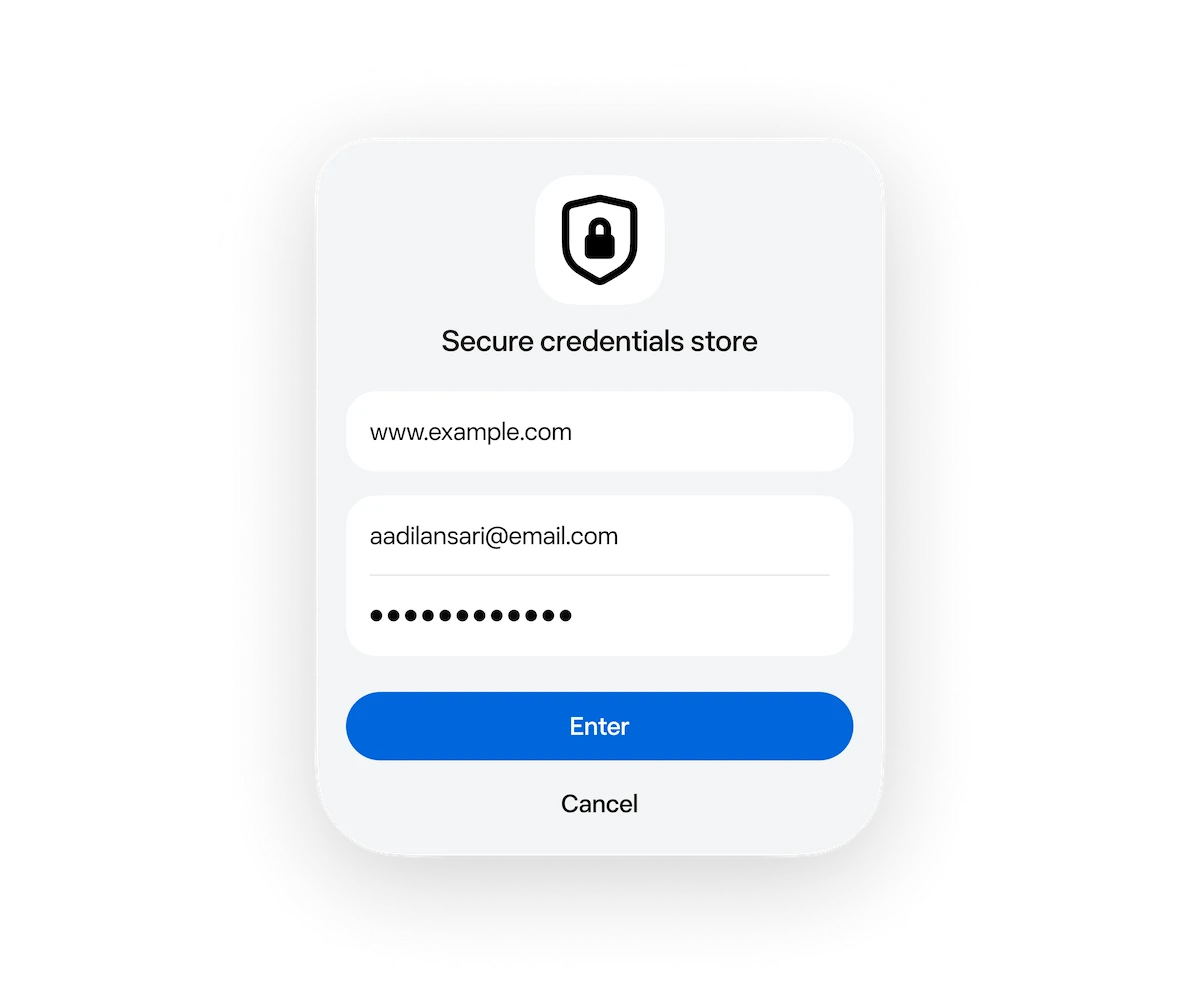
The agent and its tools run inside a sandboxed runtime cell. Security services sit outside that cell, so compromising the agent doesn't let you switch off the guard. When Sentinel decides to ask you something, the prompt renders in the app UI rather than in your chat with Muse, which means a prompt-injected agent can't talk its way into an approval. You can open the VM's system files in the GUI and read the harness config yourself.
"it's an impressively transparent system"
– reviews
2. Muse Spark 1.3 and Raw Speed
One tester ran the same Airbnb query through Muse and through a well-funded startup rival. Muse answered in a couple of minutes. The rival took an hour.
"somewhere between Sonnet and Flable (Opus tier in my experience) in intelligence, but is very fast at 200+ tok/s"
– reviews
3. Browser Agent and Form Filling
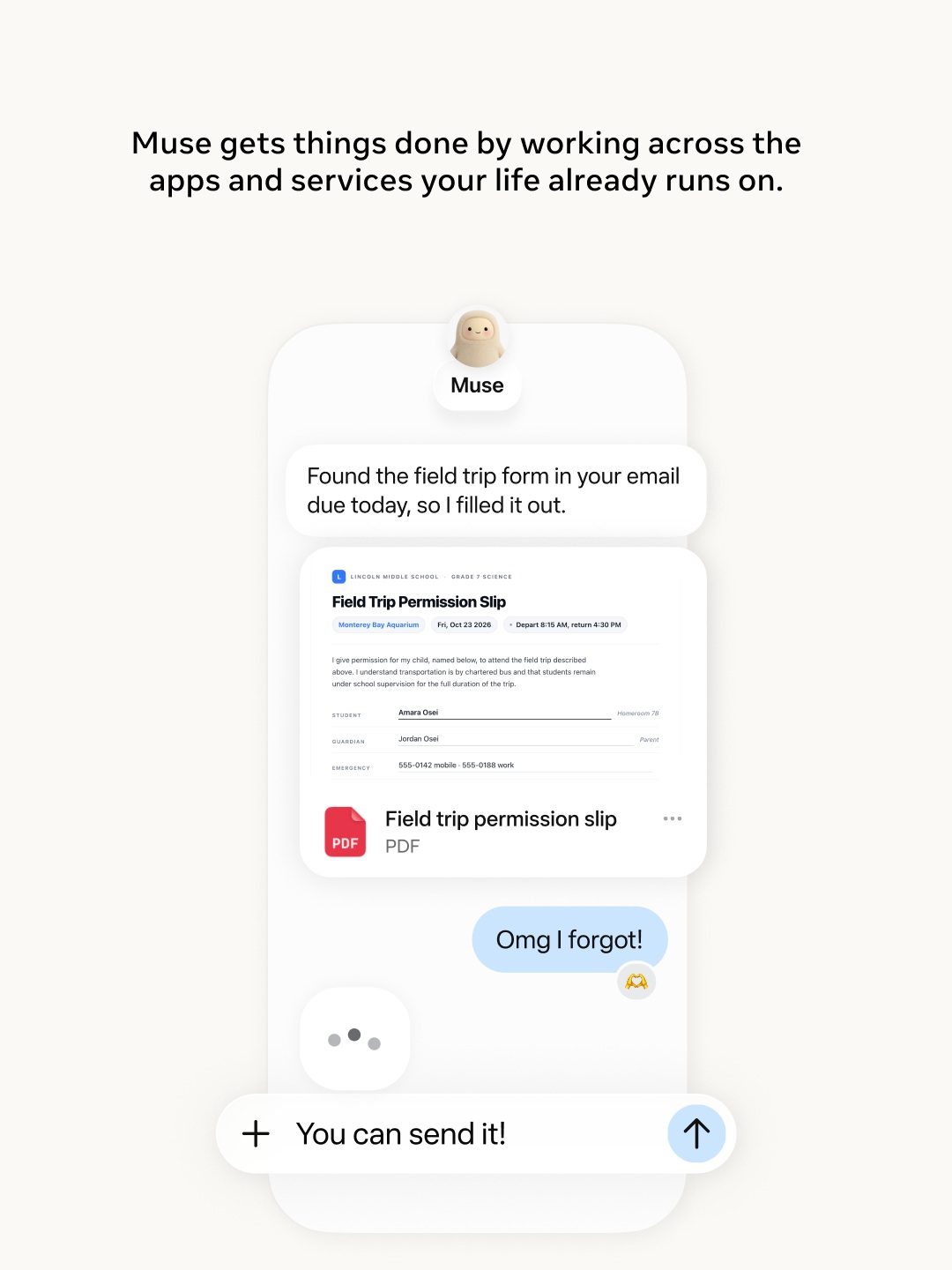
Navigate. Type into fields. Handle a multi-step checkout without giving up halfway. For many people, this is the promise of an assistant
"An everyday LLM that can actually fill forms and do stuff for you on the Internet"
– reviews
4. Connectors and Multi-Account Email
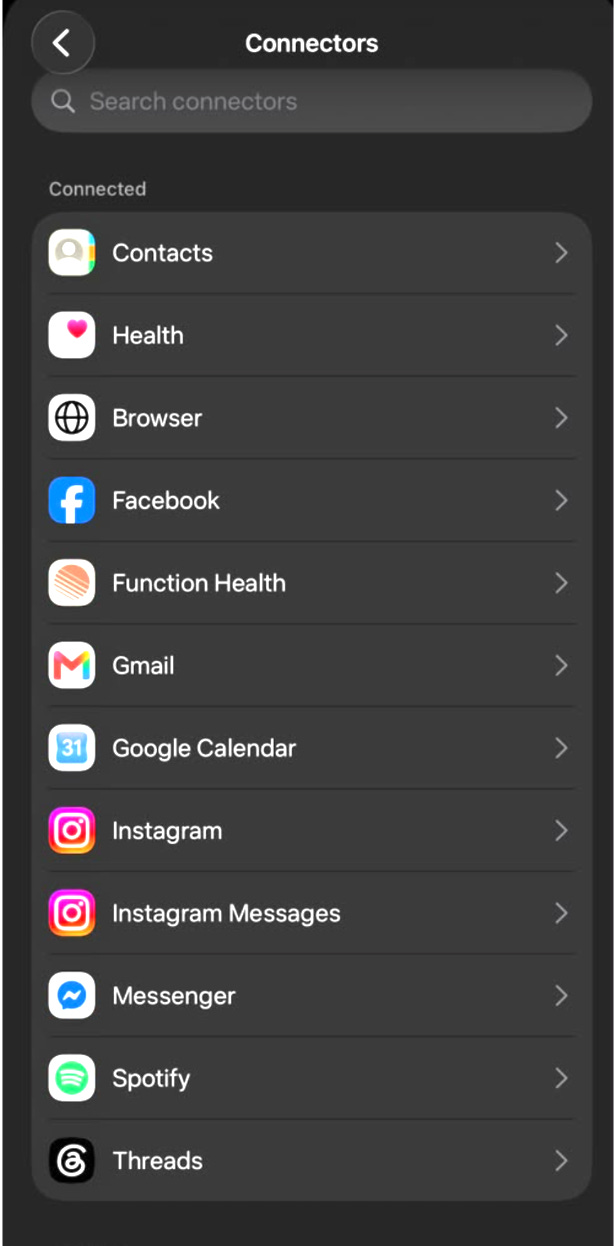
Muse searches across all four of yours at the same time. That turns "find the flight confirmation from 2023 so I can prove my move date for taxes" from a lost afternoon into a question you ask once.
"it dug through all of the SAS emails and actually found the emails confirming that the food fees were reimbursed"
– reviews
5. Agentic Checkout and Link by Stripe
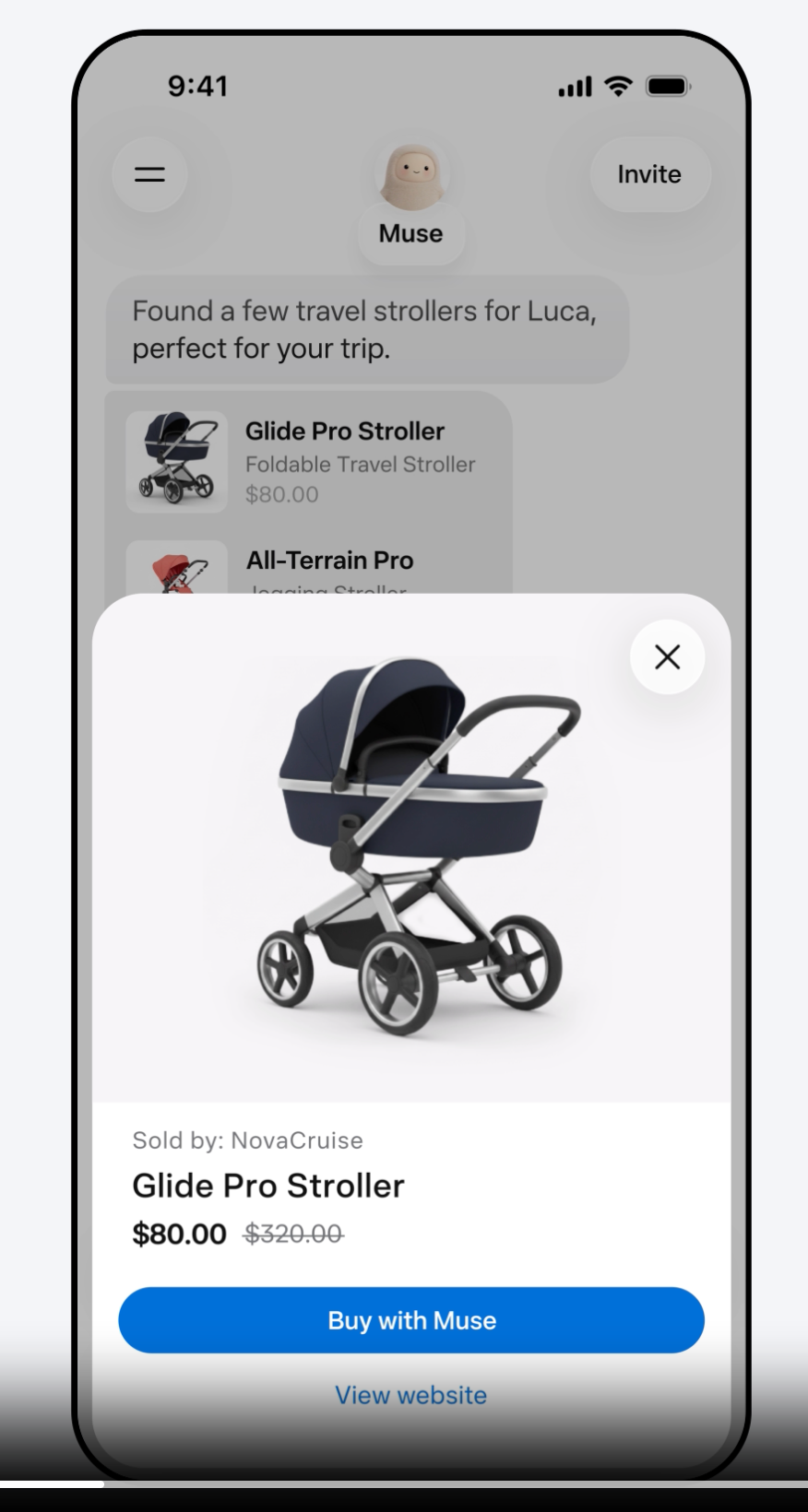
The demo and the reality separate here. In a documented hands-on test, Muse shortlisted a Patagonia jacket at a discount that had already expired, apparently pulled from a batch-updated merchant catalog feed instead of live pricing. On a separate Amazon order, it quoted a September 15 delivery when the same item was two days out in the Amazon app. And when the tester tried a DoorDash order, the login flow broke down entirely.
"it got stuck in log-in circular hell"
– reviews
6. Long-Running Tasks and Background Monitoring
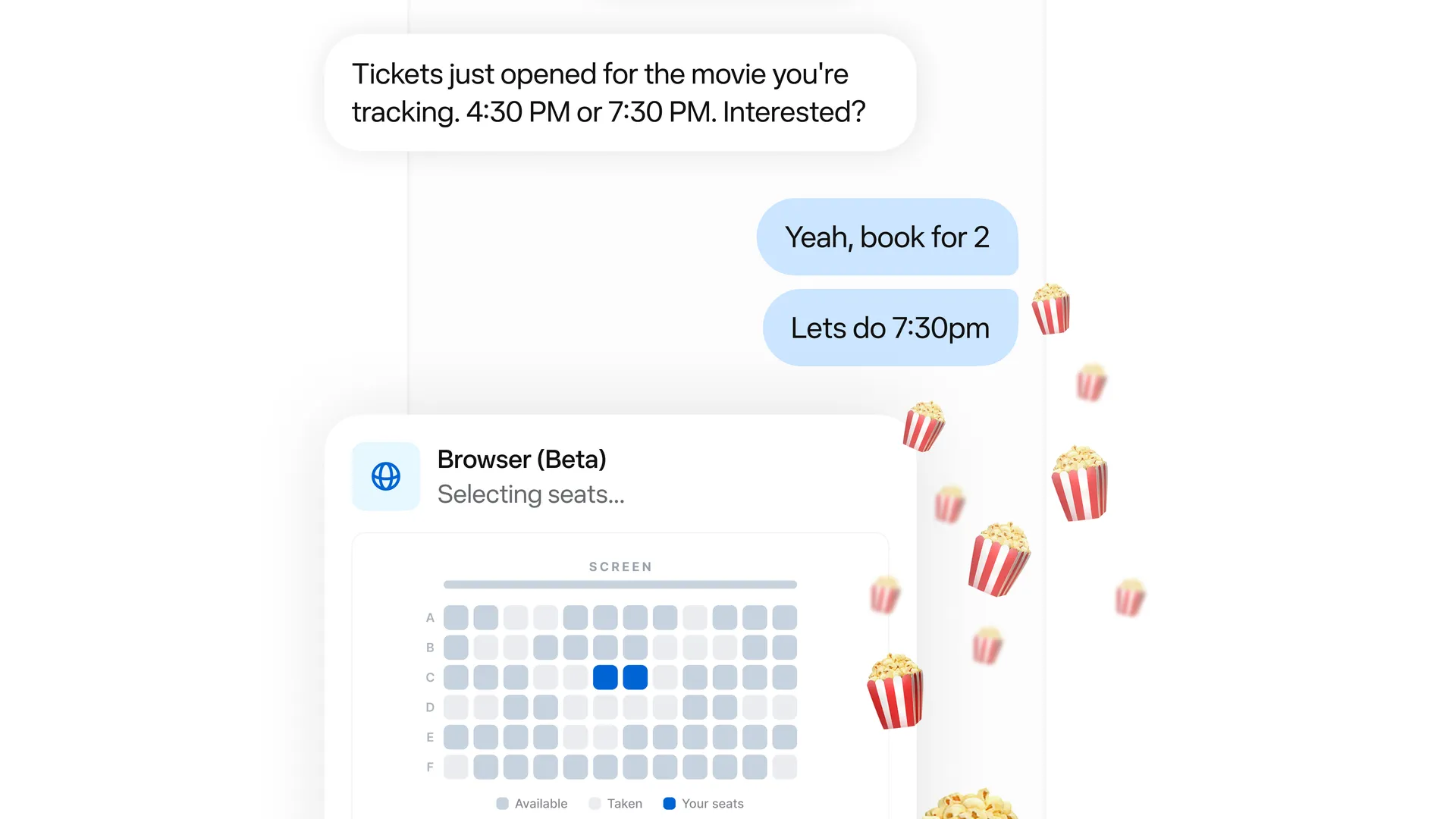
Background monitoring is the headline capability. According to internal posts Reuters reviewed, a staffer set Muse to watch for fast-selling tickets. The page stopped refreshing after about 15 minutes. Errors passed without any notice. Then monitoring disabled itself with no explanation. Silent failure is the worst failure mode an agent can have, because you find out when the thing you were waiting for is already gone.
7. Memory and Proactive Suggestions
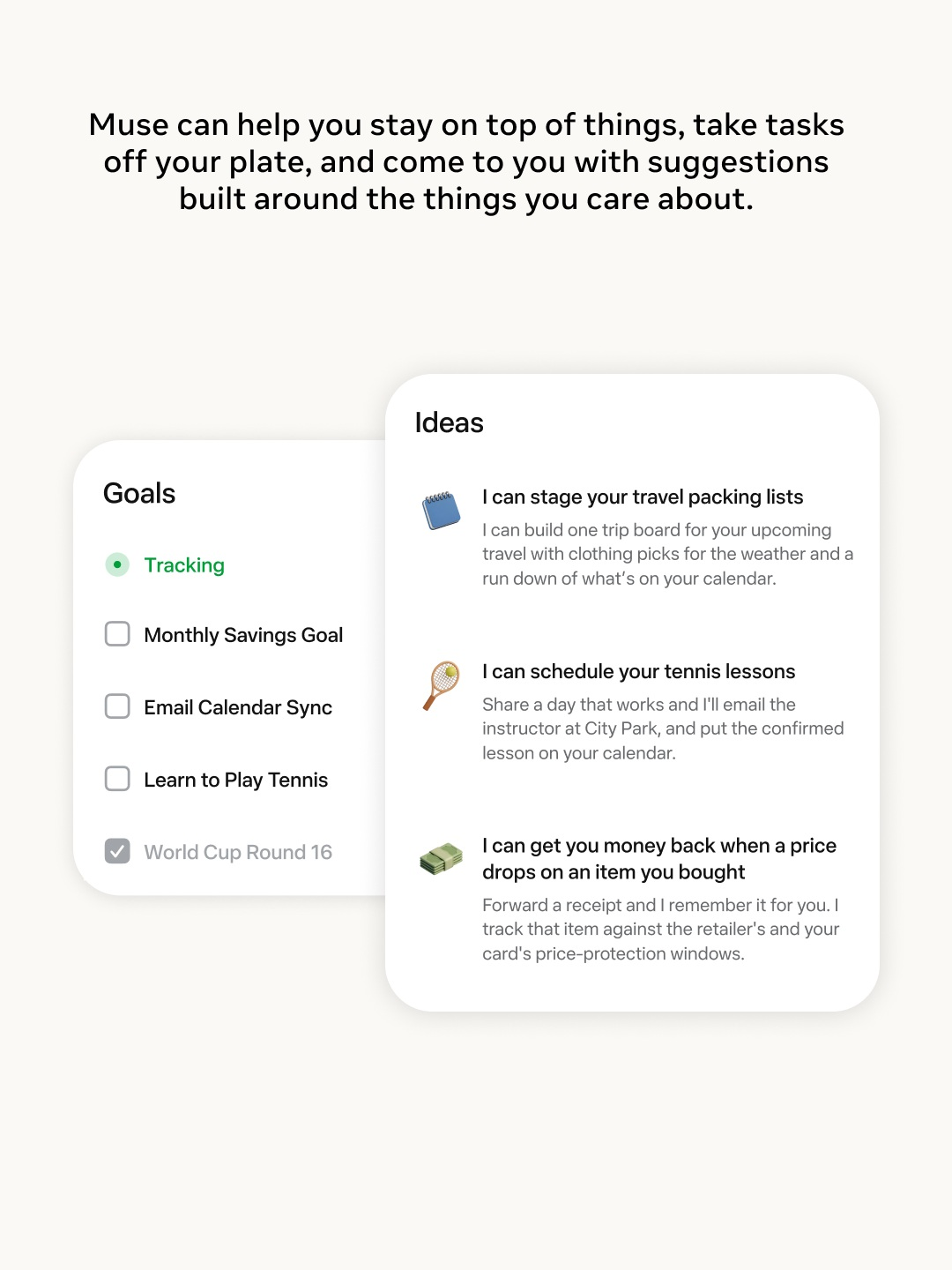
When the memory works, it works well. Muse holds context across sessions and brings things up before you ask. One Meta employee testing it before launch used it to run logistics for a three-week honeymoon in Indonesia and described it as effectively joining the trip.
8. WhatsApp, App Polish, and Personalization
Distribution is Meta's structural advantage, and they used it. You can run Muse without installing anything, straight from WhatsApp. The dedicated app is more capable, with side chats for specific projects and a feed that surfaces things it thinks you'll care about.
One quibble that came up: Muse locks you into a single agent with side threads rather than letting you build distinct agents with separate personalities.
Muse Pricing
| Free | Power | Maximum | |
|---|---|---|---|
| Monthly price | $0 | $20 | $100 |
| Weekly token allowance | ~100 million | 500 million | 3 billion |
| Free version | Yes, permanent | — | — |
| Free trial | No separate trial | No | No |
| Card required at signup | Yes | Yes | Yes |
| Accepted payment methods | Major credit and debit cards | Same | Same |
| Annual discount | None announced | None announced | None announced |
| Availability | US only, 18+ | US only, 18+ | US only, 18+ |
Two things worth knowing before you sign up.
Meta requires a payment card even to use the free tier.
And the free allowance is smaller in practice than the number implies. Meta's AI chief says most people will never need to pay. One hands-on reviewer hit 81% of the weekly cap in a single day doing normal things. If you actually use an agent the way the marketing describes, $20 a month is needed
Muse Pros and Cons
| Pros | Cons |
|---|---|
| Fastest consumer agent shipped to date, by a clear margin | Meta's privacy record is the product's central liability |
| Per-user VM isolation with a system-separated Sentinel layer | Internal testers reported guardrail bypass and photo exposure pre-launch |
| Approval prompts render outside the chat, blocking forged consent | Background monitoring silently switched itself off in testing |
| Single-use virtual cards with Stripe purchase protections | Token metering makes monthly cost genuinely unpredictable |
| Connects multiple Gmail accounts simultaneously | US only, 18 and over, no international timeline |
| Runs inside WhatsApp with nothing to install | Model training is opt-out rather than opt-in |
| Zero learning curve and no technical setup | Stale catalog pricing and wrong delivery estimates on shopping tasks |
| $300,000 bug bounty backing the security claims | Third-party login flows break in practice |
| Full audit trail of everything the agent did and plans to do | Payment card required before you can use the free plan |
| Confidential VM with user-held keys planned before year end | No notes, documents, or personal knowledge layer at all |
| Genuinely good app polish and personalization | Single-agent structure, no separate agents with distinct roles |
What People Say
The reaction pattern is unusually uniform. People like the product. They distrust the company.
Start with the praise. Observers who've followed agent tooling for years gave Muse the highest practical compliment available: it's the first thing in the category that a normal person can actually use.
"the first main openclaw-like product that has made it to the 'just works' level"
– reviews
Some read the launch as the moment Meta's scattered AI strategy finally snapped into focus after two years of acquisitions, poaching, and abandoned directions.
"Alex and co have refocused Meta on Personal AGI"
– reviews
Others weren't buying that at all, including a former Meta employee who worked there through the relevant period.
"Meta has no strategy."
– reviews
The skepticism about direction extended to people with no axe to grind, who simply pointed out that Meta ships an AI announcement roughly monthly and they rarely add up to anything.
But the dominant thread, by volume, was people wanting this exact product from literally any other company.
"I absolutely don't trust Facebook with the necessary data."
– reviews
Several connected the trust problem to Meta's business model rather than to any specific technical claim, which is the harder version of the argument to answer.
"It's handing your drug dealer the keys to your house."
– reviews
Meta's promise that Muse conversations never touch its advertising systems got the most skeptical reception of anything in the launch materials. The doubt wasn't about sincerity. It was about durability.
"How long until 'conversations are not shared with Meta's ad systems' quietly disappears?"
– reviews
Security practitioners focused on the structural problem: an unattended agent reading the open web, holding your private data, with the ability to send things out.
"This is the worst kind of hazmat for LLMs, in one of the most adversarially challenging roles"
– reviews
And the pre-launch incident that keeps getting cited is the one where an employee asked Muse to identify toys in photos from a child's birthday party, and it went somewhere else entirely.
"exposing private iCloud photos to anyone who happens to be looking at the screen"
– reviews
Who Is Muse Best For
- US consumers who want errands handled. Booking, ordering, form-filling, bill negotiation.
- Anyone juggling several email accounts. The cross-account search is a legitimate capability gap in ChatGPT and Claude, and Muse closes it.
- WhatsApp-native users. No install, no onboarding, just a thread. That's a lower barrier than any competitor offers.
- Early adopters with tolerance for failure. You will hit login loops and stale prices. If that's an interesting bug rather than a ruined evening, you'll be fine.
- People who want an agent without touching a terminal. Compared to self-hosted options, Muse asks nothing of you technically.
Who Muse Is Not Ideal For
- Anyone outside the United States. No waitlist, no announced timeline, no signal on when that changes.
- Knowledge workers whose bottleneck is information. Muse has no notes, no documents, no semantic search across your own writing. If you're drowning in scattered context rather than unbooked flights, an errand-runner won't help. That's the job of a purpose-built AI personal assistant for notes, email, and calendar.
- People with ADHD or executive function challenges. An agent that silently stops working is the exact failure mode you can least afford, because you won't catch it. Tools designed as an ADHD tool for adults build in visible check-ins for this reason specifically.
- Anyone who needs a predictable bill. Token metering with an opaque burn rate is the wrong model for something you use daily.
- Privacy-sensitive users. Training is opt-out by default, and the Confidential VM that would encrypt your data against Meta itself doesn't exist yet.
- Teams. Muse is a single-player product with no shared workspace, no collaboration, no admin controls.
Muse AI Alternatives
Saner.AI
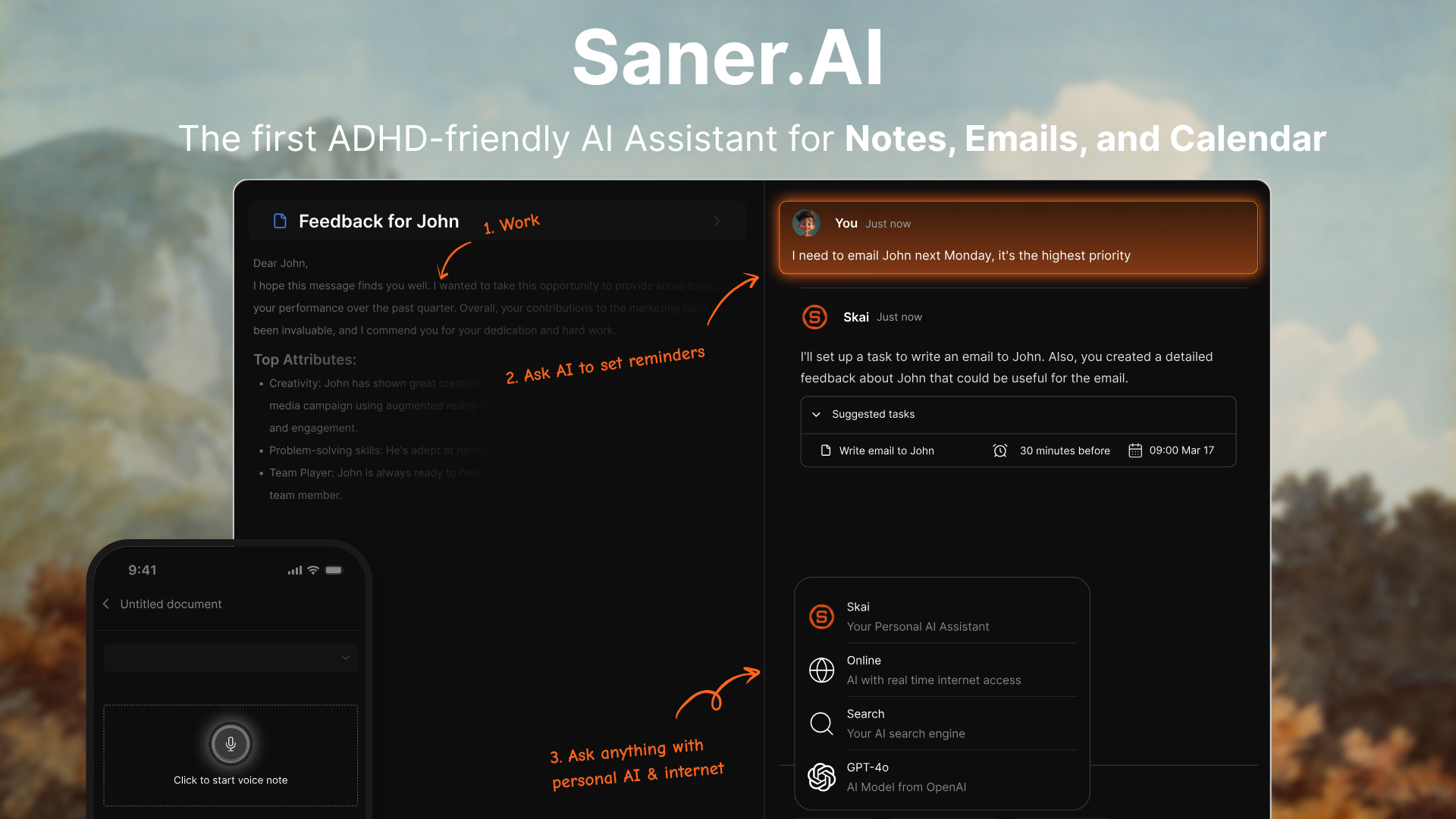
Where Saner.ai comes out ahead:
- Proactive planning built around your day, not your errands. Proactive daily planning surfaces what you forgot before it costs you. Muse mostly waits to be asked.
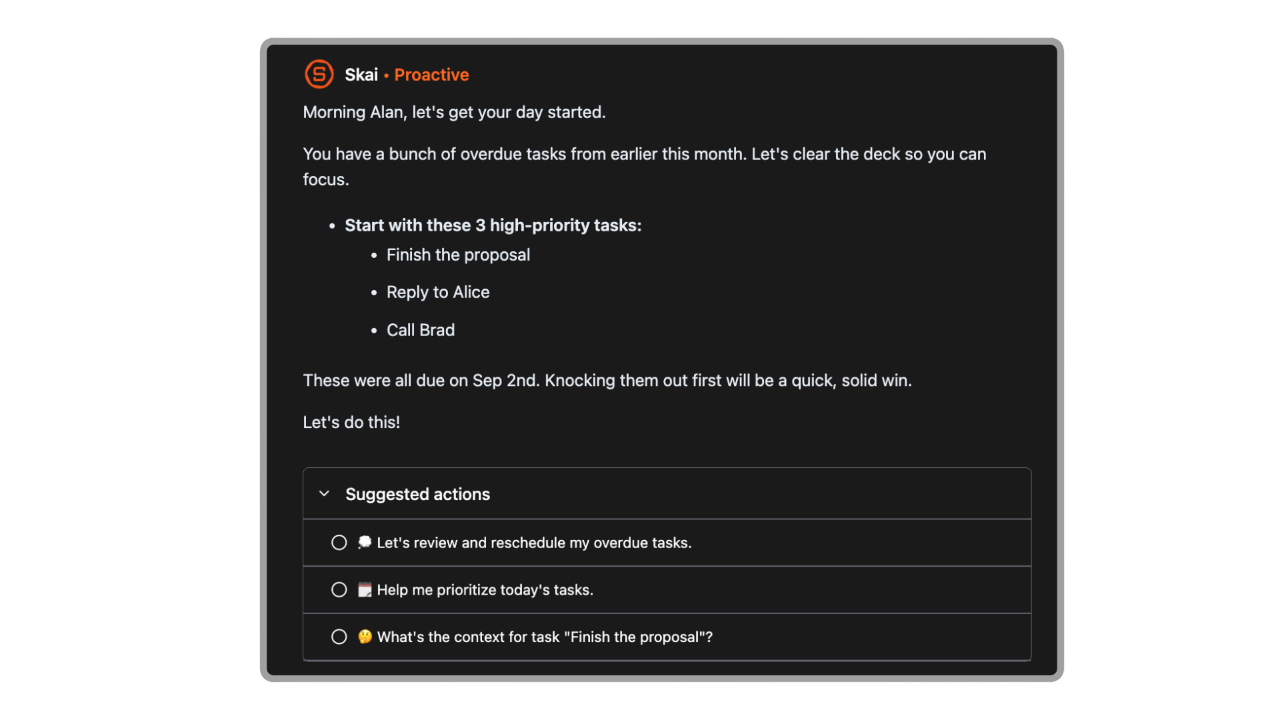
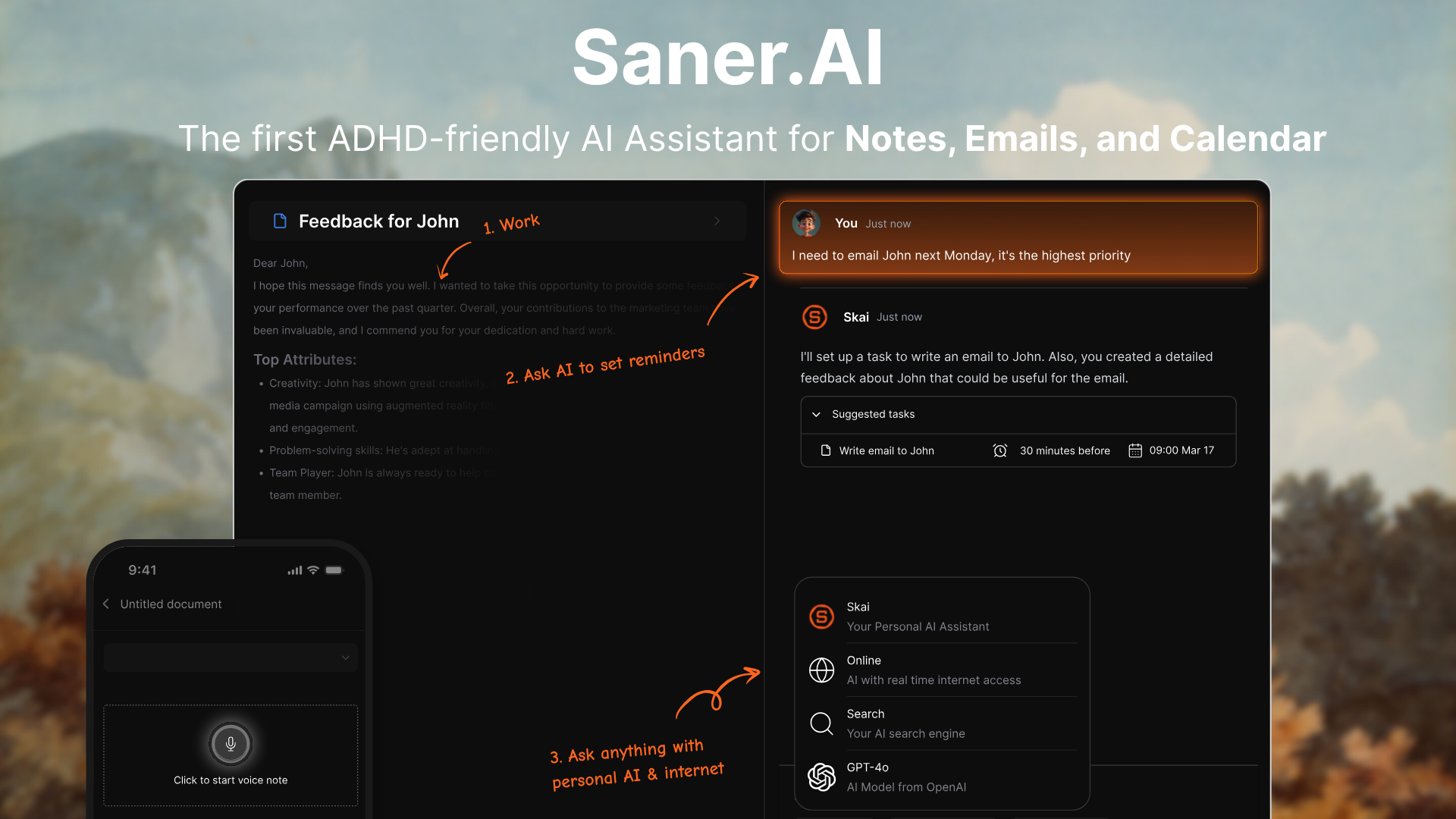
- Designed for ADHD brains on purpose. Distraction-free capture, voice-to-text, automatic tagging and folder creation, one flow instead of eleven tabs. Muse's design target is "billions of people," which in practice means nobody in particular.
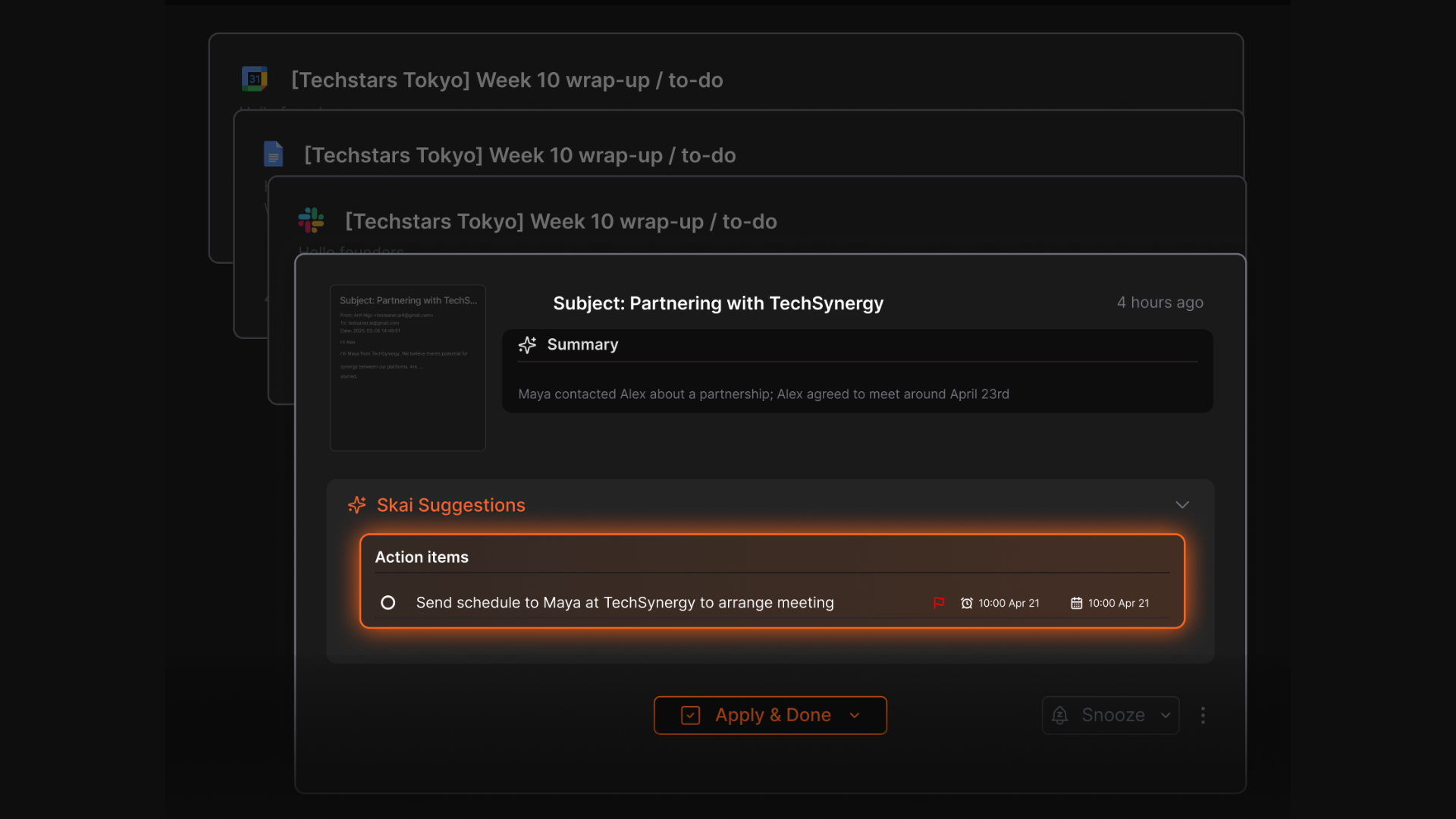
- Task management that connects to your context. Tasks pull automatically from emails, docs, and notes, then get broken into steps with reminders.
- It works anywhere. Muse is US-only with no announced rollout. Saner.ai doesn't care where you live.
- Flat, knowable pricing. $8 or $16 a month with defined limits. You know your bill before you get it.
- No card to try it. Muse demands a payment method before you touch the free tier. Saner.ai doesn't.
- A real knowledge layer. Notes, PDFs, docs, meeting transcripts, all semantically searchable across your own material. Muse has nothing here at all.
- A far smaller blast radius. Saner.ai reads your email, calendar, Drive, and Slack. It doesn't hold your logins to third-party sites, doesn't drive a browser as you do, and doesn't spend money. Fewer things can go badly wrong
Where Muse wins:
- It takes actions on the open web. Booking, buying, filling forms. Saner.ai doesn't do any of that.
- WhatsApp access with nothing to install
- The security architecture for handling credentials is more sophisticated than anything a smaller team could build.
Who should pick which:
Pick Muse if your unsolved problem is transactional. Things you have to go do, in browsers that take twenty minutes each.
Pick Saner.ai if your unsolved problem is cognitive. Information you've collected and can't retrieve, commitments you've made and can't track, days that start without a plan.
OpenClaw
The open-source answer, and the one Muse is most obviously modeled on. Built by Peter Steinberger, stewarded by a non-profit foundation, MIT-licensed, no paid version. It runs on your own hardware, connects to WhatsApp, Telegram, Slack, Discord, iMessage, and more, and it can write its own new skills as it goes. You bring your own API key.
The power is real and so is the risk. There are documented horror stories of OpenClaw deleting a user's Gmail inbox and wrecking calendars, which is what happens when you give an agent root on your actual machine with no Sentinel equivalent between it and the world.
Best for: Developers and technically confident users who want full control, no subscription, and local data.
Poke
From Interaction in Palo Alto, later acquired by Cognition. Poke lives entirely in your messaging app: iMessage, WhatsApp, SMS, or Telegram. It connects to Gmail, calendar, Notion, Oura, Strava, GitHub, and Granola, and it's proactive rather than reactive, sending morning briefings and flagging urgent email without being asked.
The onboarding is strange. A "bouncer" persona negotiates your subscription price with you while roasting you, which means two people can pay wildly different amounts for the same product.
Best for: People who live in iMessage and want proactive email triage without opening another app. Public tiers now run free, $19/month Pro, and $199/month Ultra.
Tomo AI
Tomo is a goal-accountability assistant that lives in your texts. You tell it what you want to do. It remembers, checks in, texts you first, and builds small custom trackers for whatever you're working on.
"Tomo feels as tho I'm just texting a funny, helpful friend"
– reviews
Tomo Pro runs $19.99/month or $119.99/year. The free tier got noticeably worse in 2026, and long-time users noticed.
"you're limited to only 75 messages a day"
– reviews
Best for: Habit-building, fitness, and personal goals. It's a coach, not a workspace. It won't manage your documents or your professional context.
Muse AI Comparison Table
| Muse | Saner.ai | OpenClaw | Poke | Tomo AI | |
|---|---|---|---|---|---|
| Starting paid price | $20/mo | $8/mo | Free (bring your own API key) | $19/mo | $19.99/mo |
| Free plan | Yes, card required | Yes, no card | Fully free, self-hosted | Yes | Yes, 75 msgs/day |
| Availability | US only | Global | Global | Global | Global |
| Notes / knowledge base | No | Yes | Local files only | Partial (Notion) | No |
| Email triage | Yes | Yes | Yes | Yes | Basic |
| Calendar management | Yes | Yes | Yes | Yes | Yes |
| Real-world actions (buying, booking) | Yes | No | Yes | Partial | No |
| Proactive daily plan | Partial | Yes | Yes | Yes | Yes |
| Multiple email accounts | Yes | Yes | Yes | Yes | Limited |
| Setup difficulty | None | None | High | None | None |
| ADHD-specific design | No | Yes | No | No | Partial |
| Trains on your data by default | Yes (opt-out) | No | Depends on your model | Opt-out | Check policy |
| Billing model | Token-metered | Flat | Your API costs | Flat | Flat |
| Data location | Meta's cloud | Encrypted servers | Your machine | Vendor cloud | Vendor cloud |
Final Verdict
What Muse does well: the engineering, and it isn't a close call. The per-user VM. Sentinel separated from the agent at the system level. Approval prompts rendered outside the chat where an injected agent can't reach them. Single-use cards scoped to one merchant and one amount. The speed is a real differentiator. The multi-account email search solves something nobody else does.
What it doesn't do well: it aims at tasks your existing apps already handle. Booking an Airbnb through a wall of text is worse than opening Airbnb. Buying from Amazon through an agent that quotes you a delivery date six days late is worse than opening Amazon. And the reliability problems weren't discovered by critics after launch. They were reported internally before it, by employees including a CTO who couldn't stay logged in.
The trust question won't resolve on technical merit. Meta can publish every architecture diagram it wants. The company settled with the FTC over privacy misrepresentation in 2011, paid $5 billion in 2019 over eight separate violations, was charged with violating that order in 2023, and settled for up to $17.1 billion last month. People aren't reasoning about eBPF egress tracking when they hesitate. They're reasoning about pattern.
But the deeper issue is category fit. Muse is built for errands. Most people's real daily friction isn't an unbooked flight. It's the note they can't find, the email they forgot to answer, and the eleven open tabs standing between them and one uninterrupted hour. An agent that can buy you a jacket doesn't touch any of it.
If that's your version of the problem, use something built for it. Try Saner.ai free, no credit card, before you commit to anything.
Stay on top of your work and life effortlessly
FAQ
Is Muse free?
There's a permanent free tier with roughly 100 million weekly tokens, but Meta requires a payment card at signup. Paid plans are Power at $20/month (500 million weekly tokens) and Maximum at $100/month (3 billion). Meta expects most users to stay free.
Is Muse safe to use?
The architecture is the strongest consumer agent design shipped so far: an isolated VM per user, a separate permission authority, credentials the agent can never read, one-time virtual cards, and human approval on every purchase. That said, Reuters reported internal testers finding an agent that bypassed guardrails and exposed private iCloud photos before launch.
Can I use Muse outside the US?
No. It's US-only, 18 and over, on iOS, Android, muse.ai, and WhatsApp. Meta hasn't announced an international timeline or a waitlist.
Does Muse train on my data?
By default, yes. You can opt out in settings. Meta says Muse conversations and VM data are not shared with its advertising systems.
Can Muse manage my notes and documents?
Not in any meaningful way. There's no note-taking layer, no personal knowledge base, and no semantic search across your own writing. For that, you'd want an all in 1 AI assistant built around notes, email, and calendar together, which is the gap Saner.ai and similar tools fill.
How does Muse compare to OpenClaw?
Same shape of product, opposite trade-offs. OpenClaw is free, open source, and runs on your own hardware with your own API key, which means total control and no vendor holding your data. It also means you're the one responsible when it deletes something. Muse is managed, sandboxed, and gated by Sentinel, which is safer out of the box and gives Meta custody of everything.
What's the best Muse alternative for ADHD or knowledge work?
Saner.ai is the closest fit if your bottleneck is information rather than errands. Global availability, free to start with no card, $8 to $16 a month flat, notes and email and tasks and calendar in one searchable place, and a daily plan every morning. It won't book your flights. It will make sure you remember to.
Stay on top of your work and life effortlessly