ADHD Task Paralysis: 9 Steps and 1 Tool to Overcome it


Imagine staring at a blank document for three hours. The cursor blinks, steady and patient, while your brain spins at a million miles an hour. You want to type. You need to type. Yet, your hands feel like they are made of lead, and you cannot bring yourself to press a single key. You are trapped in your own mind, watching the day disappear while doing absolutely nothing.
There is a name for this.
This is ADHD task paralysis. It feels like an internal engine that stalls right when you step on the gas. I know how exhausting it is to fight your own nervous system every day.
If you want to understand why this happens and find a few ways to finally break the freeze, let us look at how it works.
1. What is ADHD Paralysis?

ADHD task paralysis is what happens when your brain locks up in front of a task you know you need to do, and simply cannot begin. It is a neurochemical problem, driven by differences in dopamine regulation and impaired activation networks in the brain. The intention is there. The ability to act on it is what gets disrupted. That distinction matters.
3 types of ADHD Paralysis
Knowing what type of ADHD paralysis you're experiencing can be really useful. Once you know, you can identify why it's happening and find the best way to get moving again
1. Task paralysis

This happens when you look at a project and your brain treats it like an impossible puzzle. The sheer volume of steps to start makes you freeze, so you end up doing nothing at all. You want to get moving, but the mental friction of picking a starting point is physically exhausting.
Example: You need to clean the kitchen, but instead of washing the first dish, you stare at the counter for twenty minutes feeling completely overwhelmed, then sit down and scroll on your phone.
2. Mental paralysis

This is the state where your mind is running a thousand miles an hour, flooded with ideas, thoughts, and competing priorities. It feels like a massive traffic jam in your head where every single thought is honking its horn for attention. Because your brain cannot sort out which thought matters most, it just crashes.
Example: You sit down to write a work presentation, but your brain starts racing with five different ways to start, things you forgot to buy at the grocery store, and a random conversation from three years ago, leaving you staring blankly at a blinking cursor.
"I just kind of default and blank out." — Zack, diagnosed with ADHD in high school, describing how he avoids small self-care tasks like making appointments
3. Emotional paralysis

This type is triggered by a sudden surge of heavy feelings like anxiety, fear of failure, or deep shame. When an obligation feels emotionally risky, your nervous system interprets that stress as an actual physical threat. Your body drops into a literal freeze state to protect itself from the discomfort.
Example: You open an email from your boss that says "we need to talk," and you instantly feel so terrified of what it might contain that you close your laptop, pull a blanket over your head, and cannot bring yourself to look at your screen for the rest of the afternoon.
Why does ADHD Paralysis happen?
When we encounter uncomfortable situations or feel threatened, our brains kick into gear with a flight, fight, or freeze reaction.
If your dopamine levels are low or out of balance, you might find it tough to feel motivated.
9 Signs you're experiencing task paralysis
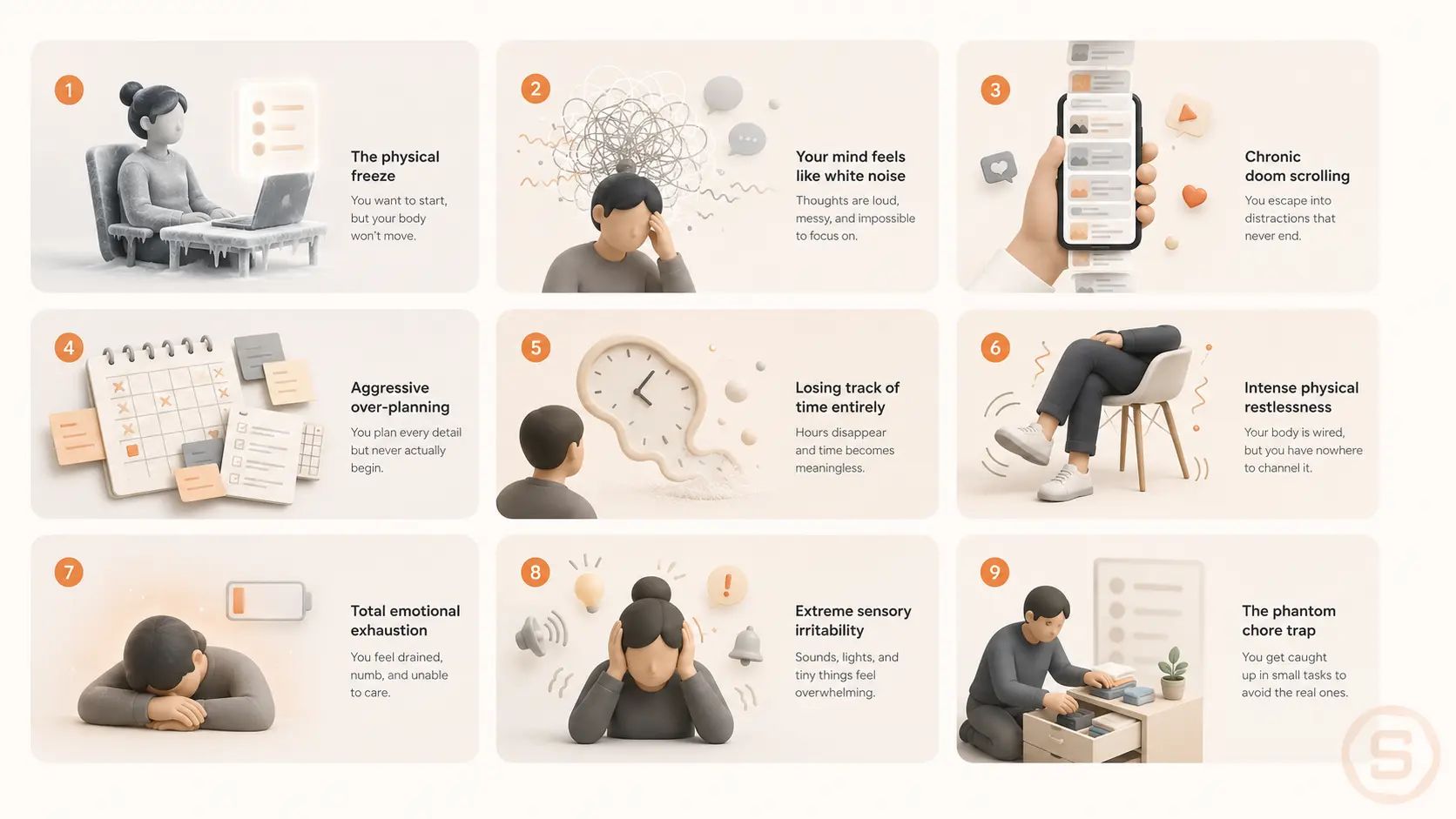
1. The physical freeze
You sit on the edge of your bed or stare at your laptop screen, completely unable to force your limbs to move. Your brain is screaming at you to stand up and start the project, but your body feels like it weighs a thousand pounds. This physical stuckness usually happens when a task triggers deep overwhelm, locking your nervous system into a literal freeze response.
2. Your mind feels like white noise
When you think about your to-do list, your brain does not just get distracted; it goes entirely blank or fills with static. You cannot find a starting point because every single step feels equally massive and urgent. This cognitive fog is a direct response to perfectionism, where the fear of doing a task incorrectly makes your brain shut down the thinking process entirely to protect you.
3. Chronic doom scrolling
You find yourself looking at social media for three hours without actually registering anything you are reading. You are not having fun or relaxing; you are desperately using a low-effort stimulus to escape the crushing anxiety of an unstarted chore. This is avoidant coping, and it is almost always triggered by the underlying shame of procrastination.
4. Aggressive over-planning
You spend two hours organizing your digital calendar, color-coding sticky notes, and writing out a granular, beautiful fifteen-step checklist. Then, the moment the schedule is finished, you close your laptop and walk away without doing a single piece of real work. Micro-planning gives you a temporary hit of control, but it is just a sophisticated mask for execution dread.
5. Losing track of time entirely
You look at the clock, and it is noon, then you blink, and it is four in the afternoon, but you cannot account for where those hours went. You did not sleep, you did not complete a project, and you did not leave your chair. Time blindness gets significantly worse during a paralysis episode because your brain loses its grip on linear time while trying to process anxiety.
6. Intense physical restlessness
Your body is buzzing with anxious energy, so you pace around your apartment, clean a completely spotless counter, or fiddle with objects on your desk. You want to be productive, but you channel that drive into random, low-stakes movements instead of the one specific project you actually need to finish. This happens because the main task feels too emotionally threatening to approach.
7. Total emotional exhaustion
You feel completely wiped out and ready for bed, even though you have not accomplished a single thing all morning. The mental friction of fighting your own brain for hours takes an immense physical toll. Running an internal argument about why you should start working burns just as much energy as doing the actual work.
8. Extreme sensory irritability
Sudden noises, bright overhead lights, or a tight clothing tag feel suddenly unbearable and make you snap. Your tolerance for small discomforts drops to zero because your brain is already maxed out from handling task anxiety. When you are deeply stuck, minor environmental distractions feel like a physical assault on your senses.
9. The phantom chore trap
You suddenly decide that you absolutely must defrost the freezer or organize your old tax documents from five years ago before you can write a simple email. You select a difficult, irrelevant task to convince yourself that you are not being lazy. This is productive procrastination, and it triggers when the primary task carries a heavy fear of failure.
How to break ADHD task paralysis:
If you are staring at a completely blank document or a pile of laundry, you already know that "just starting" does not work. Your brain is stuck. To break the freeze, you have to target the specific type of block you are experiencing.
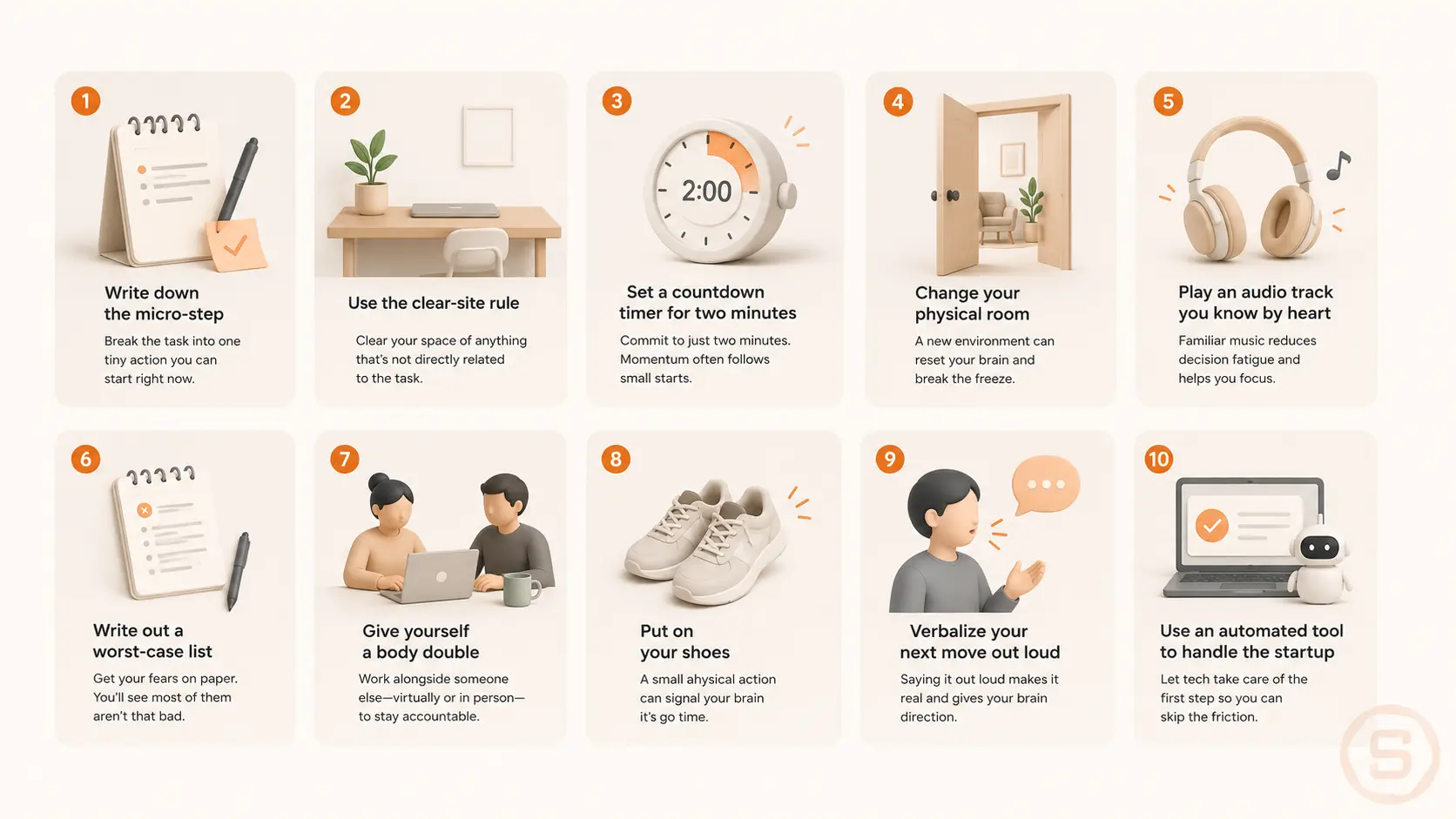
1. Write down the micro-step
Cognitive paralysis happens when a project feels like a massive, shapeless wall. Do not write down "clean the kitchen" on your list. Write "put three forks in the dishwasher." If you need to write a report, your first step is simply opening the software and typing the title. Reducing the cognitive load to a single, absurdly small action tricks your brain past the initial gate.
2. Use the clear-site rule
An invisible task does not exist to an ADHD brain, but a massive pile of random papers causes instant mental shutdown. Pick up the physical items related to your task and hide everything else inside a drawer. If you are working on a computer, close every single browser tab except the one you need right now.
3. Set a countdown timer for two minutes
When you feel overwhelmed by how long a task will take, tell yourself you only have to do it for 120 seconds. Set a physical timer on your desk. When the alarm goes off, you have full permission to stop and walk away. Most of the time, the friction disappears once you are already moving.
4. Change your physical room
Emotional paralysis often ties itself to the exact chair or desk where you have been feeling stuck. If you have spent two hours doomscrolling on your couch feeling guilty, move to the kitchen floor or a corner of your bedroom. A new physical perspective resets the emotional dread attached to the space.
5. Play an audio track you know by heart
Silence allows your brain to generate its own distracting thoughts, while new music requires too much focus. Put on a movie soundtrack or an album you have heard a hundred times. The predictable rhythm occupies the background tracking of your mind, which stops the emotional spiral and lets you focus on what is in front of you.
6. Write out a worst-case list
Fear of failure can freeze you in place before you even begin. Take a piece of paper and write out the absolute worst outcome of doing the task poorly. Usually, the reality is just a messy first draft or an awkward email reply. Seeing the actual stakes on paper takes away their power.
7. Give yourself a body double
Action-based paralysis often melts away when someone else is simply in the room. Ask a friend to sit on your couch while you organize your closet, or join an online video room where other people are working silently. You do not need to interact with them; their presence acts as a physical anchor to keep you grounded.
8. Put on your shoes
It sounds strange, but staying in slippers or bare feet signals to your brain that you are in rest mode. Lacing up a pair of sneakers changes your physical posture and creates a psychological shift toward movement. It is a quick physical cue that tells your body it is time to do something.
9. Verbalize your next move out loud
When your brain is looping in circles, speak your next physical action out loud to the empty room. Say, "I am walking over to the desk, and I am picking up the blue pen." Hearing the instruction fills your audio processing channel and cuts through the internal static that keeps you frozen.
10. Use an automated tool to handle the startup
The hardest part of any task is organizing the chaos in your head before you can begin. Instead of staring at a blank page trying to figure out where to start, you can offload that heavy lifting. Letting an app map out the steps for you can provide the exact spark you need to get moving.
An AI tool designed for task-frozen brains
What is it?
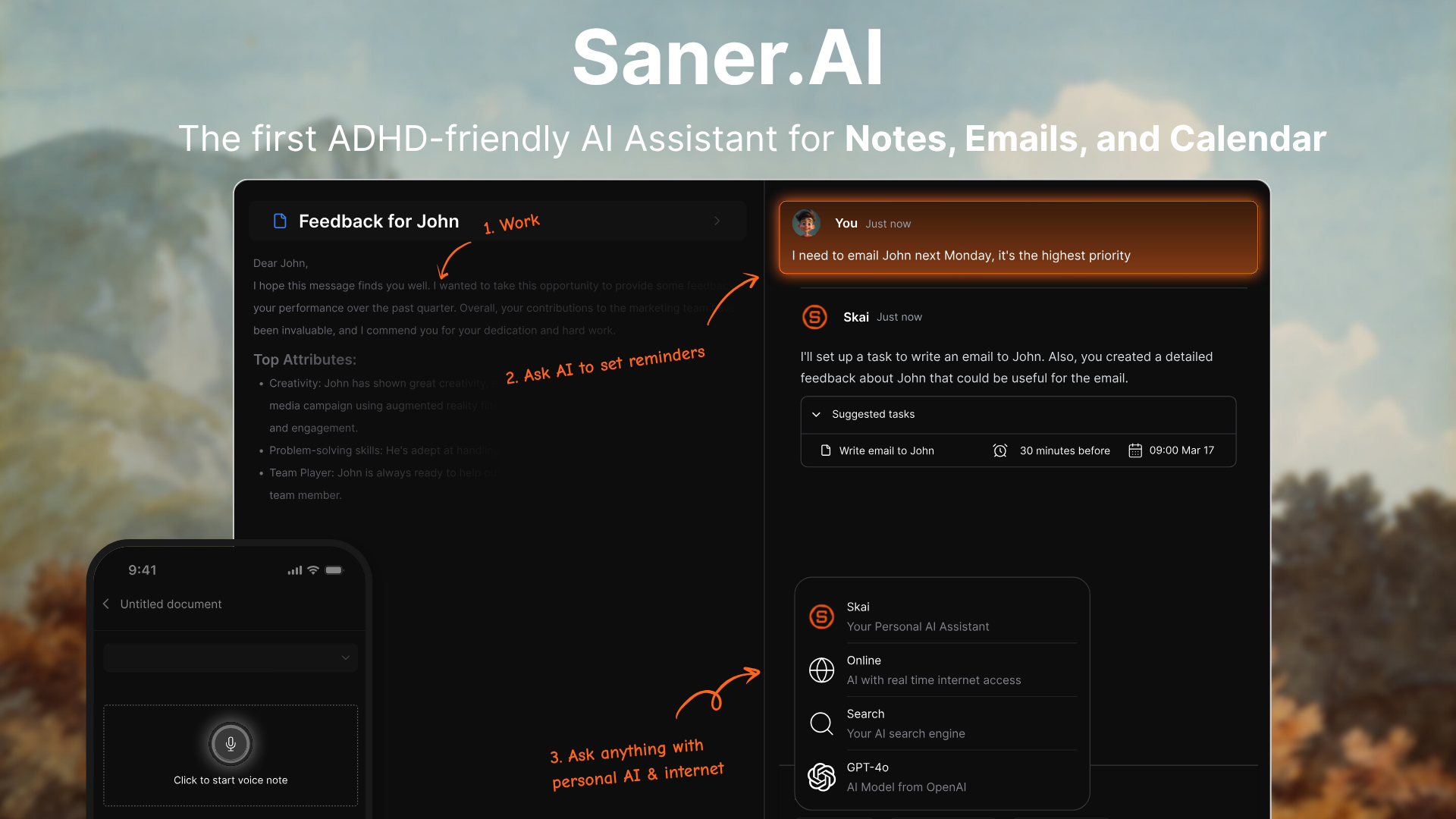
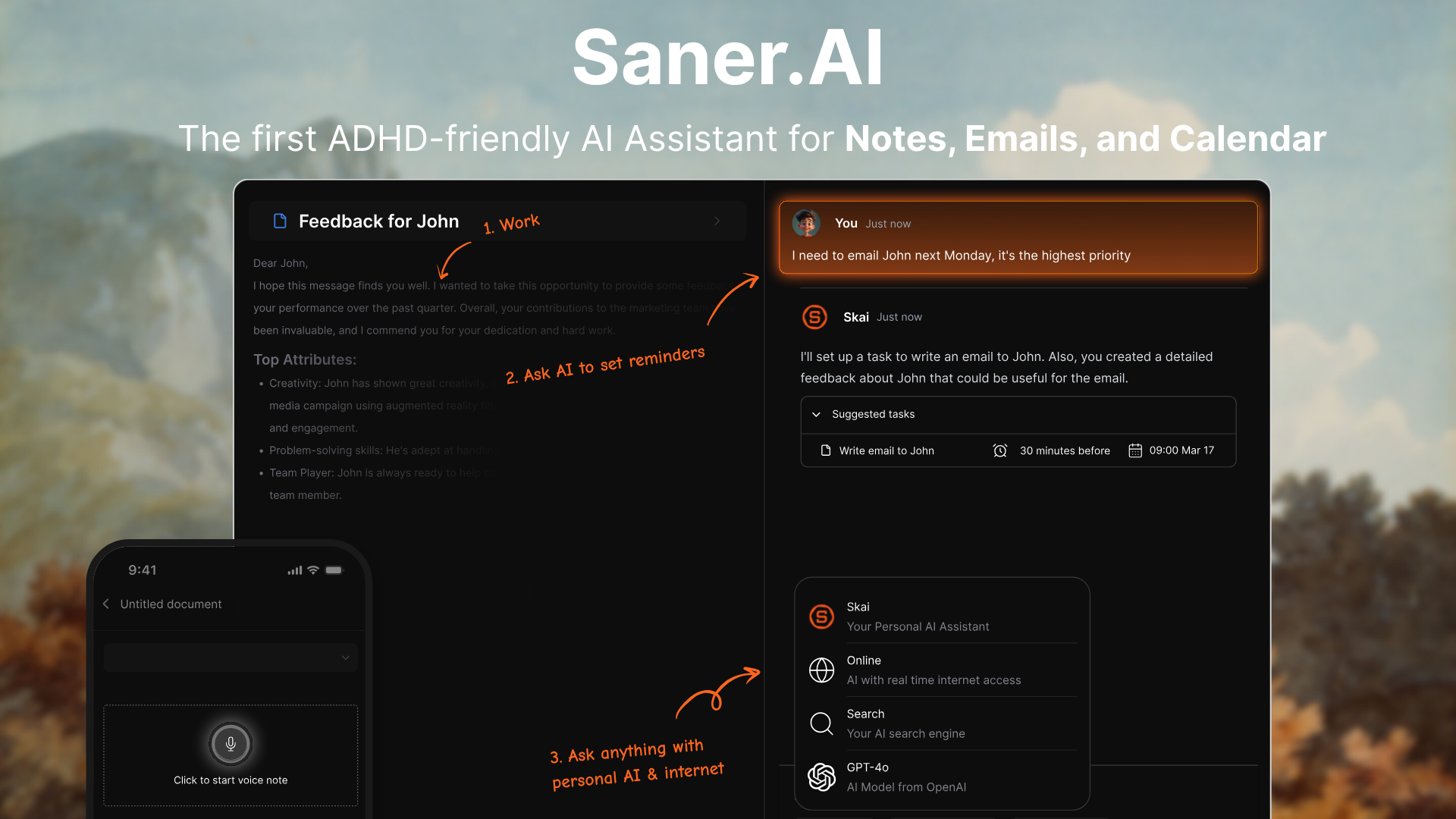
When you experience ADHD task paralysis, the simple act of organizing a schedule can cause you to freeze completely. Saner.AI resolves this state by removing manual cataloging entirely, allowing you to record unstructured brain dumps while its internal assistant automatically tags, links, and builds an actionable timeline for your day.
Key features
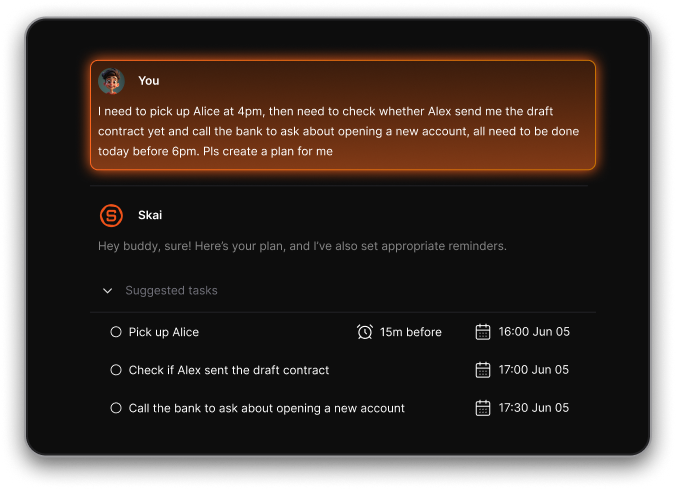
- Brain dump to task creation
This feature targets choice paralysis by letting you record messy thoughts through voice or text without forcing you to pick folders or assign tags upfront. I tried speaking into the mobile app when my mind felt too cluttered to write, and the system instantly pulled out tasks without making me make decisions.
"Skai (the AI) instantly parses it into a clean to-do list, suggests realistic due dates if I don't specify, and asks for confirmation on timings. One tap, and everything's added to my tasks." — Apple App Store Review
- Automated task breakdown
I tested this tool on a major cleaning checklist that felt too large to face, and the AI separated the project into clear daily milestones.
"The user interface is very intuitive, and I've appreciated being able to give my feedback and see the responsiveness of the developers to my suggestions for improvement." — Verified Review
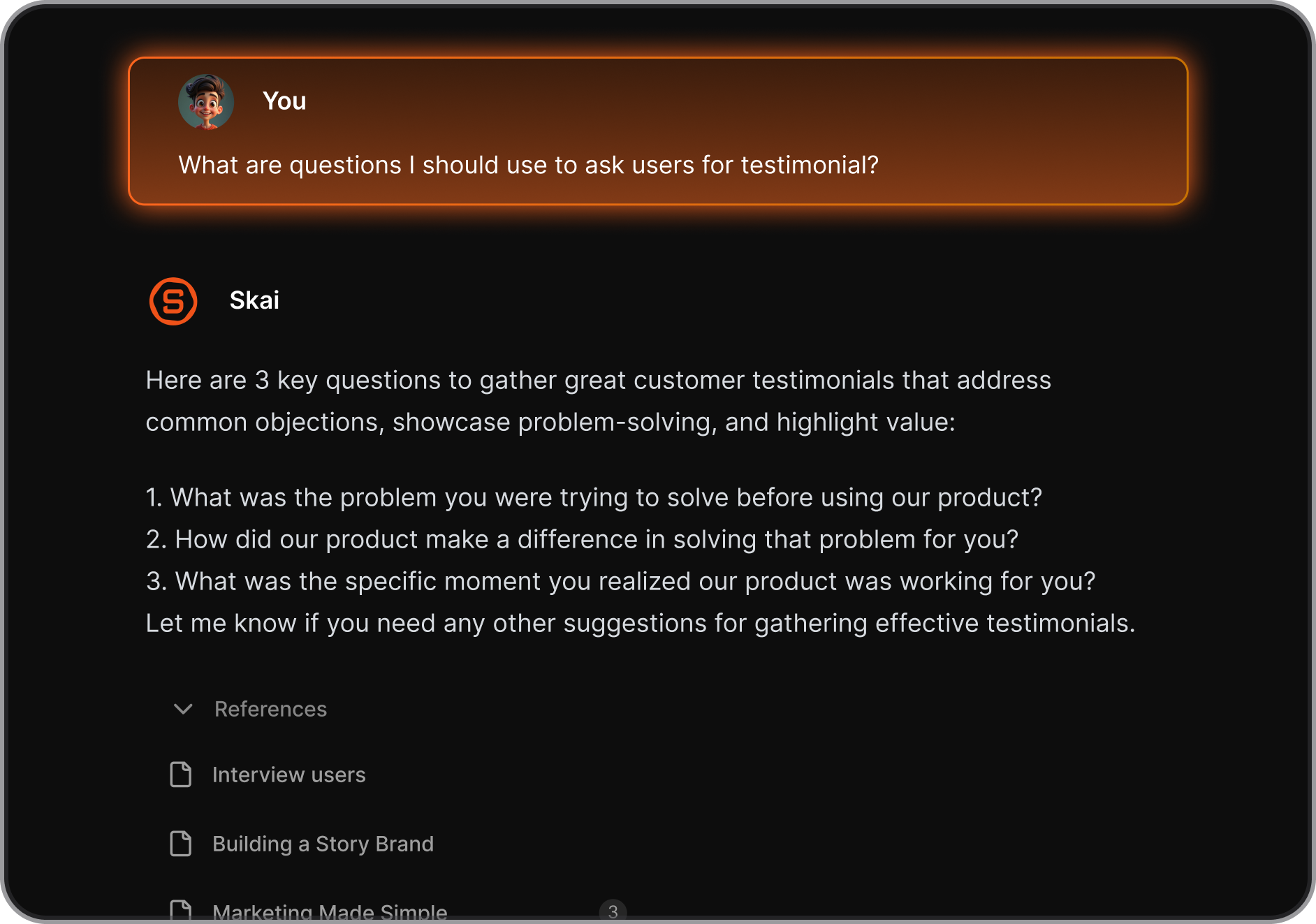
- Smart AI Chat: I can tell it things like “remind me to follow up on client X” or “add writing time Thursday,” and it just does it
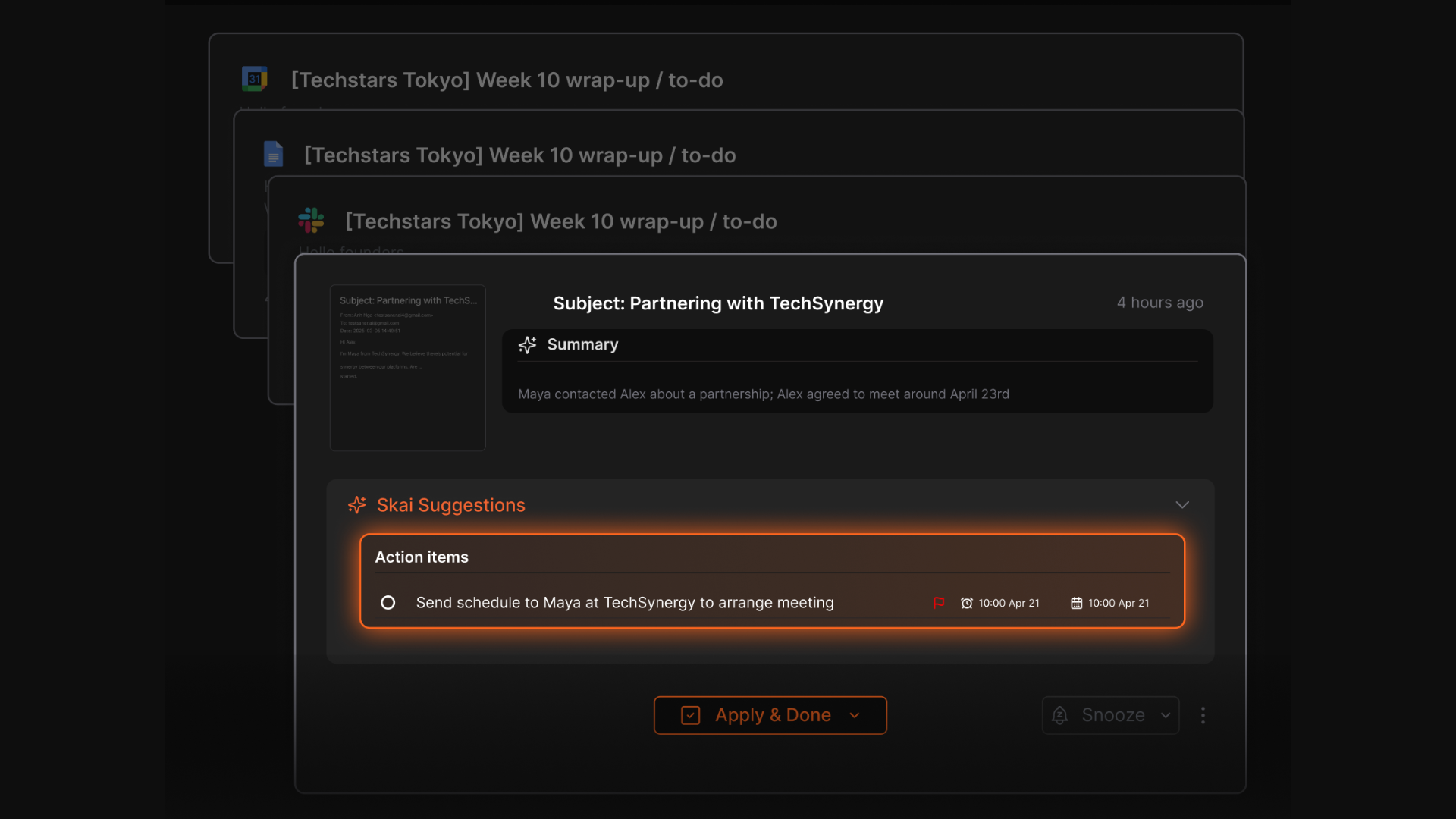
- Calendar & Email Sync: Pulls tasks straight from emails and calendar events, so nothing slips through
- All-in-One Workspace: Notes, tasks, calendar, and reminders live in one place - no app hopping
Pros
- The brain-dump feature is what helps me most - I don’t have to think about structure, I just offload everything and let the AI handle it
- I like that it acts more like a sidekick than a tool - very low-friction and responsive
- It’s great that I can ask it to “plan my day” or “show me what I forgot” - perfect for those foggy moments
- I love that it auto-pulls action items from email - I don’t need to manually track follow-ups
Cons
- Not ideal for large teams or project timelines.
Pricing
- Free Plan ($0 per month): Includes basic semantic search tools, 100MB of total storage, and 30 AI messages every month.
- Starter Plan ($12 per month billed monthly): Includes priority customer support, 5GB of storage, cross-platform synchronization, and 30 AI messages every day.
- Starter Plan Annual ($8 per month billed annually): Includes the complete set of Starter features with a discount for paying for the full year upfront.
Who is it suitable for?
- ADHDers and neurodivergent folks who get stuck trying to figure out where to start
- Anyone who wants to stop juggling 5 different productivity tools
- People who benefit from structure but hate creating it manually
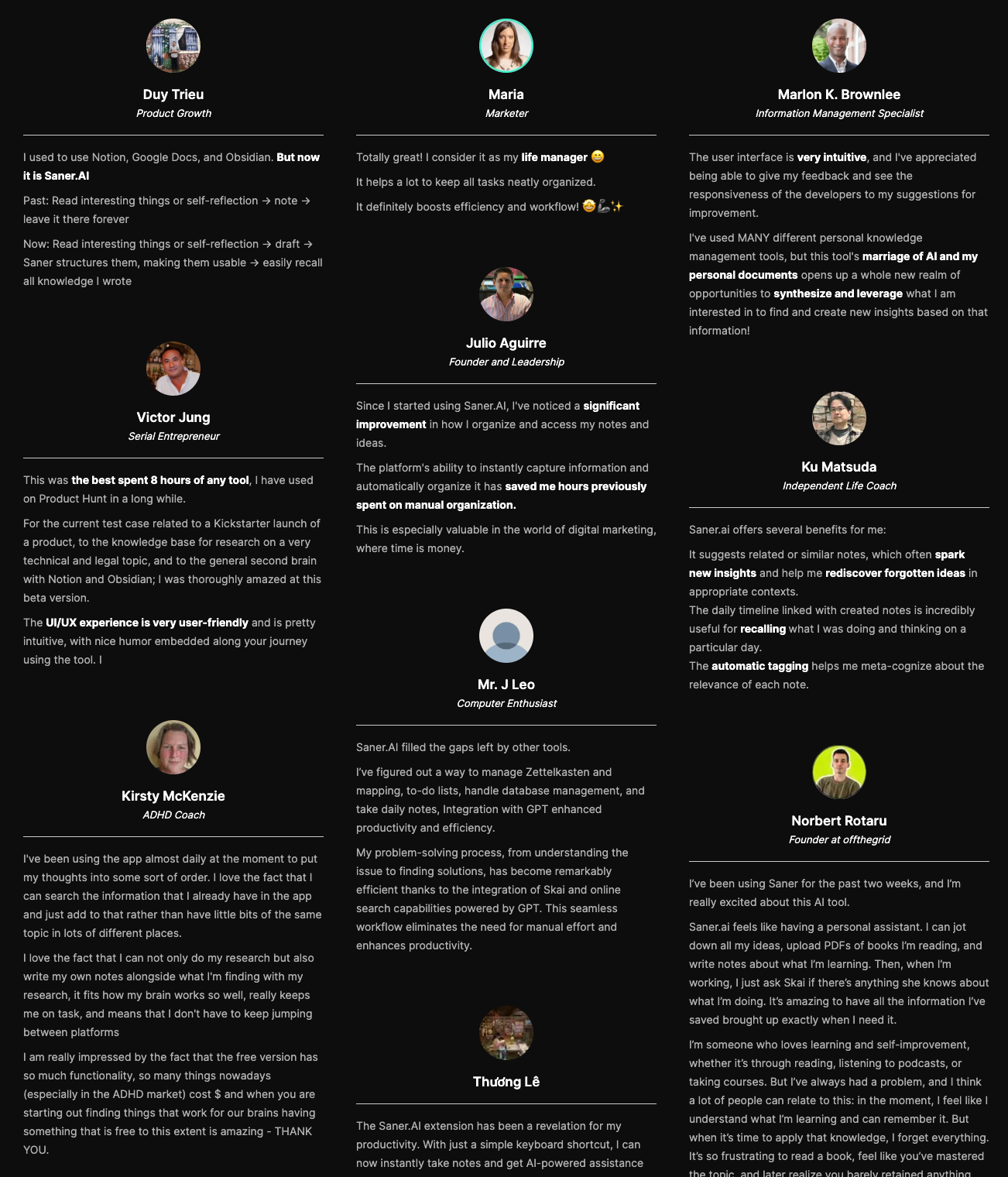
Saner.AI review
"I've used MANY different personal knowledge management tools, but this tool's marriage of AI and my personal documents opens up a whole new realm of opportunities to synthesize and leverage what I am interested in to find and create new insights based on that information!" — Verified Review
How to start using it?
- Just head to saner.ai, sign up for free, connect your email and calendar, and start brain-dumping.
- Let the AI take it from there.
The AI Assistant that helps you overcome the overwhelm
Conclusion
Living with ADHD means your brain sometimes locks you out of the very tasks you want to do. It is exhausting to sit there, staring at a screen or a pile of laundry, screaming at yourself to just move, while your body refuses to cooperate.
If you are struggling with this right now, please know you are not lazy, and you are not failing. Your nervous system is just overwhelmed. You do not have to fight this paralysis with raw willpower alone, because willpower usually runs out when ADHD kicks in.
It is completely fine to start small, like telling yourself you will only open a document or move one single object. Sometimes, having the right system to catch your thoughts before they turn into an overwhelming mess makes a massive difference.
If you want a calm, gentle space to organize your mind without the usual digital clutter that triggers distraction, Saner.AI can help. It is designed to act as a quiet second brain, holding your notes and tasks so you can breathe, step away from the overwhelm, and move forward at your own pace.
Stay on top of your work and life
Frequently Asked Questions
1. Is task paralysis real?
Task paralysis is a documented executive dysfunction issue, not an excuse. When you have ADHD, your brain struggles to regulate dopamine, which is the chemical you need to initiate action.
Instead of just starting a project, your brain treats a growing to-do list like an actual physical threat. You end up stuck in a fight-or-flight freeze response, staring at a screen or a messy room, completely unable to make your limbs move.
2. Is it just procrastination?
Procrastination is usually a choice to delay something boring in favor of something fun. Task paralysis feels like being trapped inside your own mind. You desperately want to do the work, you are fully aware of the consequences if you don't, and you might even be crying out of sheer frustration, but your brain simply refuses to click "start."
Procrastination relaxes you; paralysis actively exhausts you.
3. Can ADHD task paralysis get worse?
Yes, it tends to snowball when your mental load peaks.
If you are already dealing with burnout, lack of sleep, or sensory overload, your executive dysfunction takes a massive hit. The longer you stay stuck, the more shame and anxiety you build up. That emotional weight makes the next task feel even more terrifying, turning a bad afternoon into a weeks-long cycle of avoidance.
4. What triggers task paralysis?
The biggest trigger is vague or massive expectations. When a task doesn't have a clear, microscopic first step, an ADHD brain cannot figure out where to begin. Other common triggers include having too many options, fear of making a mistake, or feeling perceived by other people. Even a tiny, unexpected change in your schedule can derail your brain enough to cause a total system freeze.
5. Why does a long to-do list make me freeze?
An ADHD brain struggles to prioritize information efficiently. When you look at a list of ten items, your brain processes all of them simultaneously with the exact same level of urgency. Buying milk feels just as massive and critical as filing your taxes. This sudden flood of data completely overloads your working memory, causing your brain to shut down to protect itself from the noise.
6. How do I break out of a freeze state?
You have to lower the barrier to entry until it feels ridiculously easy.
Do not try to clean the whole kitchen; just pick up one single fork. If you need to write a report, open a blank document and type one terrible sentence. The goal isn't to finish the job right then. It is simply to break the physical freeze and generate a tiny bit of momentum.
7. Why do I get stuck even when I want to do the task?
Desire alone does not create dopamine. Your brain lacks the chemical bridge required to turn an intention into a physical movement. You can be deeply passionate about a project or desperate to clean your room, but if your brain does not perceive an immediate, stimulating reward, the transmission stalls. It is a mechanical failure in your brain's signaling system, not a lack of willpower.
8. What is the difference between choice paralysis and task paralysis?
Choice paralysis happens before you decide, while task paralysis happens after.
Choice paralysis is the panic of having thirty different options and worrying you will pick the wrong one, like scrolling through a streaming app for an hour. Task paralysis occurs when you already know exactly what you need to do, but you cannot force your body to take action on that decision.
9. Can physical movement help with task paralysis?
Changing your physical environment can sometimes shock your brain out of a rut. If you are stuck on the couch, try wiggling just your toes, then your ankles, then your legs. Standing up to change the thermostat or grabbing a glass of water breaks the immediate physical loop. Moving your body to a different room changes your sensory input, which can reset your focus.
10. Is task paralysis a symptom of depression or ADHD?
It can be both, but the root cause feels different. In depression, you usually don't do the task because you lack the energy or simply don't care about the outcome. With ADHD, you care immensely, your brain is spinning at top speed, and you have the physical energy, but the cognitive gears aren't catching. The two conditions frequently co-exist and worsen each other.
11. How can I support a partner experiencing task paralysis?
Do not yell, lecture, or tell them to just do it. Shame only reinforces the mental freeze. Instead, offer to body double for them, which means sitting quietly in the room while they work. You can also help them break the very first step into a tiny, physical action. Asking "Can I help you open the laptop?" is infinitely better than saying "You need to start."
12. Does medication help with task paralysis?
Stimulant medication often helps by regulating dopamine levels, making it easier for your brain to initiate tasks. However, pills do not give you direction. If you take your medication while scrolling on your phone, you might just end up super-focused on social media for four hours. Medication handles the chemical side, but you still need structural routines to guide your focus.
13. Why does task paralysis cause physical fatigue?
Being stuck in a freeze state is an active stress response. Your brain is trapped in a loop of panic, guilt, and frustration, which keeps your nervous system on high alert. You are burning through mental energy just by thinking about what you should be doing. By the time you finally break the freeze, you feel like you just ran a marathon.
14. What is body doubling and does it work?
Body doubling is a strategy where you work on a task alongside another person. They do not need to help you with your work; their quiet presence simply acts as an anchor for your attention. Having another human in the space creates a subtle, supportive environmental pressure that helps ground an ADHD brain, making it much easier to initiate and sustain boring tasks.
15. Should I use rewards to motivate myself out of paralysis?
Traditional rewards rarely work because an ADHD brain wants the gratification immediately, not later. Instead of promising yourself a treat after an hour of work, bring the reward into the task itself. Listen to a favorite podcast only while folding laundry, or eat a piece of chocolate while opening your unread emails. Tie the stimulation directly to the friction.
Stay on top of your work and life
👉 You may like this post on how to improve Productivity for adults with ADHD