AI Assistant for ADHD: Finally, A Tool That Works the Way Your Brain Does

Quick Answer: What is the Best AI Assistant for ADHD right now?
Saner.AI combines notes, email, tasks, and calendar into one place where you can talk to it like a real assistant. It manages your notes, turns scattered thoughts into organized tasks, and auto-generates your morning plan, and proactive remind you of your day tasks without you having to ask.
- No folder systems to maintain
- No manual task entry
- No reminders you have to remember to set
Connect your information, and it starts working.
Most ADHD users say the moment it clicks is when they open the app in the morning and already know what to focus on.
1. Why Most Productivity Tools Make ADHD Harder, Not Easier
ADHD is not a motivation problem. It is a neurodevelopmental condition that affects executive function: the brain's capacity to plan ahead, prioritize, start tasks, hold information in working memory, and shift attention without losing the thread.
- The numbers are significant.
- The professional consequences are real.
Traditional productivity apps assume you already have executive function skills. Every task manager wants you to manually enter tasks. Every email tool wants you to sort, label, and archive. Every calendar app wants you to proactively block time. Each new system adds another thing to maintain, competing for cognitive bandwidth that is already stretched thin.
The result is a pattern most ADHD professionals know well: discover a new app, set it up during a hyperfocus burst, use it for a week, and watch the system quietly collapse. Not because you are undisciplined - because the tool was built for a brain that does not struggle with initiation, memory, and attention regulation the way yours does.
"The best AI assistant for ADHD is not the one with the most features. It is the one that asks the least of you to keep working."
2. The Five Executive Function Traps That Make Productivity So Hard

1. The "Wall of Awful": Email Avoidance
ADHD coach and educator Brendan Mahan, M.Ed., MS., coined the term "Wall of Awful" to describe the emotional barrier that builds around tasks tied to repeated failure or overwhelm. Per Mahan's own framework, the wall is built from bricks of failure, shame, disappointment, and rejection - and it grows every time a task triggers those emotions without resolution.
For many ADHD professionals, the inbox has become exactly that wall. Opening email to 80 unread messages - each one a micro-decision draining your cognitive resources - builds a real emotional association between email and dread. Eventually, just thinking about the inbox triggers avoidance. The longer you stay away, the worse it gets.
What the research says:
- A systematic review published in PMC/National Library of Medicine confirms that emotional avoidance in ADHD is not a character flaw but a documented consequence of impaired prefrontal-limbic communication - specifically, dysfunction in the striato-amygdalo-medial prefrontal cortical network that governs emotional regulation.
2. Working Memory Gaps: Tasks Fall Through the Cracks
ADHD significantly impairs working memory - the ability to hold information in mind while using it. When a client's email contains two action items, an ADHD brain frequently catches the first and loses the second before it can be written down.
What the research says:
- Research at Johns Hopkins University confirms that working memory function is compromised in adults with ADHD, leading to more errors of omission, more commission errors, and slower reaction times compared to controls.
- A 2024 study in Frontiers in Psychiatry further established that working memory deficits are among the most consistent impairments across ADHD presentations, affecting adults just as much as children.
This is not carelessness. It is a documented neurological limitation — and it means that every multi-part email is a trap.
3. Out of Sight, Out of Mind: Follow-Up Failure
ADHD operates on two time zones: now and not now. A follow-up you plan to send on Thursday effectively does not exist until Thursday arrives and something reminds you. The proposal you sent on Monday can disappear from your mental stack entirely by Friday.
Traditional reminder apps help, but they require you to set the reminder first — which is itself an executive function task. The follow-up you forgot to schedule a reminder for is the one that costs you the client.
What the research says:
- A comprehensive review on ADHD and time perception published in PMC/National Library of Medicine found consistent evidence that adults with ADHD show higher error rates in time estimation tasks and have significantly impaired future-oriented thinking - the exact cognitive function needed to remember future actions.
4. Context Switching Is More Expensive for ADHD Brains
Every professional pays a cognitive cost when switching between tasks. For ADHD brains, that cost is steeper and more disruptive.
What the research says:
- A peer-reviewed study in PMC found that adults with ADHD are significantly slower than controls when required to shift attentional sets between tasks, and this difficulty correlated directly with diagnostic ADHD severity.
- The same research confirmed that ADHD is specifically associated with a deficit in the flexible deployment of attention - meaning every context switch takes longer, burns more energy, and carries a higher risk of losing the original thread entirely.
Checking email "quickly" turns into 45 minutes because each new message triggers a new attentional shift. That is not a distraction. It is a neurological cost.
5. Decision Fatigue Arrives Earlier and Hits Harder
Every email demands a decision: respond now, respond later, delegate, archive, or delete. For ADHD professionals, each micro-decision costs more cognitive currency than it does for neurotypical peers.
What the research says:
- A meta-analysis of 55 fMRI studies published in PMC/National Library of Medicine found that individuals with ADHD show compensatory hyperactivation in somatomotor and visual brain regions during goal-directed tasks, consistent with the hypothesis that ADHD brains overrely on secondary systems to compensate for hypoactivation in the prefrontal cortex and anterior cingulate cortex — regions that directly govern decision-making and cognitive control.
- A separate peer-reviewed study in PMC on ADHD and workplace burnout confirmed that the constant cognitive effort required to navigate executive function deficits depletes energetic coping resources, a pattern directly linked to decision fatigue and emotional exhaustion across the workday.
By mid-morning, the decision budget is gone - and the remaining 40 emails sit untouched, building tomorrow's wall of awful.
None of these are personal failings. They are predictable consequences of how ADHD affects the brain's executive function systems. The solution is not to try harder. It is to reduce the demand on those systems - which is exactly what Saner.AI is designed to do.
How Saner.AI Helps ADHD Professionals
Saner.AI is an AI personal assistant built specifically for people with ADHD. It handles notes, email, tasks, and calendar in one place, and you interact with it through conversation - the same way you would text a real assistant.
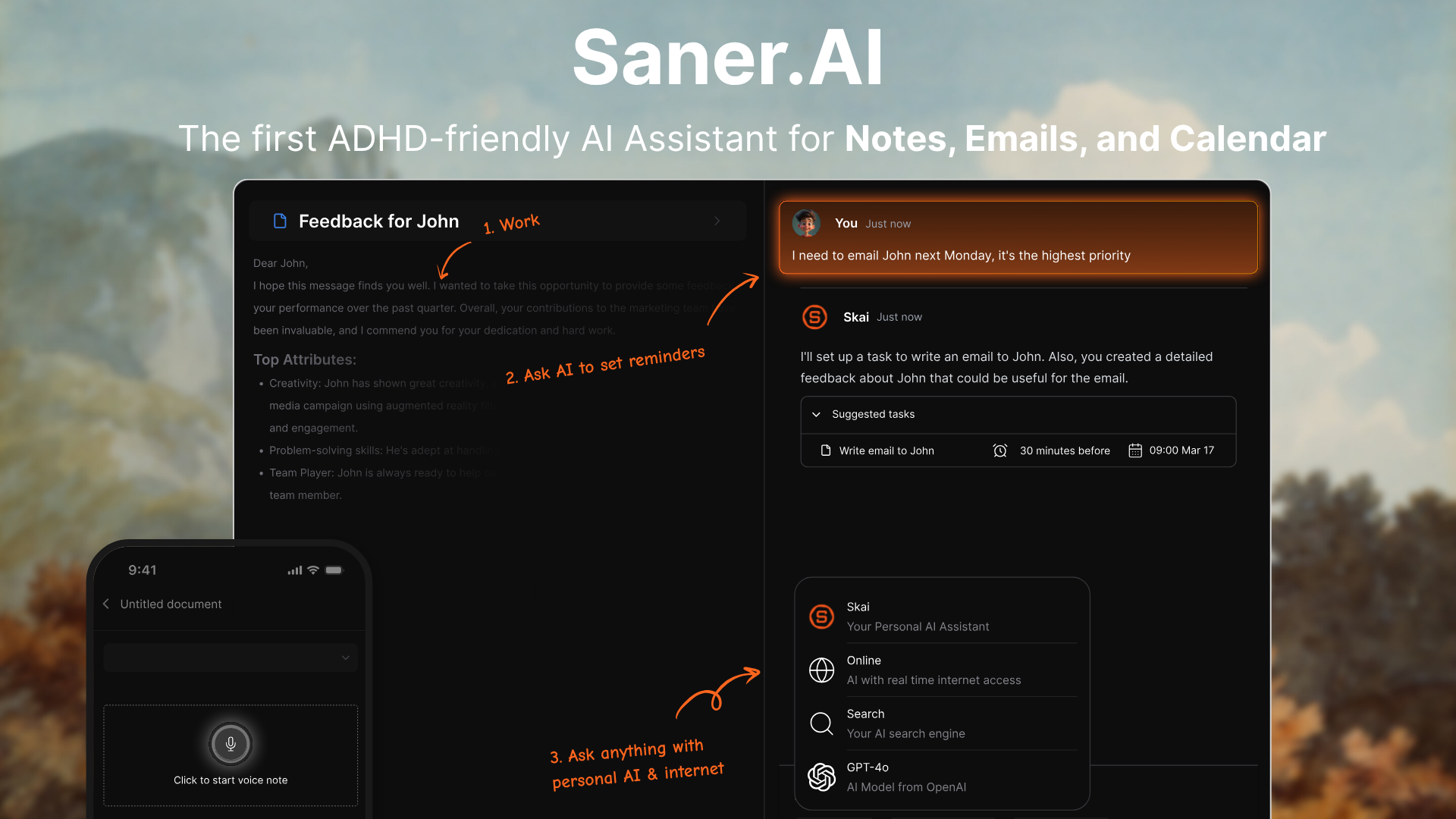
What makes it different is the architecture. Saner.AI does not require you to maintain a system. You do not enter tasks manually. You do not triage your inbox. You do not set reminders for things you might forget. The tool handles those layers automatically, which is the difference between software built for ADHD and software that merely markets to ADHD users.
Pricing: Free plan available. Starter plan at $8/month (billed annually) or $12/month billed monthly. Standard plan at $16/month (billed annually) or $20/month billed monthly.
Saner.AI Key Features
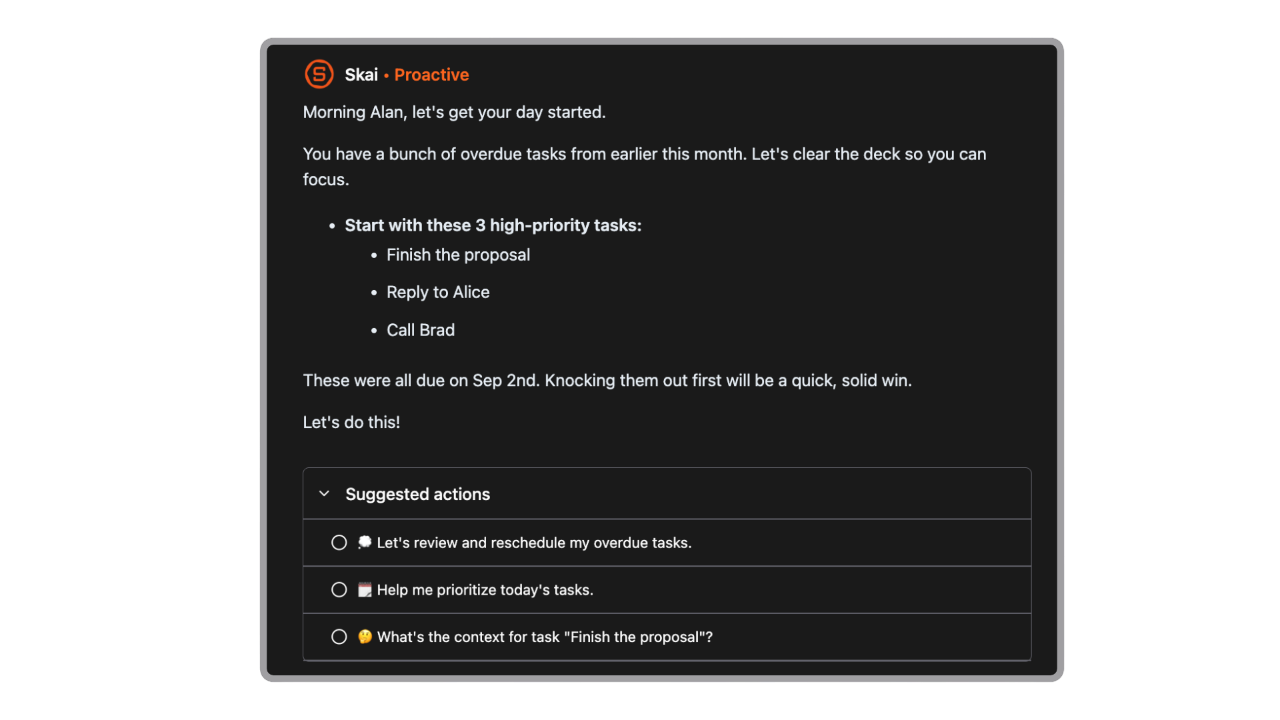
- Brain dump to tasks: Type, talk, or paste a wall of unstructured thoughts. Saner.AI pulls out the actual tasks. No formatting needed, no deciding where things go. You say what is on your mind and it handles the sorting.
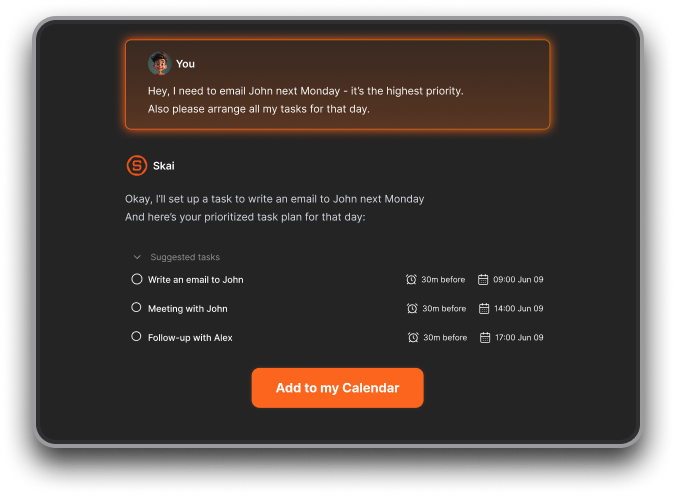
- Email triage and task extraction: Saner.AI reads your inbox and automatically extracts action items. Both items in that multi-request client email get captured - not just the first one. Nothing relies on working memory to survive.
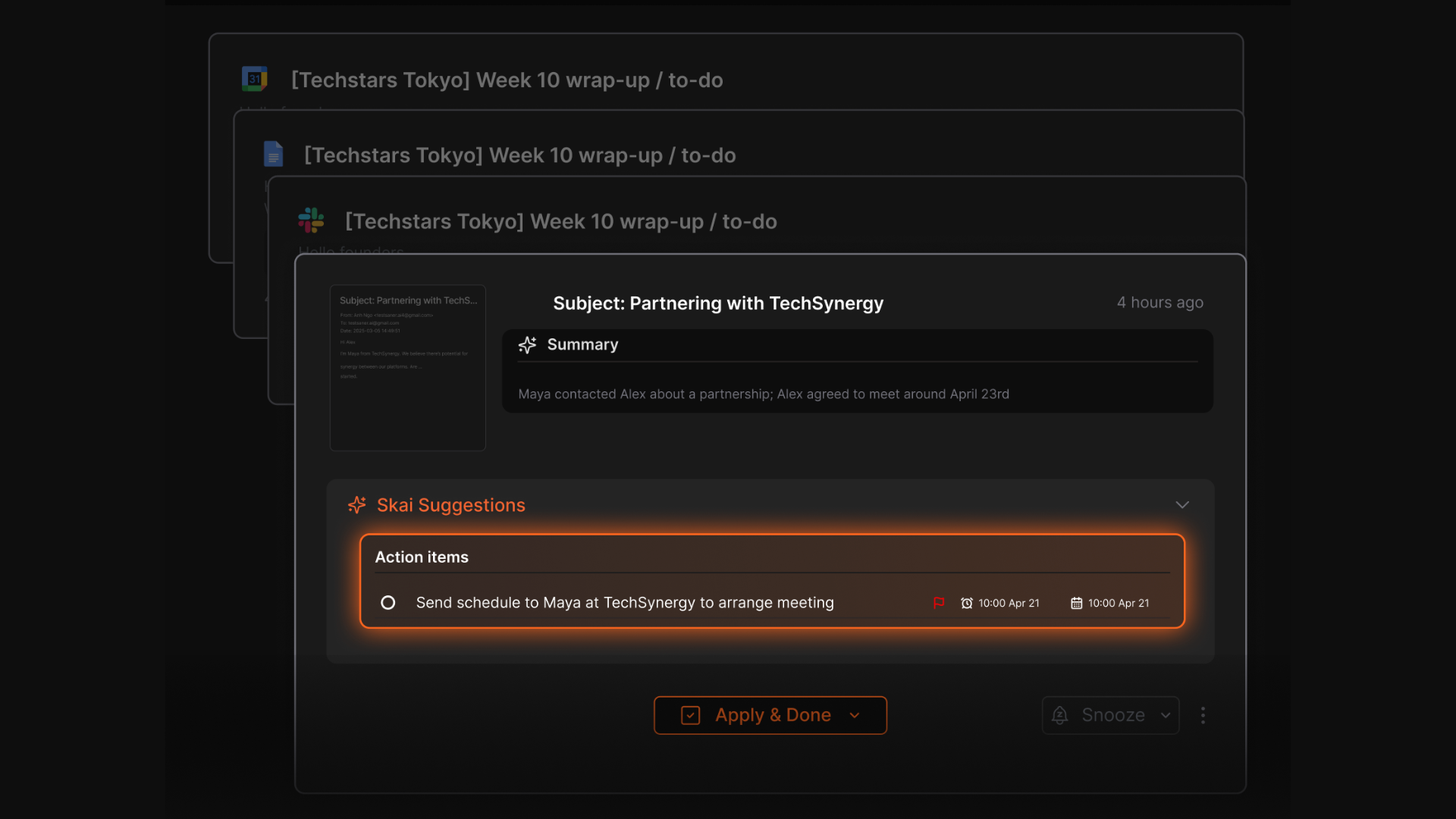
- Daily morning plan: Each morning, Saner.AI scans your inbox, notes, and calendar and gives you a prioritized view of the day. Instead of 45 minutes of inbox excavation, you open the app and see it already organized.
As a user describes it: "Staying on top of the constant flow of email and multiple calendars is challenging, and so far, Saner is the only AI-based tool that truly feels like a personal assistant."
- Semantic search across everything: You do not have to remember where something is or what you called it. Ask in natural language and Saner.AI finds it across your notes, emails, calendar, and files. This matters for ADHD because working memory - the exact thing you cannot rely on - is no longer the retrieval mechanism.
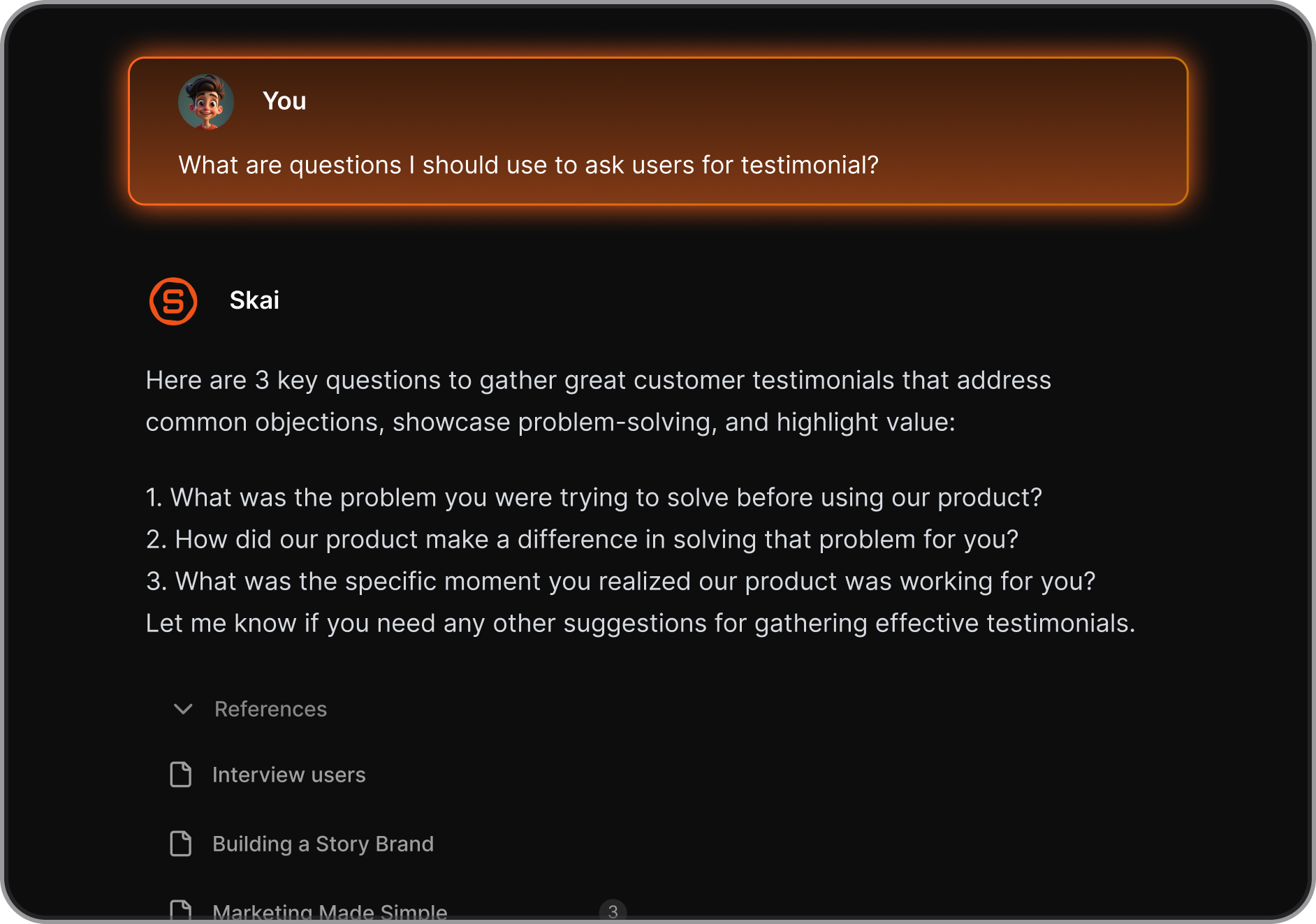
- Proactive check-ins Saner.AI surfaces what matters without waiting for you to ask. If something is time-sensitive or has been sitting too long, it flags it. No weekly review required to catch what slipped.
- Integrations: Gmail, Google Calendar, Google Drive, and Slack. Setup takes a few minutes. No configuration required after that.
A Day in the Life: Before and After Saner.AI
Before Saner.AI
| Time | What Happens |
|---|---|
| 8:00 AM | Open laptop. See 71 unread emails. Feel the weight. Close it. Make coffee instead. |
| 9:00 AM | Force back into inbox. Get pulled into one thread for 30 minutes. |
| 10:00 AM | Realize you have a meeting you forgot to prepare for. Scramble to find the original thread. |
| 12:30 PM | Notice a client email from three days ago you never replied to. Send a rushed apology. |
| 11:00 PM | In bed, suddenly remember a follow-up you were supposed to send last week. |
Result: Missed reply. Unprepared meeting. Forgotten follow-up. Guilt building.
After Saner.AI
| Time | What Happens |
|---|---|
| 8:00 AM | Open Saner.AI. Morning plan ready: 3 big tasks prioritized; 7 emails need attention; meeting notes context loaded. |
| 8:15 AM | Review and respond to the 7 emails. Reschedule overdue tasks. Done. |
| 8:30 AM | Scan the meeting prep. Walk in knowing what to discuss. |
| 9:00 AM | Start the work you were actually hired to do. |
| 5:00 PM | Day done. Nothing slipped. No guilt. |
Result: Nothing dropped. No shame spiral. Peaceful evening.
The total workload is identical. What changed is where the cognitive burden sits. You still make every real decision - the sorting, tracking, surfacing, and organizing happen before you open the app.
Why Saner.AI Works When Everything Else Has Failed
If you have ADHD, you have tried other systems. Bullet journals, Notion databases, Getting Things Done, Todoist, color-coded Trello boards. Each worked for a week. Each was eventually abandoned.
That is not a failure of willpower. It is a design failure.
Every one of those systems shares the same fatal assumption: that you will consistently perform the maintenance tasks required to keep them running. Enter your tasks. Review your weekly goals. Process your inbox to zero. For a brain with reliable executive function, that maintenance is mildly annoying but doable. For an ADHD brain, it is the exact bottleneck that causes the system to collapse.
Saner.AI is built differently:
- It does not require you to enter tasks - it extracts them from your notes, emails, and messy braindump
- It does not require maintenance - it reads everything you enter and prepares an optimal plan for you
- It does not require you to remember follow-ups - it tracks open threads without your involvement
- It does not require you to prepare for meetings - it compiles context for you
The system runs whether you engage with it every day or ignore it during a rough week. A tool that works on good days and bad days - without collapsing the moment ADHD makes consistency impossible - is a fundamentally different category of tool.
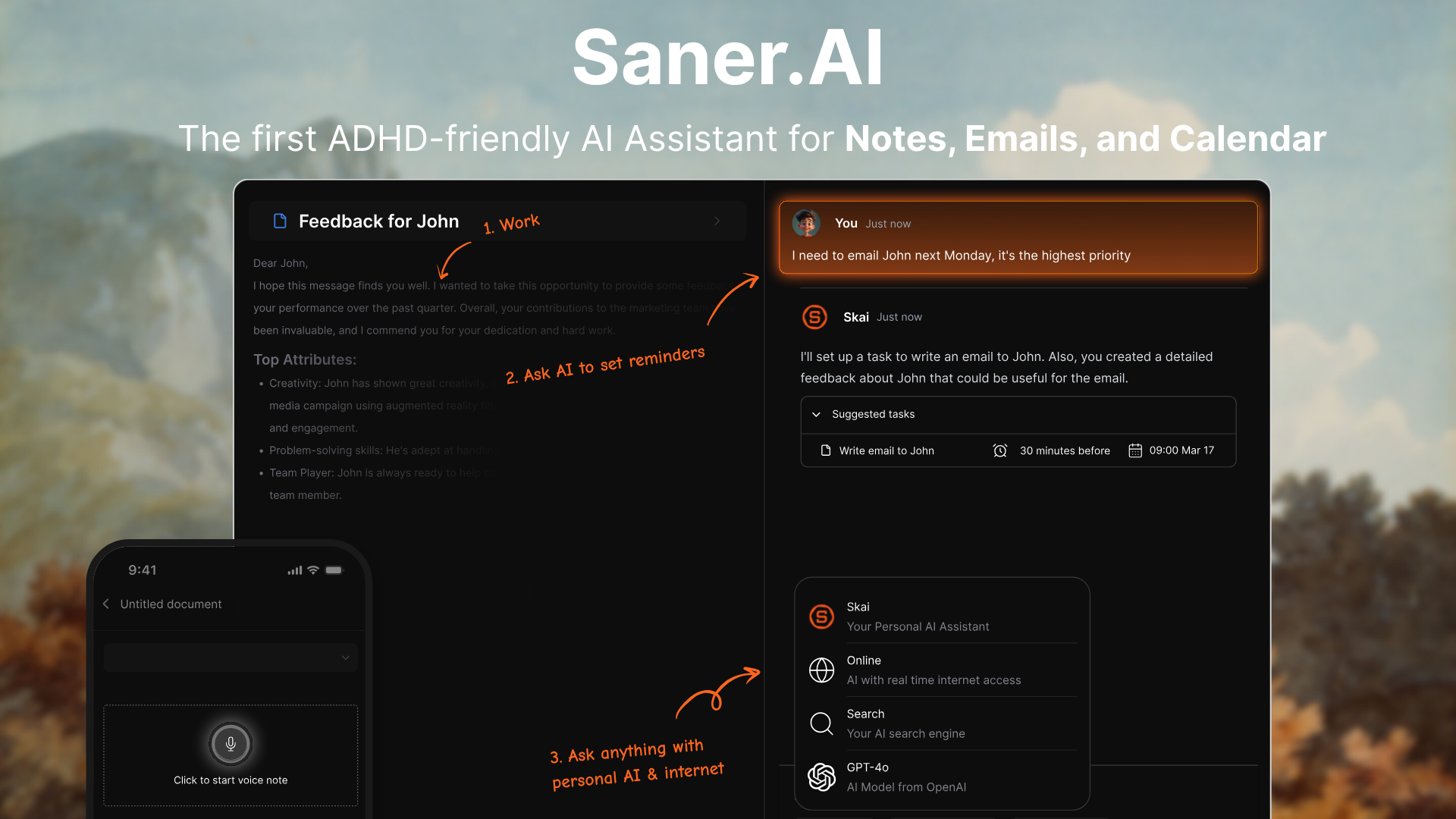
Stay on top of your work and life
The Real ROI: Hours Reclaimed, Relationships Preserved
For ADHD professionals, the return on an AI assistant is not just about time saved. It is about the cascading consequences that never happen - the client who does not lose trust, the colleague whose email does not go unanswered for a week, the shame spiral that does not start at 11pm when you remember what you forgot.
What You Reclaim
- 1–2 hours per day no longer spent excavating your inbox to figure out what actually needs attention - replaced by a morning plan that is already built
- Dropped tasks caught automatically - follow-ups tracked, open threads flagged, action items pulled from emails before they disappear from working memory
- The relationship cost of missed replies prevented - clients, colleagues, and managers who never have to wonder whether you saw their message
- The shame spiral interrupted - fewer "I cannot believe I forgot that" moments that compound into self-doubt and avoidance of the inbox entirely
- Cognitive load reduced before your day even starts - the sorting, organizing, and prioritizing are handled before you open the app
The ROI of Saner.AI
The WHO-backed Kessler study found that ADHD costs the average worker 35 days of lost annual work performance. Even recovering a fraction of that has measurable value:
- Hours lost to ADHD task avoidance and recovery: 5-6 per week
- Value of those hours at an average of $40/hr: $200-$240/week ~ $1000-$1200/month
- Revenue lost per missed follow-up: $500-$15,000 per occurrence
- Saner.AI cost: $8/month
- ROI: When you fully recover the lost hours, you get 125x to 150x return from the Saner.AI subscription
Another main point is the compounding cost of each dropped ball that does not happen. A missed follow-up does not just lose you one deal. It damages trust with a client who may not send another opportunity. A forgotten reply does not just delay a project. It feeds the internal story that you are unreliable - which makes the next email harder to open, which makes the wall of awful taller, which makes the next week harder.
For ADHD professionals, the emotional cost of dropped balls often exceeds the financial one. Saner.AI stops the cascade before it starts.
What You Cannot Put a Number On
The most valuable return is not on a spreadsheet. It is:
- Opening your inbox without dread
- Knowing that nothing important is silently slipping
- Finishing a workday without the low-grade anxiety of "what did I forget"
- Being able to do hyperfocus-worthy creative work because the administrative layer is already handled
That cognitive relief — the weight lifted from "what am I forgetting?" — is worth more than any hourly rate calculation. And unlike a human assistant, which costs thousands per month and requires management energy you may not have, Saner.AI runs quietly in the background at $8/month. No check-ins. No delegating. No worrying about whether it caught everything.
What Saner.AI Cannot Do Alone
Saner.AI handles the information and task layers, which are the heaviest executive-function drains for most ADHD professionals. But ADHD is broader than that, and a complete support system usually includes a few other things.
Body Doubling Apps (Focusmate, Flown)
Body doubling - working alongside another person - is one of the most well-documented ADHD productivity strategies. Apps like Focusmate, Flown pair you with an accountability partner via video for focused work sessions. Saner.AI handles the what (prioritizing your day). Body doubling handles the how (actually initiating and sustaining focus). Together, they address both planning and execution.
ADHD Coaching
A coach helps with patterns, environment design, and emotional regulation - the larger strategic layer that AI cannot address. Saner.AI handles the daily operational load. Coaching addresses the bigger picture.
Medication
For many ADHD professionals, medication is foundational and makes all other strategies more effective. Think of it this way: medication improves your executive function capacity. Saner.AI reduces the executive function demand. Both matter — and neither replaces the other.
The principle across all of these: Build your stack around tools that reduce demands on your brain, not tools that assume reliable executive function as a prerequisite.
How to Get Started (Under 5 Minutes, No Configuration)
- Sign up at saner.ai
- Import your notes or start talking to Saner
- Optionally connect to Google or Outlook
- That's it - Saner.AI starts scanning your data and learning your patterns
Your first morning plan appears the next day.
The free plan includes note search, task reminders, and calendar sync. Paid plans unlock full email triage, proactive AI check-ins, and unlimited AI requests.
If you have spent years trying productivity systems designed for a brain you do not have, Saner.AI is worth testing. Not because it is perfect - but because it is built around the actual problem: reducing what your brain has to hold, rather than adding more for it to manage.
Frequently Asked Questions
How does an AI assistant actually help with ADHD? ADHD impairs executive function: planning, prioritizing, initiating, and working memory. Most productivity tools require those skills to use. Saner.AI reduces the demand on those systems by automating the organizational layer — pulling tasks from emails and notes, tracking follow-ups, and building your daily plan automatically. Less to manage manually means more cognitive space for the work that actually matters.
Will I keep using this, or will it become another abandoned app? The reason to be cautiously optimistic is structural. Saner.AI does not require daily engagement to work. It reads your email and builds your morning plan whether or not you open the app. There is no daily ritual to maintain. On bad weeks when ADHD makes consistency impossible, the system keeps running.
Is Saner.AI a replacement for ADHD treatment? No. It is a tool, not a treatment. It handles the information and task management layer, which is one specific dimension of the ADHD challenge. Emotional regulation, time perception, relationship dynamics, and the patterns that ADHD coaching addresses are outside what software can do. Think of Saner.AI as an accommodation — like noise-canceling headphones — that reduces friction in one area so you have more capacity for everything else.
How much setup does it need? Very little. Connect your data and Saner.AI starts working within a few hours. No rules to configure, no folder structures to build, no templates to maintain. It learns from your existing patterns automatically.
What does it cost? The free plan is available indefinitely. The Starter plan is $12/month (billed monthly) or $8/month (billed annually with early user discount). The Standard plan is $20/month (billed monthly) or $16/month (billed annually).
Key Research Sources Used in This Article
- CHADD — General Prevalence of ADHD in Adults (CDC data, 2024)
- Kessler et al. — Prevalence and Effects of Adult ADHD on Work Performance, Harvard/WHO (PubMed)
- WHO World Mental Health Survey Initiative — ADHD Workplace Productivity (PMC)
- Johns Hopkins — Working Memory Deficits in Adults with ADHD
- Frontiers in Psychiatry — Working Memory and Inhibitory Control in ADHD (PMC)
- PMC — Emotional Dysregulation and ADHD: prefrontal-limbic network dysfunction
- PMC — Evidence of Emotion Dysregulation as a Core Symptom of Adult ADHD (systematic review)
- PMC — Selective Impairment of Attentional Set Shifting in Adult ADHD
- PMC — Time Perception in Adult ADHD: A Decade Review
- PMC — Meta-analysis of 55 fMRI Studies: ADHD hyperactivation and hypoactivation patterns during goal-directed tasks
- PMC — Executive Function Deficits, ADHD, and Depletion of Cognitive Coping Resources at Work