How to Manage Tasks with ADHD: Systems, Strategies and Tools (2026)


I stared at my monitor, paralyzed by the three separate, color-coded project templates I had spent all morning creating. My desk was a clean slate, my coffee was fresh, and my workspace was perfectly optimized for the massive task ahead. Then I noticed an old sticky note on the corner of my monitor, peeled it off, and spent the next forty-five minutes researching the exact adhesive chemical formulas used by 3M. By the time I came to, it was past noon, my coffee was cold, and I had not written a single word of my report.
Productivity advice built for neurotypical brains doesn't work on an ADHD brain. The standard advice tells you to break tasks down, use a planner, and eliminate distractions, but it ignores how our minds actually function.
If you are tired of staring at a massive to-do list while your brain locks up, here is how to manage tasks when you have ADHD.
Why is task management so hard with ADHD?
Task management fails with ADHD because your brain handles executive function differently. A baseline shortage of dopamine makes starting uninteresting tasks feel physically painful. Your working memory constantly drops information, meaning out of sight really is out of mind. When you add time blindness, which distorts how long a project takes, regular to-do lists just become reminders of what you are avoiding.
How does the ADHD brain approach tasks differently?
The reason you struggle with tasks probably has nothing to do with effort or intelligence. It has everything to do with how your brain is wired, specifically, how it handles three things: executive function, dopamine, and prioritisation.
1. Executive function: your brain's internal project manager

Executive function is the cognitive process that organises thoughts and activities, prioritises tasks, manages time efficiently, and makes decisions.
Think of it as the part of your brain that decides what to do next, in what order, and for how long.
For people with ADHD, daily tasks that may seem routine to others (staying organised, meeting deadlines, focusing, and regulating emotions) can present real challenges. This is often due to executive dysfunction, which impairs the ability to plan, organise, and execute tasks. At the heart of this is the prefrontal cortex, a brain region crucial for these higher-order cognitive processes.
2. Dopamine: why boring tasks feel impossible

ADHD brains are interest-driven rather than importance-driven. A neurotypical brain might get motivated because a task is important, a work deadline triggers a sense of duty, which releases enough dopamine to start working.
In the ADHD brain, dopamine is only released by the process of being interested.
This is why the classic advice, "just write a to-do list and work through it" so often fails. Importance alone doesn't generate the neurological momentum needed to begin.
3. The prioritisation problem

There's a third layer that makes task management harder still. Many adults with ADHD experience what researchers describe as an "interest-based nervous system", meaning boring or unclear tasks feel impossible to start, even when you genuinely want to do them.
The result is a task list where everything feels equally urgent or equally invisible; there's no reliable internal signal for this first, then that.
The key motivators that drive ADHD engagement are interest, urgency, novelty, competition, and passion, reframing motivation as a nervous system response rather than a willpower issue.
Understanding this changes everything. It means that the goal of ADHD-friendly task management isn't to try harder. It's to design your environment and systems so that the right tasks become interesting, urgent, or novel enough for your brain to actually engage with them.
Dr. Russell Barkley, clinical professor of psychiatry and one of the world's leading ADHD researchers, frames it this way in Taking Charge of Adult ADHD: ADHD is "a fundamental deficiency in self-regulation generally and executive functioning specifically — the ability to look toward the future and to control one's behaviour based on that foresight."
ADHD-friendly task management strategies that actually work
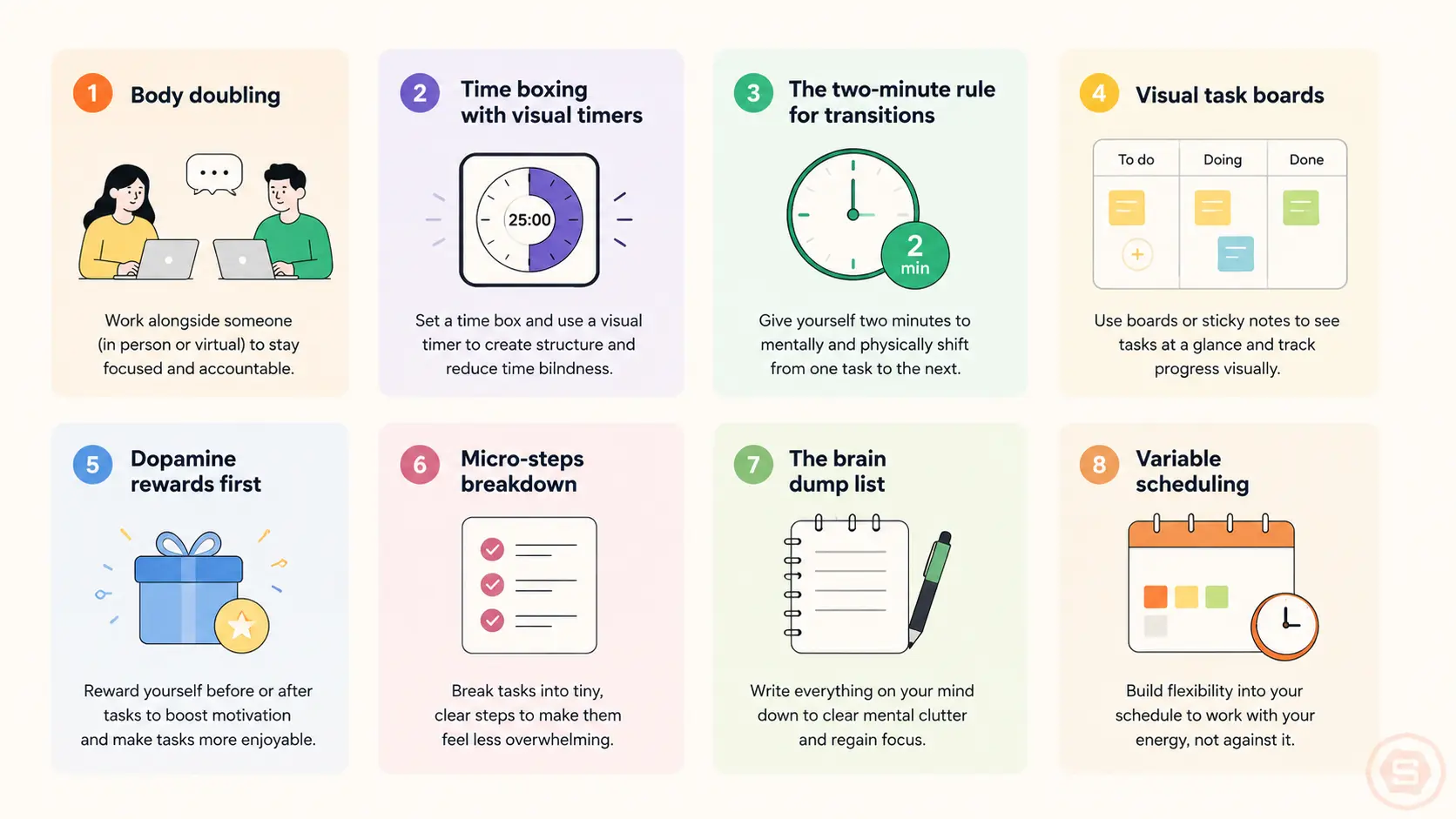
1. Body doubling
You sit in a room or join a video call with someone else who is also working. You do not even have to work on the same thing. The other person can fold laundry while you write a report.
An ADHD brain struggles to start tasks because of low dopamine. Having another human being in the space creates a gentle accountability that keeps your brain anchored. It reduces the urge to drift away or find a distraction because the presence of another person normalizes the act of staying on task.
2. Time boxing with visual timers
Instead of telling yourself to work until a project is finished, you set a physical timer for twenty minutes. You agree to work only until the timer runs out.
The concept of time is often abstract when you have ADHD. A classic clock face showing a shrinking red wedge makes time visible. It changes a vague, overwhelming obligation into a short sprint with a clear endpoint. You can tolerate almost any task if you can see that it only lasts for fifteen more minutes.
3. The two-minute rule for transitions
If an item takes less than two minutes, you do it immediately. If it takes longer, you only commit to doing the first two minutes of it. You open the document and write one sentence, or you pick up two pieces of clothing from the floor.
The hardest part of task management with ADHD is the transition from doing nothing to doing something. Momentum is everything. By shrinking the expectation down to a tiny two-minute window, you lower the barrier to entry. Once you break the initial paralysis and start moving, your brain often decides it is easier to just keep going.
4. Visual task boards
You map out your chores or projects using physical sticky notes on a wall or whiteboard. You move them across columns labeled to do, doing, and done.
Out of sight equals out of mind for an ADHD brain. Digital apps are helpful, but closing the tab often means the task ceases to exist in your memory. A physical board keeps your obligations in your direct line of sight. Moving a physical note to the done column also provides a small, tactile sense of accomplishment that keeps you engaged.
5. Dopamine rewards first
You pair a boring task with something you actually enjoy. You listen to your favorite podcast only while washing dishes, or you eat a piece of chocolate before you sit down to pay bills.
Standard productivity advice tells you to work first and reward yourself later. That rarely works for ADHD brains because the brain needs dopamine to start the task in the first place. Reversing the order gives your brain the chemical fuel it needs to tackle mundane chores that lack inherent excitement.
6. Micro-steps breakdown
You take a large goal like cleaning the kitchen and break it down into absurdly small steps. Your list does not say clean kitchen. It says open dishwasher, empty top rack, and wipe left counter.
Vague projects cause instant mental freeze. An ADHD brain looks at a big project and views it as one massive, impossible mountain. Breaking down micro-steps removes the decision-making process during the actual work. You do not have to figure out what to do next because the list tells you exactly what small action to take.
7. The brain dump list
When your mind feels crowded, you write down every single thought, chore, and random idea onto a blank sheet of paper. You have not organized them yet. You just get them out of your head.
Working memory in an ADHD brain is often limited. Trying to hold onto five different tasks while trying to focus on one creates intense mental fatigue. Putting everything on paper clears your mental whiteboard. Once the thoughts are safe on paper, your brain can relax and focus on choosing just one item to handle.
8. Variable scheduling
You change your working environment or routine when a method stops working. If you always work at your desk, you move to the kitchen table or a coffee shop for the afternoon.
Novelty triggers dopamine. A strategy that worked perfectly last week might fail completely today, and that is a normal part of having ADHD. Instead of forcing yourself to stick to a broken routine, changing your physical environment or switching up your tools can provide the freshness your brain needs to re-engage with your work.
An AI system that manages tasks the way ADHD brains actually work
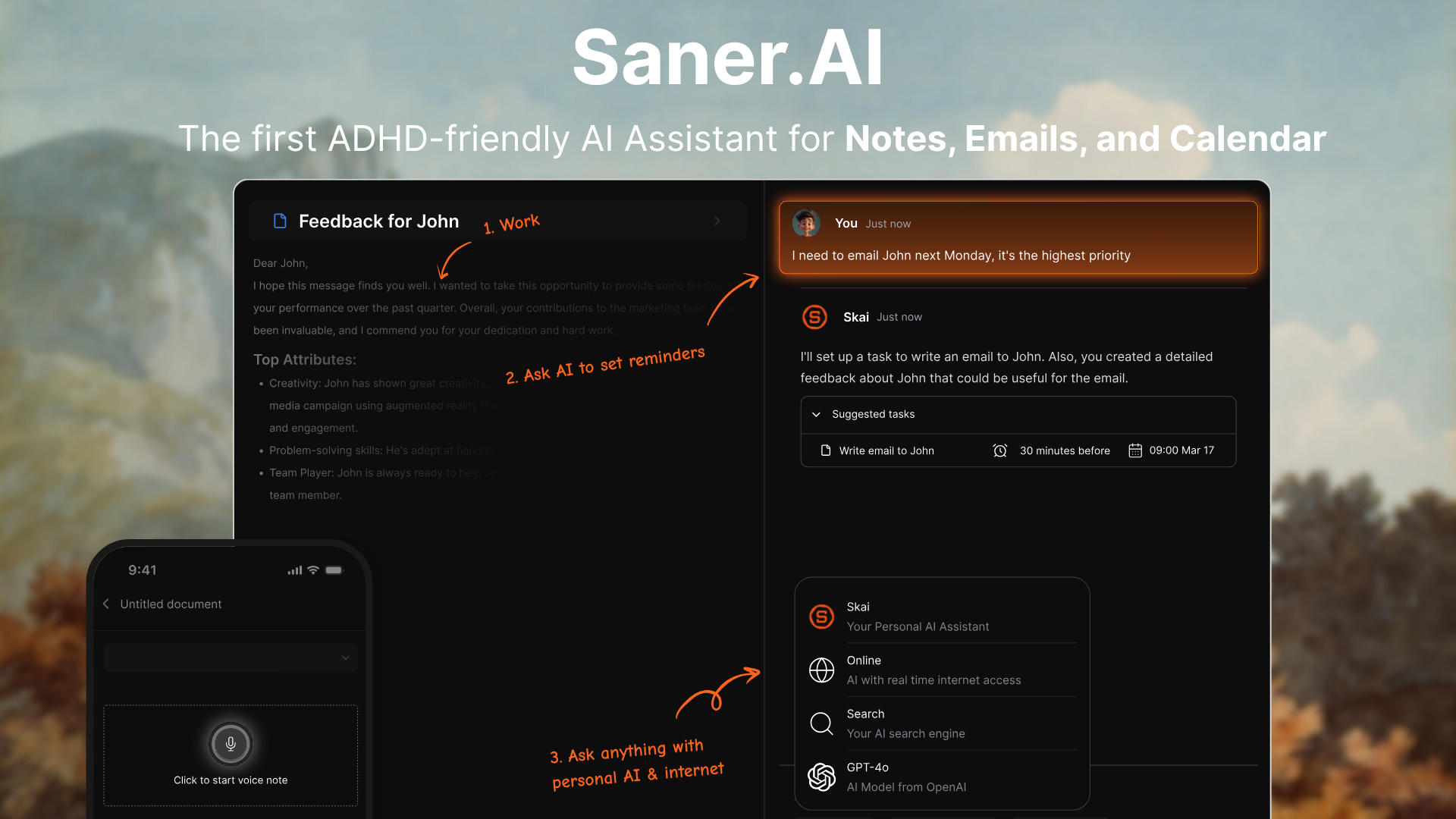
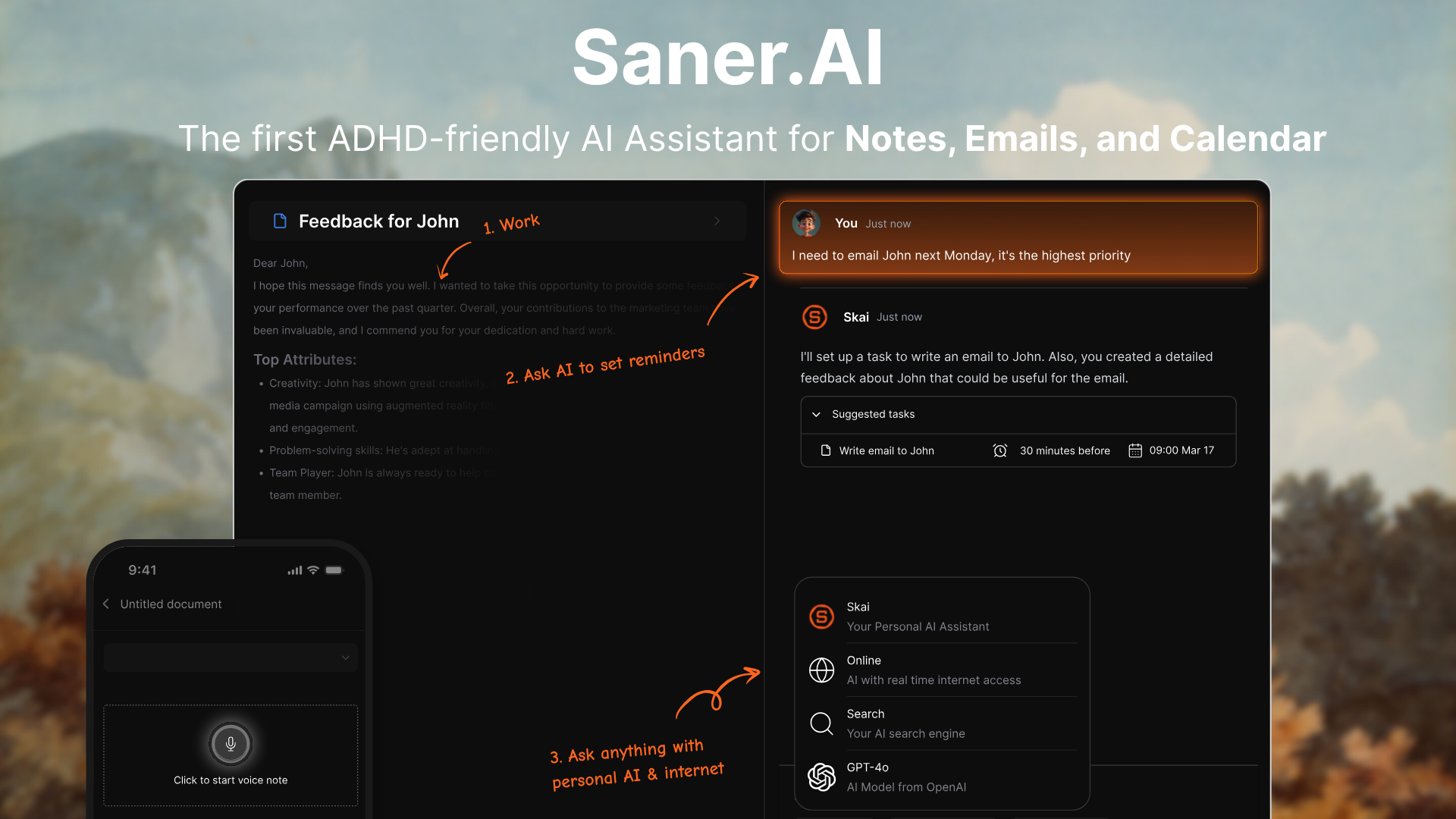
Saner.AI is a personal AI productivity assistant built for neurodivergent knowledge workers. It works best at turning chaotic, unorganized thoughts into a structured plan without forcing you to maintain a complex database system. The tool consolidates notes, emails, and calendar deadlines into a single, clean interface designed to bypass executive dysfunction and task paralysis.
Key feature
- Automatic day planning
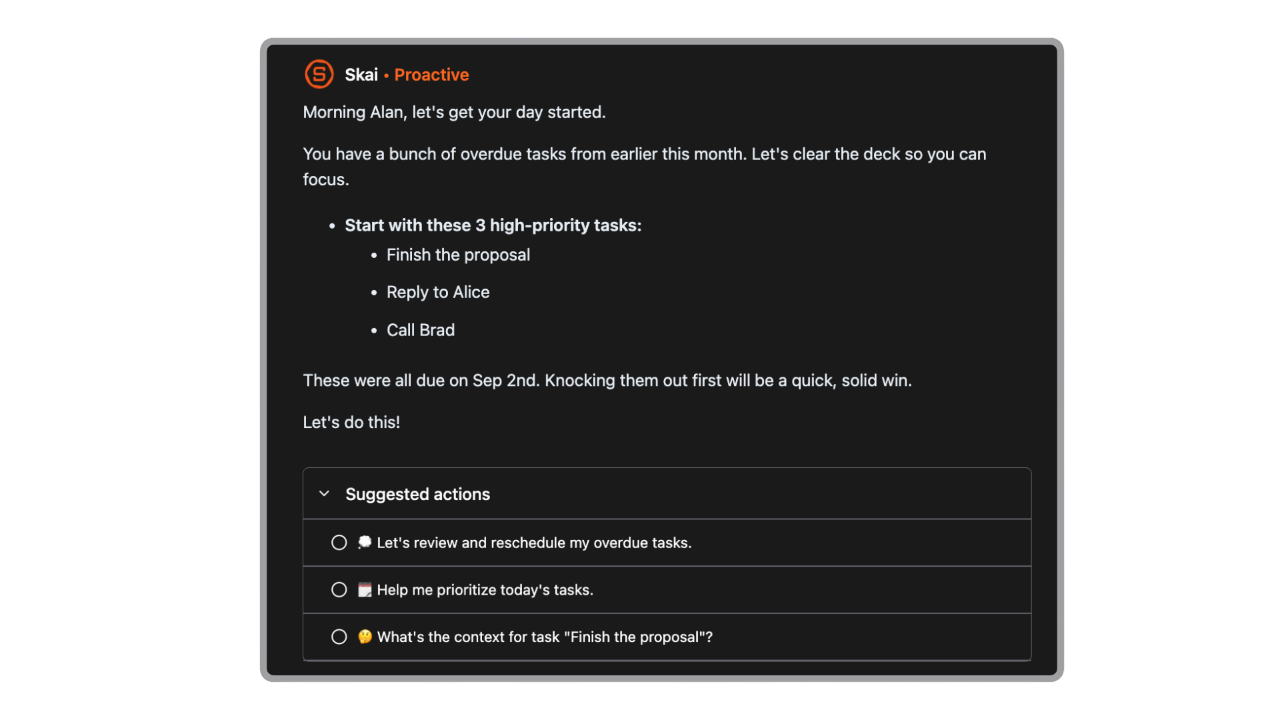
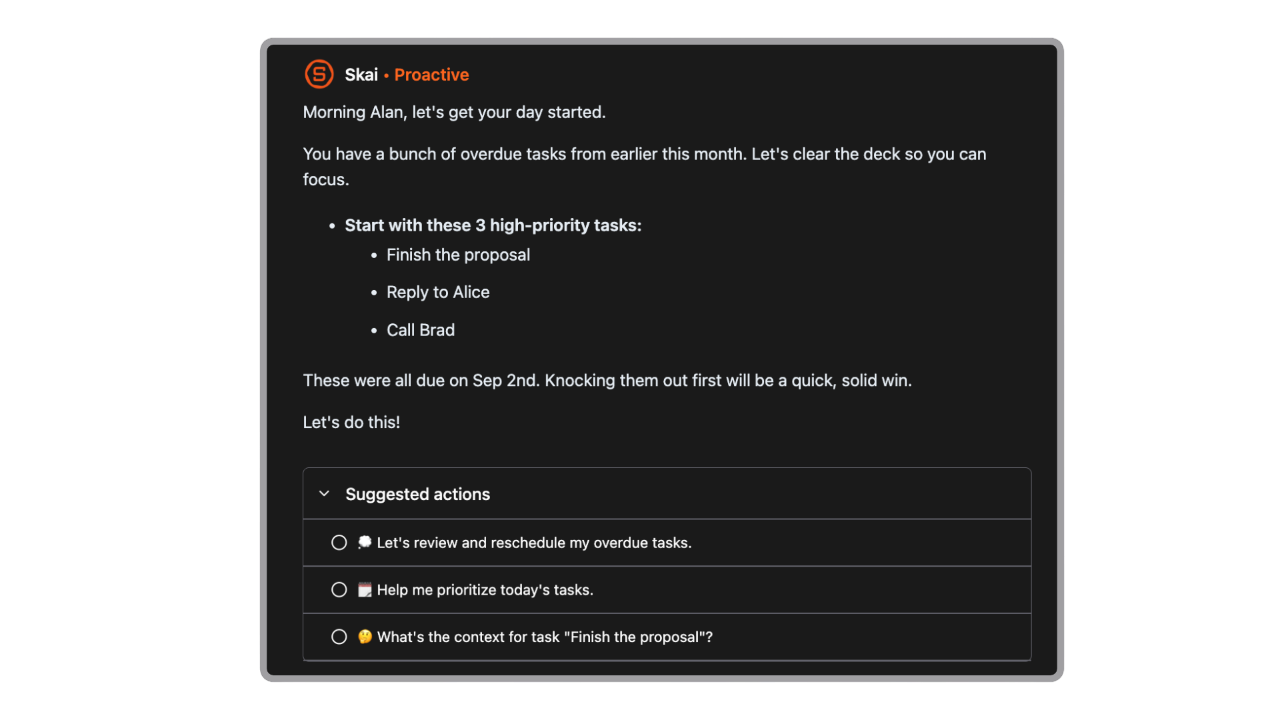
Saner.ai syncs with your Google ecosystem and calendars, even your notes and tasks, to create a simple overview of your day. I tested this morning's check-in feature, and I like that it proactively outlines your daily schedule so you do not have to fight time blindness or figure out what to work on first.
- Brain dump to task extraction
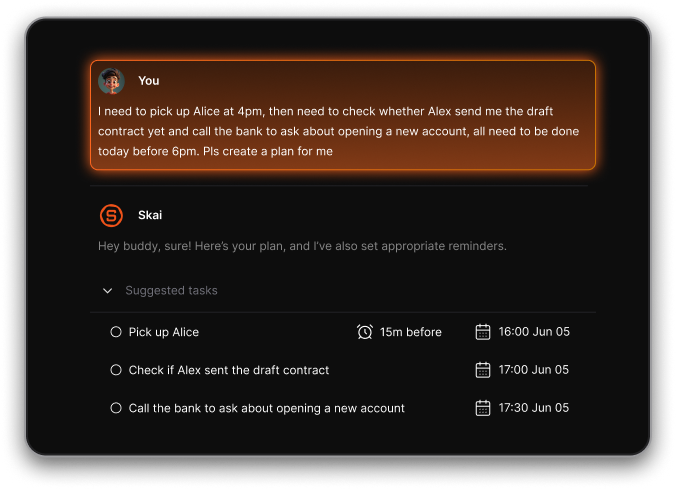
The application lets you type or use voice notes to record everything on your mind in one unedited mess. I tried dumping a chaotic stream of thoughts into the app, and the AI separated the actionable steps from the random thoughts, instantly building clear reminders.
- Connected note knowledge assistant
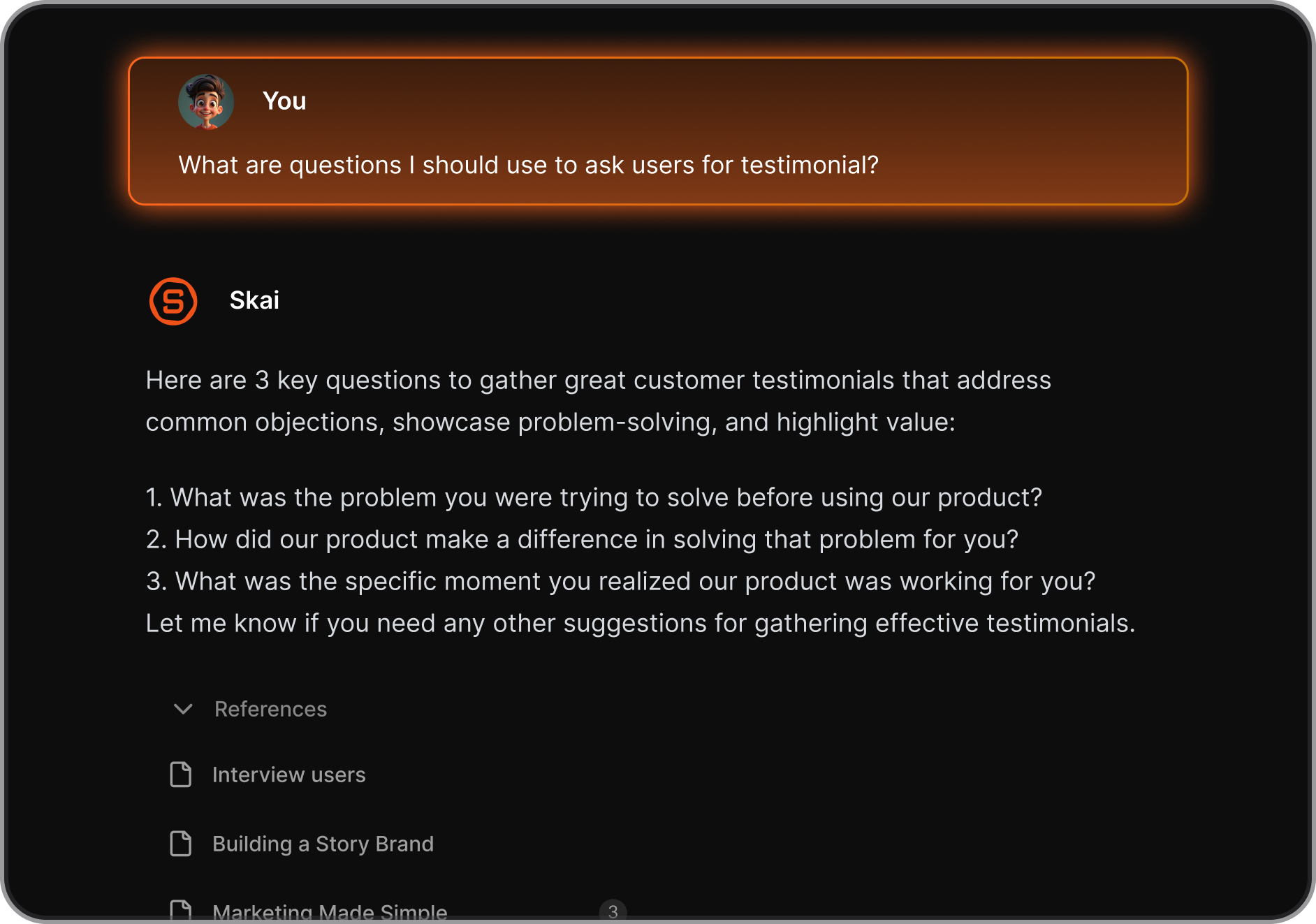
Saner.ai uses an AI assistant named Skai to chat directly with your personal documents, files, and imported text. I found it helpful to search my scattered research materials via standard dialogue instead of clicking through endless nested folders.
Pros
- I like that the setup is instant and does not require building a massive database from scratch like Notion or Obsidian.
- I appreciate the voice note option because it allows me to capture tasks before my brain gets distracted.
- I enjoy using the task breakdown assistant to split massive, intimidating goals into small actions.
Cons
- The app is not a good choice for people who want a full project management system.
Who is it best for
- Saner.AI is best for students and professionals with ADHD who struggle with task initiation and need an assistant to turn messy ideas into an immediate schedule.
Pricing list
- Free Tier: Includes basic note-taking, standard AI chat, and manual task creation.
- Pro Plan ($16/month): Unlocks full AI email inbox processing, automatic calendar scheduling, and larger document storage limits.
Saner.AI reviews
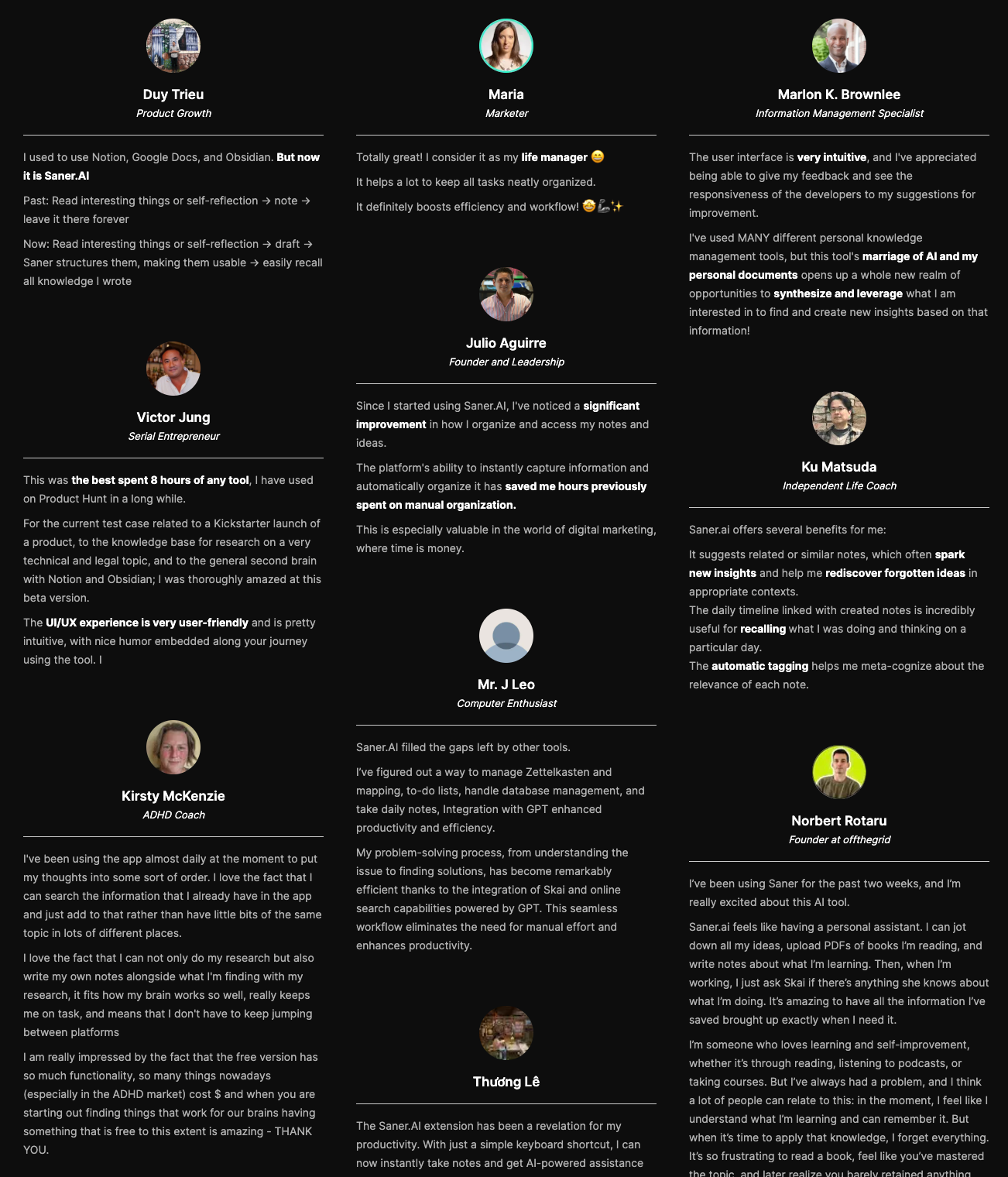
Reviewers frequently point out how the interface removes the friction of organizing multiple formats.
"This tool's marriage of AI and my personal documents opens up a whole new realm of opportunities to synthesize and leverage what I am interested in to find and create new insights..." — Verfied Review
How to get started
- Step 1: Link your Google Calendar to sync your daily schedule.
- Step 2: Use the voice or text option to brain dump your current to-do list.
- Step 3: Ask the Skai assistant to organize your raw thoughts into specific steps.
Stay on top of your work and life
Wrapping up - How to manage tasks with ADHD
Managing tasks when your brain feels like it has thirty open tabs is exhausting. If you have ADHD, or suspect you do, standard productivity advice often feels like it is written for a completely different species. You do not need more willpower or a prettier planner. You just need tools that do not fight your brain.
Dealing with a brain that refuses to focus is genuinely exhausting. You have likely tried standard advice like color-coded planners or constant phone alarms. Sometimes these methods help, but often they just feel like another chore to manage.
That is completely normal, and it does not mean you are failing. If you want a tool built specifically for how your mind actually operates, you might want to look at Saner.AI. It acts as a second brain, keeping track of your notes and tasks without forcing you into a rigid box. It is a simple way to clear the mental clutter when regular organizers fail you.
Stay on top of your work and life
FAQ - Managing Tasks with ADHD
1. Why is it so hard to start a task when I have ADHD?
Starting feels like climbing a mountain because your brain has lower levels of dopamine. Dopamine regulates your sense of reward and motivation. Without enough of it, your brain struggles to initiate the action, even if you want to do the work. This is a structural issue with executive function rather than a personal failure.
2. What is the best way to prioritize tasks with ADHD?
Pick one single thing that needs to happen today. Traditional matrix systems fail because everything feels urgent at the same time. I find it helps to choose the task that causes the most friction or anxiety, then let everything else wait. Trying to rank a list of ten items just creates mental paralysis.
3. How can I stop hyperfocusing on the wrong tasks?
Hyperfocus is difficult to break once you are in it. You can set an alarm that requires you to physically get out of your chair to turn it off. External disruptions break the mental loop. I also write down my main objective on a sticky note and put it right on my screen before I open my computer.
4. How do I deal with the overwhelming feeling of a large project?
Break the project down until the first step feels absurdly small. Instead of writing "clean the kitchen," write "put two forks in the dishwasher." Your brain needs a low barrier to entry to get past the initial resistance. Once you do that tiny action, momentum usually takes over and helps you continue.
5. Why do normal to-do lists fail for people with ADHD?
Standard lists become a graveyard of forgotten ideas. They look like a wall of demands, which triggers stress. If a list is too long, your brain shuts down to protect itself. Instead, use index cards with only one task written on each card. Hide the cards you are not working on to reduce the visual noise.
6. How can I stay focused on a boring task?
Introduce novelty or a sense of urgency. You can use a timer and race against the clock to finish. Listening to fast music or using a fidget toy can also give your brain the background stimulation it craves. Boredom is physically uncomfortable for an ADHD brain, so you have to inject some play.
7. What should I do when my mind goes completely blank before a task?
Externalize your thoughts immediately. Talk out loud to yourself about what you need to do next. When you speak the steps, you activate different parts of your brain. Say something like, "I am opening the document now." This creates a physical bridge from confusion to action, reducing the mental fog.
8. How does object permanence affect task management?
If you cannot see a task, it basically ceases to exist for you. Out of sight means out of mind. This is why digital apps often fail. Keep your tasks visual by using whiteboards, sticky notes, or clear storage bins. Visual cues act as constant, quiet reminders that keep the task in your awareness.
9. Is there a way to manage tasks without feeling constant anxiety?
Shift your focus from outcomes to time blocks. Instead of promising yourself that you will finish a report, promise that you will sit with it for fifteen minutes. You can control your time, but you cannot always control your focus. Lowering the stakes removes the pressure that causes the anxiety.
10. How can I handle interruptions without losing my place entirely?
Write down exactly what you were doing the moment the interruption happens. Use a single word or a quick scribble on a scrap piece of paper. When you return, you will have a physical marker pointing you back to your spot. This saves you from spending twenty minutes trying to remember where you left off.
11. Why do I lose interest in a new organizational system after a week?
Your brain thrives on novelty, so the initial excitement of a new app or planner naturally fades. This is completely normal. Do not blame yourself for abandoning a system. Instead, expect it to happen. Keep a rotation of three different tools and switch between them whenever you feel boredom setting in.
12. How do I balance self-care with an endless list of chores?
Put self-care on your list as a non-negotiable task. Rest is a required part of productivity. Avoid treating rest as a prize you only earn after finishing everything. Schedule your breaks first, then fit the chores around those moments.
13. What is body doubling, and does it actually help with tasks?
Body doubling means working alongside another person, either in the same room or on a video call. They do not help with your task; they just work on their own things. Their physical presence provides a quiet accountability. It grounds your focus and makes the environment feel more stable and less isolating.
14. How can I manage tasks when my medication wears off in the evening?
Do not plan complex or heavy tasks for the late hours. Save your evenings for routine, low-energy chores that require minimal decision-making. Prepare your clothes for the next day or wash a few dishes. Give your brain permission to slow down when the chemical support drops off.
15. What should I do if I am self-diagnosed and struggling with task management?
Trust your experience and use ADHD strategies anyway. You do not need a formal diagnosis to use tools that help your brain. If a strategy works for you, keep it. Focus on understanding your specific patterns of attention and energy, then build your daily routines around those personal realities.
Stay on top of your work and life